If you’ve ever clicked on a “$99 fare” and then watched the price climb as soon as you hit the seat map, you’re not imagining it. Airlines have quietly turned airline seat selection fees into a huge business. The twist? You almost never have to pay—as long as you understand how the system works.
Below, I’ll break down how airlines charge for seats, when it actually makes sense to pay, and the specific strategies I use to avoid or shrink those fees without ending up in the worst seat on the plane.
1. Are Seat Selection Fees a Scam or a Service?
Here’s the basic truth: if you bought a ticket, you already paid for transportation in a seat. What airlines are charging for is the privilege of choosing which seat you get.
Instead of raising base fares (which makes them look bad in search results), airlines keep the headline price low and then slice the trip into paid extras: bags, food, early boarding, and now seat selection. For many carriers, airline revenue from seat selection is now right up there with baggage fees.
In practice, that looks like this:
- Advertised economy fares are often bare-bones. Seat selection shows up later as an add-on or bundled into a higher fare type.
- Booking flows use
drip pricing
and pushy language to make it feel like you have to pick a seat now or risk chaos at the airport. - But legally and practically, no airline can force you to pay for a seat. Skip selection and you’ll get a free assignment at check-in.
So don’t ask, Do I have to pay a seat fee?
Instead ask, What problem am I solving by paying?
Are you avoiding a middle seat? Trying to sit with kids? Wanting more legroom? If there’s no real problem, there’s no real reason to pay.
2. Decoding the Types of Seats (and What They Really Cost)
Not all seats are created—or priced—equally. Airlines treat seats like inventory and use color-coded maps and dynamic pricing to squeeze out every extra dollar. Understanding the tiers makes any seat selection fee cost breakdown a lot less confusing.
Here’s the basic hierarchy you’ll see on most major airlines:
- Standard economy seats
These are the regular seats in the main cabin. On some full-service airlines, they’re still included with standard economy fares. On others, especially with Basic Economy or similar, you’ll pay a fee just to choose one in advance. If you skip it, you’ll get a free seat later—usually whatever’s left. - Preferred seats
Same size as standard seats, but in better spots: closer to the front, quieter sections, or more desirable window/aisle clusters. Fees range from a few dollars to much more on busy routes. This is where a lot of hidden airline seat charges quietly live. - Extra-legroom / Economy Plus / Comfort-style seats
Think United Economy Plus, Delta Comfort+, and similar products. You’re usually getting around 34–37 inches of pitch instead of 30–32, plus a better location in the cabin. On U.S. domestic flights, these often run $30–$50 per segment; on long-haul international flights, they can jump to hundreds of dollars. - Exit row and bulkhead seats
These feel spacious and are heavily monetized. The trade-offs: limited or no recline on some aircraft, no under-seat storage for takeoff and landing, and eligibility rules (you must be able and willing to assist in an emergency, usually 15+ or 16+ and physically capable). - Premium Economy (separate cabin)
On many long-haul routes, this is a distinct cabin between economy and business. You usually get a wider seat, more legroom, better food, and free seat selection included. Don’t confuse this with “Economy Plus” style seating, which is still technically economy. - Business and First Class
These cabins almost always include free seat selection. There are exceptions: some airlines (like British Airways) charge extra to pick specific business-class seats, especially the best flatbeds, using dynamic pricing based on location.
On top of that, seat fees are dynamic. Just like fares, prices move with demand and time. The same aisle seat might be $19 when you book and $49 a week before departure.
So when you see a cheap fare, pause and ask: What will this cost once I add the seat I actually want?
Sometimes the “expensive” airline with free seat selection ends up cheaper than a budget carrier once you factor in all the airlines charging for seat selection and bags.
3. When Paying for a Seat Is Actually Worth It
Most of the time, seat fees are pure revenue plays. But not always. There are situations where paying is rational, even smart. My rule of thumb: Is this fee solving a real problem, or just a mild preference?
Here’s when I’d seriously consider paying:
- Long flights (especially overnight)
On a 1-hour hop, you can tolerate almost anything. On a 10-hour red-eye, a bad seat can wreck your sleep and your first day on the ground. Paying for an aisle, extra legroom, or a quieter section can be worth every dollar. - You really hate middle seats or feel claustrophobic
If a middle seat triggers anxiety or pain, that’s not a “nice-to-have.” Paying to guarantee an aisle or window is a legitimate comfort and mental health decision. - Tight connections
Short layover? A seat near the front can shave crucial minutes off deplaning. In that case, a small fee can be cheaper than the cost and stress of a missed connection. - Needing to sit with someone
Traveling with a partner, elderly parent, or someone who needs assistance? Paying to sit together can be worth more than the fee. Sometimes it’s even cheaper to buy the lowest fare and then pay for seat assignments than to buy a higher fare that includes them. - Chronic pain or mobility issues
If extra legroom or an aisle seat significantly reduces pain or makes it easier to move, that’s a strong reason to pay. Think of it as a health expense, not a luxury.
And when do I usually skip paid seats?
- Short flights (under ~2 hours) when I’m traveling solo.
- Trips where I genuinely don’t care where I sit and I’m not on a tight schedule.
- When the seat map is already mostly full and the remaining paid options are barely better than what I’d likely get for free at check-in.
Before you click Continue
, ask yourself: If I don’t pay this fee, what’s the worst realistic outcome? If the answer is “I might end up in a random aisle or middle seat for 90 minutes,” you can probably keep your money.
4. How Airlines Nudge You Into Paying (and How to Push Back)
Once you notice the tricks, you can’t unsee them. Airlines design their booking flows to make seat fees feel mandatory, even though they’re optional. This is where a lot of seat selection mistakes to avoid come from.
Common tactics:
- Scary wording
Messages likeYou may be separated from your party
orSeats are going fast
appear right next to the payment button. The message is clear: pay now or regret it later. - Confusing buttons
TheSkip seat selection
option is often tiny, greyed out, or hidden behind a link likeContinue without seats
. It’s there—you just have to hunt for it. - Drip pricing
You see the base fare first. Only after you’ve entered your details do you see the real cost of seats, bags, and extras. By that point, many people just click through to avoid starting over. - Color-coded upsells
Seat maps highlight “better” seats in bright colors with labels likePreferred
orExtra Comfort
, making the free seats look like leftovers.
Here’s how to push back and practice a smarter economy seat selection strategy:
- Always look for the “no thanks” option
It might saySkip seats
,Continue
, orDecide later
. Click that. You can still get a free seat at check-in. - Don’t panic about sitting together
Many major U.S. airlines now guarantee that families with young children can sit together without extra fees. Check your airline’s policy before you pay for family seating without extra fees you might already be entitled to. - Remember: a seat is guaranteed
If you hold a ticket, you will not be standing in the aisle. The airline must assign you a seat, even if you never pay a selection fee.
If you want to see how different carriers structure their airline seat selection fees, resources like this breakdown from KAYAK give a good overview of the current landscape.
5. Families, Groups, and Couples: How to Sit Together Without Overpaying
For families and groups, seat fees can explode fast because they’re charged per person, per segment. A “small” $25 fee on a round-trip with a connection can turn into $25 × 4 people × 4 segments = $400. That’s a lot of money just to sit together.
Here’s how I’d approach it if you’re not traveling solo and want family seating without extra fees whenever possible:
- Know the family seating rules
Many major U.S. airlines now promise that families with young children will be seated together without extra charges. It might not be the best row in the cabin, but it often means you don’t need to pay just to avoid being separated from your kids. - Pay for a subset of seats
Family of four? You don’t always need to pay for all four seats. Sometimes paying for one parent + one child together is enough; the other parent and child can often be moved nearby at the airport. - Book everyone on the same reservation
This makes it easier for the airline’s system—and human agents—to keep you together when assigning free seats. - Check in exactly when it opens
If you’re skipping paid seats, set an alarm for 24 hours before departure (or whatever your airline uses). Early check-in gives you a better shot at decent free seats together. - Use the human factor
Gate agents and flight attendants often try to help families sit together, especially with young kids. It’s not guaranteed, but your odds are better if you arrive early and ask politely.
For couples or friends, the question is simpler: Is it worth $X per person to guarantee sitting together? On a short flight, maybe not. On a long-haul or a special trip, it might be worth paying for peace of mind.

6. Beating the System: Concrete Ways to Avoid or Shrink Seat Fees
Now for the practical part: how to avoid seat selection fees (or at least reduce them) without making your trip miserable. Think of this as your toolkit.
1. Skip advance selection and play the check-in game
If you’re flexible, the simplest move is to skip seat selection entirely and check in right when it opens. Many travelers end up with perfectly fine seats this way, often even together with companions. You might not get your dream row, but you’ll save real money.
2. Compare total trip cost, not just the fare
When you’re shopping, don’t just compare base fares. Mentally add:
- Seat fees (for the seats you’d realistically choose)
- Bag fees
- Any extras you know you’ll buy (like early boarding)
That “cheap” low-cost carrier can easily become more expensive than a full-service airline once you add everything back in. A quick budget airline seat fees comparison can flip which option is actually cheaper.
3. Use loyalty status and co-branded credit cards
Even low-level elite status can unlock free seat selection with airline status or discounted preferred and extra-legroom seats. Co-branded airline credit cards sometimes include free standard seat selection or priority boarding, and they often cover bag fees.
Some credit cards that waive seat selection fees do it directly; others help indirectly by giving you status or travel credits you can use toward seats. If you fly one airline regularly, it can be cheaper to lean into their ecosystem than to pay à la carte every time—as long as you pay your card in full to avoid interest.
4. Consider an annual extra-legroom subscription (if you fly a lot)
Some airlines, like United, sell annual Economy Plus subscriptions. If you’re paying $39–$89 per segment for extra legroom several times a year, a subscription can make sense. But do the math honestly: how many flights will you actually take, and on how many will you truly need extra legroom?
5. Hunt for last-minute upgrades
Sometimes the best deals show up close to departure. If extra-legroom or premium seats haven’t sold, airlines may discount them at check-in or at the gate. If you were already considering paying, it can be worth waiting to see if the price drops before committing.
6. Avoid third-party seat traps
Online travel agencies and credit card portals often show incomplete or outdated seat maps. To avoid bad surprises with paid seat selection vs free assignment, I prefer to:
- Book the flight wherever is cheapest or most convenient.
- Then immediately pull up the reservation on the airline’s own site or app to manage seats.
This gives you the most accurate view of what’s actually available and what it costs—and helps you spot any hidden airline seat charges before you pay.
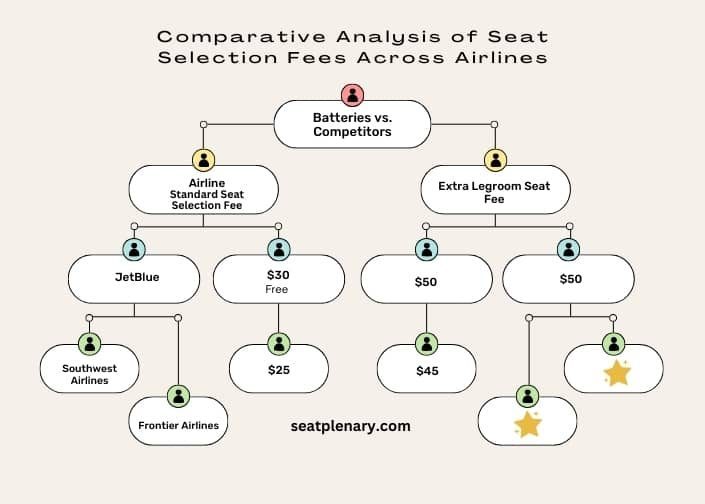
7. A Simple Framework: Should You Pay for a Seat on Your Next Flight?
When I’m staring at a seat map and a list of fees, I run through a quick checklist. You can use this as a mental script the next time you’re trying to decide how to sit together on a plane without paying or whether to splurge on extra legroom.
- How long is the flight?
Under 2 hours and I’m solo? I usually skip paying. Over 5–6 hours, I start valuing comfort more. - What’s my real pain point?
Is it legroom, anxiety about middle seats, sitting with kids, or making a tight connection? If I can’t name a real problem, I don’t pay. - What’s the worst-case scenario if I don’t pay?
If the worst case is “I sit in a random seat for a short flight,” I keep my money. If the worst case is “I’m separated from my 5-year-old on a 9-hour flight,” I pay. - Have I checked the total cost across airlines?
I compare base fare + seat fees + bags. Sometimes a slightly higher fare with free seat selection is the better deal once you factor in all the flight booking fees and seat charges. - Can status, a card, or timing solve this for free?
I check if my loyalty status or card benefits unlock free seats, and I always look again at check-in for better free options.
Seat selection fees aren’t going away. If anything, they’ll get more sophisticated. But once you understand how airlines use them—and you’re willing to say no thanks
when it makes sense—you can keep your costs down without sacrificing comfort or sanity.
Next time that seat map pops up, pause for a second and ask yourself: Is this fee buying me real comfort, or just peace of mind? Let that answer decide whether you click “Pay” or “Skip.”