Why airport slot shortages push airfares up
When travelers see airfares spike at certain times of day or year, the visible cause is the price on the booking screen. The underlying driver is often a shortage of airport slots: the tightly regulated take-off and landing permissions airlines must hold to operate at congested airports.
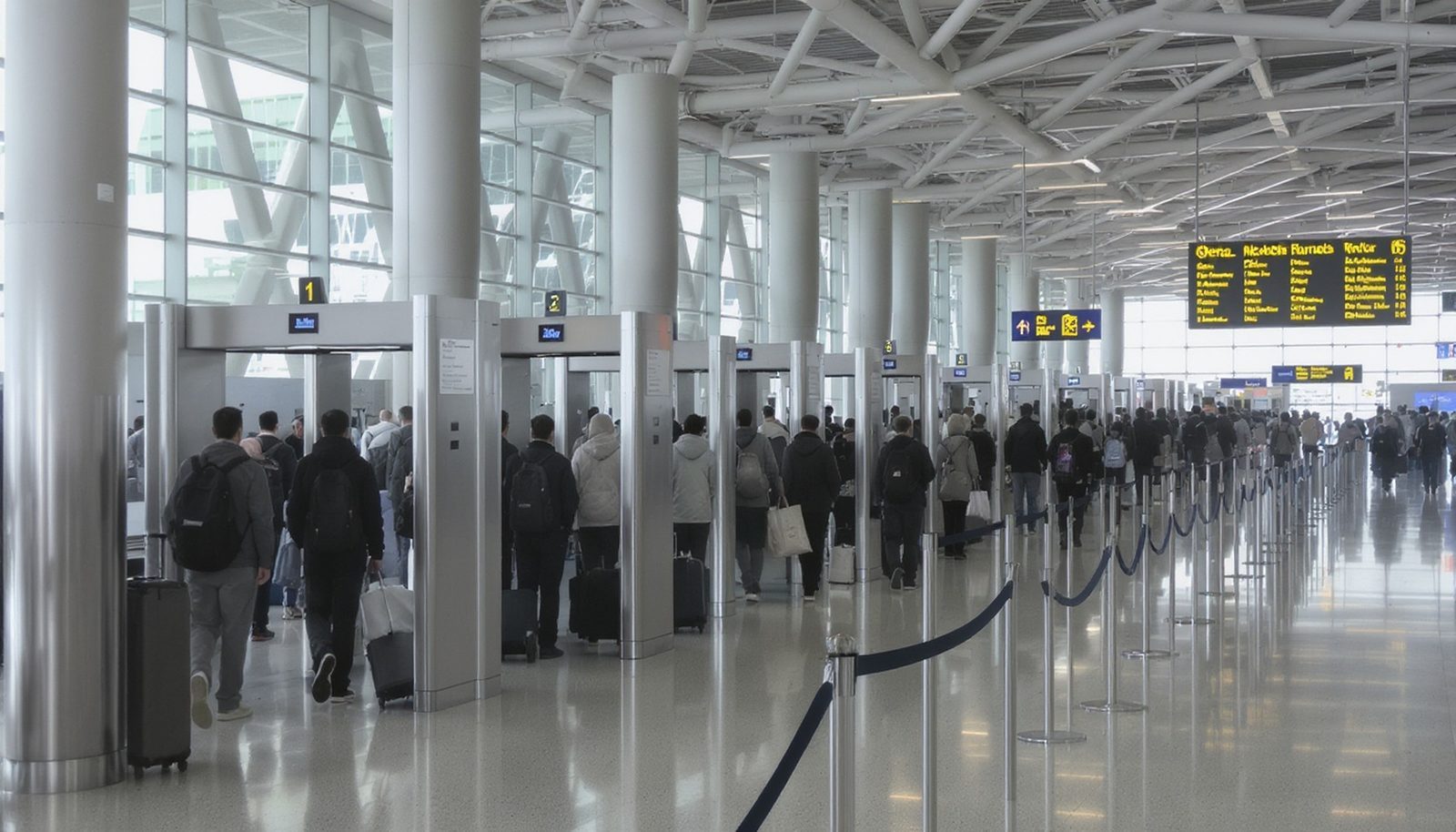
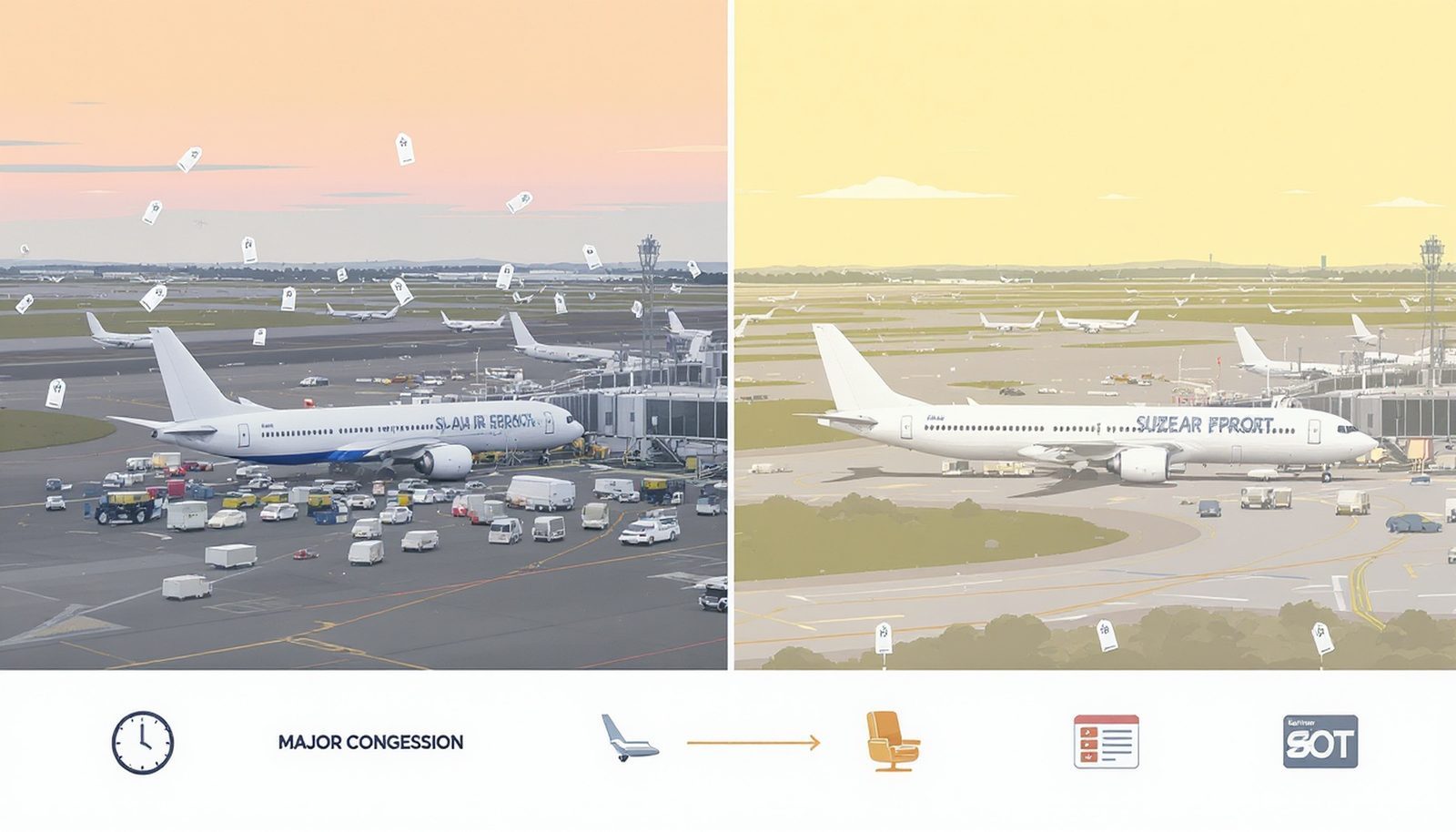
Slots are a hard capacity constraint. At busy hubs, regulators cap the number of movements per hour to keep runway, taxiway, and terminal operations within safe limits. Once those slots are fully allocated, airlines cannot simply add more flights at popular times, even if demand and willingness to pay are high.
This creates a structural imbalance similar to rush-hour crowding in urban transit. Demand concentrates in specific time windows: early morning departures for business travelers, evening returns, and weekend peaks for leisure. Off-peak periods, by contrast, may have spare capacity. Because airlines cannot easily expand peak capacity, they use prices to ration scarce seats in those constrained slots.
Dynamic pricing algorithms translate this structural scarcity into higher fares. When demand for a flight in a constrained slot rises, the algorithm moves the fare up through booking classes. The mechanism is not arbitrary: it allocates limited seats to those with the highest willingness to pay, while preserving some inventory for late-booking, high-yield passengers.
In this sense, airport slot shortages are to aviation what track and platform capacity are to rail: they define the ceiling on how much peak demand can be served. As long as that ceiling is binding, price becomes the main adjustment variable, and airfare inflation is most visible where slot scarcity is most acute.
From static fares to dynamic peak/off-peak pricing in air travel
Historically, airlines used relatively static fare structures: advance-purchase discounts, Saturday-night stay requirements, and fixed seasonal patterns. Over time, these have evolved into more granular, dynamic systems that resemble the peak/off-peak logic seen in public transport.
The core mechanism is the same: internalize congestion and capacity costs. When a flight departs in a peak slot at a congested airport, the marginal cost of serving an additional passenger is higher. The airline may need extra ground staff, buffer time for delays, and higher schedule padding. More importantly, the opportunity cost of using that slot for a low-yield itinerary is high, because the same slot could be used for a more profitable route or timing.
Dynamic pricing algorithms respond by raising fares as demand builds for those peak flights. Off-peak flights, by contrast, often see discounts or promotional fares designed to fill otherwise empty seats. This is analogous to off-peak discounts in transit: the goal is to shift some demand away from the most congested periods without building new infrastructure that would sit underused at other times.
Digital booking channels make this feasible. Just as app-based transit systems can layer new pricing rules over existing infrastructure, airline revenue management systems can adjust fares in real time based on booking curves, competitor actions, and seasonal patterns. The underlying aircraft and slot infrastructure does not change; the pricing logic does.
However, aviation faces additional constraints. Airport slot rules, bilateral air service agreements, and political scrutiny limit how aggressively airlines can exploit scarcity. Regulators may intervene if pricing is perceived as exploitative, especially where a single carrier dominates a slot-constrained airport. This creates a tension between revenue maximization and public acceptability similar to that faced by public transit agencies.
Decision tension: pay for peak convenience or shift your trip?
For travelers, the central decision is whether to pay for peak convenience or adjust timing to avoid peak pricing penalties on flexible fares. This is not just a matter of personal preference; it reflects how dynamic pricing algorithms respond to your choices.
When you search for flights, the system effectively tests your willingness to trade time for money. Early morning and late afternoon flights at slot-constrained hubs tend to be priced higher because they align with business schedules and tight connections. Midday or late-night flights often carry lower fares, especially on routes with multiple daily frequencies.
The mechanism is similar to off-peak transit incentives. If enough travelers are willing to shift to less popular times, airlines can smooth demand across the day, improving load factors without adding peak capacity. If few travelers shift, prices remain high in peak slots, and the system continues to ration by income and urgency rather than by time flexibility.
The trade-off is not binary. Many itineraries offer a spectrum of options: slightly earlier or later departures, alternative connecting hubs, or different days of the week. Each option sits at a different point on the price–convenience curve. Understanding that curve is key to avoiding peak pricing penalties when your schedule is flexible.
| Option | Mechanism | Typical impact on fare | Trade-off |
| Peak-time nonstop | Uses scarce slot at popular hour | Highest | Maximum convenience, maximum price |
| Off-peak nonstop | Uses less demanded time band | Lower | Less convenient timing, lower price |
| Peak-time with connection | Shares peak slots across two airports | Medium–high | More travel time, sometimes cheaper than nonstop |
| Off-peak with connection | Uses less demanded slots at one or both airports | Lowest | Longest journey, highest disruption risk |
This structure mirrors the way transit agencies design peak/off-peak fare bands. The more you can move away from the most congested time and place combinations, the more you can avoid paying for the underlying slot scarcity.
How dynamic pricing algorithms translate slot scarcity into airfare inflation
Dynamic pricing in aviation is often portrayed as mysterious, but its core logic is straightforward when viewed through the lens of capacity and slots.
1. Capacity and demand forecasting
Airlines start by forecasting demand for each flight, taking into account historical patterns, seasonality, and known events. For flights in constrained slots, the forecast assumes high baseline demand. The aircraft size and slot allocation define a hard cap on seats available.
Because adding another flight in the same time band is often impossible or uneconomic, the forecasted demand for peak flights is intentionally set to exceed capacity. This creates the conditions for higher fares: the algorithm expects that more people will want seats than can be accommodated.
2. Fare buckets and booking curves
Seats are divided into fare buckets, each with a specific price and set of conditions. As bookings accumulate, lower buckets close and higher ones open. On peak flights, the algorithm closes low buckets earlier because it anticipates strong late demand. On off-peak flights, low buckets may remain open longer to stimulate bookings.
This is where slot scarcity matters. If a flight uses a highly valuable slot, the opportunity cost of selling too many seats cheaply is high. The algorithm therefore protects inventory for higher-paying passengers, effectively pushing the average fare up. Over time, this contributes to observed airfare inflation on routes and times where slot constraints are binding.
3. Competitive and regulatory constraints
Dynamic pricing does not operate in a vacuum. Competitor fares, alliance agreements, and regulatory oversight all shape how aggressively an airline can price. On routes with multiple carriers and alternative airports, competition can limit the pass-through of slot scarcity into fares. On monopoly routes from a slot-constrained hub, the pass-through can be much higher.
Regulators may intervene if pricing appears to exploit slot dominance. This is analogous to political constraints on peak surcharges in public transit: even if higher peak prices are economically rational, they may be politically unsustainable if perceived as unfair.
4. Feedback loops and trend signals
Dynamic pricing systems learn from outcomes. If a peak flight consistently sells out early at high fares, the algorithm may raise starting prices in future seasons. If off-peak flights remain underfilled despite discounts, the system may experiment with deeper promotions or schedule adjustments.
Over time, this feedback loop can amplify airfare inflation in constrained markets. As long as demand remains strong and slots remain scarce, the algorithm has little incentive to lower prices. Instead, it fine-tunes the timing and magnitude of increases, much like transit agencies calibrate peak/off-peak differentials to manage crowding.
Mechanisms to avoid peak pricing penalties when you have flexibility
Travelers with flexible schedules can exploit the same mechanisms that airlines use to manage demand. The goal is not to outsmart the algorithm, but to align your choices with off-peak capacity that the system is trying to fill.
1. Time-band awareness rather than exact times
Dynamic pricing responds to time bands, not just clock times. Early morning, late afternoon, and Sunday evening are classic peak bands. Midday, late night, and midweek often function as off-peak bands, especially on business-heavy routes.
By searching across a full day or week, you can see how fares cluster. The pattern reveals where the algorithm perceives peak and off-peak demand. Shifting your departure by a few hours or a day can move you into a different band, with a different price level, even if the origin and destination are unchanged.
2. Airport and routing flexibility
Slot scarcity is airport-specific. Secondary airports often have more available slots and less congestion, which can translate into lower fares. Similarly, connecting through a less congested hub can reduce the slot scarcity embedded in your itinerary.
This mirrors transit systems that offer discounts for traveling via less crowded routes or times. The trade-off is additional travel time and potential inconvenience, but the underlying mechanism is the same: you are helping the system use underutilized capacity, and the system rewards you with a lower price.
3. Fare type and flexibility trade-offs
Flexible fares often carry a premium because they allow changes and cancellations. When combined with peak slots, this premium can be substantial. However, some airlines structure flexible fares with less severe peak penalties if you are willing to accept off-peak timing.
In effect, you are choosing between two dimensions of flexibility: time flexibility (when you fly) and rule flexibility (how easily you can change). If you have high time flexibility, you can often accept a more restrictive fare in exchange for off-peak pricing. If you need rule flexibility but can avoid peak slots, you may still reduce the total premium compared to a fully flexible fare in the busiest time band.
4. Understanding promotional off-peak incentives
Just as transit agencies run off-peak promotions to test demand shifts, airlines run targeted sales on specific flights or days. These are not random; they are experiments to see how price-sensitive certain segments are to timing changes.
By recognizing these patterns—such as recurring midweek sales or discounts on midday departures—you can align your travel with the system’s incentives. In doing so, you help airlines smooth demand and avoid the need for even higher peak fares to cover fixed costs.
Equity, transparency, and the politics of airfare inflation
Dynamic pricing and slot scarcity raise equity and transparency questions similar to those in public transit. When peak prices rise faster than incomes, access to convenient travel times becomes stratified by ability to pay.
Low-income travelers, long-distance commuters, and those with inflexible work schedules are most exposed to peak pricing penalties. They may have limited ability to shift travel times, especially when flights are tied to shift work, family obligations, or visa appointment schedules. In these cases, dynamic pricing can reinforce existing inequalities in mobility.
Transparency is another constraint. If travelers cannot predict when and why fares change, they may perceive the system as arbitrary or manipulative. This perception can trigger political backlash, calls for regulation, or pressure on airport authorities to reallocate slots in ways that reduce concentration and perceived abuse.
Airlines and regulators face a structural trade-off. More granular, data-driven pricing can improve efficiency and help manage congestion, but it also increases complexity and opacity. Simpler, more predictable fare structures may be easier to understand and accept, but they blunt the price signals that help align demand with limited slot capacity.
Some policy proposals mirror debates in transit: capping peak fares on essential routes, reserving a share of slots for lower-cost services, or using tax-funded subsidies to offset high prices for specific groups. Each approach shifts costs between airlines, travelers, and taxpayers, and each changes the incentives that dynamic pricing systems respond to.
Risks, uncertainties, and unintended consequences
The move toward more dynamic, peak-sensitive pricing in aviation carries several risks and uncertainties that parallel those seen in public transport.
1. Mis-calibrated incentives and new mini-peaks
If airlines offer strong discounts for specific off-peak flights, they may inadvertently create new mini-peaks. For example, a heavily discounted midday flight could become crowded while adjacent flights remain underfilled. This mirrors transit systems where poorly timed off-peak discounts simply shift congestion rather than reduce it.
Because airlines lack fine-grained, real-time control over slot allocation, correcting these mis-calibrations can take multiple scheduling seasons. In the meantime, travelers experience unpredictable crowding and price patterns, which can erode trust.
2. Algorithmic opacity and regulatory intervention
Dynamic pricing algorithms are often proprietary and opaque. Travelers, regulators, and even airport authorities may struggle to understand how slot scarcity, demand forecasts, and competitive responses interact to produce observed fares.
This opacity creates a risk of regulatory intervention, especially if airfare inflation is politically salient. Regulators may impose caps, transparency requirements, or slot reallocation rules that alter the economics of peak pricing. These interventions can stabilize prices in the short term but may reduce incentives for airlines to invest in efficiency or to experiment with off-peak incentives.
3. Distributional impacts and social backlash
Without explicit safeguards, the costs and benefits of dynamic pricing are unevenly distributed. High-income, time-flexible travelers can exploit off-peak discounts, while low-income, time-constrained travelers bear a disproportionate share of peak pricing penalties.
If these patterns become visible—for example, when certain communities consistently pay more for essential travel—social backlash can emerge. This may take the form of public campaigns, legal challenges, or pressure on governments to subsidize specific routes or time bands. Such responses can reshape the pricing landscape in ways that are hard to predict from the perspective of current algorithms.
4. Data gaps and limited evidence on long-term effects
There is limited quantitative evidence on how specific peak/off-peak differentials in airfares affect long-term travel behavior, route viability, or regional connectivity. Airlines run controlled experiments and A/B tests, but results are often proprietary and context-specific.
This data gap makes it difficult for policymakers to assess whether dynamic pricing is achieving broader goals such as regional development, environmental sustainability, or social equity. It also means that travelers must navigate a system whose long-term trajectory is uncertain, even as short-term price signals become more granular.
Balanced conclusion: navigating a slot-constrained, dynamically priced sky
Airport slot shortages and airfare inflation are two sides of the same structural coin. Slots cap how much peak demand can be served; dynamic pricing allocates that constrained capacity across travelers with different willingness and ability to pay. As digital tools make pricing more granular, the system increasingly resembles the peak/off-peak logic seen in public transport, with similar tensions between efficiency, equity, and acceptability.
For travelers, the key mechanism to understand is the interaction between time, place, and price. Peak slots at congested airports embed higher opportunity costs, which dynamic pricing algorithms translate into higher fares. Off-peak times, secondary airports, and alternative routings represent underused capacity, which the system tries to fill with lower prices and targeted incentives.
Those with flexibility can often avoid peak pricing penalties by aligning their choices with off-peak capacity. Those without flexibility are more exposed to the inflationary effects of slot scarcity. This distributional pattern raises equity and transparency concerns that regulators and airlines need to address.
Looking ahead, the trajectory points toward more data-driven, experiment-based pricing, with controlled pilots and A/B tests shaping how time bands and incentives evolve. The unresolved question is not whether dynamic pricing will persist—it almost certainly will—but how its benefits and burdens will be shared. The balance between managing congestion, sustaining airline finances, and preserving fair access to convenient travel times remains a live policy debate, and travelers’ experiences at the booking screen are where these abstract trade-offs become concrete.