I’ve lost count of how many times I’ve watched people step out of an airport, open a rideshare app, see a “cheap” fare… and then complain later about how much the trip really cost them in money, time, and stress.
On the surface, airport taxis, rideshares, and shuttles look simple. In reality, airport transportation is full of surge pricing, flat fares, luggage fees, airport pickup fees, and small-print rules. The option that looks cheapest upfront is often the one that quietly drains you the most.
Let’s walk through the real choices you face after you land, and where the hidden cost of airport transportation usually hides.
1. “This Uber Looks Cheap” – Until Surge and Airport Fees Hit
When I land, my first instinct is the same as yours: open Uber or Lyft and check the price. The number on the screen feels reassuring. It’s upfront. It’s digital. It feels fair
.
But for airport rides, that number often hides more than it reveals. Here’s what’s usually baked into the fare:
- Dynamic pricing (surge) – Prices jump during peak hours, bad weather, holidays, big events, or when several flights land at once. That
cheap
UberX can quietly double or triple. - Airport surcharges – Many airports add a per-trip rideshare fee (often around $2.50–$7) that gets passed straight to you. One study found airport rideshare trips cost 35–50% more than similar in-city rides because of these fees and demand spikes (source).
- Per-minute charges – Stuck in the pickup queue or crawling through airport traffic? The clock is ticking, and you’re paying for it.
So that $28 estimate you see might actually be closer to:
- $28 base + $6 airport fee + surge multiplier + time in traffic
By the time you reach your hotel, you’re staring at $45–$60 for a ride you thought was cheap.
That’s the classic airport taxi vs Uber cost comparison mistake: looking only at the first number.
How I handle this: I still check the rideshare app first, but I treat that price as a starting point, not the final truth. Then I compare it with the local taxi flat fare or a meter estimate before I commit. It’s a quick airport transfer cost breakdown that saves me from surge pricing airport rideshare surprises.

2. The Taxi Line: Boring, Old-School… and Quietly Cheaper?
Taxis don’t have the same tech sheen as rideshares, but at airports they often have one big advantage: predictable pricing.
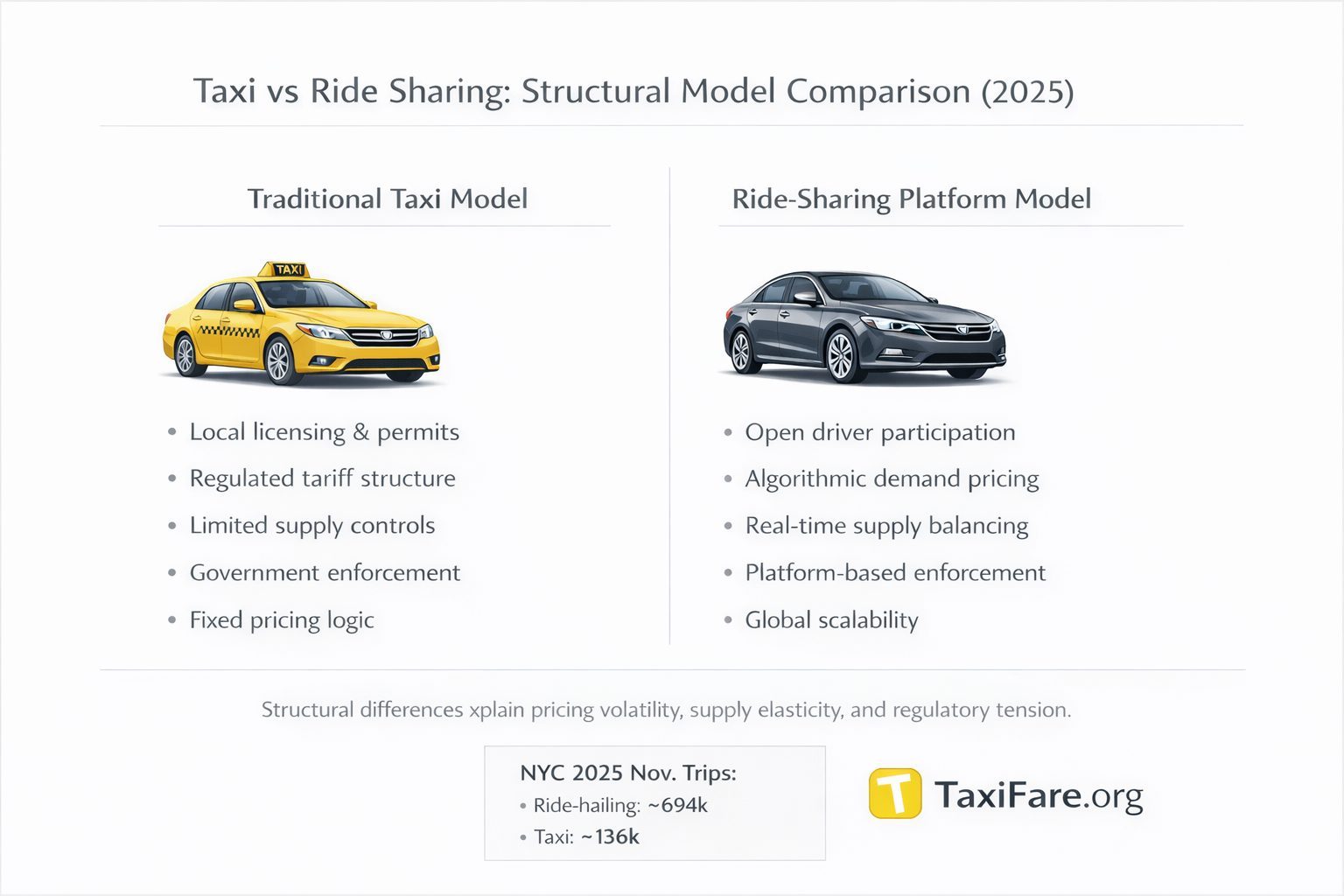
In many cities, airport taxis use:
- Flat fares from airport to city zones (for example, JFK–Manhattan has a fixed rate; cities like Tokyo and London publish standard airport fares).
- Regulated meters with fixed per-mile and per-minute rates, plus clearly listed surcharges.
That means when rideshare prices spike, taxis suddenly become the value option. You’re not fighting an algorithm; you’re paying a published tariff. For the true cost of airport taxis, that transparency matters.
But taxis have their own hidden costs:
- Time in line – At busy airports, you might wait 15–30 minutes in the taxi queue. If you’re exhausted or on a tight schedule, that wait has a real cost.
- Traffic risk – On metered rides, heavy traffic can push the fare up. Flat fares avoid this, but not every airport offers them.
- Luggage and extras – Some countries charge per bag or for late-night rides. Others include everything. You need to know which system you’re walking into.
When I lean taxi:
- When the airport has a known flat fare to the city center.
- When the rideshare app is surging or looks suspiciously high.
- When I want to lock in a price and stop thinking about it.
The irony? The old-fashioned
taxi is often the modern traveler’s best hedge against algorithmic price swings and airport transportation price traps.
3. Shuttles and “Cheap” Shared Rides: Are You Paying in Time Instead?
Airport shuttles and shared rides look fantastic on paper. The price per person is low, the marketing screams budget-friendly,
and if you’re solo, it can feel like a no-brainer.
But before I book one, I run through a quick mental checklist:
- How many stops? A 30-minute direct ride can turn into 75 minutes if you’re the last drop-off.
- What’s my arrival time? Late-night or early-morning shuttles may run less frequently, which can mean long waits.
- Where’s the pickup? Some shuttles require you to find a specific counter, wait for a group, then walk to a distant bay.
- What’s the real per-person cost? For two or three people, a taxi or rideshare split might be only slightly more expensive but far faster and more comfortable.
With shuttles, the hidden cost usually isn’t money. It’s time, predictability, and control. If you’re on vacation and don’t care when you arrive, that might be fine. If you’re jet-lagged, on business, or traveling with kids, that trade-off can feel brutal.
My rule of thumb: I only choose shuttles when:
- I’m solo and not in a rush.
- The price difference vs taxi or rideshare is big enough to justify the extra time.
- The shuttle has a clear schedule and solid reviews (I always skim recent comments).
When you compare airport shuttle vs rideshare pricing, remember: the receipt shows dollars, not the extra hour you spent circling hotels.
4. Traveling as a Group or Family: When “Expensive” Private Transfers Win
Private transfers look pricey at first glance. You see a quote that’s $20–$50 more than a taxi and think, No way.
But if you’re not traveling alone, that first impression can be very wrong.
Here’s what private transfers often include:
- Meet-and-greet in the arrivals hall with your name on a sign.
- Flight tracking so the driver adjusts for delays.
- Help with luggage from baggage claim to the car.
- Guaranteed vehicle size for families, groups, or lots of bags.
- Fixed price regardless of traffic or time.
Now imagine you’re a family of four:
- Two taxis or an XL rideshare might cost almost as much as a private transfer.
- Everyone is tired, maybe jet-lagged, maybe with kids melting down.
- You still have to find the pickup zone, manage bags, and hope the car is big enough.
In that scenario, the expensive
option can actually be the cheapest per person once you factor in time, stress, and reliability. For late night airport ride costs or high-stakes trips, that peace of mind is worth a lot.
When I book a private transfer:
- When I’m arriving late at night in an unfamiliar city.
- When I’m with family, a group, or carrying bulky gear.
- When I absolutely cannot afford a pickup failure (important meetings, tight schedules).
The hidden cost here is psychological: we see a higher upfront number and ignore the hidden costs of everything else.
5. Luggage, Lines, and Walking: The Costs You Don’t See on the Receipt
Most people only compare the number on the screen or the meter. Over time, I’ve learned to factor in the invisible
costs too when I’m doing my own airport transfer cost guide in my head.
Luggage policies
- Some taxis charge per extra bag or for oversized items.
- Some private transfers add fees for sports gear, strollers, or extra suitcases.
- Rideshares usually don’t charge per bag, but you’re gambling on trunk space unless you book a larger category.
Pickup location and walking time
- Rideshares are often pushed to remote pickup zones or separate lots. At some airports, you need a shuttle just to reach them.
- Taxis are usually right outside baggage claim.
- Shuttles may have counters in a different terminal or require you to wait in a specific area.
If you’re tired, carrying heavy bags, or traveling with kids or older relatives, that extra 10–15 minutes of walking and waiting is not free. It’s just not printed on the receipt.
Time vs money trade-off
I ask myself one simple question: How much is 30 minutes of my time worth on this trip?
- If I’m on vacation and relaxed, I might trade time for money and choose the slower, cheaper option.
- If I’m on business or exhausted, I’ll pay more to get moving quickly.

6. The Smart Traveler’s Checklist: How to Avoid Getting Burned
Instead of asking, Is Uber cheaper than a taxi?
I ask: What’s cheapest for this exact trip, right now?
The answer changes by city, time, and context (example comparison).
Here’s the quick decision process I use every time I land to avoid cheap airport transfer mistakes and airport transport ripoffs:
- Check rideshare prices first
Open Uber/Lyft and note:- Current fare estimate.
- Any surge indicators.
- Pickup location (how far do I have to walk?).
- Compare with taxi costs
Before I fly, I usually look up:- Official airport taxi flat fares or zone pricing.
- Approximate meter cost using a taxi fare calculator.
- Factor in group size
- Solo: rideshare or shuttle can be cheapest off-peak.
- 2–4 people: splitting a taxi or private transfer often beats everything else.
- Decide how much your time is worth today
- Need speed and simplicity? Taxi or pre-booked transfer.
- Flexible and budget-focused? Rideshare or shuttle.
- Watch for airport tricks
- Some airports let you walk just outside the rideshare geofence (for example, to a nearby hotel) and avoid the airport pickup fees. That can save a few dollars per trip.
- Some airports have minimum taxi fares that make very short rides disproportionately expensive.
The goal isn’t to always pick the absolute cheapest option. It’s to avoid the fake cheap option that looks good upfront and punishes you later with time, stress, or surprise fees.
7. So Which One Should You Choose Next Time You Land?
If I had to boil it down, here’s how I think about the taxi vs rideshare from airport debate, plus shuttles and private transfers:
- Rideshares – Best for solo travelers or couples during off-peak times, when surge is low and you don’t mind walking to a pickup zone.
- Taxis – Best when there’s a flat airport fare, when rideshare is surging, or when you want to get moving immediately without app drama.
- Shuttles – Best when you’re very price-sensitive, not in a rush, and traveling solo.
- Private transfers – Best for families, groups, late-night arrivals, or high-stakes trips where certainty and comfort matter more than shaving off a few dollars.
The hidden cost of airport transport isn’t just in the fare. It’s in your time, your stress level, your luggage, your group size, and how much unpredictability you’re willing to tolerate after a flight.
Next time you land, don’t just tap the first cheap
option you see. Pause for 30 seconds, run the numbers, and ask yourself: What is this really going to cost me?