Choosing the Right Category: Why This Is a Cost Guide, Not Just Inspiration
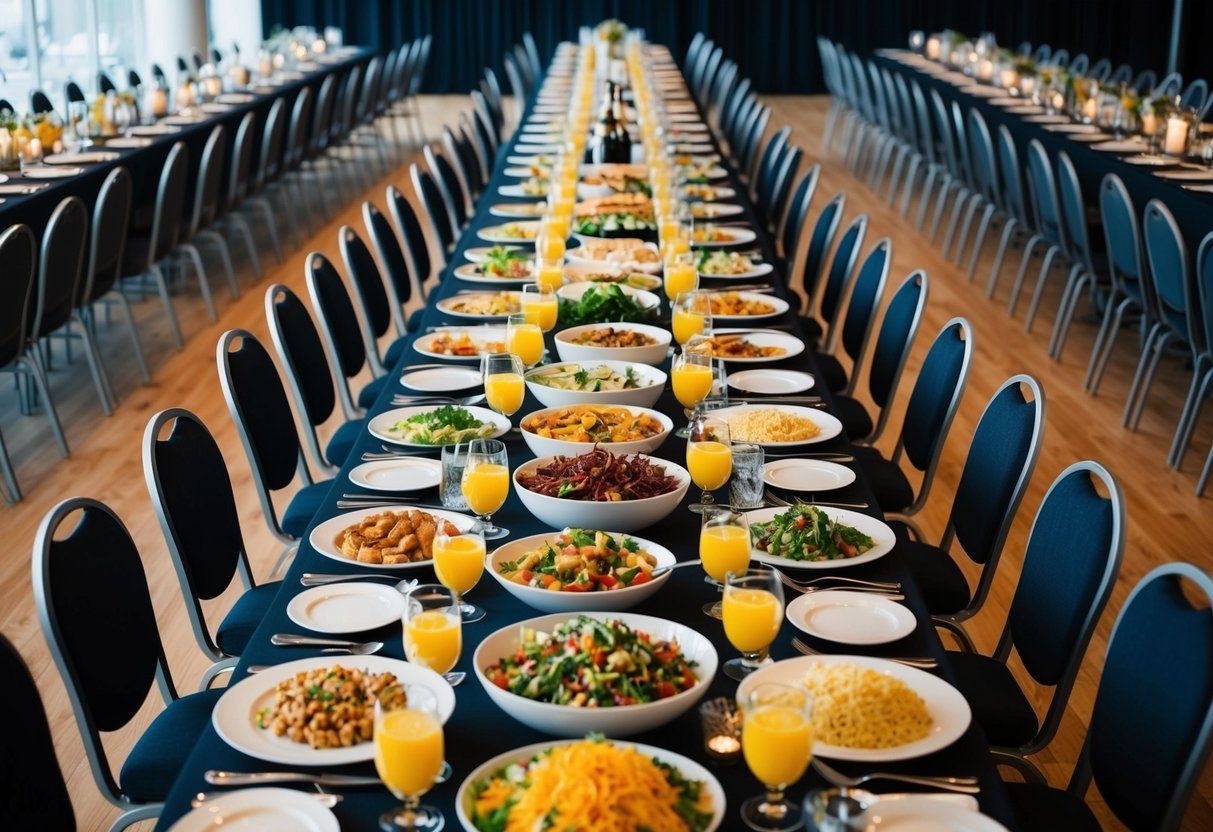
All-inclusive resorts look simple: one price, everything included. But once you bring 100 guests for a wedding, retreat, or family trip, the math changes. It starts to feel less like a vacation and more like planning catering for a 100-person event.
This article is a Cost Guide first. Every section walks through a decision that can move your total bill up or down.
I use ideas from 100-guest catering economics (buffets, staffing, bar, and hidden fees) and apply them to all-inclusive resorts. The goal is not to chase the lowest price on paper. The goal is to see which choices actually change your total spend and where hidden costs show up.
Key assumptions for this guide:
- Group size: about 100 guests (wedding, family reunion, corporate offsite).
- Resort type: mainstream all-inclusive (Caribbean, Mexico, similar markets).
- Focus: how choices about food, drink, service level, and event structure change total cost.
Decision 1: PerPerson Rate vs. Real Total Cost for 100 Guests
In catering, the main rule is simple: per-person price times headcount drives almost everything. All-inclusive resorts work the same way, but the pricing is less obvious.
Resorts usually show a nightly rate per person that includes room, food, and drinks. With 100 guests, even a small change in that rate adds up fast. A $20 difference per person per night over three nights is $6,000. That is like upgrading an entire buffet tier for 100 people.
To make this easier to see, think in terms of a simple cost structure:
| Component | How it scales with 100 guests | Resort analogue to catering |
| Base room + food + standard drinks | Almost perfectly linear with guest count and nights | Like a basic buffet package per person |
| Premium food options | Linear, but often bundled into higher room categories or add-on events | Like upgrading from simple buffet to formal buffet |
| Staffing & service | Partly fixed (minimum staff) and partly variable (extra servers, bartenders) | Similar to adding servers or chef stations |
| Bar upgrades | Highly sensitive to consumption and package type | Equivalent to open bar vs. cash bar decisions |
| Fees & taxes | Often a percentage of the above | Like service charges and gratuities |
The key move: do not compare resorts on nightly rate alone. You need to estimate the total cost of ownership for 100 guests, including:
- Base all-inclusive rate (rooms + standard food + standard drinks).
- Required event packages (for weddings, meetings, or private dinners).
- Service charges, resort fees, and local taxes.
- Transportation if bundled (airport transfers, shuttles).
Trade-off: a resort with a higher base rate but more inclusive event packages can cost less overall than a cheaper resort that charges extra for every private function.
Decision 2: Buffet-Style All-Inclusive vs. Premium Dining Upgrades
Catering data shows that service style is a major cost driver. Buffets usually cost less per person than plated meals because they need less labor and less detailed plating. All-inclusive resorts follow the same logic. The default is buffet and casual dining. Premium meals sit on top as upgrades.
For a 100-person group, you are basically choosing between:
- Standard all-inclusive buffet model: large buffets, casual restaurants, and included snacks.
- Hybrid model: standard buffets plus a limited number of e0 la carte or specialty restaurant reservations.
- Event-style premium dining: private receptions, plated dinners, chef stations, or beach banquets.
From a cost angle, the trade-offs look like catering tiers:
- Standard buffet-style all-inclusive is like a basic buffet package for 100 guests: efficient, predictable, and low labor per guest.
- Premium dining events are like formal buffet or plated service: more staff, more planning, and higher ingredient costs.
Why this matters for value:
- If your group is happy with shared buffets and casual meals, you can keep most dining inside the base rate and avoid big add-ons.
- If you want several private, plated, or highly customized meals, you are adding a second catering budget on top of the resort stay.
Hidden cost risk: resorts say food is included, but private group meals, special menus, and exclusive venues usually cost extra. For 100 guests, even a small per-person fee for a private dinner can match the cost of an extra night at the resort.
Decision 3: Bar Structure Open, Limited, or Event-Only?
In classic catering, bar choices (open vs. cash vs. limited) can add 2025% or more to the bill. All-inclusive resorts seem to solve this by including drinks in the nightly rate. For groups, it is more complicated.
Key bar decisions at all-inclusive resorts:
- Standard vs. premium alcohol tiers: base packages may include local brands, with extra charges for premium labels.
- Event bar packages: private receptions often need separate bar setups, even at an all-inclusive resort.
- Time-limited vs. unlimited event bars: some packages limit hours or drink types.
To control cost, think about who carries the risk:
- Fully open, premium-inclusive model: higher base rate but predictable; the resort has priced in heavy drinking.
- Standard-inclusive with premium event bars: lower base rate, but you carry the risk of high drinking during private events.
- Hybrid with time-limited or drink-limited event bars: you give up some flexibility to gain cost control.
The catering parallel is clear: an all-day open bar for 100 guests is expensive because you cannot predict consumption. Resorts manage this by:
- Limiting premium options to certain venues or times.
- Charging extra for private bar setups at events.
- Using time windows (for example, 23 hour reception bars) to cap risk.
Decision implication: when you compare resorts, ask exactly how bar service works for private group events. A resort that includes standard drinks everywhere but charges a lot for event bars can cost more than a place with a higher base rate but more inclusive event packages.
Decision 4: Package Tiers vs. Custom Add-Ons for Group Events
Catering for 100 guests often comes in tiers (basic, standard, premium) that bundle food, bar, staff, and rentals. All-inclusive resorts do something similar for weddings and group events. You pick event packages on top of the all-inclusive stay.
Typical structure for 100-guest resort events:
- Entry-level event packages: basic ceremony setup, simple reception, limited private time, and standard menus.
- Mid-tier packages: better menus, longer private event time, more decor, and sometimes better bar options.
- Premium packages: several events (welcome party, rehearsal, reception, farewell brunch), premium menus, and longer private venue use.
The trade-off is between simplicity and control:
- Packages make planning easier but can hide line-item costs, so it is harder to compare resorts.
- Custom add-ons give you control but can pile up like catering surcharges: extra hours, extra staff, upgraded menus, and decor.
From a decision point of view, the best value for 100 guests usually comes from:
- Picking a package that covers the core events you truly need (for example, ceremony + main reception).
- Adding only a few upgrades that clearly improve guest experience (for example, one standout premium dinner instead of many small tweaks).
- Watching small per-person upgrades, because they turn into thousands of dollars at 100 guests.
This follows the catering lesson that small per-guest upgrades add up fast. A single step up in menu or bar quality can make sense. Stacking several upgrades (premium menu + longer bar + extra events) can push you into a much higher price range.
Decision 5: Staffing, Service Level, and Operational Risk
In catering, drop-off service costs less because there is no on-site staff or rentals, but you take on more risk as the host. All-inclusive resorts flip this. Staff is built into the model, but service level changes by resort and package, and some risks still sit with you.
Key service-level choices for 100 guests:
- Standard resort service vs. dedicated group coordinators: some resorts only include a coordinator with higher-tier packages.
- Shared venues vs. fully private spaces: private spaces often need extra staff and setup fees.
- Basic buffet service vs. enhanced staffing: more servers, bartenders, or chefs for private events.
Trade-offs:
- Lower-tier packages save money but push more logistics onto you or your team (timelines, guest flow, special requests).
- Higher-tier packages cost more but lower operational risk, like full-service catering where the vendor handles setup, service, and cleanup.
With 100 guests, under-staffing is a real risk: long buffet lines, slow bar service, and trouble handling dietary needs. These are not just comfort issues. They can lead to last-minute staffing add-ons or overtime charges.
Decision implication: when you judge value, ask how many staff your events get, what setup and teardown include, and how overtime works. A resort that looks cheaper but under-staffs events can create service problems and surprise fees.
Decision 6: Hidden and Add-On Costs That Distort Value
Catering research shows that hidden feesdelivery, setup, extra staff, service charges, and baroften add 2025% or more to the food subtotal. All-inclusive resorts have their own add-ons that can change the final bill for 100 guests.
Common hidden or semi-hidden costs at all-inclusive resorts:
- Service charges and resort fees: often a percentage of event packages or room revenue.
- Private venue fees: charges for exclusive use of a beach, terrace, ballroom, or restaurant.
- Setup and teardown fees: especially for complex decor or unusual locations.
- Overtime charges: if events run past the agreed hours.
- Minimum spend requirements: for certain venues or time slots.
- External vendor fees: if you bring your own photographer, DJ, or planner.
These costs act like catering surcharges that sit on top of the per-person food price. For 100 guests, even small percentages or flat fees can be significant.
To handle this, treat the resort proposal like a catering quote and ask for:
- A line-item breakdown of all event-related charges.
- Clear notes on what is included vs. what counts as extra.
- Written rules on overtime, guest count changes, and cancellations.
The value question is not just about the base rate. It is about how much of your spend is fixed vs. exposed to surcharges. A resort with a slightly higher base price but fewer add-ons can be a better deal than one that relies on upsells and layered fees.
Decision 7: Portion Planning, Waste, and Overbuying Upgrades
In catering, a common rule of thumb is about 1.5 pounds of food per person. If you overestimate, you waste food and money. At all-inclusive resorts, food is technically unlimited, but the same idea applies to paid upgrades and private events.
For 100 guests, the main risk is not running out of food. The real risk is buying more premium experiences than guests can actually enjoy. Examples:
- Several private dinners when one or two would be enough.
- Very long bar hours when most guests leave early.
- Top-tier menu upgrades for every event instead of focusing on one standout meal.
Decision implication: use portion-planning logic on your event schedule:
- Pick the high-impact moments (for example, main reception, one signature dinner) and spend upgrade budget there.
- Keep other meals inside the standard all-inclusive options.
- Be honest about guest energy and habits; late-night events or very long receptions may not be fully used.
This is the same as efficient catering: you spend where it matters and avoid paying for extras that do not improve the guest experience.
Risk and Uncertainty: Where All-Inclusive Value Can Break Down
Even with careful planning, some uncertainties can change the value of an all-inclusive resort for 100 guests. These look a lot like the risk factors in large-group catering.
Guest Count Volatility
In catering, guest count is the main cost lever. At resorts, contracts often need final numbers by a set date and may penalize late changes. If your real attendance is far off from your forecast, you may face:
- Minimum charges based on the contracted headcount.
- Fees for last-minute additions or reductions.
Consumption Uncertainty
All-inclusive pricing assumes an average level of food and drink. For private events, heavy drinkers or long hours can push bar costs up if you use a separate event bar package. If your group drinks very little, you may overpay for premium-inclusive tiers.
Operational Disruptions
Weather, venue issues, or local rules can force changes to outdoor events or timing. This can lead to:
- Relocation fees or extra setup costs.
- Shortened schedules that reduce the value of paid event hours.
Policy and Fee Changes
Resorts can change policies, menus, or fees between booking and arrival. Without clear contract terms, you may have little leverage if inclusions shift.
To manage these risks, use the same discipline you would with a professional catering contract:
- Lock in key terms (guest count windows, bar structure, venue fees) in writing.
- Clarify what happens in common disruption cases (weather, schedule changes).
- Keep a contingency buffer in your budget for overruns.
Practical Framework: Comparing All-Inclusive Value for 100 Guests
To compare resorts clearly, treat each one like a bundle of catering-style decisions. For each resort, map out:
- Base per-person, per-night rate and what it truly includes.
- Event package structure: which meals and events are private vs. shared.
- Bar model: standard vs. premium, and how private event bars are priced.
- Staffing and service level: coordinator support, staff counts, and overtime rules.
- Hidden fees: service charges, venue fees, and vendor policies.
- Risk factors: guest count flexibility, weather backup plans, and policy stability.
Then, instead of asking Which resort is cheapest?, ask:
- Which resort gives the most predictable total cost for my 100-guest plan?
- Where do I get the highest impact per dollar for guest experience?
- Which option keeps me safest from hidden fees and operational risk?
If you think like a catering planner for 100 guests, you can see past the simple all-inclusive label and make choices that align cost, value, and risk for your group.