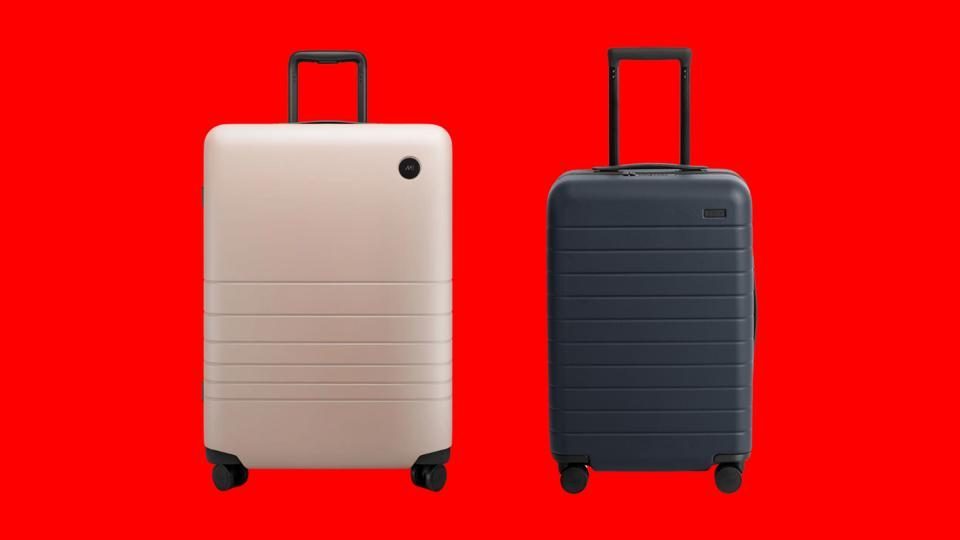
I don’t start with flights when I plan a trip. I start with bags.
Why? Because baggage choices can quietly add hundreds of dollars to a trip, especially for families or long-haul travel. Once you see how much those fees stack up, you start treating luggage like a puzzle you can actually solve.
This playbook walks through the four big options — carry on, checked, ship, or buy at destination — and when each one really saves you money (and sanity).
1. The Core Decision: What Are You Really Optimizing For?
Before you obsess over suitcase size, ask yourself one blunt question:
Am I optimizing for cash, time, or comfort on this trip?
You rarely get all three. Most baggage strategies lean toward one or two:
- Carry-on only: Best for saving time and reducing stress. Often cheaper, but not always.
- Checked bag: Best for comfort and capacity. Can be a money trap if you ignore fees and weight limits.
- Ship luggage: Best for convenience with heavy or multiple bags, and sometimes for cost on long or international trips.
- Buy at destination: Best when baggage fees are ridiculous and what you need is cheap and easy to replace.
Once you know your priority, the rest of the decisions get much easier. Your baggage strategy to save money will look very different if you’re a solo traveler on a weekend hop versus a family of four on an international flight.
2. Carry-On Only: When Traveling Light Actually Saves You Money
Carry-on only sounds like a minimalist fantasy, but it’s not automatically the cheapest move. It is often the smartest when:
- You’re on a short trip (weekend to 5–7 days) and can re-wear outfits.
- You’re flying airlines that charge for checked bags but still allow a free carry-on.
- You value fast exits from the airport and hate baggage claim roulette.
Carry-ons shine for:
- Time savings: No check-in line for bags, no waiting at the carousel. You walk off the plane and go.
- Lower risk: Airlines can’t lose what never leaves your side.
- Predictable costs: On many non–ultra-low-cost carriers, a standard carry-on is still free, which can tilt the checked bag vs carry on cost in your favor.
But there are catches:
- Liquid rules: You’re stuck with the 3.4-ounce (100 ml) TSA limit in a quart-sized bag. That often means buying full-size toiletries at your destination.
- Strict dimensions: Some budget airlines charge more for a carry-on than a checked bag and enforce size limits aggressively at the gate.
- Gate-check surprises: If overhead bins fill up, you may be forced to gate-check your bag — sometimes with fees, sometimes without.
My rule of thumb: if I can pack for the whole trip in a carry-on without needing a second bag or paying a carry-on fee, I do it. That’s where carry on only travel cost savings really show up. If I’m already flirting with overweight or extra-bag territory, I start comparing checked vs shipping.
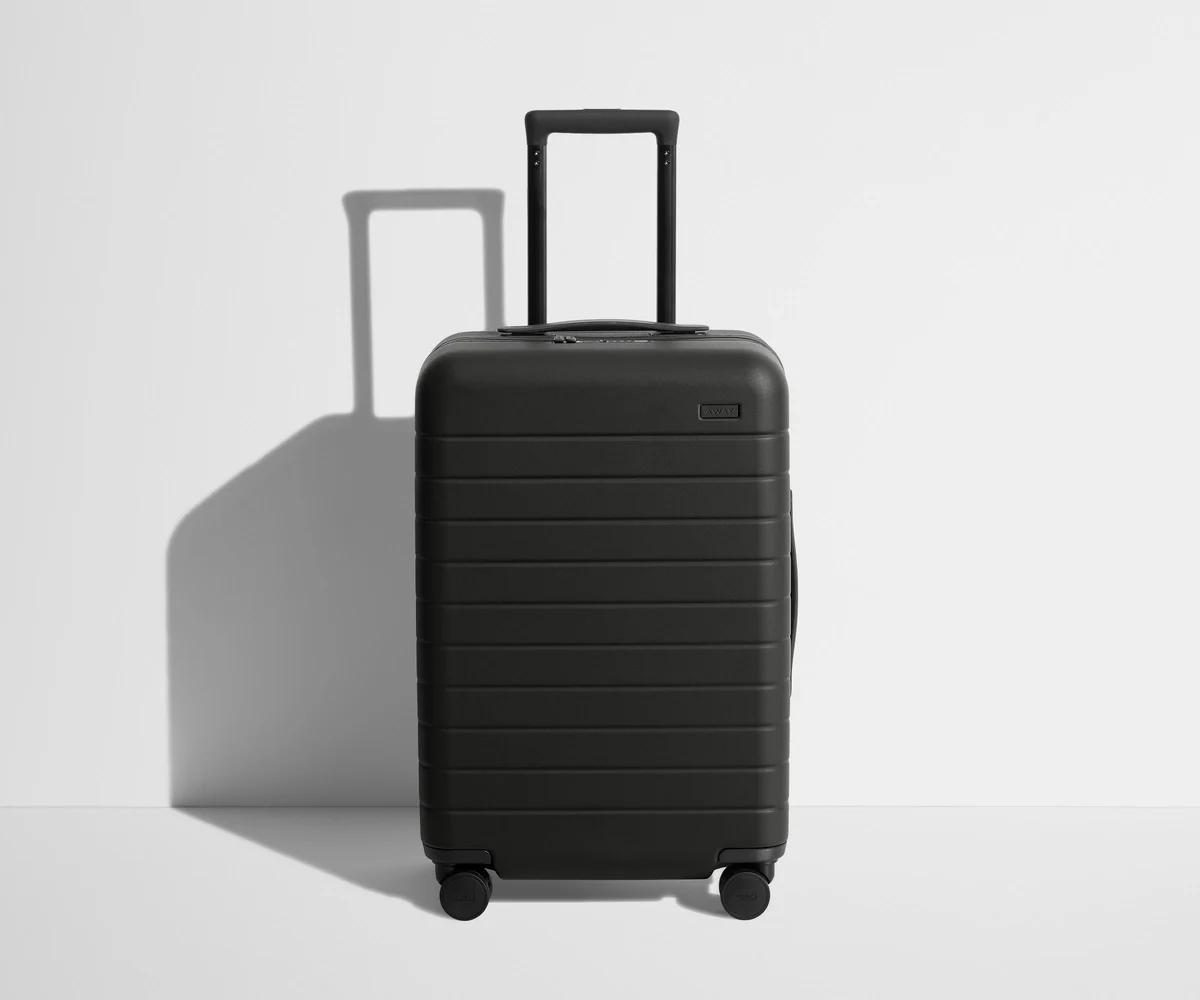
Pro tip: Use packing cubes and an expandable carry-on. Pack it compressed on the way out, then expand for souvenirs on the way back. And wear your bulkiest shoes and jacket on the plane.
3. Checked Bags: When Paying the Fee Is Actually the Smart Move
Checked bags get a bad reputation, but sometimes they’re the most rational choice in a cost effective luggage strategy.
As of 2026, most major U.S. airlines charge around $45–$50 for the first checked bag each way, with small discounts if you prepay online. Ultra-low-cost carriers (Frontier, Spirit, Allegiant, etc.) can charge more, and their pricing is dynamic — it changes by route, date, and when you add the bag.
Checking a bag makes sense when:
- You’re on a long trip (10+ days) or traveling with kids and gear.
- You’re flying internationally and your fare includes at least one free checked bag.
- You have elite status or a co-branded credit card that gives you and companions free checked bags.
- You’re carrying items that can’t go in the cabin (certain sports gear, larger liquids, some equipment).
Where people get burned isn’t the base fee — it’s the overweight and oversize penalties. Most airlines cap standard checked bags at about 50 lbs (23 kg) and 62 linear inches. Go over that and you can easily add $50–$200 per bag each way.
So a “cheap” $50 checked bag can quietly become a $200 problem if you:
- Pack one giant, heavy suitcase instead of two lighter ones.
- Don’t weigh your bag at home.
- Assume international flights always include free bags (they don’t; it depends on route and fare type).
Hybrid strategy I use a lot:
- One carry-on with 2–3 days of clothes, meds, valuables, and essentials.
- One checked bag with everything else.
If the checked bag is delayed, I’m mildly annoyed, not stranded.
Before you book, check the airline’s baggage page directly (not just the booking site). Many carriers now hide fees behind calculators and dynamic pricing tools — especially Delta, United, JetBlue, Frontier, and Spirit. The fare that looks cheapest on a search engine often isn’t once you add realistic baggage costs and look at the full checked luggage cost breakdown.
4. Shipping Your Luggage: The Underrated Move for Heavy or Multi-Bag Trips
Most travelers don’t even consider shipping their luggage. They should, especially when airline baggage fees start to look painful.
Services like LuggageToShip, LugLess, MyBaggage, and SendMyBag partner with FedEx, UPS, DHL and others to move your bags door-to-door. You drop them off or schedule a pickup; they show up at your hotel, Airbnb, or dorm.
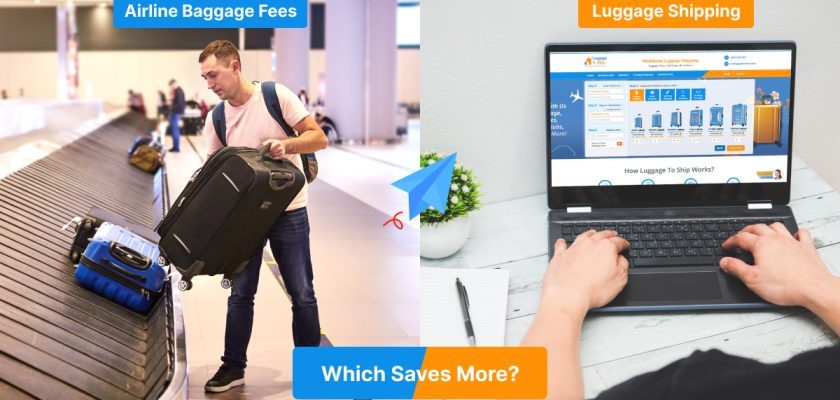
When does shipping start to win financially in a luggage shipping cost comparison?
- When you have multiple bags or very heavy bags that would trigger airline overweight fees.
- When you’re doing a long stay (study abroad, seasonal work, moving cities).
- When you’re carrying bulky items (sports gear, equipment) that airlines treat as oversized.
Typical ranges from the research:
- Airline first checked bag: about $30–$50 each way on many routes.
- Shipping: often $40–$60 per bag for standard speeds, sometimes less for slower services or shorter distances.
- Example: a 40 lb bag from New York to Chicago in two business days via FedEx can be around $49.70. Faster options can jump above $300.
So no, shipping is not automatically cheaper. But it can be a bargain when:
- Your airline charges brutal overweight fees (e.g., $100+ per bag).
- You’d otherwise need to check three or four bags.
- You value walking through the airport hands-free more than you value having your stuff immediately on landing.
Non-money benefits I really like:
- Less airport friction: No wrestling suitcases through security or to the hotel.
- Tracking and insurance: Often clearer and more generous than airline compensation for lost bags.
- Direct delivery: To dorms, hotels, and Airbnbs — especially nice for students and long-term stays.
But there are trade-offs:
- You need to plan ahead. Last-minute shippers pay rush premiums.
- You need someone to receive the bag or a safe place for drop-off.
- Delays can be more annoying if you arrive before your stuff.
My approach: if I’m traveling with more than two checked-size bags or anything very heavy, I run the numbers with a shipping vs checked baggage calculator. If shipping is within 10–15% of the airline cost but saves me a ton of hassle, I usually ship.
5. The “Buy at Destination” Strategy: When Packing Less Beats Paying More
This is the strategy most people underestimate.
Sometimes the cheapest move is to not bring the thing at all.
Ask yourself:
If I didn’t pack this, could I buy a decent version at my destination for less than the baggage fees it triggers?
Examples where buying at destination often wins in the travel packing vs buying at destination debate:
- Toiletries: Full-size shampoo, conditioner, sunscreen. These are heavy, liquid, and cheap almost everywhere.
- Beach gear: Towels, cheap flip-flops, inflatable toys. Often cheaper to buy locally than to pay for an extra bag.
- Basic clothing: Extra T-shirts, socks, underwear. If you’re going somewhere with normal retail, you can top up on arrival.
Where this strategy fails:
- Remote destinations with limited shopping or very high prices.
- Specialty gear (technical hiking equipment, custom sports gear) that’s expensive or hard to find.
- Trips where you care a lot about specific brands or fits.
My rule: if an item is cheap, bulky, and replaceable, I lean toward buying it there instead of paying to haul it. If it’s expensive, hard to replace, or critical (medications, glasses, electronics), it comes with me — usually in my carry-on.
6. Airline Fine Print: The Hidden Baggage Costs That Wreck Budgets
Here’s where skepticism pays off. Airlines have made baggage pricing intentionally complex. If you don’t read the fine print, you pay for it.

Things I always check on the airline’s site before I buy a ticket:
- Carry-on rules by fare type: Some “basic economy” fares don’t include a full-size carry-on at all, only a personal item.
- Bag fees by route: Transatlantic, Hawaii, and some international routes have different rules and prices.
- Dynamic pricing: Airlines like JetBlue, United, Delta, Frontier, and Spirit often use calculators instead of simple charts. Fees can change by season, route, and when you add the bag.
- Prepay discounts: Many airlines charge less if you pay for bags online in advance rather than at the airport.
- Weight and size limits: Standard is often 50 lbs and 62 linear inches, but some airlines are stricter.
Also important:
- Round-trip reality: Baggage fees are usually per bag, per direction. A $50 bag is really $100 on a round trip.
- Non-refundable fees: If you cancel your ticket, you usually don’t get baggage fees back unless the airline’s policy explicitly allows it.
- Connecting flights: On a single ticket, your bag usually transfers without extra fees, but mixed carriers and separate tickets can complicate this.
One more angle: credit cards and elite status. A single co-branded airline card that gives you and companions a free checked bag can easily offset its annual fee if you check bags even once a year as a family. Just make sure:
- You book everyone on the same reservation.
- You actually use the card to pay for the tickets if that’s required.
For budget airline baggage strategy in particular, this fine print matters even more. Ultra-low-cost carriers often lure you in with a cheap fare, then make their money on bags and seat selection. Knowing how to avoid airline baggage fees — or at least tame them — is half the game.
7. Putting It All Together: A Simple Baggage Decision Framework
Let’s turn this into something you can actually use when booking.
Walk through these steps:
- List your non-negotiables.
What absolutely must travel with you (meds, work gear, special equipment)? Those go in your carry-on or a carefully planned checked bag. - Check your airline’s baggage policy for your exact route and fare.
Use their calculator or fee chart. Note: carry-on allowance, first and second checked bag fees, overweight/oversize fees, and any free bags from status or cards. - Estimate your realistic luggage.
Not your fantasy version. How many bags, and roughly how heavy? If you’re close to 50 lbs, assume you’ll go over on the way back. - Run the numbers.
Compare:- Carry-on only (plus buying some items at destination).
- Carry-on + checked (hybrid).
- Checked only (if carry-on is restricted or charged).
- Shipping some or all bags vs airline fees.
- Apply the “annoyance filter.”
If two options are within ~10–15% in cost, choose the one that makes your trip feel calmer. Sometimes paying $20 more to avoid dragging two giant suitcases through a subway is the real win.
Here’s how I personally default:
- Weekend or 3–5 days, solo or couple: Carry-on only, buy toiletries there. This keeps your baggage strategy to save money simple and flexible.
- 7–14 days, no kids: Hybrid — one carry-on with essentials, one shared checked bag.
- Family trip with kids: At least one checked bag, but I weigh everything at home and use status/credit card benefits aggressively.
- Long stay or move (students, relocations): Ship heavy stuff, fly with one checked bag + one carry-on of essentials.
Once you start treating baggage as a strategic choice — not an afterthought — a few things happen. Your trips get cheaper. Your airport days feel calmer. And you stop being that person repacking on the airport floor to dodge a surprise overweight fee.
Check, carry on, ship, or buy there — the right mix for you is where cost, comfort, and sanity meet in the middle.