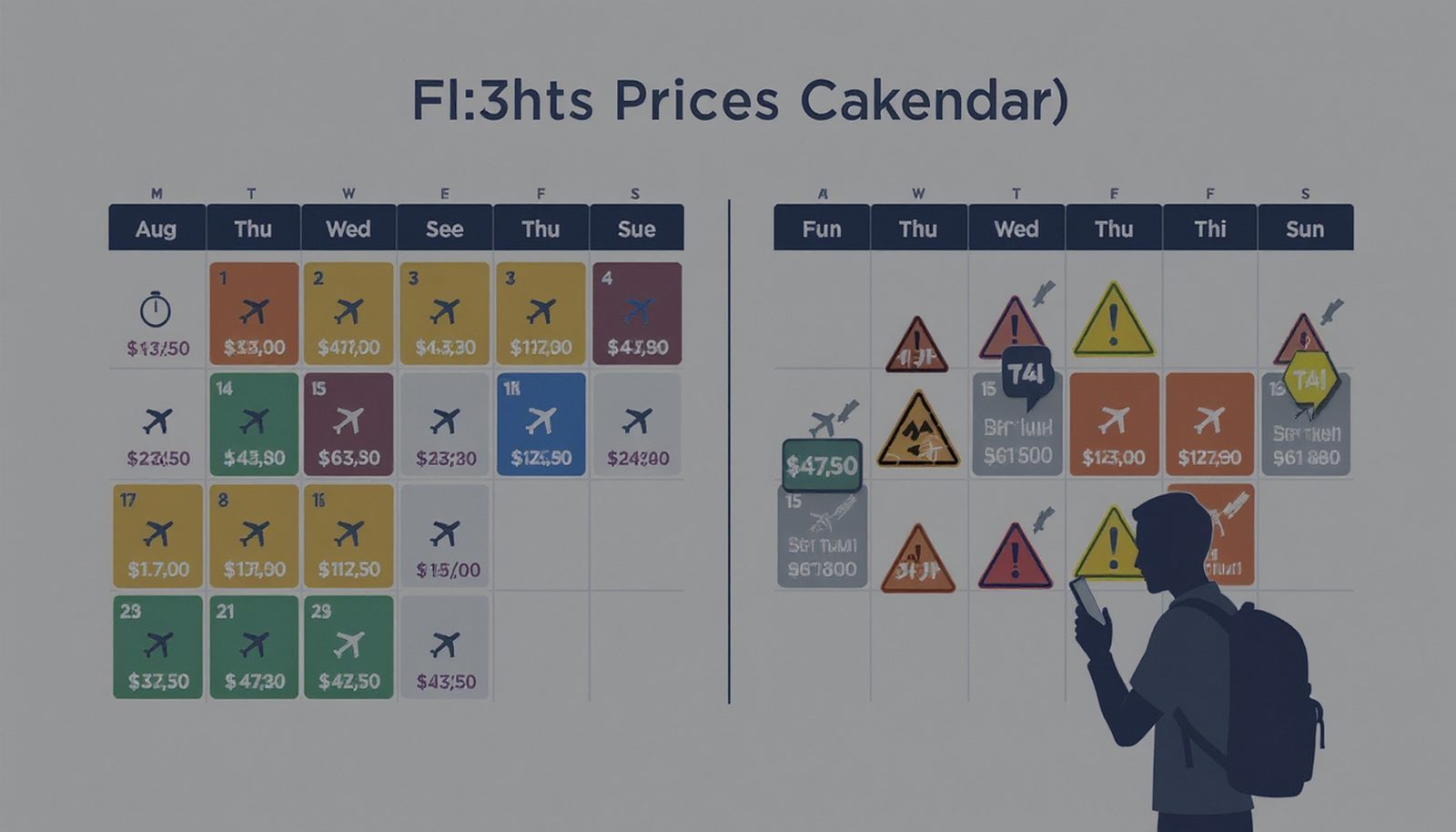
Why “What Day Is Cheapest?” Is Now the Wrong First Question
Many travelers still look for a single “cheapest day” to buy or fly. Under the U.S. Department of Transportation’s (DOT) October 2024 refund rules, the more useful question has shifted from “Which day is cheapest?” to “On which day does a disruption hurt me least financially?”
Previously, airlines could define “significant delay” on their own terms. A Tuesday bargain fare could quietly turn into a Thursday night arrival, and your ability to demand a refund was limited. The new rules standardize what counts as a “significant change” and link it directly to automatic refund rights when you decline rebooking or vouchers.
This reshapes how to think about the “best day” decision. The cheapest day is no longer just about the base fare; it is about how schedule risk, refund triggers, and rebooking penalties interact across the week. To evaluate that, you need to understand how the rules work and how airlines are likely to respond.
How the New DOT Rules Reshape Weekly Flight Risk
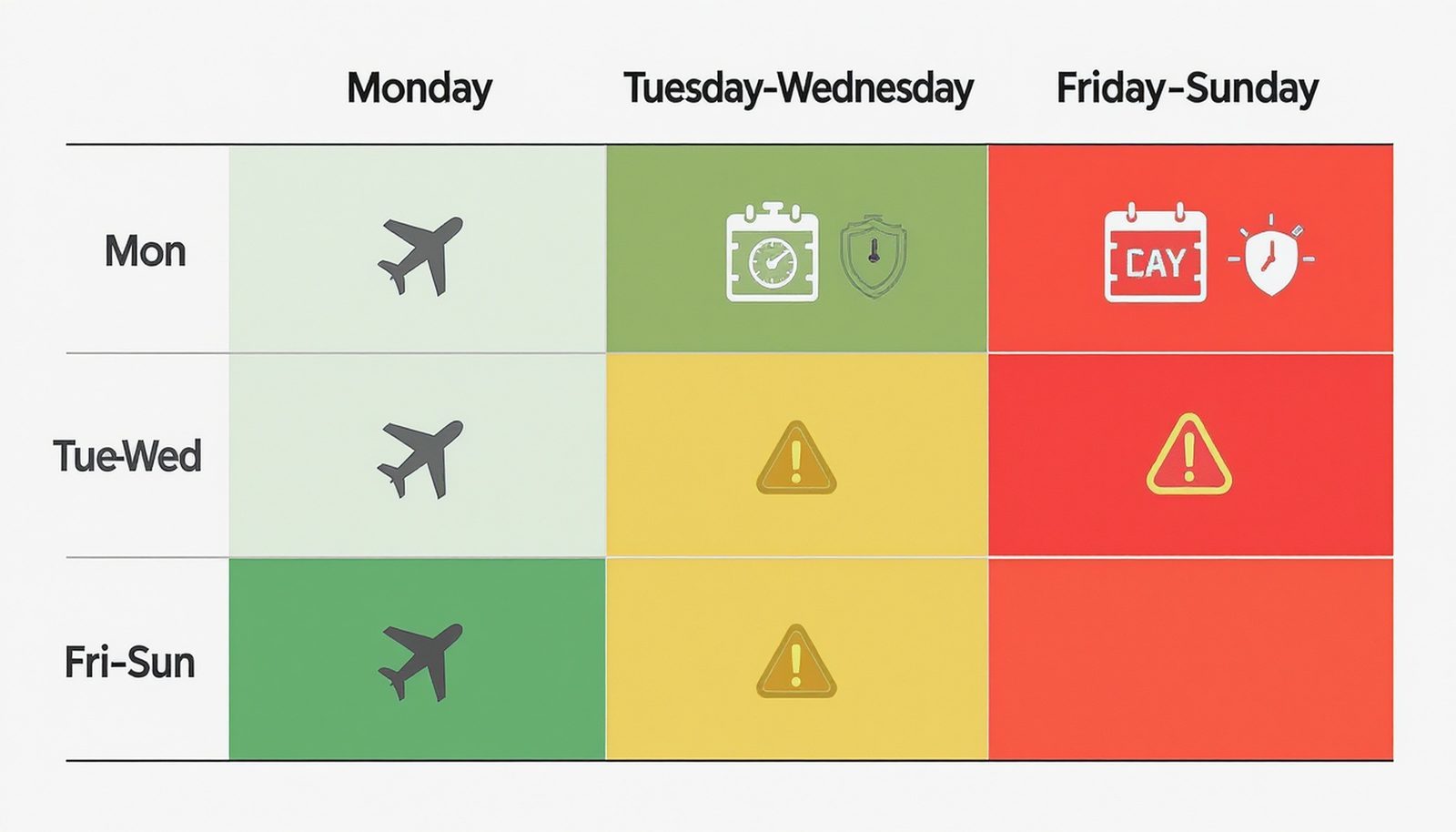
The DOT’s 2024 rules do not control prices, but they change the payoff structure of each travel day by defining when a schedule change becomes a legally meaningful event. A 30-minute shift on a Friday is an annoyance; a 3+ hour shift on a Friday is now a regulatory trigger.
The rules define a “significant change” that can unlock a refund if you refuse alternatives. Key mechanisms include:
- Time thresholds: For U.S. domestic flights, a departure or arrival shift of 3 hours or more is significant. For international flights, the threshold is 6 hours or more.
- Structural changes to the itinerary: A change in origin or destination airport, the addition of a connection, or a downgrade in cabin or class of service all count as significant.
- Accessibility-related changes: If the aircraft or connection changes in a way that undermines accessibility arrangements you relied on, that is also significant.
Once a change crosses these thresholds, the airline must:
- Notify you via your subscribed channels (email, SMS, app).
- Offer rebooking or a voucher.
- Provide a cash refund to the original form of payment if you decline those alternatives.
These rules apply every day of the week, but disruption patterns are not uniform. Weather, congestion, and maintenance backlogs tend to cluster around certain days and seasons. The new rules do not remove that risk; they shift more of the financial consequences to the airline when it materializes—if you choose to use your refund rights.
In practice, the “best day” is the one where the combination of fare level and likelihood of a qualifying disruption gives you the most favorable expected outcome. A slightly more expensive Wednesday flight with lower disruption risk may now be “cheaper” in expected value than a rock-bottom Sunday flight that is more exposed to cascading delays.
Fare vs. Flexibility: Comparing Days of the Week Under the New Rules
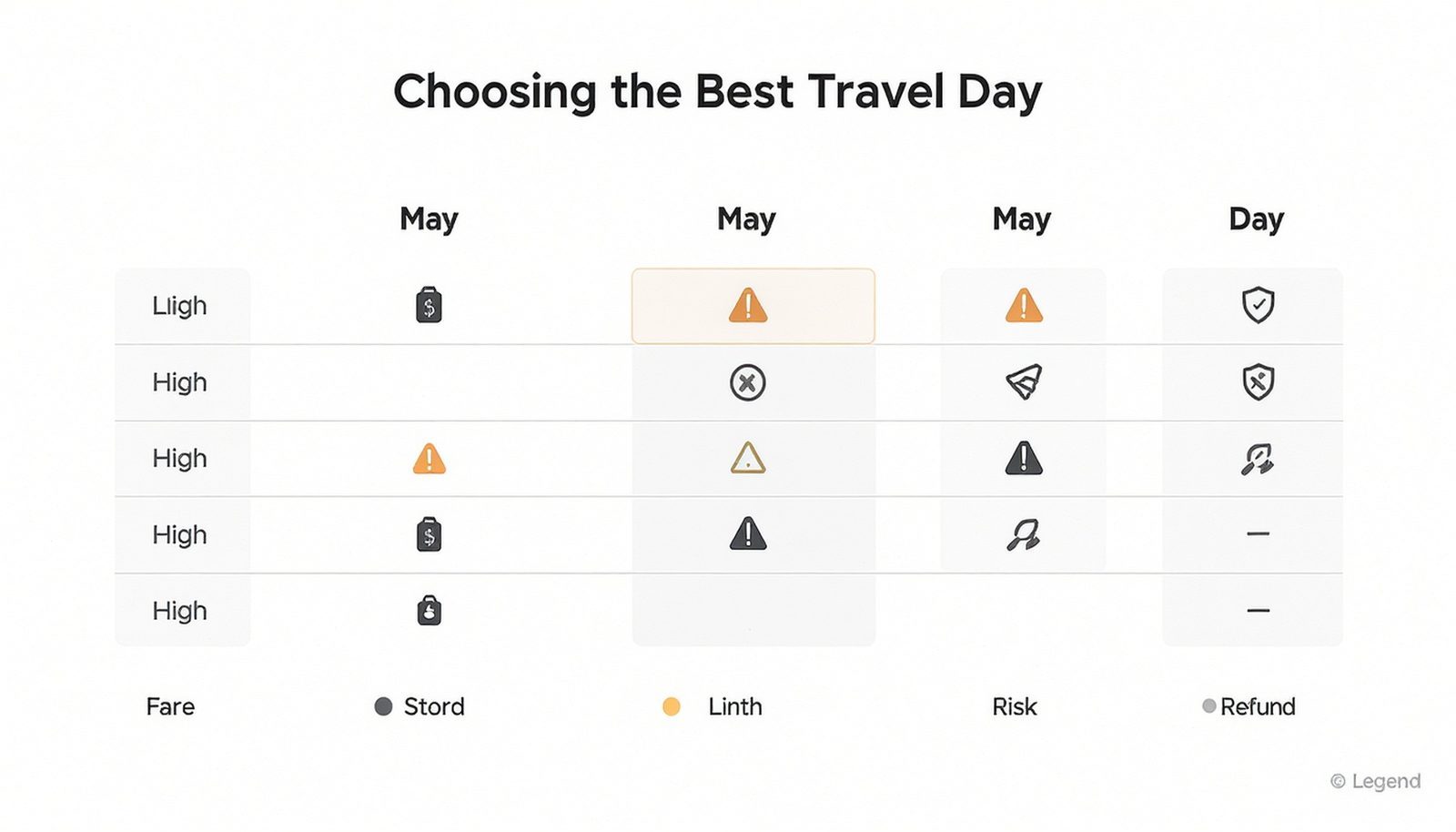
The DOT rules standardize refund triggers but not prices, so airlines still use day-of-week pricing to manage demand. What changes is how much those prices expose you to rebooking penalties and lost flexibility when schedules shift.
The table below illustrates the structural trade-offs by day of week. It does not assign specific prices but shows how the new rules interact with typical patterns.
| Day of Week | Typical Base Fare Pattern* | Disruption Pattern & Refund Implications | Who Usually Bears More Risk? |
| Monday | Often higher for business-heavy routes | Morning congestion and tight business schedules mean a 3+ hour shift can trigger many refund-eligible events, but travelers are more likely to accept rebooking to avoid missing meetings. | Traveler, because they often accept rebooking and forfeit refunds. |
| Tuesday–Wednesday | Frequently among lower-fare days | Less peak congestion on many routes; fewer cascading delays. When a significant change occurs, travelers have more flexibility to decline rebooking and claim refunds. | Airline, because flexible travelers are more likely to insist on refunds. |
| Thursday | Rising fares as weekend demand builds | Start of leisure peaks; disruptions can spill into weekend plans. Travelers may accept vouchers to preserve trips, shifting liability back to themselves. | Mixed; depends on whether travelers prioritize cash refunds or trip continuity. |
| Friday | Often high for both business and leisure | High congestion and weather knock-on effects. Many changes cross the 3-hour threshold, but travelers under time pressure often accept rebooking. | Traveler, due to higher likelihood of accepting alternatives. |
| Saturday | Can be cheaper on some routes | Lower business traffic; some operational slack. Significant changes still trigger refund rights, and travelers may be more willing to decline rebooking. | Airline, when travelers exercise refund rights. |
| Sunday | Often high for return flights | End-of-week congestion and tight Monday commitments. Disruptions are common, but travelers often accept rebooking to avoid missing work. | Traveler, for the same reason as Friday. |
*Patterns vary by route and season; this table describes structural tendencies, not fixed prices.
The key mechanism is behavioral: the rules only convert a significant change into a refund when you decline rebooking or vouchers. On days when travelers feel more time pressure (Fridays and Sundays), they are more likely to accept alternatives, effectively transferring the benefit of the new rules back to the airline.
Departure Time, Rebooking Penalties, and the New Refund Logic
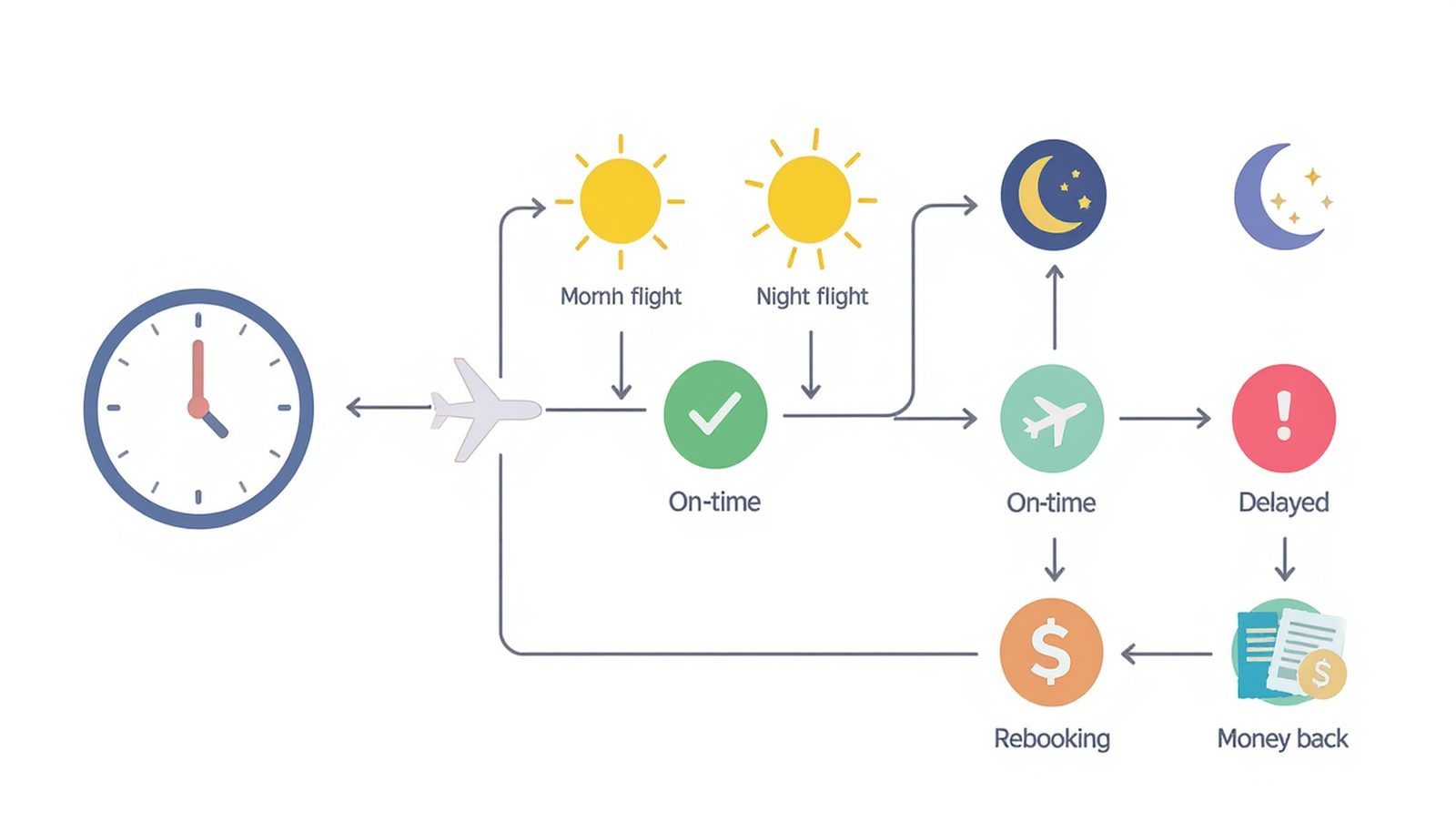
Day of week is only half the equation. The other half is time of day, which shapes both disruption risk and how painful rebooking penalties feel.
Under the new rules, the airline’s ability to charge you change or rebooking penalties depends on who initiates the change and whether the change meets the “significant” threshold:
- If you voluntarily change a nonrefundable ticket and the original flight is operating as scheduled, standard change fees, fare differences, and rebooking penalties still apply. The rules do not make nonrefundable tickets flexible.
- If the airline cancels or significantly changes your flight (3+ hours domestic, 6+ hours international, or other qualifying changes), and you decline rebooking or vouchers, you are entitled to a cash refund with no penalty.
Departure time interacts with this in three ways:
- Morning flights: Often less exposed to same-day cascading delays, but if a morning flight is significantly delayed, you may still be able to salvage the day with rebooking. That makes you more likely to accept rebooking and less likely to exercise refund rights.
- Late-night flights: More exposed to knock-on delays. A 3+ hour shift can push you into the next day, making the trip less useful. In these cases, declining rebooking and taking a refund becomes more rational.
- Connection-heavy itineraries: Added connections or changes to connection points are themselves “significant changes.” If a schedule change forces an extra stop, you can refuse and claim a refund, regardless of the day of week.
From a decision standpoint, the “best day” is often the one where your chosen departure time and connection pattern give you the option value to say no. A cheap Tuesday red-eye with a tight connection may look attractive, but if a small delay pushes you into a missed connection that the airline fixes with an extra stop, you now face a choice: accept the new routing or invoke your refund rights and abandon the trip.
Because the rules require refunds to be issued within 7 business days for credit card purchases and 20 days for other methods, the financial impact of that choice is more predictable. You can treat a late-night, high-risk itinerary as a kind of “option” on a refund: if the airline significantly changes it, you can cash out; if not, you fly as planned.
Ancillary Fees, Baggage Delays, and the Hidden Cost of “Cheap” Days
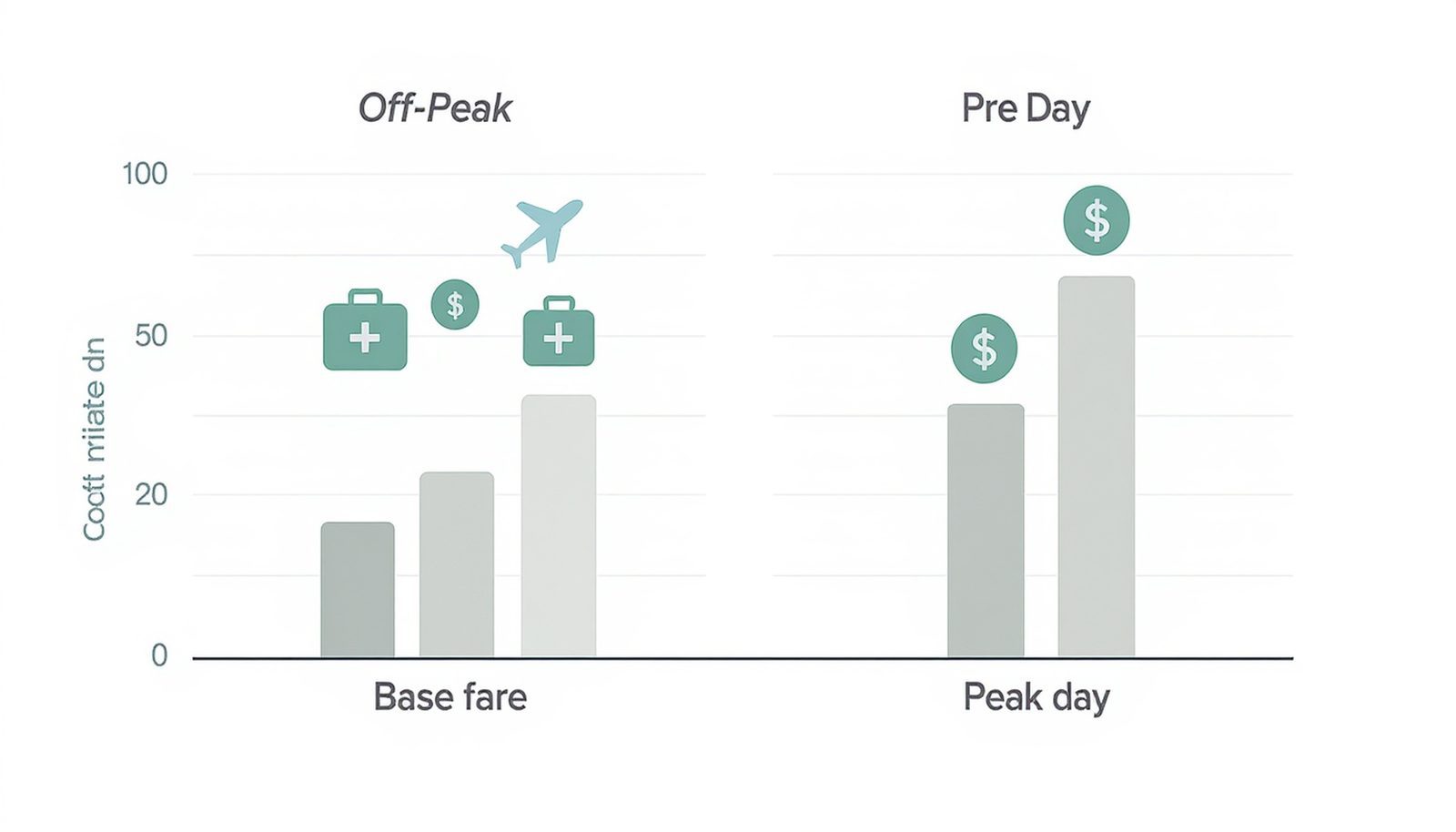
Day-of-week pricing usually highlights the base fare, but airlines increasingly earn revenue from ancillary fees: seat selection, checked bags, Wi‑Fi, priority boarding, lounge access, and more. The new rules extend refund protections to these extras when they are not delivered through no fault of the traveler.
Two mechanisms matter for the “best day” calculation:
- Ancillary service non-delivery: If you pay for a specific seat, Wi‑Fi, or lounge access and the airline fails to provide it (for reasons not caused by you), they must refund that fee. This applies regardless of the day of week.
- Baggage delay thresholds: Checked baggage fees must be refunded when bags are lost or significantly delayed beyond fixed hour thresholds. For domestic flights, that threshold is 12 hours. For international flights, it ranges from 15 to 30 hours depending on flight length.
These rules interact with day-of-week patterns in subtle ways:
- On peak travel days (Fridays, Sundays, holiday eves), baggage systems are more stressed. The probability of crossing the 12-hour domestic or 15–30-hour international threshold rises, increasing the chance that your “cheap” flight triggers baggage fee refunds.
- On off-peak days (midweek), baggage operations may be smoother, but the base fare is often lower. The total cost difference between days shrinks once you factor in the possibility of refunded baggage and ancillary fees on peak days.
However, there is a crucial asymmetry: while the rules force airlines to refund fees for non-delivered services, they do not require compensation for the inconvenience itself. A Sunday flight with a delayed bag may end up “cheaper” on paper if you get your baggage fee back, but the disruption to your Monday schedule is still yours to absorb.
In effect, the new rules protect your cash outlay more than your time and comfort. The best day of the week is therefore the one where the combination of base fare, ancillary fees, and operational stress gives you the lowest expected total cost, including the value of your time.
Risks, Uncertainties, and the Limits of the New Protections
Even with clearer rules, several uncertainties limit how precisely you can optimize by day of week.
Compliance and Enforcement Gaps
The rules require airlines to automatically detect qualifying events, notify passengers, and process refunds. But there is no quantitative data yet on how often airlines:
- Correctly flag a 3+ hour domestic or 6+ hour international shift as “significant.”
- Proactively offer cash refunds rather than emphasizing vouchers or rebooking.
- Meet the 7- and 20-day refund deadlines in practice.
This creates a gap between formal rights and real-world outcomes. A Tuesday flight may be structurally safer, but if the airline’s systems fail to recognize a qualifying change, you may need to actively assert your rights to realize the benefit.
Unknown Impact on Pricing Strategies
Airlines now face clearer liability for disruptions, including weather and IT failures. They may respond by:
- Adjusting base fares across the week to offset expected refund payouts.
- Rebalancing ancillary fees (e.g., charging more for checked bags on high-risk days).
- Altering schedules to reduce exposure to peak disruption windows.
Without data on how airlines are actually repricing, it is not yet possible to say whether, for example, Tuesday will remain structurally cheaper than Friday once refund liabilities are fully priced in.
Patchwork Protection vs. EU-Style Compensation
The U.S. rules strengthen refund rights but stop short of mandating cash compensation or amenities (hotels, meals) for long delays. Earlier proposals for such compensation were rolled back in 2025. This creates a patchwork:
- You have strong rights to get your money back when flights are canceled or significantly changed and you decline alternatives.
- You do not have standardized rights to additional cash compensation for delays, unlike in some EU and Canadian regimes.
As a result, the “best day” in the U.S. context is not the day with the highest chance of compensation, but the day where you can most effectively use refund rights to avoid paying for a trip that no longer serves its purpose.
Behavioral Risk: Forfeiting Refunds by Accepting Rebooking
The largest practical risk is behavioral. The rules are clear that if you accept rebooking or a voucher, you generally forgo your right to a cash refund for that disruption. On high-pressure days (Fridays, Sundays, holiday peaks), travelers are more likely to accept whatever keeps the trip alive, even if it means:
- Arriving much later than planned.
- Adding connections or changing airports.
- Accepting a downgrade in cabin or service.
From a decision-intelligence perspective, this means the same disruption has different financial outcomes depending on the day of week, not because the rules change, but because your tolerance for saying no changes.
Putting It Together: A More Nuanced View of the “Best Day”
Under the new DOT rules, there is no single universal “best day of the week” for cheaper flights. Instead, each day offers a different balance of:
- Base fare levels shaped by demand.
- Operational risk (weather, congestion, maintenance).
- Behavioral pressure to accept rebooking or vouchers.
- Refund and ancillary protections that now apply uniformly but are exercised unevenly.
Midweek days like Tuesday and Wednesday often remain attractive because:
- Base fares are frequently lower on many routes.
- Operational stress is often lower, reducing the chance of disruption.
- Travelers tend to have more flexibility to decline rebooking and insist on refunds when significant changes occur.
However, the new rules also mean that a higher-priced Friday or Sunday flight may be less financially risky than before, because a severe schedule change now has a clear path to a refund if you are willing to walk away from the trip.
The core mechanism is this: the DOT has converted certain schedule changes into automatic refund triggers, but only when you refuse alternatives. The “best day” is therefore the day when your schedule, risk tolerance, and willingness to say no align with the structure of these rules.
In practice, that often means:
- Using midweek flights when you value both lower fares and the option to decline rebooking.
- Recognizing that on peak days, the real cost of a “cheap” ticket includes a higher chance that you will accept a suboptimal rebooking and lose refund leverage.
- Factoring ancillary and baggage fee protections into your total cost, especially on days with higher disruption risk.
The new regulations do not answer the old question of “Which day is cheapest?” with a simple weekday name. Instead, they give you a clearer framework to evaluate how each day’s price interacts with disruption risk, rebooking penalties, and your own behavior. The cheapest day is now the one where you can most effectively convert schedule uncertainty into either a usable trip or a timely refund—on your terms, not the airline’s.