
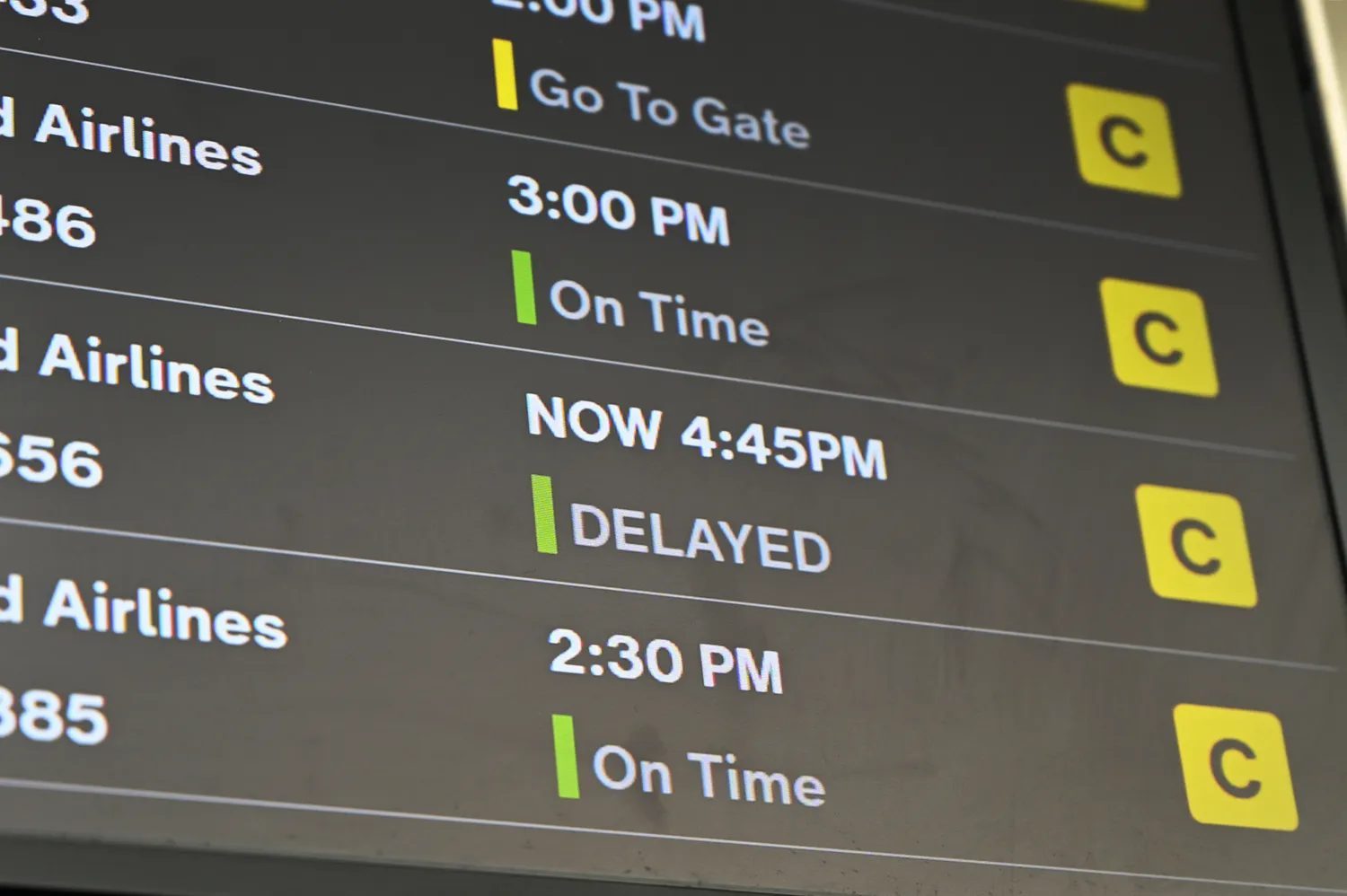
Most of us budget for flights, hotels, and maybe one big splurge dinner. Almost none of us budget for the night we didn’t plan to spend at an airport hotel, the extra airport meals, or the tour that disappears when our flight never leaves the ground.
Those surprises add up fast. One analysis estimated the average cost of a disrupted trip for U.S. travelers at around $484 per person once you factor in extra hotels, meals, missed activities, and last-minute transport. That’s not a minor line item. That’s a real hit.
This guide walks through how to build a realistic flight disruption budget—a backup travel budget for cancellations and delays. You’ll see how much to set aside, what airlines actually cover, and how credit cards, travel insurance, and compensation rules can act as a quiet safety net in the background.
1. Decide: How Much “Disruption Cushion” Do You Actually Need?
Start with a number. If you had to put a price on one bad travel day
, what would it be for you?
When a flight goes sideways, a single disrupted day can easily include:
- Extra hotel: ~$150–$250 per night (often more in big or hub cities)
- Airport and on-the-road meals: ~$40–$80 per person per day
- Ground transport changes (taxis, Ubers, trains): ~$40–$150
- Missed prepaid activity or tour: $50–$200+
- Replacement essentials (toiletries, clothes, chargers): $30–$100
That’s how you hit that ~$400–$500 average loss in a hurry. The hidden costs of cancelled flights are rarely just one receipt.
Here’s a simple way to size a disruption cushion per person, based on the risk level of your trip:
- Domestic, low-risk trip (non-peak season, direct flights): $150–$250
- Domestic, higher-risk (winter, tight connections, busy holidays): $250–$400
- International, economy, moderate risk: $300–$500
- International, complex itinerary or peak season: $500–$800
To fine-tune that backup budget for rerouted flights and delays, ask yourself:
- How many connections do I have?
- Am I traveling in a disruption-prone season (winter storms, summer thunderstorms, holidays)?
- How expensive is the destination for last-minute hotels and food?
- How many prepaid, nonrefundable things are on my itinerary?
The more times you answer “yes,” the closer you should move toward the higher end of those ranges. That’s your personal travel delay expense calculator in practice—simple, but grounded in reality.
2. Problem: You Think the Airline Will Pay for Your Hotel (Often, It Won’t)
This is where a lot of travelers get burned. The assumption goes: If they cancel my flight, they’ll put me in a hotel.
In many places, that’s just not how it works.
Here’s the reality in plain language, so you can budget for extra hotel costs for flight delays without wishful thinking.
United States
- No general law forcing airlines to pay for hotels or meals after cancellations or delays.
- They must either rebook you or refund you if your flight is cancelled or significantly changed and you don’t accept alternatives. That’s the baseline.
- Some airlines voluntarily offer hotels and meal vouchers when the disruption is within their control (crew, maintenance, etc.), especially for overnight delays.
You can compare what each major U.S. airline promises during controllable disruptions on the DOT’s Airline Cancellation and Delay Dashboard. It shows whether they’ll give you:
- Free rebooking
- Meal vouchers
- Hotel accommodation
But remember: these are policies, not universal rights. They can change, and they often don’t apply to weather or air traffic control issues. When you’re doing financial planning for flight disruptions in the U.S., assume you’re on the hook for that airport hotel.
European Union & UK (EU261 / UK261)
- Protections are much stronger.
- If a cancellation or long delay forces an overnight stay, airlines generally must provide a hotel and transport to/from the hotel, plus meals and refreshments, unless it’s an extraordinary circumstance (e.g., severe weather).
- You may also be entitled to cash compensation (often up to about $650–$700) if the airline is at fault and your arrival is delayed 3+ hours or your flight is cancelled on short notice.
Canada, Australia, and Others
- Canada: duty of care (including hotels) in many airline-controlled cancellations; compensation rules depend on airline size and cause.
- Australia: generally refunds or rebooking; compensation is more limited.
Budget takeaway: in the U.S. and many other regions, plan as if you’ll pay for your own hotel and meals during long flight delays. Treat any airline-provided hotel as a bonus, not the backbone of your backup travel budget for cancellations.
3. Decision: How Many “Lost Days” Can You Afford?
Money is one thing. Time is another. A long delay or cancellation can wipe out a day or more of your trip. That has a cost too, especially if you’ve prepaid activities or nonrefundable nights.
Think through a couple of common scenarios before you book. It’s not fun, but it’s honest.
Scenario A: You Lose the First Day
- Overnight delay leaving home.
- You arrive a day late, exhausted.
- You miss your first night’s hotel (nonrefundable) and a morning tour.
Financially, that might mean:
- 1 extra hotel night near the airport: $150–$250+
- Lost prepaid hotel night at destination: $100–$300+
- Lost tour or activity: $50–$200+
That’s easily $300–$700 gone in a single swing.
Scenario B: You Lose a Connection and Get Stranded
- Missed connection due to delay.
- Rebooked for the next day.
- Stuck in an expensive hub city.
Costs here:
- Hotel in a major city: $200–$400
- Meals and transport: $60–$150
- Potentially rearranging tours, trains, or internal flights at your destination.
How to budget for lost days:
- List your nonrefundable items (hotels, tours, trains, internal flights).
- Mark which ones are at risk if you arrive 12–24 hours late.
- Sum the value of what you could lose in a worst-case 1-day delay.
- Decide: am I comfortable self-insuring that amount, or do I want insurance/credit card coverage to backstop it?
If that number makes you wince, you either need a bigger disruption cushion, better protections, or both. This is where the self-insuring vs travel insurance for disruptions question becomes very real.
4. Strategy: Use Credit Cards and Insurance as Your “Shadow Budget”
Your real disruption budget isn’t just the cash you set aside. It also includes the protections you quietly carry through your credit card and any standalone travel insurance. Think of it as a shadow budget that only appears when things go wrong.
Trip Delay & Interruption Coverage (Credit Cards)
Many mid- to high-end travel cards include:
- Trip delay insurance: reimburses reasonable expenses (hotel, meals, transport, toiletries) if your trip is delayed by a set number of hours (often 6–12) for a covered reason.
- Trip cancellation/interruption: reimburses nonrefundable trip costs if you have to cancel or cut short for covered reasons (illness, severe weather, etc.).
Typical limits are in the $300–$500 per person per trip range for delays, sometimes more. That’s effectively an emergency travel fund for lost days—if you use it correctly:
- You paid for the trip (or at least the flights) with that card.
- The reason for delay fits the policy.
- You keep receipts and documentation.
Before your trip, take ten minutes to:
- Check which card you’re using to pay for flights.
- Look up its trip delay and interruption benefits.
- Note the minimum delay hours, covered reasons, and per-person limits.
Whatever that card will cover, you can subtract from the cash you need to hold in your disruption budget. It’s not free money, but it’s money you don’t have to keep in your checking account.
Standalone Travel Insurance
If your trip is expensive, complex, or packed with nonrefundable pieces, a separate policy can be worth the extra line in your trip cost guide for flight delays and cancellations. Look for:
- Trip delay coverage with clear per-day and total limits.
- Trip interruption coverage that reimburses nonrefundable hotels, tours, and transport.
- Clear wording on what counts as a covered delay (weather, strikes, mechanical issues, etc.).
Insurers expect you to use any airline-provided hotels or meals first where legally required (for example, under EU261/UK261). But when airlines don’t step up, insurance becomes your backup travel budget for cancellations and long delays.
Budget takeaway: add up your card and insurance limits. That’s your shadow disruption budget. Then decide how much extra cash you want on top to feel comfortable.
5. Tactic: Plan for Hotels, Meals, and Transport You Might Have to Front
Even when you’re entitled to help, you often have to pay first and fight later. That means your disruption budget needs to cover fronting costs for extra hotels, meals, and ground transport—then chasing reimbursement afterward.
1. Extra Hotels
- Assume 1–2 nights of last-minute hotel at your departure, connection, or destination city.
- Price out a realistic mid-range hotel near the airport or city center for your dates.
- Use that as your per-night estimate when you plan for the cost of airport hotels during cancellations.
If you’re in the EU/UK and the airline doesn’t arrange a hotel when they should, book something reasonable, keep receipts, and later request reimbursement under EU261/UK261. The same logic applies in Canada under its duty-of-care rules.
2. Meals
- Airport food is expensive. Budget $15–$25 per meal per person.
- For a full disruption day, assume 2–3 meals: $40–$70 per person.
- Keep every receipt, even for snacks and water. They all count when you’re budgeting for meals during long flight delays.
3. Ground Transport
- Budget for at least one extra taxi/Uber ride to and from an unexpected hotel: $30–$80 depending on the city.
- Add a buffer for rebooked trains or buses if your delay makes you miss them.
Practical move: keep a separate “disruption” line in your trip spreadsheet or notes app. For each city, note:
- Emergency hotel nightly estimate
- Daily food estimate
- Extra transport estimate
Then total it up. That’s your realistic cash cushion for unexpected travel expenses for delayed flights.
6. Don’t Leave Free Money on the Table: Refunds & Compensation

Budgeting for disruptions is one side of the equation. Getting money back is the other. Many travelers never claim what they’re owed—either because they don’t know their rights, or they’re too exhausted to push.
Refunds (U.S. and Beyond)
- If your flight is cancelled or significantly changed and you choose not to travel, you’re generally entitled to a refund of the unused portion, even on nonrefundable tickets.
- This is separate from any hotel or meal support.
- If an airline refuses a refund you believe you’re owed on a U.S. flight, you can complain to the DOT via their site and dashboard: DOT Airline Cancellation and Delay Dashboard.
EU/UK Compensation (EU261 / UK261)
- On covered flights (departing the EU/UK, or arriving there on an EU/UK carrier), you may get cash compensation if:
- Your arrival is delayed 3+ hours and the airline is at fault.
- Your flight is cancelled less than 14 days before departure.
- You’re denied boarding due to overbooking and didn’t volunteer.
- Amounts depend on distance and delay, often up to about $650–$700.
- Extraordinary circumstances (severe weather, air traffic control strikes) usually don’t qualify for compensation, but you still have a right to care (meals, hotels) in many cases.
Tools like AirAdvisor’s compensation calculator can quickly tell you if you might be eligible and estimate the amount. They take a cut if they win, but they can be worth it if you don’t want to argue with airlines yourself.
Montreal Convention & International Itineraries
- For many international flights, the Montreal Convention allows claims for provable financial losses due to delays (like hotels and meals).
- It’s more legalistic and slower, but it’s another path if you’ve kept good records.
Action list for every disruption:
- Ask the airline what they’ll provide: rebooking, vouchers, hotel.
- Get the reason for delay/cancellation in writing if possible.
- Keep every receipt: hotels, meals, transport, essentials.
- After the trip, file claims with the airline, your card, and/or your insurer.
It takes effort, but this is how you claw back some of the hidden costs of cancelled flights and long delays.
7. Build Your Personal Flight-Disruption Playbook
Now let’s turn all of this into something you can actually use before your next trip—a simple playbook for managing the costs of missed travel days and delays.
Before You Book
- Check your airline’s disruption policies and the DOT dashboard (for U.S. carriers).
- Prefer airlines and routes with better care commitments, especially for tight or overnight connections.
- Use a card with strong trip delay/interruption coverage to pay for flights.
Before You Fly
- Estimate your disruption cushion using the ranges above.
- Price out emergency hotels and meals for your key cities.
- List all nonrefundable items and decide what you’re willing to self-insure.
- Save your card and insurance benefit PDFs offline.
When Things Go Wrong
- Stay calm, but move fast: get in line and get on the app/phone at the same time.
- Ask clearly:
What can you offer for hotel and meals?
- If you must book your own hotel, keep it reasonable and keep all receipts.
- Document everything: boarding passes, delay notices, screenshots.
In the end, financially bulletproofing your trip isn’t about expecting the worst. It’s about pricing it in. When you know how much to budget for flight cancellations and ugly delays—and you’ve quietly set aside the cash and coverage to handle it—disruptions become annoying, not devastating.
On your next trip, try this: set a specific disruption budget number per person, write it down, and see how it changes the way you plan. You may find you travel a little more relaxed, even when the departure board turns into a wall of delays.