
You see a wild fare pop up: $280 roundtrip to Europe, $99 to the Caribbean, $450 to Japan. Your brain screams Book it now!
Your bank account whispers, Are you sure?
I’m firmly in the book the deal first, decide later
camp. But I’ve also watched plenty of people grab a cheap flight and then get crushed by hotel prices, $18 cocktails, and how is this museum $40?
moments.
This guide is how I keep that from happening. It’s a simple, skeptical way to turn a cheap flight into a realistic total trip budget before you commit for good. Think of it as your personal total vacation cost calculator—no spreadsheet degree required.
1. Use the 24-Hour Rule: Book First, Then Decide If the Trip Is Actually Affordable
In the US, most airlines must give you a 24-hour free cancellation window on flights booked at least seven days before departure. That’s your superpower.
When I see a legit deal, I usually:
- Book the flight immediately (direct with the airline when possible).
- Set a timer for 20–22 hours later.
- Use that window to price out the entire trip: lodging, food, transport, activities, extras.
- Cancel if the total number doesn’t work. No guilt, no sunk-cost fallacy.
This flips the usual FOMO script. Instead of asking, Can I afford this flight?
you ask, Can I afford this trip?
That’s the heart of realistic travel budget planning.
And remember: a cheap flight to an expensive city can be worse than a normal flight to a cheap city. A cheap flight, expensive destination combo is how people end up overspending. Total value beats headline price every time.

2. Start With a Hard Total Budget (Then Work Backwards)
Most people do this backwards. They see a deal, then try to make it work
with whatever money they have. I do the opposite.
Before I even look at destinations, I decide:
- How much can I truly spend in total? Not what I wish I could spend. What I can pay off in full within a month or two.
- Who’s going? Solo, couple, family, group. Four cheap flights can still be a big number.
- How long? A $300 flight for a 3-day trip is very different from a 3-week trip.
Then I break that total into rough buckets (you can tweak the percentages):
- Flights: 20–35%
- Accommodation: 25–40%
- Food & drinks: 15–25%
- Local transport: 5–15%
- Activities & tours: 10–20%
- Extras & buffer: 5–10%
Now when a deal pops up, I can instantly sanity-check it and build a trip budget around a flight deal instead of around vibes.
Example: You can spend $1,500 total for a 7-day trip.
- Flight at 30% of budget = about $450.
- If the flight is $280, great. You’ve just freed up $170 for better lodging or more activities.
- If the flight is $700, that’s almost half your budget. Everything else will feel tight.
This is why I don’t chase every deal. Some cheap
flights are still too expensive for the trip I actually want. A full vacation budget from flight price only works if the rest of the numbers cooperate.
3. Reality Check the Destination: Is the Ground Game Going to Kill You?
A $250 flight to an ultra-expensive city can be a trap. A $600 flight to a cheaper region can be a bargain once you add everything up.
Once I have a flight on hold, I immediately ask:
- Is this a high-cost or low-cost destination?
- Are there cheaper alternatives with a similar vibe?
Some patterns are predictable:
- High-cost: Switzerland, Iceland, Norway, Singapore, major Western European capitals, big US cities.
- Value destinations: much of Southeast Asia, parts of Eastern & Central Europe, Mexico (outside resort zones), many Balkans and Latin American cities.
Tools like Budget Your Trip or Numbeo give ballpark daily costs for food, transport, and lodging. I don’t treat them as gospel, but they’re great for a quick Is this Paris or is this Hanoi?
check and to compare destinations by total trip cost.
If the destination is pricey, I ask myself:
- Can I afford the daily cost I’m seeing?
- Would I rather spend the same money on a longer or richer trip somewhere cheaper?
- Is there a similar but cheaper alternative? (Budapest instead of Vienna, Philippines instead of Maldives, etc.)
If the answer is this will be tight and stressful,
I cancel the flight and wait for a better match. That’s how you avoid overspending at your destination before you even pack a bag.
4. Build a Quick-and-Dirty Daily Cost Model (In Under an Hour)
Now we get practical. During that 24-hour window, I build a rough daily budget. Not a spreadsheet masterpiece. Just enough of a total trip cost breakdown to know if this plan is sane.
I usually aim for a simple table like this:
| Category | Per Day (per person) | Notes |
|---|---|---|
| Accommodation | $X | Average of 3–5 realistic options |
| Food & drinks | $Y | Breakfast, lunch, dinner, 1–2 drinks |
| Local transport | $Z | Metro, buses, occasional taxi/ride-share |
| Activities | $A | Entry fees, tours, experiences |
| Extras | $B | Coffee, snacks, souvenirs, random stuff |
Here’s how I get those numbers fast:
- Accommodation: Check 3–5 realistic options on Booking.com or similar for your actual dates. Ignore the cheapest outliers and the aspirational stuff. Take the middle.
- Food: Look at a few mid-range restaurants on Google Maps or TripAdvisor. Note typical main dish prices. Multiply by 2–3 meals, add a coffee and maybe a drink.
- Transport: Search
[city] metro day pass price
orairport to city center taxi cost
. Average it out per day. - Activities: Check 3–4 must-do things (museums, tours, day trips) on sites like GetYourGuide or official attraction websites. Spread those costs across your days.
Then I multiply:
- Daily total × number of days = on-the-ground cost.
- Add flight cost + travel insurance + a 10–15% buffer.
Now you’re not guessing. You’ve basically built your own total vacation cost calculator for this specific trip. If that final number is above my original total budget, I don’t try to justify it. I either shorten the trip, downgrade the style, or walk away.
5. Don’t Let the Flight Dictate Everything: Adjust Dates, Airports, and Routes
A cheap flight is a starting point, not a prison sentence. I treat it as a strong suggestion and then see how flexible I can be without losing the value.
Here’s what I play with:
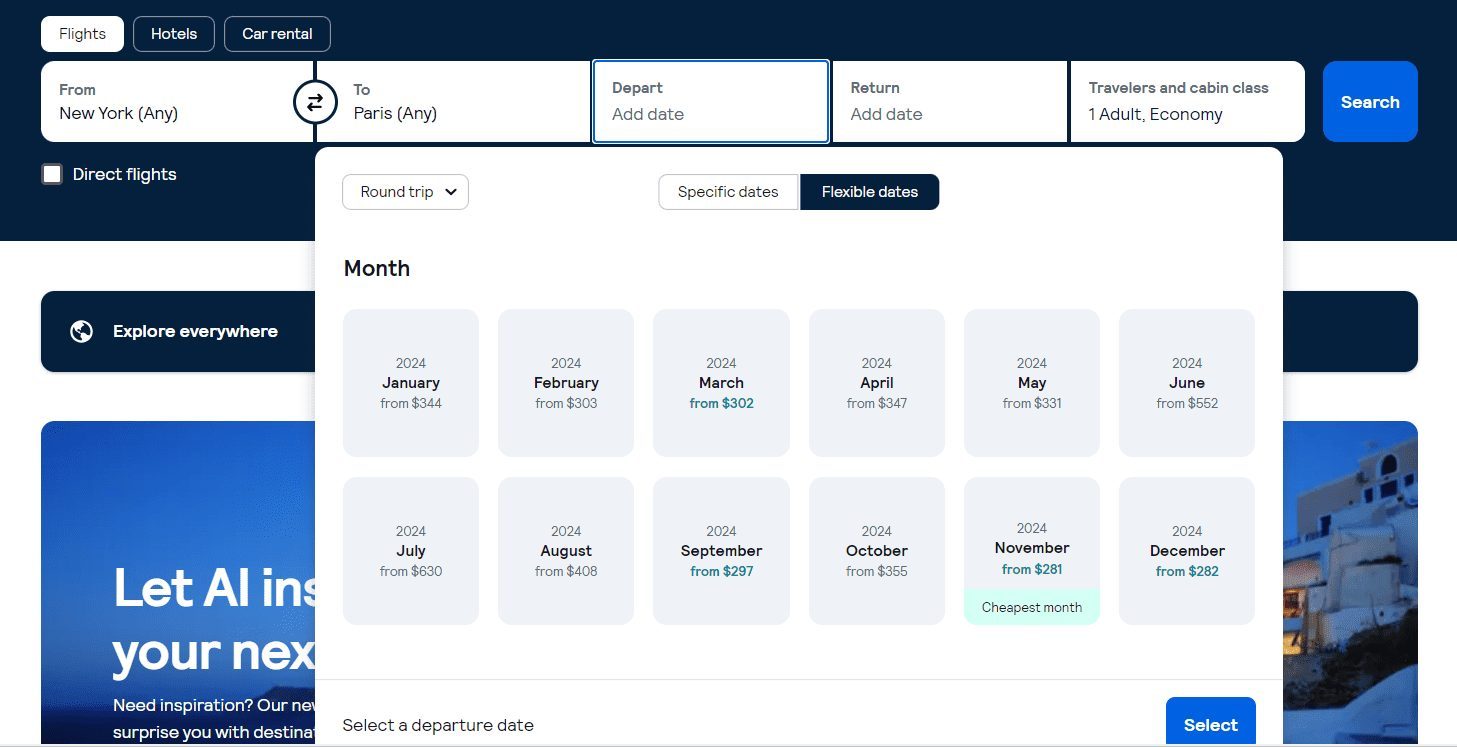
- Shift dates slightly. Using tools like Google Flights, Skyscanner, or KAYAK’s flexible date view, I check if moving the trip by 1–3 days drops hotel prices or avoids a big event.
- Check nearby airports. Sometimes flying into a secondary airport saves money on both the ticket and airport taxes. Other times, the cheap flight lands somewhere that’s a nightmare to reach the city from. I always price the full route: flight + airport transfer.
- Open-jaw tickets. Flying into one city and out of another can save both time and money. For example, fly into Rome, out of Milan, and train between them instead of backtracking.
- Layovers and stopovers. A long layover can be a mini-trip if you’re into that. Some airlines even offer free or low-cost stopover programs with hotel deals. But I only count it as a win if it doesn’t blow up my budget with extra visas, transfers, or hotels.
The question I keep asking: Is this routing saving me money overall, or just making the flight look cheap while everything else gets more expensive?
That’s how you avoid classic flight sale travel budgeting mistakes.
6. Decide Your Daily Style: Bare-Bones, Comfortable, or Treat-Yourself?
Two people can spend wildly different amounts in the same city on the same dates. The difference is style, not destination.
When I’m building a budget around a cheap flight, I pick a trip style up front:
- Bare-bones: Hostels or budget guesthouses, street food, public transport only, mostly free activities. Great for stretching a small budget or long trips.
- Comfortable: Mid-range hotels or apartments, mix of cheap eats and nice dinners, some paid activities, occasional taxi/ride-share.
- Treat-yourself: Nicer hotels, frequent restaurant meals, paid tours, day trips, maybe business class or premium experiences.
Then I sanity-check the flight against that style:
- If the flight is cheap because the destination is expensive, I might be forced into bare-bones mode just to make it work. Do I actually want that?
- If the flight is a bit more but the destination is cheap, I might afford a comfortable or treat-yourself trip for the same total cost.
Ask yourself honestly: Will I be okay saying no to things once I’m there?
If you know you’ll want to eat out, go out, and do the big-ticket activities, budget for that reality now. Don’t pretend you’ll suddenly become frugal on vacation.
This is where you allocate budget: flights vs daily expenses. The flight is one line item. Your day-to-day style is what really drives the total.

7. Add the Hidden Stuff: Fees, Transfers, Insurance, and Buffer
This is where cheap
trips quietly get expensive. I force myself to list every annoying extra before I decide.
Things I always check:
- Baggage fees: Budget airlines love low base fares and high bag fees. I price the flight with the luggage I’ll realistically bring.
- Seat selection & extras: If I care about sitting together or having legroom, I include those costs.
- Airport transfers: That $20 bus vs. $80 taxi vs. $40 train matters, especially in both directions.
- Visas & entry fees: Some countries charge $20–$100+ per person just to enter.
- Travel insurance: I treat this as non-negotiable for international trips. It’s part of the budget, not an afterthought.
- Emergency buffer: I add at least 10% on top of my total estimate for surprises, price changes, or one big splurge.
These are the classic flight deal hidden travel costs that blow up a budget if you ignore them. Once I’ve added all of that, I compare the final number to my original total budget. If I’m over, I don’t shave $5 here and there to make it look okay. I either:
- Shorten the trip, or
- Downgrade the style, or
- Cancel the flight and wait for a better fit.
That last option is underrated. There will always be another deal.

8. Make the Call: Keep the Flight or Walk Away
By now, you should have:
- A hard total budget you’re comfortable with.
- A realistic daily cost estimate for this destination.
- A clear sense of your trip style and non-negotiables.
- All the hidden costs on the table.
Now the decision is simple, even if it’s not easy.
Ask yourself:
- Does this trip fit my total budget with a buffer?
- Will I enjoy this trip at the budget level I can afford? Or will I feel deprived the whole time?
- Is this the best use of this money right now? Or would I rather save it for a different destination or longer trip?
If the answer is yes, keep the flight and start locking in the rest. If not, cancel within the 24-hour window and move on. You didn’t miss out; you just avoided an expensive mistake.
Cheap flights are fun. But a trip that matches your budget, your travel style, and your actual life? That’s the real win—and the whole point of learning how to budget for a cheap flight trip instead of letting the deal run the show.