I’ve seen too many companies treat per diem like a flat “travel allowance” and then act surprised when costs spiral in cheap markets and employees starve in expensive cities. If your team travels globally, a lazy international per diem policy is one of the fastest ways to burn budget and trust.
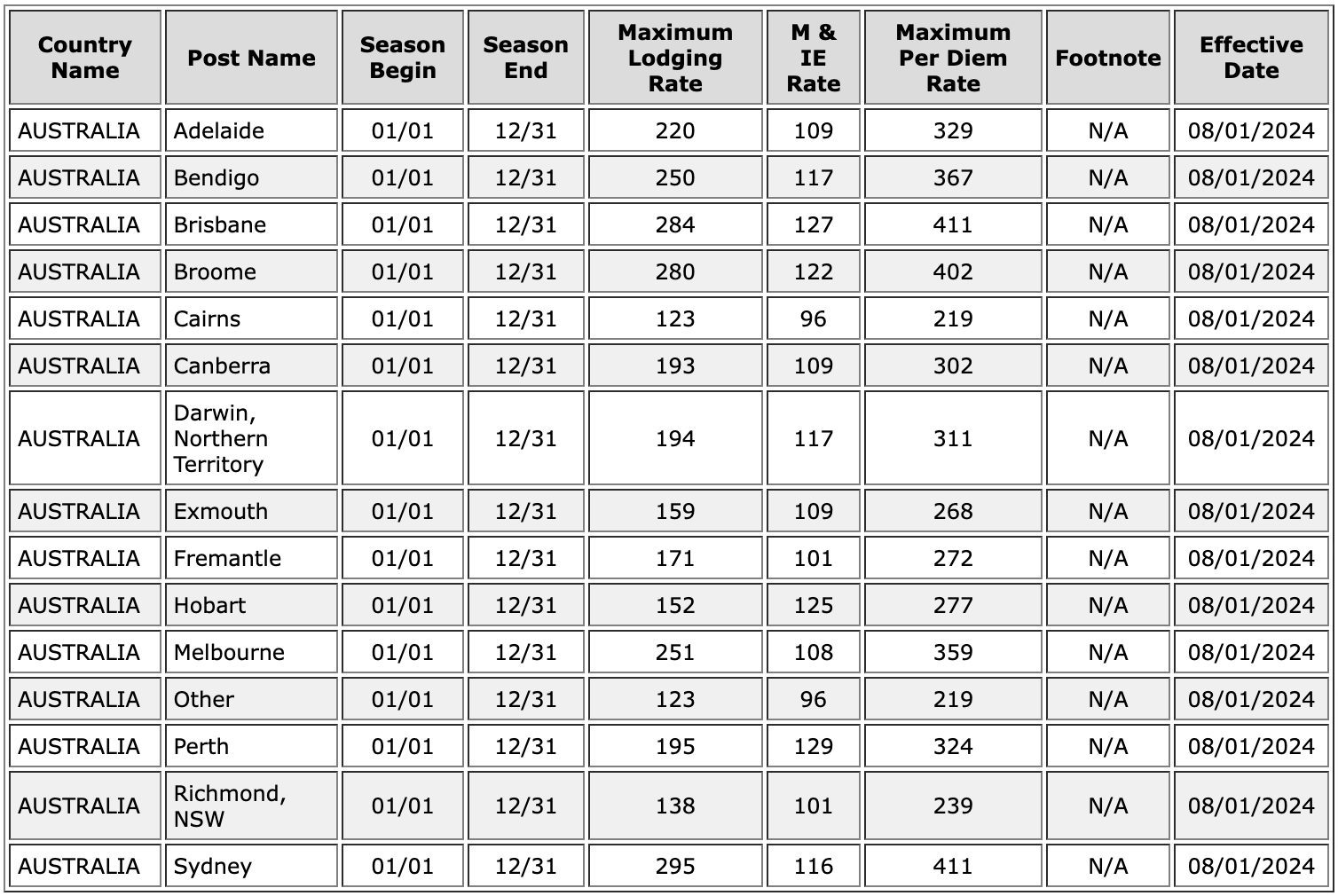
In this guide, I’ll walk through how to design a global per diem strategy that’s fair, defensible, and usable in the real world. We’ll lean on official benchmarks like the U.S. Department of State foreign per diem tables (DoS Foreign Per Diem Rates) and tax guidance from multiple countries. But we’ll also look at where copying those numbers blindly can backfire—especially when you’re dealing with both cheap and expensive cities.
1. Start with the real problem: what are you optimising for?
Before you touch a spreadsheet, decide what your international per diem policy is actually for. Most companies say it’s about fairness. In practice, it’s usually about budget control and admin simplicity. That tension is where bad policies are born.
I usually start with three blunt questions:
- Predictability: Do you care more about predictable budgets or precise cost matching?
- Fairness: Are you willing to pay more in some markets to avoid resentment and constant negotiation?
- Compliance: How much risk are you willing to take on tax and labour disputes?
Per diem is a trade-off tool. Compared with reimbursing actual expenses:
- Per diem gives you flat daily caps, simpler reporting, and fewer arguments over receipts. It’s great for forecasting and for employees who want flexibility.
- Actuals give you granular control but require heavy documentation and checking. In high-cost cities, they can be more realistic, but they’re also more painful.
Most global travel expense policies end up hybrid: per diem for meals and incidentals, and either per diem or capped actuals for lodging. That’s also how official systems are structured: separate lodging and M&IE (meals & incidental expenses) components, as you’ll see in the U.S. State Department’s DSSR Section 925 and similar frameworks in Europe and elsewhere.
If you don’t decide what you’re optimising for, your per diem policy will quietly optimise for chaos.

Takeaway: Write down your priorities (budget, fairness, compliance) before you set a single rate. You’ll need those priorities later when people push back.
2. Choose your benchmark: official tables vs your own numbers
Once you know what you’re optimising for, you need a reference point. A “global average” rate is tempting—but it’s also how you end up overpaying per diem in low cost markets and underfunding per diem in high cost cities. Manila shouldn’t be funded like London.
Most organisations I work with start from one of three anchors:
- U.S. Government tables – GSA for domestic U.S., and the U.S. Department of State for foreign per diem (DSSR Section 925). These are updated monthly and split into lodging and M&IE.
- Local tax authority limits – for example, Germany’s BMF tables, HMRC benchmark rates in the UK, or URSSAF guidance in France, as summarised in resources like Bill.Dock’s 2026 guide.
- Internal cost data – your own historical hotel and meal spend, especially in key hubs.
Here’s the catch: official tables are maximums, not obligations. The U.S. State Department explicitly treats its foreign per diem as a cap for federal employees, not a guarantee. Many tax authorities do the same: amounts above their thresholds become taxable income.
So you have three realistic options when building a global per diem strategy:
- Match official rates in high-cost cities and discount them in cheaper markets.
- Set your own tiered bands (e.g., Tier 1 = global hubs, Tier 2 = regional capitals, Tier 3 = smaller cities) and map locations to those bands.
- Hybrid: use official lodging caps but your own M&IE bands, especially if your travellers’ habits differ from the “average” federal traveller.
I tend to prefer a hybrid approach. I’ll peg lodging to official caps in expensive cities (London, Singapore, Tokyo) but apply a percentage discount in cheaper markets. For meals, I lean on internal data and then sanity-check against official M&IE tables and other per diem benchmarking for global companies.
Takeaway: Don’t blindly copy government tables. Use them as a ceiling and then design your own structure underneath, especially for cheaper markets.
3. Build location-based tiers so you don’t overpay cheap markets
This is where you stop overpaying in low-cost cities. The trick is to group locations into tiers based on cost of living, not politics, seniority, or who shouts the loudest.
I usually start with three to five city tiers:
- Tier A – Ultra high cost: London, Zurich, Geneva, Singapore, Tokyo, some Nordic capitals.
- Tier B – High cost: Paris, New York, Sydney, Hong Kong, major Western European capitals.
- Tier C – Medium cost: regional hubs and secondary cities.
- Tier D – Low cost: smaller cities and emerging markets where official per diem often overshoots reality.
Then I map each city to a tier using:
- Official per diem tables (DoS, GSA, local tax authorities).
- Internal hotel and meal data.
- External cost-of-living indices (as a cross-check, not a primary source).
For each tier, I define:
- Lodging cap: often a percentage of the official rate (e.g., 100% in Tier A, 90% in Tier B, 75% in Tier C, 60% in Tier D).
- M&IE per diem: a flat amount per tier, benchmarked against official M&IE but adjusted for your travellers’ patterns.
Why not just use the official city-by-city numbers? Because they change monthly, and managing hundreds of micro-rates manually is a recipe for errors. Tools like Engine or ExpenseMonkey exist precisely because this complexity is real. If you don’t have automation, tier-based per diem rates are your friend.
A good tier system makes it impossible to accidentally pay London rates in Lagos.

Takeaway: Design 3–5 cost tiers, map cities to them, and set tier-based caps. That’s how you stop overpaying cheap markets without micromanaging every destination.
4. Protect travellers in expensive cities without blowing the budget
Underfunding high-cost cities is the other side of the problem. If your per diem doesn’t cover a basic hotel and three modest meals in London or Zurich, your policy is broken. People will either top up out of pocket (and resent you) or start gaming the system.
Here’s how I handle expensive cities in a global per diem strategy:
- Anchor lodging to official caps: For Tier A cities, I usually allow up to 100% of the U.S. State Department lodging rate or the local tax-free maximum, whichever is lower. In exceptional cases, I’ll allow higher actuals with pre-approval, similar to the U.S. federal rule that allows up to 300% of standard lodging in rare circumstances.
- Keep M&IE realistic: I don’t try to fund fine dining, but I do ensure the per diem covers three normal meals plus incidentals like coffee, water, and basic laundry. Remember: official M&IE often includes an extra 10% for incidentals, as the DoS explains in its per diem methodology.
- Use actuals as a safety valve: In ultra-peak periods (trade fairs, major events), I allow actual lodging with a hard cap and justification. This prevents travellers from being stuck when all “moderately priced” hotels are sold out.
One subtle but important point: many tax systems require you to reduce per diem when meals are provided (hotel breakfast, client lunch, conference dinner). Germany, the UK, and others are explicit about this. Ignore those rules and part of your per diem can turn into taxable income.
Takeaway: In expensive cities, align lodging with official caps, keep meal allowances realistic, and use actuals as a controlled exception. Underfunding here is more damaging than slightly overfunding.
5. Nail the rules for travel days, multi-city trips, and provided meals
Most disputes I see aren’t about the headline rate. They’re about edge cases: first and last day, crossing time zones, or bouncing between cities with different rates. This is where a clear travel expense policy per diem really earns its keep.
I like to codify a few simple rules:
First and last day of travel
Many systems (including U.S. federal travel rules) use 75% of the M&IE rate on the first and last day. I usually copy that. It’s intuitive and easy to automate.
Time zones and destination-based rates
When crossing time zones, I apply the destination’s rate for the day, mirroring U.S. practice. That avoids weird situations where someone gets a low-rate day for a long-haul flight into a high-cost city.
Multi-city itineraries
For trips with multiple cities, I do one of two things:
- Daily by location: Each day uses the rate for the city where the traveller sleeps.
- Weighted average for planning: For budgeting, I use tools (or even simple calculators like MyTimeCalculator’s per diem planner) to estimate total cost across locations, but the actual reimbursement still follows daily location rates.
Provided meals
This is where many policies quietly drift out of compliance. Most tax authorities expect you to reduce per diem when meals are provided. For example:
- Breakfast provided: reduce M&IE by a fixed percentage (often 15–20%).
- Lunch or dinner provided: reduce by a larger percentage (often 30–40%).
I bake these percentages into the policy and into the expense tool. No manual math. No arguments.

Takeaway: Spell out rules for partial days, time zones, multi-city trips, and provided meals. Most friction disappears when these are clear and automated.
6. Align with tax rules so your per diem doesn’t become salary in disguise
Per diem is only attractive if it stays tax-free where possible. Once it’s treated as taxable income, you’re basically paying salary with extra admin.
Across the 40+ countries covered in guides like Bill.Dock’s 2026 overview, a few patterns repeat:
- Tax-free caps: Each country sets maximum non-taxable per diem or equivalent allowances. Pay above that, and the excess is taxable.
- Accountable plans: In the U.S., the IRS requires an accountable plan: employees must substantiate travel (time, place, business purpose) and return excess. Otherwise, per diem becomes taxable wages.
- Documentation: Many regulators (e.g., HMRC in the UK) require internal checking systems if you use benchmark rates. No checks, no safe harbour.
So when I design a global per diem strategy, I do three things:
- Map home-country tax rules: For each major employee population, I document the local tax-free limits and conditions.
- Set global caps at or below those limits: If my global per diem exceeds a country’s tax-free threshold, I either reduce the rate for that population or accept that the excess is taxable and communicate that clearly.
- Define documentation standards: I require basic trip details (who, where, why, when) and, where needed, receipts for lodging even under per diem, to satisfy local rules.
Remember: some countries don’t use classic per diem at all. The Netherlands’ WKR free allowance, France’s URSSAF rules, or the UAE’s no personal income tax context all change how you structure travel allowances. You can’t just copy a U.S.-style per diem and hope for the best.
Takeaway: Design your per diem inside tax-free limits where possible, and be explicit when you’re paying taxable allowances. Compliance is part of the strategy, not an afterthought.
7. Automate the boring parts and make the rules visible
Even the best-designed policy will fail if it lives in a PDF nobody reads and relies on manual spreadsheets. International per diem is inherently dynamic: rates change monthly, currencies move daily, and tax rules evolve.
I focus on two things: automation and clarity.
Automation
Whether you use a dedicated tool (like Engine, ExpenseMonkey, Bill.Dock) or your own system, you want to automate:
- Location-based rate lookup (city, country, tier).
- Currency conversion (base currency vs local currency).
- First/last day percentages.
- Meal reductions when meals are provided.
- Multi-city itineraries and average cost reporting.
Manual tracking of monthly DoS updates, seasonal variations, and exchange rates is exactly the kind of “spreadsheet chaos” that leads to overpayments and disputes.
Clarity
Then I make the rules painfully clear:
- A one-page summary for travellers: what they get, when it’s reduced, what they must document.
- A slightly longer guide for managers and finance: how tiers work, when exceptions are allowed, and how tax treatment works.
- Examples: a 3-city trip, a long-haul flight with time zones, a conference with provided meals.
If people need to email finance to understand their per diem, your policy isn’t finished.
Takeaway: Automate rate application and make the rules visible. A good policy is one that travellers can explain back to you without reading the fine print.
8. Stress-test your policy with real scenarios
I don’t trust any per diem policy until it survives a few realistic test cases. This is where you catch hidden overpayments and underfunding, especially when comparing per diem vs actual expenses.
Try scenarios like:
- Cheap market test: A week in a low-cost city (Tier D). Does the per diem look generous compared with actual hotel and meal prices? If yes, consider lowering the tier rate or tightening lodging caps.
- Expensive market test: Five nights in London or Zurich during a busy season. Can a traveller find a safe, modest hotel within the lodging cap? If not, you may need an exception process.
- Multi-city test: A trip that hits a Tier C city, then a Tier A city, then back home. Does the policy handle rate changes cleanly? Are first/last day rules applied consistently?
- Tax test: For a key country (say, Germany or the U.S.), does your per diem stay within tax-free limits? If not, is the taxable portion clearly communicated?
Use a planning tool or even a simple calculator to model total per diem cost under different rules (75% vs 50% on travel days, different tier mappings, different per diem rates by country, etc.). You’ll quickly see where you’re overpaying or underfunding.
Takeaway: Don’t ship a policy you haven’t stress-tested. Real itineraries will expose weaknesses faster than any theoretical discussion.
Closing thought: design for trust, not just control
At the end of the day, per diem is about trust. You’re telling travellers, We trust you to spend within this envelope without itemising every coffee.
If the envelope is too tight, they’ll feel punished. If it’s too loose, finance will feel out of control.
A good global per diem strategy and set of corporate travel per diem guidelines will:
- Use official benchmarks as ceilings, not crutches.
- Apply tiered, location-based logic to avoid overpaying cheap markets.
- Protect travellers in expensive cities with realistic caps and clear exceptions.
- Align with tax rules so you’re not accidentally paying salary in disguise.
- Automate the mechanics and make the rules transparent.
If you get those pieces right—plus keep an eye on adjusting per diem for currency and inflation over time—you’ll spend less time arguing about receipts and more time focusing on why people are travelling in the first place.