Why this is a Destination problem: the hidden cost of getting to the game or concert
For fans chasing a big match, a championship series, or a once-in-a-lifetime concert, the destination is not just a city; it is a specific date, venue, and kickoff time. That rigidity makes air travel to major events uniquely exposed to airline dynamic pricing.
Unlike a typical holiday where dates can shift, fans often must arrive within a narrow window. Airlines know this. Their revenue-management systems treat these high-stakes trips as a distinct demand pattern: concentrated in time, highly visible in search data, and relatively inelastic once schedules are announced. The result is that the cost of reaching the destination can swing sharply, even within a single day, as algorithms react to demand signals.
This article focuses on Destination as the dominant category: how the mechanics of airline dynamic pricing reshape the real cost of getting to major events, and why fans heading to specific destinations at fixed times face structurally higher risk than flexible leisure travelers.
How airline dynamic pricing actually works for event-bound routes
Dynamic pricing in air travel is not random. It is a structured system that continuously re-evaluates what each remaining seat should cost, based on a set of inputs that become especially intense around big events.
At the core are fare buckets—predefined price levels for the same physical seat. A single economy cabin might be divided into many buckets, from deeply discounted to fully flexible. The algorithm’s job is to decide which buckets remain open at any moment.
For fans traveling to a destination tied to a fixed event, several mechanisms interact:
- Time-to-departure curves: Months before the event, the system expects more price-sensitive demand and keeps cheaper buckets open to fill a baseline of seats. As the event approaches, the algorithm assumes remaining demand is less flexible and gradually closes low buckets.
- Seat inventory thresholds: When a flight crosses certain load-factor thresholds (for example, 60%, 75%, 90% full), rules can automatically close cheaper buckets. To a fan, this looks like a sudden jump in price; to the system, it is a planned step in the revenue curve.
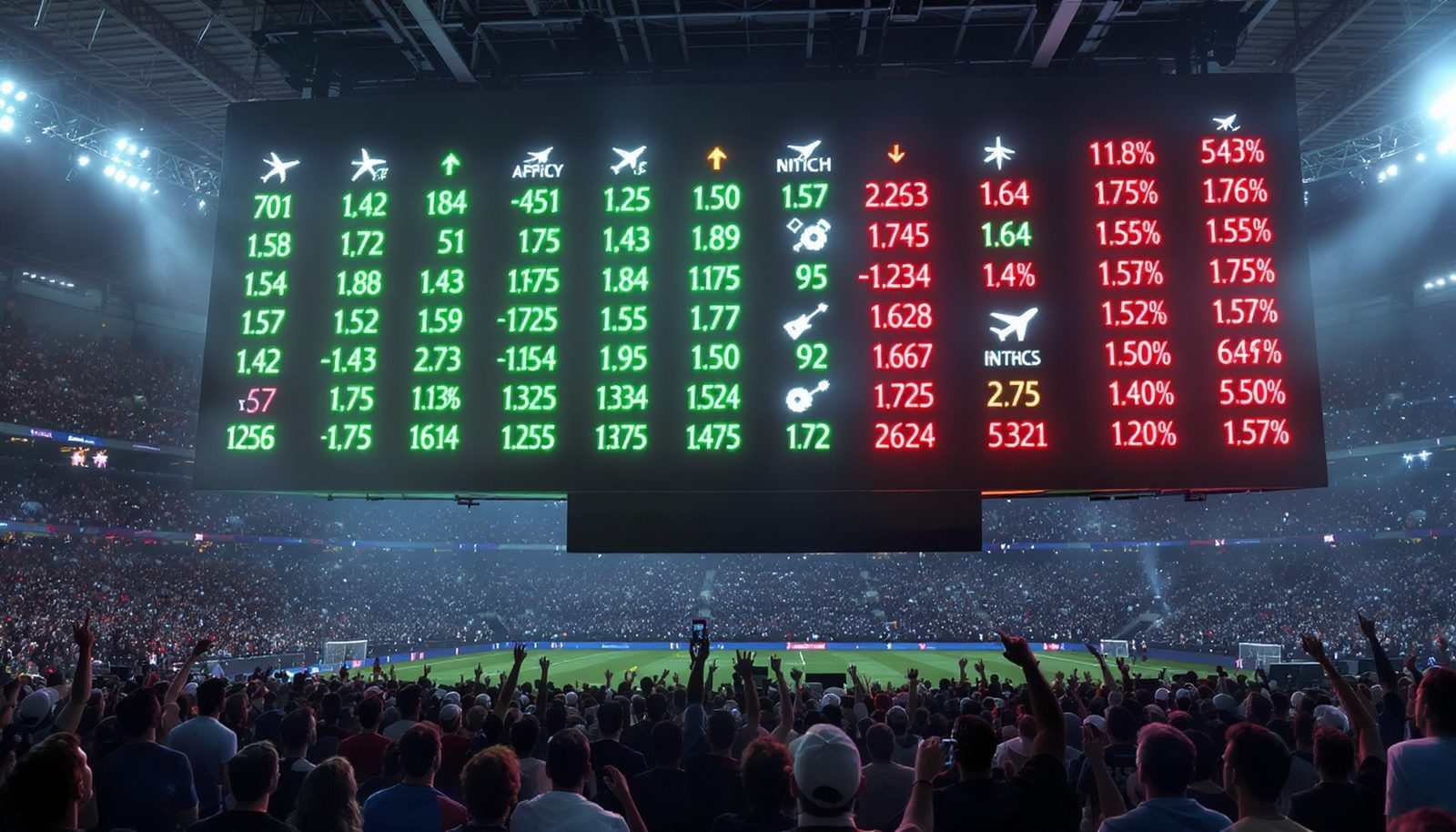
- Real-time search volume: When a tournament schedule is announced or a tour date goes viral, search volumes for specific city pairs and dates spike. The system interprets this as a signal that willingness to pay has risen and adjusts prices upward, sometimes within minutes.
- Historical demand patterns: Past data from similar events—World Cups, playoffs, festivals—feed into forecasts. If previous events filled flights at high fares, the algorithm will be more aggressive in closing cheap buckets early.
The key mechanism is that each new search and booking is treated as information. For a fan base converging on a single destination, the collective behavior of searching and booking becomes a powerful input that pushes prices higher as the event draws near.
From fan behavior to fare spikes: the decision loop
Fans do not just respond to prices; they also shape them. The interaction between fan behavior and airline algorithms creates a feedback loop that can turn enthusiasm into higher fares.
1. Announcement shock
When a final, playoff series, or tour date is announced, fans rush online to check flights. The algorithm sees a sudden increase in searches for specific dates and routes. Even before many tickets are purchased, the spike in search volume is a demand signal. The system infers that more people are now interested in those flights and that some will be willing to pay more.
2. Early-booker segmentation
Fans who book immediately after the announcement often access lower fare buckets. The system interprets these early bookings as confirmation that demand exists but still has room to grow. It may keep some cheaper buckets open to continue filling seats, but it now has a clearer picture of how quickly the flight might sell.
3. Repeated search signaling
As days pass, many fans repeatedly search the same route and dates, trying to “time” the purchase. Some analyses suggest that repeated searches from the same device or IP, especially over short periods, correlate with higher displayed fares. The mechanism is straightforward: repeated interest in the same itinerary is treated as a proxy for urgency and higher willingness to pay.
For fans, this creates a paradox. The more they check, the more they may signal that they are committed to traveling, which can justify higher prices in the algorithm’s logic.
4. Last-minute compression
As the event nears, the mix of remaining potential passengers shifts. Casual fans drop out; those still searching are more likely to be committed attendees, media, or business travelers. The system expects this group to be less price-sensitive. It closes most low fare buckets and exposes higher ones, leading to steep last-minute prices.
In this phase, the destination is effectively a captive market. Fans who must be in the stadium or arena at a specific time have few substitutes. The algorithm monetizes that lack of flexibility.
Why fans pay more: structural power and limited substitutes
The risk for fans is not just about timing; it is about structural conditions that give airlines leverage over event-bound travel.
Oligopoly and route-level monopoly
On many routes to major event destinations, a small number of airlines dominate. In some cases, a single carrier controls the most convenient non-stop flights. This concentration reduces competitive pressure. When one airline’s dynamic pricing system pushes fares up, rivals may follow similar patterns rather than undercut aggressively, especially on peak dates.
For fans, this means that even diligent comparison across airlines may reveal similar price trajectories, because the underlying market structure supports high dynamic prices.
Weak substitutes for time-sensitive travel
For a flexible vacation, travelers can shift dates, choose alternative airports, or even switch to trains or buses. For a championship game or a one-night concert, those options are limited:
- Arriving a day late is not an option; the event is over.
- Alternative airports may add long ground transfers that are impractical before or after late-night events.
- Surface transport may be too slow to meet fixed schedules.
This lack of substitutes makes demand more inelastic. Dynamic pricing systems are designed to identify and monetize such inelastic segments. Fans, by definition, often fall into this category when traveling to a specific destination at a fixed time.
Digital distribution and data asymmetry
Most fans search and book online, often through multiple platforms. Airlines and intermediaries can observe:
- Search frequency and patterns for specific routes and dates.
- Approximate location via IP address, which can correlate with income levels.
- Device type, which is sometimes used as a rough proxy for purchasing power.
- Loyalty program status, indicating past spending and brand attachment.
Fans see only the final price; they do not see how these signals are weighted. This information asymmetry allows airlines to refine their segmentation while keeping the logic opaque. For event-bound destinations, where search intensity is high and concentrated, the data is especially rich, reinforcing the system’s confidence in raising prices.
Who bears the brunt: fan segments and their exposure
Not all fans face the same dynamic pricing risk. Different segments interact with the system in distinct ways, based on flexibility, booking behavior, and financial constraints.
| Fan segment | Typical behavior | Dynamic pricing exposure |
| Local or regional fans | Short-haul flights, sometimes same-day return, often booked late after confirming tickets. | High exposure: short booking windows and limited alternatives make them vulnerable to last-minute price spikes. |
| International superfans | Long-haul trips, often planned months ahead, sometimes combining multiple events or sightseeing. | Mixed exposure: can benefit from early low buckets, but face large absolute costs if they delay or if event dates shift. |
| Corporate guests and sponsors | Travel arranged closer to the event, with less sensitivity to price and more focus on schedule. | Very high exposure: algorithms expect low price sensitivity and keep fares high near departure. |
| Student and budget fans | Highly price-sensitive, may consider alternative airports or longer connections. | Lower exposure if they can book early and stay flexible; high exposure if they wait for ticket confirmation. |
The mechanism behind these differences is the interaction between flexibility and signal strength. Fans who can shift dates or routes send weaker signals of urgency and can sometimes access lower buckets. Those who must travel on specific flights, and who search repeatedly, send strong signals that the system interprets as willingness to pay more.
Dynamic pricing as a redistribution mechanism between fans
Dynamic pricing does not simply raise prices; it redistributes who pays what. For event-bound destinations, this redistribution often occurs between different types of fans.
From flexible to inflexible travelers
When flights to a host city are under-filled months before an event, algorithms may open cheaper buckets to stimulate demand. Flexible fans who can commit early benefit from these lower fares. As the event approaches and the flight fills, the system closes cheap buckets and raises prices, shifting more of the revenue burden onto late bookers.
In effect, the system uses early, flexible fans to build a base load, then extracts higher margins from late, inflexible fans who cannot easily change plans.
From uncertain to committed fans
Many fans wait to secure event tickets, vacation approvals, or travel companions before booking flights. This delay means they enter the market later, when algorithms have more evidence of strong demand and fewer cheap seats left.
The mechanism is simple: uncertainty delays booking; delayed booking coincides with higher demand signals; higher demand signals justify higher prices. Fans who were cautious about committing early end up subsidizing those who locked in flights before all details were confirmed.
Risk and uncertainty: what fans cannot see in the pricing engine
Dynamic pricing risk for fans is amplified by several layers of uncertainty that are difficult to observe or quantify from the outside.
Opaque data usage
There is limited transparency about how specific data points—cookies, IP address, device type, loyalty status—are weighted in pricing decisions. While some patterns are reported anecdotally, there are no widely accepted benchmarks for how much these factors can move a fare in typical or extreme cases.
This opacity means fans cannot reliably predict whether changing devices, clearing cookies, or using different platforms will materially affect prices. They are operating in a system where the rules are not fully disclosed.
Regulatory gray zones
Regulation around personalized pricing, data usage, and disclosure obligations is still evolving and varies by jurisdiction. Key uncertainties include:
- How far airlines can go in individualizing prices based on personal data.
- What level of explanation, if any, they must provide about pricing logic.
- How cross-border data flows affect enforcement when fans book international trips.
Until these boundaries are clarified and enforced, fans face the risk that practices considered acceptable today may later be judged unfair, but without retroactive relief.
Platform differences
Prices can differ across airline websites, online travel agencies, and meta-search engines. These differences may reflect distinct commercial agreements, inventory access, or algorithmic strategies. Fans often interpret these discrepancies as opportunities to “beat the system,” but without insight into the underlying mechanisms, it is difficult to know whether a lower price on one platform is a temporary anomaly or a systematic advantage.
The uncertainty is not just about the level of prices, but about the stability of any observed pattern. A strategy that appears to work for one event or route may fail for another, because the underlying data and rules differ.
Comparing booking strategies: how timing and flexibility reshape the destination cost
Fans often experiment with different booking strategies to manage costs. While the exact outcomes vary by route and event, the underlying trade-offs can be compared structurally.
| Strategy | Mechanism | Potential benefit | Key risk |
| Book immediately after event announcement | Exploit early low fare buckets before search and booking data signal strong demand. | Access to lower prices if the algorithm has not yet adjusted to the demand spike. | Event details (dates, venue changes) may shift, making tickets less useful or requiring change fees. |
| Wait for ticket confirmation, then book | Delay commitment until attendance is certain, reducing risk of unused flights. | Lower non-flight risk: fewer unused tickets if plans fall through. | Higher flight cost as algorithms respond to rising demand and close cheap buckets. |
| Use flexible dates or alternative airports | Shift to flights and routes where demand is less concentrated and dynamic pricing is less intense. | Access to cheaper buckets on off-peak days or less popular airports. | Longer travel times, more complex transfers, and potential misalignment with event schedules. |
| Last-minute booking | Rely on the possibility that flights are under-filled and that the system will open cheaper buckets late. | Occasional savings if demand is overestimated and airlines need to fill seats. | Very high risk of extreme prices or sold-out flights, especially for major events. |
These strategies illustrate that there is no universal “best time” to book. Instead, fans face a set of trade-offs between commitment risk (booking before plans are firm) and price risk (booking after algorithms have fully priced in demand).
Dynamic pricing and perceived fairness: why fans feel targeted
Beyond the financial impact, dynamic pricing shapes how fans perceive the fairness of reaching their destination. Several mechanisms contribute to a sense of being targeted or exploited.
Sudden, unexplained jumps
When a fare jumps significantly between two searches, fans often interpret this as punishment for hesitation. In reality, the jump may reflect a fare bucket closing after a threshold was reached. However, because the system does not explain this, the change feels arbitrary.
Inconsistent experiences across fans
Two fans in different locations, using different devices or platforms, may see different prices for similar itineraries. Without transparency, these differences are easily interpreted as unfair discrimination, even when they may be driven by inventory or commercial agreements rather than individualized targeting.
Monetizing attention spikes
When a viral moment—such as a star player’s announcement or a surprise tour date—triggers a surge in searches, the resulting price increases can feel like a tax on enthusiasm. The mechanism is simply the algorithm interpreting search volume as demand, but the experience for fans is that their collective interest has been turned into higher costs.
Balanced conclusion: the real cost of getting to the moment
Dynamic pricing for flights to major events is not a simple story of good or bad. It is a system designed to allocate limited seats in a way that maximizes revenue, using every available signal about demand, timing, and flexibility. For fans, this system creates both opportunities and risks.
On the opportunity side, dynamic pricing can make it cheaper for flexible fans to reach event destinations if they can commit early, choose off-peak days, or use alternative airports. The same mechanisms that raise prices for last-minute, inelastic travelers can lower them for those who help fill seats when demand is uncertain.
On the risk side, fans whose travel is tightly bound to fixed event dates, who wait for certainty before booking, or who repeatedly search the same routes face a structurally higher chance of paying more. Market concentration, limited substitutes, and opaque data usage amplify this risk, especially on routes where a few airlines dominate.
Ultimately, the destination experience for fans now begins long before they arrive at the stadium or arena. It starts when they first search for flights, entering a dynamic system that interprets their behavior as data. Understanding the mechanisms behind that system does not eliminate the risk, but it clarifies why the cost of getting to the moment can feel unpredictable—and why, for many fans, the journey has become the first arena where they must compete.