Why “Best Festival City” Now Means “Best Managed Risk City”
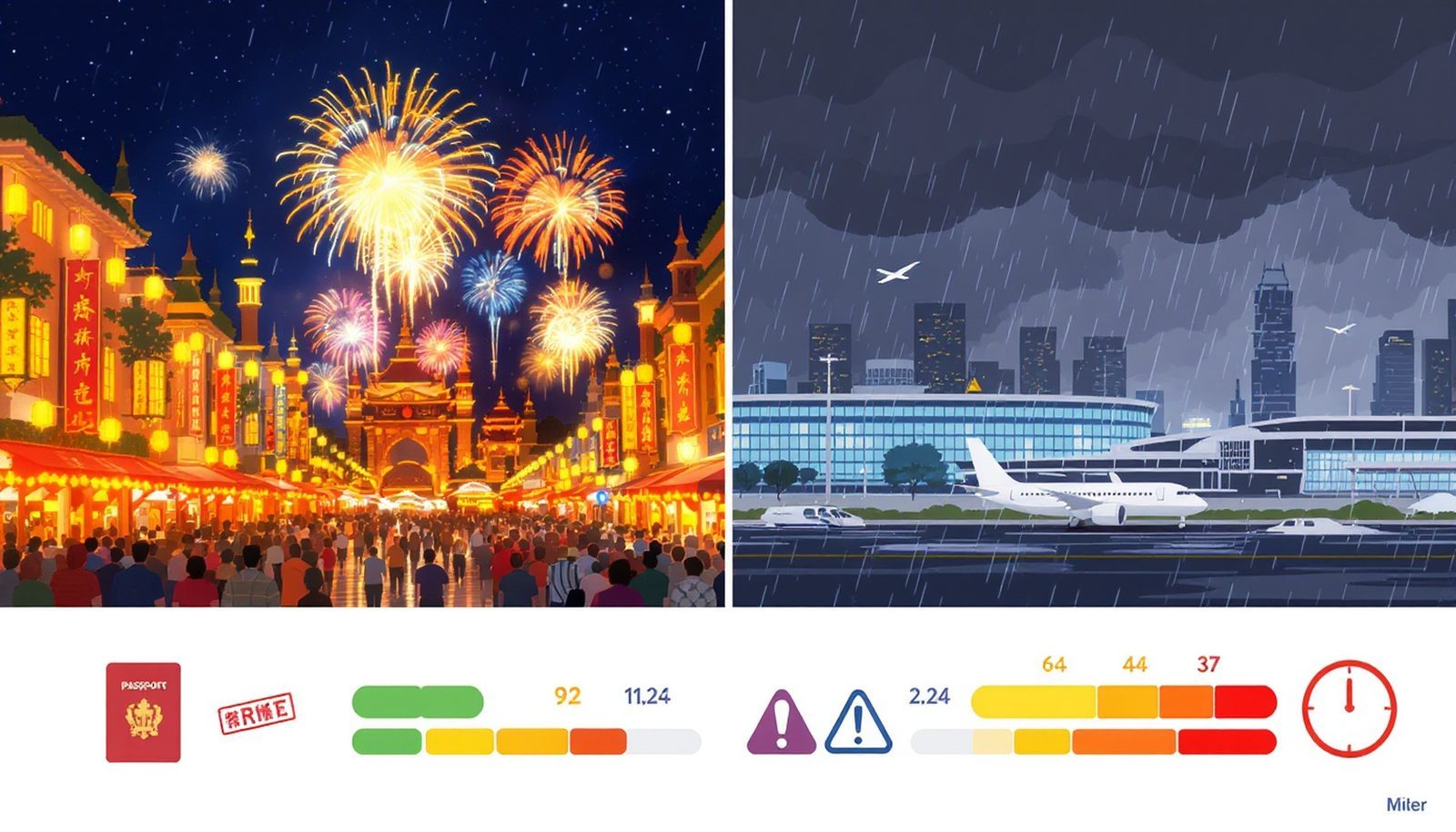
When travelers talk about the “best cities” for festival season, they usually mean atmosphere: fireworks, parades, street food, and late-night concerts. For 2026, the decision looks different. Safety advisories, rainy-season disruptions, and tighter entry rules are turning festival trips into risk-managed projects rather than spontaneous escapes.
This article fits the Destination category, but treats destinations as risk profiles rather than bucket-list names. Instead of ranking cities, it explains why some festival cities are more resilient than others once you factor in three structural forces:
- U.S. State Department four-level travel advisories and similar national systems.
- Airline and airport operational constraints, especially during rainy season.
- Visa, entry, and payment rules that can quietly invalidate a trip.
The aim is not to tell you where to go, but to show how to compare cities during festival season when rainy season 2026 travel safety restrictions and policy shifts can change feasibility overnight.
How Travel Advisory Levels Reframe “Best Festival City” Choices
Many travelers still treat government travel advisories as background noise. For festival trips, these advisories now act as a filter that can determine whether airlines operate normally, whether insurance pays out, and whether consular help is available if something goes wrong.
The four-level advisory system as a decision engine
The U.S. State Department segments destinations into four levels, from “Exercise Normal Precautions” to “Do Not Travel.” Each level reflects specific indicators: crime, terrorism, civil unrest, health risks, natural disasters, time-limited events, kidnapping, and wrongful detention. For festival cities, two mechanisms matter most:
- Time-limited events: Elections, protests, or major religious gatherings can temporarily raise risk levels, especially when they overlap with festivals.
- Natural disasters and rainy-season hazards: Flooding, landslides, and infrastructure damage can push a city into a higher advisory level even if crime and terrorism remain unchanged.
Because advisories are updated whenever security conditions or U.S. government staffing change, a city that looks ideal when you book can move from Level 1 or 2 to Level 3 or 4 before your festival begins. That shift can trigger:
- Changes in airline schedules or route availability.
- Insurance exclusions for “known risks” if the advisory level rises before departure.
- Reduced consular capacity if staff are pulled out or restricted.
Festival density as a risk multiplier
Festivals concentrate people, which amplifies several advisory indicators:
- Crime: Crowded streets and distracted visitors increase pickpocketing and opportunistic theft.
- Civil unrest: Political or social movements may use festivals as stages for demonstrations, raising the chance of clashes or curfews.
- Health: Respiratory illnesses and vector-borne diseases spread more easily when visitors pack into indoor venues or flood-prone neighborhoods.
In advisory terms, a city that is normally Level 1 or 2 can behave like a higher-risk environment during its peak festival week, even if the official level does not change. The advisory system is not granular enough to show this micro-spike, so travelers must infer it from the underlying indicators.
Trade-off: iconic festivals vs. advisory stability
There is a structural trade-off between iconic, high-density festivals and advisory stability:
- Cities with globally famous festivals often attract more political attention, protests, and opportunistic crime, increasing the volatility of risk indicators.
- Less famous festival cities may offer similar cultural experiences with lower advisory volatility, but they receive less media coverage, making risk shifts harder to detect quickly.
For 2026, the “best” festival city is not necessarily the most famous one, but the one where advisory indicators are predictable and well-documented, especially around rainy-season hazards.
Rainy Season 2026: How Weather Turns Festival Cities into Logistics Problems

Rainy-season guidance typically lists generic hazards: flooding, landslides, infrastructure damage, and disease. For festival travelers, the key is to understand how these hazards translate into operational constraints on flights, ground transport, and accommodation.
From rainfall to route reliability
Rain itself is not the main problem; the issue is how local infrastructure handles it. The mechanism often looks like this:
- Heavy rain → overwhelmed drainage → urban flooding.
- Flooding → road closures and slower traffic → airport access delays.
- Flooded runways or reduced visibility → flight delays and diversions.
- Repeated disruptions → airlines adjust schedules, reduce frequencies, or consolidate flights.
In festival cities, where demand spikes on specific days, this chain can create bottlenecks:
- Arrivals cluster into fewer operational windows, increasing missed-connection risk.
- Departures after the festival may be overbooked as airlines try to clear backlogs.
- Alternative routes (via secondary airports or nearby cities) may also be saturated.
Rainy season and health risk during festivals
Rainy seasons often correlate with higher incidence of waterborne and vector-borne diseases. For festival cities, this interacts with crowding in two ways:
- Sanitation stress: Temporary festival infrastructure (portable toilets, food stalls) may not be designed for heavy rain, increasing contamination risk.
- Healthcare capacity: Local clinics and hospitals may already be stretched by seasonal illnesses, leaving less capacity for injured or sick visitors.
Advisories may flag “health” as a risk indicator, but they rarely specify how rainy-season festivals strain local systems. The practical effect is that a city can remain at a moderate advisory level while its functional resilience during a festival is significantly lower than in the dry season.
Timing trade-off: peak festival vs. peak rainfall
Many festivals are tied to religious or agricultural calendars that coincide with rainy seasons. This creates a structural trade-off:
- Attend at the traditional time: You get the authentic experience but accept higher probability of transport disruption and health-system stress.
- Choose shoulder dates or alternative cities: You reduce weather-related risk but may miss the most intense cultural moments.
Because available guidance does not quantify delay probabilities or typical disruption durations, travelers must treat rainy-season festival trips as higher-variance experiences: the outcome range (from flawless to heavily disrupted) is wider than for dry-season travel.
Airlines, Airports, and the Hidden Time Cost of Festival Travel
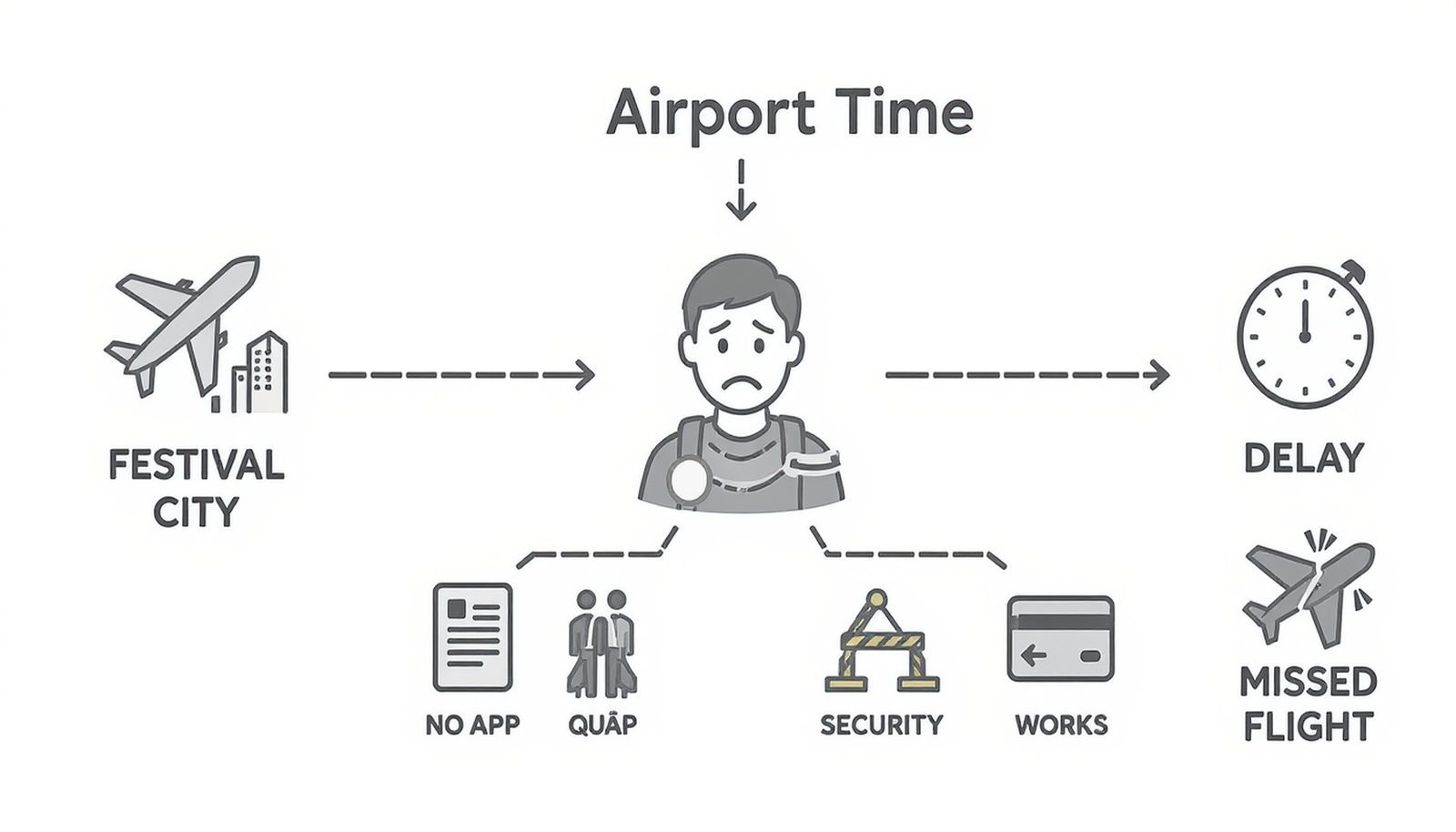
Airline advisories and airport-specific rules translate abstract risks into concrete frictions: longer check-in times, extra documentation checks, and higher missed-connection risk. During festival season, when flights are fuller and schedules tighter, these frictions become decisive.
Operational advisories as early-warning signals
Airlines issue notices about weather disruptions, security situations, and infrastructure constraints. Examples include:
- Weather alerts for North America that signal potential cascading delays.
- Security-related disruptions around specific airports (e.g., Tel Aviv).
- Construction at major hubs like JFK or Boston that lengthen taxi times and gate availability.
For festival cities, these advisories matter in two ways:
- Feeder route vulnerability: Even if your festival city is stable, disruptions at a hub can break the chain of connections needed to reach it.
- Recovery capacity: During peak festival weeks, spare seats for rebooking are limited, so a single missed connection can translate into a multi-day delay.
Airport rules that invalidate digital-first assumptions
Some airports impose rules that conflict with common travel habits:
- No digital boarding passes at certain airports (e.g., Marrakech), requiring printed documents.
- Extended security queues at airports like Brussels due to heightened security measures.
- Construction-related changes in terminal layouts that increase walking time and confusion.
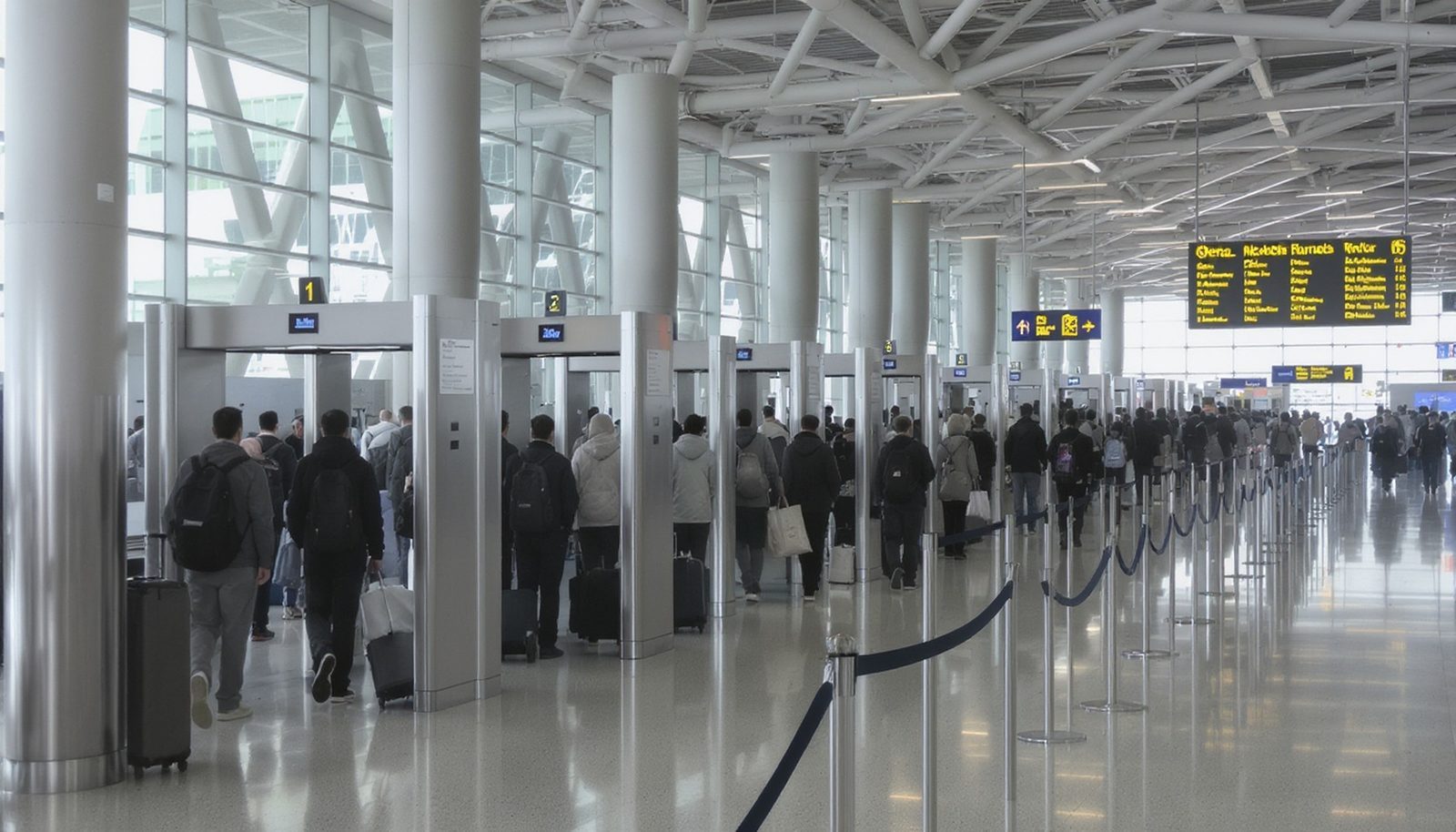
These rules convert into hidden time costs. A traveler who normally arrives 90 minutes before departure may need 2–3 hours at specific airports, especially when festival crowds add volume. The risk is not just missing a flight; it is missing a non-replicable festival event (opening ceremony, main parade) because a tight connection failed.
Payment friction and stranded-cost risk
Airports and airlines are also changing how payments work:
- Some airport locations are moving to cashless operations.
- Temporary blocks on certain card types (e.g., India-issued credit cards) for bookings or changes.
For festival travelers, this creates a specific mechanism of risk:
- A disruption occurs (weather, security, or operational).
- You need to rebook or pay for an extra night of accommodation.
- Your primary payment method is not accepted in that channel or location.
- You incur stranded costs: time lost searching for alternatives, higher last-minute prices, or inability to secure a seat at all.
Because festival periods compress demand into narrow windows, the cost of payment friction is amplified: the difference between rebooking immediately and after a few hours can be the difference between attending the festival or missing it entirely.
Visa, Entry, and ID Rules: When “Best City” Becomes “No Boarding”
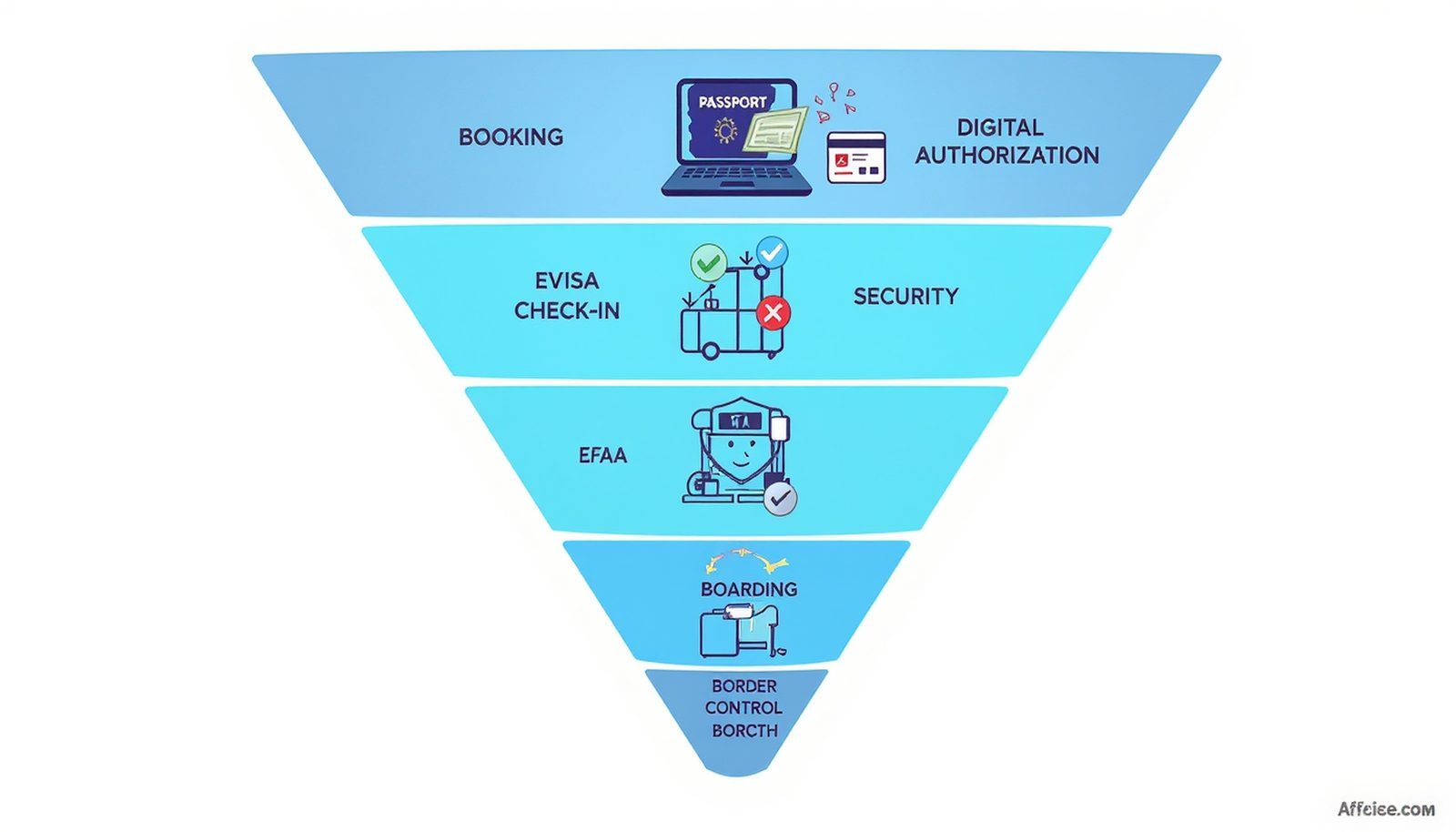
Visa and entry mechanisms are tightening and digitizing, especially through electronic travel authorizations (eTAs) and eVisas. For festival trips, these systems act as pre-departure filters that can quietly block access to otherwise attractive cities.
Digital pre-clearance as a gatekeeper
Recent changes include:
- Electronic travel authorizations for Israel for previously visa-exempt travelers.
- Mandatory eVisas for Brazil for U.S., Australian, and Canadian citizens.
- Cuba’s D’Viajeros form plus electronic travel authorization for non-Cuban nationals.
- REAL ID requirements for domestic U.S. flights.
These mechanisms compress the pre-travel compliance window. The key dynamic is:
- Travelers treat digital authorizations as minor paperwork.
- Airlines treat them as hard prerequisites for boarding, because carriers can be fined for transporting non-compliant passengers.
The result is a growing gap between traveler perception (“I’ll do it later”) and enforcement reality (“No boarding without it”).
Festival timing and processing bottlenecks
Festival seasons create spikes in application volume for eVisas and eTAs. Even without published statistics, the mechanism is clear:
- More travelers apply in a short window.
- Systems and staff face higher loads.
- Processing times become less predictable.
Because airlines and border authorities may apply rules inconsistently across airports and carriers, there is uncertainty about where denial occurs:
- At check-in, when airline staff detect missing or invalid authorizations.
- At transit points, if documentation is re-checked.
- On arrival, if border officers interpret rules more strictly than airline staff.
This enforcement ambiguity is a structural risk: the same traveler profile might be allowed to board in one airport but denied in another, even with identical documents.
ID compliance for domestic segments in festival itineraries
REAL ID requirements for U.S. domestic flights add another layer. For festival trips that combine international and domestic segments, a non-compliant ID can break the itinerary even if the international leg is valid. The mechanism is simple:
- Traveler focuses on passport and visa for the international segment.
- Domestic leg requires REAL ID-compliant identification.
- Failure to meet domestic ID rules prevents reaching the international departure point or onward festival city.
In effect, the “best festival city” may be unreachable not because of its own rules, but because of ID requirements in a connecting country.
Comparing Festival Cities: Advisory Level vs. Rainy-Season Exposure
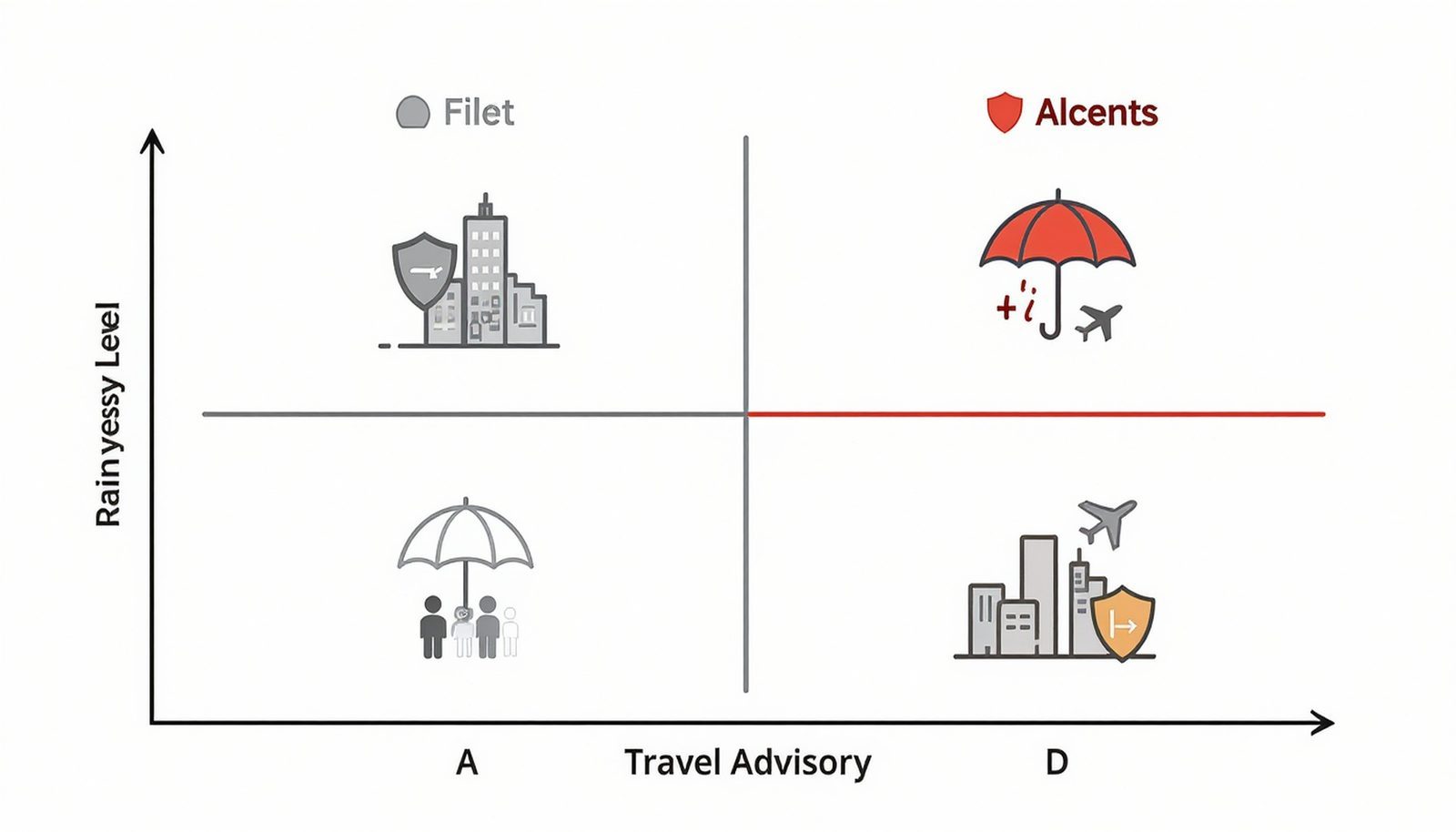
Because we lack quantitative disruption data, the most practical comparison is qualitative: how advisory levels interact with rainy-season exposure and operational complexity. The table below outlines a generic framework for comparing candidate festival cities without naming specific locations.
| City Profile | Advisory Level Pattern | Rainy-Season Exposure | Operational Complexity | Key Trade-off |
| Type A: Stable, low-risk, off-peak rain | Usually Level 1–2, rare changes | Rainy season does not overlap main festivals | Major hubs, redundant routes | Lower cultural intensity vs. high reliability |
| Type B: Iconic festival, moderate advisory volatility | Level 2–3 around major events | Partial overlap with rainy season | Busy hubs, some airport constraints | High cultural payoff vs. higher disruption risk |
| Type C: High-risk, high-intensity festival | Level 3–4 or frequent changes | Strong overlap with rainy season | Limited routes, infrastructure stress | Unique experience vs. significant safety and access risk |
| Type D: Emerging festival city | Limited advisory history, data gaps | Rainy-season impact unclear | Smaller airports, fewer backups | Lower cost and crowds vs. information uncertainty |
This framework shows that “best” is not a single ranking but a choice among risk-return profiles. Travelers who prioritize reliability will gravitate toward Type A cities, while those seeking unique experiences may accept Type B or even Type C profiles, especially if they have higher risk tolerance and flexibility.
Risk and Uncertainty: What We Still Don’t Know
Even with structured advisories and airline notices, there are significant gaps in the information needed to make fully rational festival-city choices.
Missing quantitative links between advisories and disruptions
We do not have clear data on how often changes in advisory levels translate into:
- Flight cancellations or route suspensions.
- Insurance claim denials based on “known risk” clauses.
- Stranded-traveler scenarios where evacuation support is limited.
This means travelers cannot easily estimate the probability that a Level 2 city will behave like a Level 3 environment during a festival, or how quickly airlines adjust operations after an advisory change.
Unclear enforcement patterns for digital entry controls
There is limited transparency on how consistently eVisas, eTAs, and digital forms are enforced across airlines and border points. Key unknowns include:
- How often airlines deny boarding due to missing or ambiguous authorizations.
- How frequently travelers are turned back on arrival despite being allowed to board.
- Whether festival periods trigger stricter enforcement compared with off-peak times.
This uncertainty makes it difficult to model the true risk of being blocked from a festival city at the last minute.
Economic mechanisms behind payment and cashless policies
We also lack detailed explanation of who bears the cost when payment-method constraints collide with disruptions:
- When airports go cashless, what happens to travelers whose cards fail?
- When certain card types are temporarily blocked for bookings, how do airlines handle travelers who cannot pay through approved channels?
- Do these policies disproportionately affect travelers from specific regions during festival peaks?
Without this information, travelers cannot accurately assess the financial risk of relying on a single payment method in a festival city with evolving policies.
Rainy-season thresholds and cost implications
Rainy-season guidance rarely provides thresholds (e.g., rainfall levels that typically trigger road closures) or cost estimates (e.g., average delay duration during peak storms). As a result:
- Travelers cannot distinguish between cities that handle heavy rain well and those that experience systemic breakdowns.
- It is hard to compare the expected cost of disruption between two festival cities with similar climates but different infrastructure resilience.
These uncertainties mean that even well-informed travelers must accept a degree of irreducible risk when choosing festival cities for 2026, especially where rainy seasons and complex entry rules overlap.
Conclusion: Choosing Festival Cities as a Portfolio of Risks
In the past, picking the “best city” for festival season was mostly about taste and budget. In 2026, it is increasingly about risk architecture. Travel advisories, rainy-season hazards, airline operations, and digital entry systems interact to create distinct profiles for each festival city.
The key mechanisms are clear:
- Advisory levels convert security, health, and environmental signals into a dynamic baseline that can change trip feasibility.
- Rainy-season conditions turn festivals into high-variance events, where infrastructure resilience matters as much as cultural appeal.
- Airline and airport rules translate risk into time costs, missed connections, and payment friction.
- Visa, eTA, and ID systems act as pre-departure filters that can silently remove cities from your realistic options.
Because we lack precise probabilities and cost data, travelers must think in terms of trade-offs rather than certainties. A practical approach is to treat your festival plans as a portfolio:
- Combine at least one low-volatility city (stable advisories, minimal rainy-season overlap) with any higher-risk, high-reward festival destinations.
- Recognize that the same festival city can move between categories as advisories, weather patterns, and entry rules evolve.
Ultimately, the “best” festival city in 2026 is the one whose risk profile matches your tolerance and flexibility, not just the one with the most spectacular fireworks. Understanding the mechanisms behind advisories, rainy-season disruptions, and digital controls allows you to make that match consciously, rather than discovering the trade-offs at the boarding gate.