

I’ve lost count of how many times I’ve heard someone say, We saved $200 on that ticket.
Then I pull up the expense report and realize the total cost of the trip went in the opposite direction.
If you manage business travel, you’ve probably felt that same tension. The pressure to book the cheapest flight is constant. But here’s the uncomfortable part: those bargain fares can quietly drain your budget, wear down your team, and throw your schedule off balance.
This isn’t a pitch for first class on every route. It’s about recognizing when cheap
is actually expensive, and how to build a travel strategy that keeps corporate travel flight costs under control without punishing the people who are actually on the road.
1. The Illusion of Savings: When the Cheapest Fare Costs the Most
The core problem? Most companies still optimize for ticket price, not total trip cost.
On paper, a $350 economy ticket looks better than a $550 one. But what if that $350 option:
- Requires a 6 a.m. departure and a 3-hour layover
- Charges $60 for a checked bag and $40 for seat selection
- Comes with a painful change fee if the meeting moves
Now layer in the hidden pieces of the total cost of business flights:
- Two extra hours of employee time spent in transit instead of with clients
- Higher risk of missed connections and last-minute rebooking fees
- Fatigue that kills productivity the next day
Suddenly that cheap
ticket is the most expensive option in the room. This is the hidden cost of cheap flights that rarely shows up in a simple fare comparison.
Now compare that to a slightly higher fare on a more reliable airline with better schedules and flexible policies. That ticket might look pricey at first glance, but it often reduces the true cost of discounted flights. As several corporate travel guides point out, choosing airlines with flexible change and cancellation policies often saves more than you lose by paying a bit extra upfront (source).
So the real question isn’t, What’s the cheapest fare?
It’s this: What’s the lowest total cost for this trip, including time, risk, and flexibility?

2. Time Is a Line Item: Why Travel Convenience Matters More Than You Think
Most travel budgets ignore the most expensive resource in the company: your people’s time.
Think about a typical cheap
itinerary:
- Longer layovers to shave $80 off the fare
- Off-peak flights that require 4 a.m. wake-ups
- Secondary airports far from the client’s office
On a spreadsheet, you’ve just scored a win. In reality, you turned a 6-hour trip into a 12-hour day and guaranteed your traveler will be half-functional in the meeting. That’s where airfare savings vs productivity loss becomes very real.
Tools like TSA PreCheck and Global Entry are a good example of where paying a little saves a lot. Frequent travelers can save 20–30 minutes per airport visit by skipping long security lines. Over a year, that’s hours of regained productivity and less stress. Yet many companies still won’t reimburse the enrollment fee.
It’s worth asking:
- Do we factor our employees’ time into our travel decisions?
- Do we allow slightly higher fares if they significantly reduce travel time?
- Do we track how much time is lost in transit vs. spent with clients?
If the answer is no, your cheap
flights are quietly taxing your payroll and inflating the total cost of business flights in ways that don’t show up in the fare alone.
3. The Policy Trap: When “Book the Cheapest” Backfires
Plenty of companies still rely on a one-line travel rule: Employees must book the lowest available fare.
It sounds disciplined. In practice, it’s risky.
Here’s what happens in the real world:
- Employees feel forced to choose inconvenient or risky flights to stay compliant.
- They book through random websites to find the absolute lowest price.
- Finance sees lower ticket prices but higher overall travel spend.
These kinds of business travel booking mistakes are common in unmanaged or loosely managed programs. One corporate travel analysis notes that unmanaged travel leads to significant budget waste and that structured programs can cut costs by up to 30% annually (source).
A better company travel policy airfare doesn’t just say be cheap.
It spells out:
- Booking windows (for example, flights should be booked 14–30 days in advance when possible)
- Preferred airlines and routes based on negotiated deals
- Flexibility rules (when it’s okay to pay more for direct flights or better schedules)
- Class of service by route length (e.g., economy under 4 hours, premium or business above 8)
Once you centralize travel and enforce a clear policy, you gain something more valuable than a one-off cheap fare: data. With data, you can negotiate discounts, spot waste, and refine your rules so that corporate travel flight costs stay under control without relying on blunt instructions like book the cheapest.

4. The Fine Print Problem: Change Fees, Add-Ons, and “Light” Fares
Another hidden cost of cheap flights lives in the fine print.
Many airlines now sell light
or basic
fares that look attractive in search results. But once you add:
- Checked baggage
- Seat selection
- Priority boarding
- Reasonable change or cancellation options
…the total cost can jump 15% or more compared to a standard fare that included those benefits from the start (source).
For corporate travel, this is especially risky. Business trips change. Meetings move. Clients reschedule. A rigid, non-changeable ticket is a liability, not a bargain. The cost of flight cancellations for employers and last-minute changes can easily wipe out any initial savings.
So when you see a low fare, pause and ask:
- What’s included? Bags, seats, changes?
- What’s the change fee? Is it a flat fee or fare difference only?
- What’s the total cost if we need to adjust this trip once?
Sometimes the smarter move is to pay slightly more for a flexible fare and avoid paying twice when plans inevitably shift. That’s the real trade-off in the cheap flights vs flexible tickets debate.
5. Economy vs. Business: When Paying More Actually Saves Money
This is where many finance teams flinch: Why would we ever pay for business class?
Because sometimes, business class is the cheaper option when you zoom out and look at the full picture.
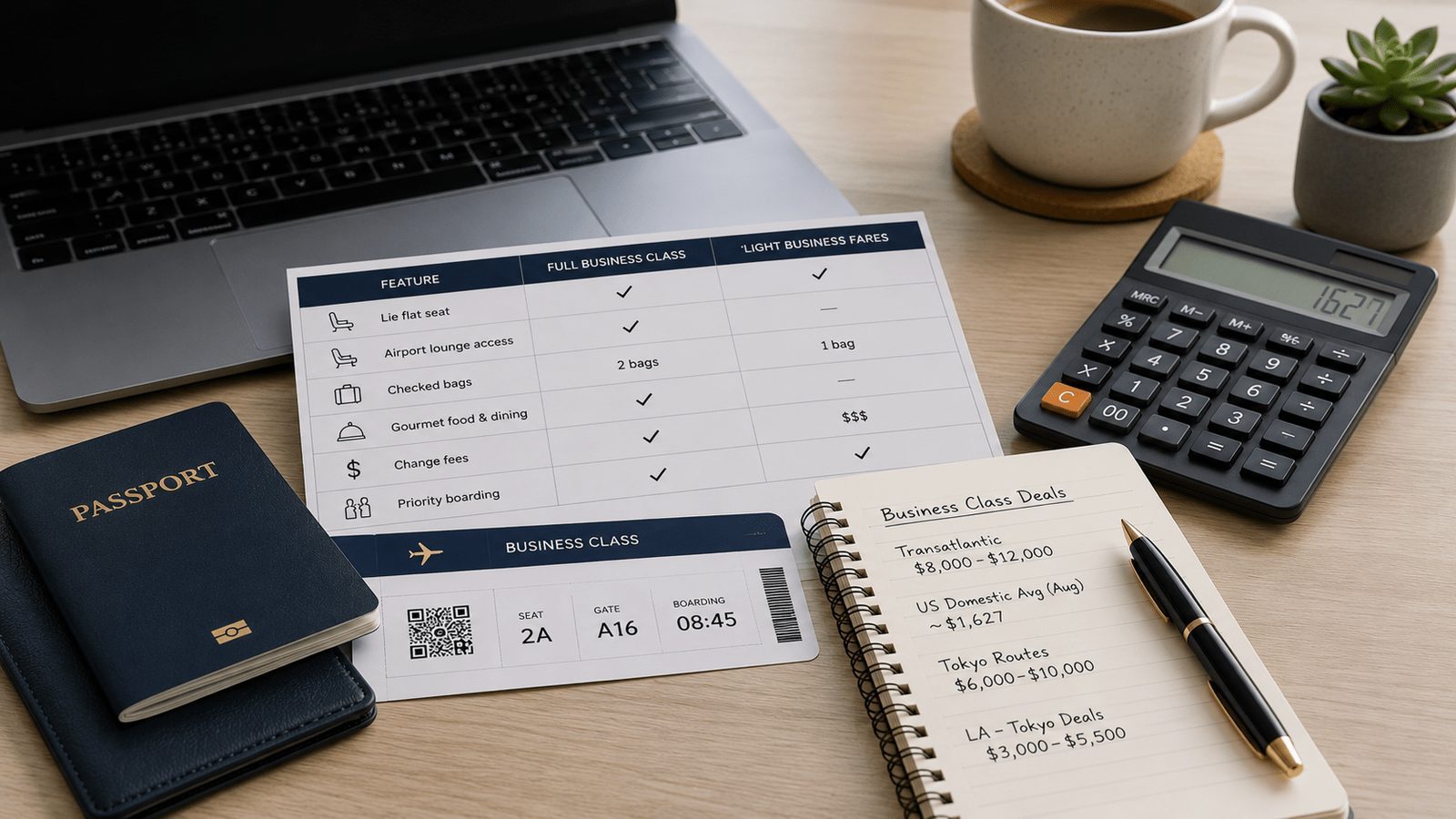
On long-haul routes, business class isn’t just a bigger seat. It’s:
- Lie-flat beds that allow real sleep
- Lounge access for quiet work and reliable Wi‑Fi
- Priority check-in, security, and boarding that save 20–30 minutes at multiple points
- More generous baggage allowances and fewer surprise fees
For a senior executive flying overnight to close a deal, arriving rested and functional can be the difference between winning and losing a contract. That’s not luxury. That’s risk management—and a way to avoid the airfare savings vs productivity loss trap.
The good news: business class doesn’t always mean $10,000 tickets. With the right strategies, companies routinely book business fares at 30–70% below the published price (source). That can include:
- Booking in the
sweet spot
window (often 65–110 days before departure) - Using secondary airports where fees and demand are lower
- Leveraging miles and points for upgrades or award tickets
- Working with consolidators or specialized agencies that access hidden corporate fares
Whenever you’re unsure, come back to one question: What’s the value of this trip? If the potential revenue or strategic importance is high, it can be financially rational to invest in a seat that protects your traveler’s performance and reduces the true cost of discounted flights.

6. Loyalty, Negotiated Deals, and the Power of Saying “No” to Random Bargains
One of the biggest hidden costs of chasing cheap flights is fragmentation. Every time an employee books a random airline for a one-off deal, you lose leverage.
Airlines reward consistent volume, not just size. Even smaller companies can negotiate:
- 5–10% corporate discounts
- Capped fares on key routes
- Better change and cancellation terms
- Extra perks like priority boarding or baggage allowances
But you only get there if you can show data: We flew this route X times last year, mostly on your airline.
That’s impossible if everyone is chasing the lowest fare on different carriers every time. Over time, those low airfare corporate travel risks add up.
There’s also a double-dip opportunity: corporate and personal loyalty programs. Many airlines allow both the company and the traveler to earn points on the same ticket. Over time, those points can fund discounted or even free flights, upgrades, or status benefits that reduce friction for your travelers.
The hard part? You have to be willing to say no to some too good to be true
deals on non-preferred carriers. It can feel like leaving money on the table. In reality, you’re trading a one-time saving for long-term leverage and a more predictable airfare cost breakdown for businesses.
7. From Ad Hoc Booking to Strategy: How to Stop Overpaying for “Cheap”
If your travel program is basically everyone books their own flights and emails receipts
, you’re almost certainly overpaying—especially once you factor in flight change fees for companies, cancellations, and last-minute bookings.
Here’s a simple roadmap to move from ad hoc chaos to strategic control without turning your company into a bureaucracy:
- Centralize booking channels
Use a single platform, TMC (travel management company), or at least a short list of approved tools. This gives you visibility, consistency, and better control over the total cost of business flights. - Define a real travel policy
Go beyondbook the cheapest.
Set rules for booking windows, preferred airlines, cabin classes by flight length, and when flexibility is allowed. A clear company travel policy airfare framework reduces guesswork and frustration. - Negotiate with vendors
Use your historical data to approach airlines, hotels, and car rental companies. Even modest volume can unlock discounts, better terms, and fewer surprises when plans change. - Educate travelers
Explain why you sometimes choose a slightly higher fare. Show how it reduces total cost, cuts down on business travel booking mistakes, and protects their time and sanity. - Measure total trip cost
Track not just ticket prices, but changes, cancellations, baggage fees, and last-minute bookings. That’s where the real waste hides—and where the hidden cost of cheap flights becomes visible.
The goal isn’t to spend more. It’s to spend smarter. To stop rewarding the lowest sticker price and start rewarding the lowest total cost.
8. The Mindset Shift: From Cheap Flights to Smart Travel
If your main KPI is average ticket price
, you’re going to make bad decisions.
Cheap flights feel good in the moment. They make reports look tidy. But if they lead to:
- More missed connections and rebooking fees
- Exhausted employees and weaker client meetings
- Lost negotiation power with airlines
- Higher total trip costs once all the extras are added
…then they’re not cheap at all. They’re just another form of hidden spend.
The companies that truly save on travel do something different. They:
- Think in terms of value per trip, not just price per ticket
- Invest in systems, policies, and partnerships instead of chasing one-off bargains
- Protect their travelers’ time and energy as carefully as their budget
So the next time someone proudly announces, We found a really cheap flight,
try a different follow-up.
Ask: What did it really cost us?
Once you start there, your travel program gets leaner, smarter, and a lot more humane—and the true cost of discounted flights becomes much easier to control.