

I love a good “$30-a-day” headline as much as anyone. But every time I’ve chased one, the same thing happens: the cheap destination isn’t actually cheap once I add visas, ATM fees, SIM cards, and surprise taxes. The daily budget looks great on paper. My bank statement tells a different story.
If you’ve ever wondered why your “bargain” trip somehow cost as much as a week in Spain, this is probably why. Let’s walk through the hidden travel costs in cheap destinations that quietly wreck your budget – and how to push back before they do.
1. The Visa Trap: When Cheap Countries Charge Expensive Entry Fees
We tend to look at accommodation and food first. But in many “budget” regions, the real hit comes before you even leave the airport: visas, entry fees, and new-style travel authorizations.
Think about it this way: if you’re planning a 7-day trip and the visa costs $60, that’s almost $9 per day added to your budget before you’ve eaten a single meal. Stay only a few days and the per-day cost is even worse.
Some examples travelers often underestimate:
- Electronic authorizations and pre-clearance fees – systems like the EU’s upcoming ETIAS will add a mandatory charge just to enter, even if you’re visa-exempt.
- National park or special region fees – places like the Galápagos or certain islands charge separate conservation or entry fees on top of your flight.
- Daily levies – Bhutan’s Sustainable Development Fee is the extreme example, but more destinations are experimenting with per-day charges.
The catch? These costs rarely show up in those “$25/day in X country” blog posts. They’re also often non-refundable and payable in a strong currency (USD, EUR), which hurts even more if your home currency is weak.
How I handle it now:
- I calculate
visa + entry fees ÷ number of days
and add that to my daily budget. If it doubles my daily cost, I reconsider the trip length or destination. - I always check the official government site or a trusted source (not just a blog) for current fees and whether they’re per entry, per year, or per day.
- I avoid super-short trips to high-fee destinations. If I’m paying a big entry fee, I stay long enough to make it worthwhile.
2. ATMs and Bank Fees: The Silent Budget Killer
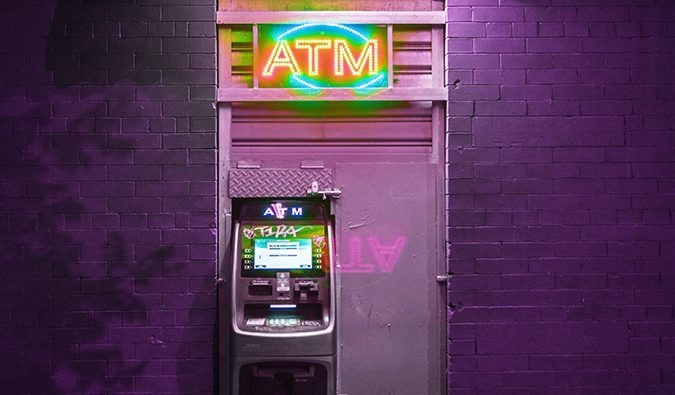
ATMs are where “cheap” destinations quietly become expensive. The problem isn’t just one fee – it’s layers of them.
On a single withdrawal abroad, you might be paying:
- Local ATM operator fee – a flat charge every time you withdraw.
- Your home bank’s foreign ATM fee – another flat fee or a percentage.
- Foreign transaction / currency conversion fee – often around 3% of the amount.
Do that three or four times a week and your “cheap” street food suddenly has a luxury surcharge. These international ATM withdrawal charges are one of the biggest budget travel hidden charges people forget to plan for.
What makes it worse is how we behave when we’re nervous about cash. We withdraw small amounts “just in case,” which means paying those flat fees over and over. In cash-heavy countries, that’s brutal.
What I do differently now:
- Use travel-friendly banks and cards – I look for accounts that reimburse ATM fees or charge none at all, like the ones highlighted by long-term travelers such as Nomadic Matt in his breakdown of bank-fee strategies (source).
- Withdraw fewer times, in larger amounts – I’d rather pay one fee on $300 than three fees on $100.
- Carry a backup card – if one card gets blocked or eaten by an ATM, I don’t have to use terrible airport exchanges or cash advances.
- Check my bank’s partner networks – some banks belong to alliances that waive ATM fees at specific partner banks abroad.
Before any trip now, I ask myself: If I only used cash and my current bank cards, how much would I lose in fees?
If the answer is more than the cost of opening a better account, I switch.
3. Dynamic Currency Conversion: The “Helpful” Button That Robs You
Dynamic Currency Conversion (DCC) is one of the most deceptive travel “services” I’ve seen. It shows up at ATMs and card terminals as a friendly question:
Would you like to pay in your home currency?
It sounds safe. Familiar. Less scary than seeing a big number in a foreign currency. But here’s what’s really happening:
- The machine or merchant chooses the exchange rate, not your bank.
- That rate is almost always worse than your bank’s rate.
- Sometimes there are extra hidden margins or fees baked in.
So you feel reassured, but you’re paying more for the same thing. On a big purchase – a hotel bill, a tour, a flight – that difference can be huge.
My rule is simple: I always choose to pay in the local currency. If the terminal is confusing, I ask the staff to select local currency or I cancel the transaction and try again.
And if an ATM only offers withdrawals in my home currency with a terrible rate? I walk away and find another machine. I’d rather spend 10 minutes searching than lose 5–10% of every withdrawal to bad currency conversion fees abroad.
4. Tourist Taxes, Bed Levies and “Mandatory” Fees

Tourist taxes used to be a niche thing. Now they’re everywhere – and they’re often hidden until the last step of booking or even until check-in.
You’ll see them under different names:
- City tax or bed tax
- Resort fee or facility fee
- Environmental levy or visitor contribution
Sometimes they’re a flat amount per night, per person. Sometimes they’re a percentage of the room rate. Either way, they can add 10–30% to your accommodation cost.
Here’s the catch: many booking sites show a low nightly rate, then quietly add these fees in tiny text at the bottom. Or they say taxes and fees not included
and leave you guessing.
If you’re trying to understand how tourist taxes affect hotel prices, this is where the real cost hides. The headline rate is rarely the final number.
How I avoid nasty surprises:
- I scroll all the way to the “taxes and fees” section before booking anything.
- I calculate the real nightly rate including all mandatory charges, then compare properties.
- If a place has a huge resort fee for things I don’t care about (gym, “business center,” daily water), I skip it.
- I remember that some cities charge per person, not per room – which matters a lot if I’m not traveling solo.
Cheap destinations are catching up fast on tourist taxes. Ignore them, and your “$20 room” can quietly become $30+ once all the tourist taxes and bed levies are added.
5. SIM Cards, Roaming and the Cost of Staying Connected
Data is the new oxygen when we travel. Maps, translations, ride-hailing, mobile boarding passes – it all depends on being online. But connectivity is another place where cheap destinations get expensive.
Here’s where the money leaks out:
- International roaming – your home provider’s “convenient” roaming package can cost more than your accommodation if you’re not careful.
- Airport SIM markups – those “tourist SIM” counters often charge more for less data than local shops in town.
- Short-validity packages – cheap on day one, but they expire quickly, forcing you to top up again and again.
In many countries, a local SIM or eSIM is dramatically cheaper than roaming. But you still need to watch the fine print: activation fees, mandatory top-ups, or “tourist plans” that look generous but throttle speeds after a small high-speed allowance.
If you’re trying to compare local SIM card costs for travelers, don’t just look at the headline data amount. Look at validity, speed limits, and whether you’ll need to keep topping up.
My current approach:
- I check local SIM and eSIM prices before I fly, not at the airport counter.
- If I’m visiting multiple countries, I compare a regional eSIM vs. buying separate local SIMs.
- I download offline maps and translation packs so I can survive a day or two without data if needed.
- I turn off background data and auto-updates so my “10 GB” doesn’t vanish in two days.
The question I ask myself: How much is my data plan really costing per day, and is there a cheaper way to get the same functionality?
Often, there is – and it’s usually not the airport kiosk.
6. Internal Transport, Infrastructure and the “Cheap but Inconvenient” Problem

Many destinations are cheap once you’re there – if you ignore how much it costs to move around. Poor infrastructure can quietly force you into more expensive choices.
Common budget busters:
- Limited public transport – if buses are slow, rare, or unsafe at night, you end up using taxis or private transfers.
- Mandatory tourist shuttles – some attractions are only reachable via official (and pricey) transport.
- Tolls and parking – renting a car can look cheap until you add toll roads, city congestion charges, and parking fees.
- Prepaid transit cards – some cities require a minimum top-up that you’ll never fully use on a short trip.
On paper, a country might be “$25/day.” In reality, you’re spending $10–$20 a day just getting from A to B because the cheap options are slow, confusing, or unreliable.
These are the kinds of unexpected fees in cheap countries that don’t show up in glossy budget breakdowns but absolutely show up on your credit card.
What I do before I land:
- I research how locals actually get around, not just what’s marketed to tourists.
- I check if my accommodation offers free or cheap transfers – sometimes that alone justifies a slightly higher room rate.
- I look up transit card rules – minimum top-ups, card deposit, refund process – and factor that into my budget.
- I decide in advance:
Is this a public-transport city for me, or a rideshare/taxi city?
Then I budget accordingly.
Cheap destinations with weak infrastructure often force you to pay more for comfort and reliability. That’s not wrong – but it’s only a bargain if you plan for it.
7. How to Budget for “Cheap” Destinations Without Fooling Yourself
When I plan a trip now, I don’t start with the headline daily budget. I start with a more uncomfortable question:
What are all the things this destination doesn’t include in that daily number?
This is where the true cost of traveling to cheap countries shows up: visa fees, tourist taxes, travel money fees and surcharges, and all the little extras that don’t fit neatly into a “$30/day” promise.
Here’s the checklist I use to keep myself honest:
- Before I book flights
- Check visa/entry fees and spread them across the number of days.
- Estimate internal transport (buses, trains, transfers, taxis).
- Look up typical tourist taxes and resort fees in the cities I’ll visit.
- Before I book accommodation
- Scroll to the bottom for “taxes and fees” and add them to the nightly rate.
- Check if Wi-Fi, air-con, or safe usage has extra charges.
- See if the location will force me into expensive transport (e.g., far from public transit).
- Before I spend a cent abroad
- Confirm my bank’s ATM and foreign transaction fees.
- Get at least one card with no foreign transaction fees.
- Decide on a SIM/eSIM plan and rough data budget.
Once I’ve done that, I adjust my expectations. Sometimes the “cheap” destination stays cheap – great. Other times, I realize that a supposedly expensive place with good infrastructure, low fees, and easy transport might actually cost the same or less overall.
In the end, the biggest mistakes that make cheap trips expensive usually come from ignoring these hidden travel costs in cheap destinations. When you factor in visas, ATMs, SIM cards, and tourist taxes from the start, you can still travel on a tight budget – just without the nasty surprises.