
I used to sort every flight search by lowest price and feel smug about it. If the cheapest option was a 5:30 a.m. departure with a midnight connection in a random hub, I’d shrug and think, It’s only one rough day. I’m saving money.
Then I started adding up what those cheap
flight times really cost: surge-priced taxis at 3 a.m., airport food, wasted hotel nights, and entire first days of trips lost to exhaustion. The headline fare was low. The trip was not.
This is the part most booking sites never show you. In this guide, I’ll walk through how I now look at red-eyes, dawn departures, and awkward layovers using a simple idea: Total Trip Cost—money, time, and energy. Once you start thinking this way, the hidden costs of cheap flight times are hard to ignore.
1. The Cheapest Ticket vs. the Cheapest Trip
When you see a $79 red-eye and a $149 midday flight, your brain yells, Save the $70!
But that’s only looking at the ticket, not the trip.
Here’s how I break it down now, borrowing from the Total Cost of Travel
idea on Free Life Journey and similar breakdowns on TripSense:
- Airfare: the obvious number, but only one line item.
- Ground transport: taxis, ride-shares, airport trains, parking, late-night surcharges.
- Hotel impact: extra nights, wasted nights, early check-in or late check-out fees.
- Airport spending: meals, coffee, snacks, and that
just browsing
that turns into $40. - Sleep & productivity: the value of a usable day at your destination—work or vacation.
Once I started adding these up, a pattern emerged that matches what multiple fare analyses show about cheap flight schedules:
- Early-morning and late-night flights are often only 12–16% cheaper on average than peak times, not half price.
- Red-eyes on busy routes might be 25–35% cheaper, but that discount can disappear once you factor in everything else.
My rule of thumb now: if a better-timed flight is within about $50–$100 on a long trip, I treat that as an investment in functionality, not a luxury. I’m not just buying comfort; I’m buying a usable day and a calmer brain. That’s the real flight time vs total trip cost trade-off.

2. Red-Eyes: The Vampire Costs You Don’t See at Checkout
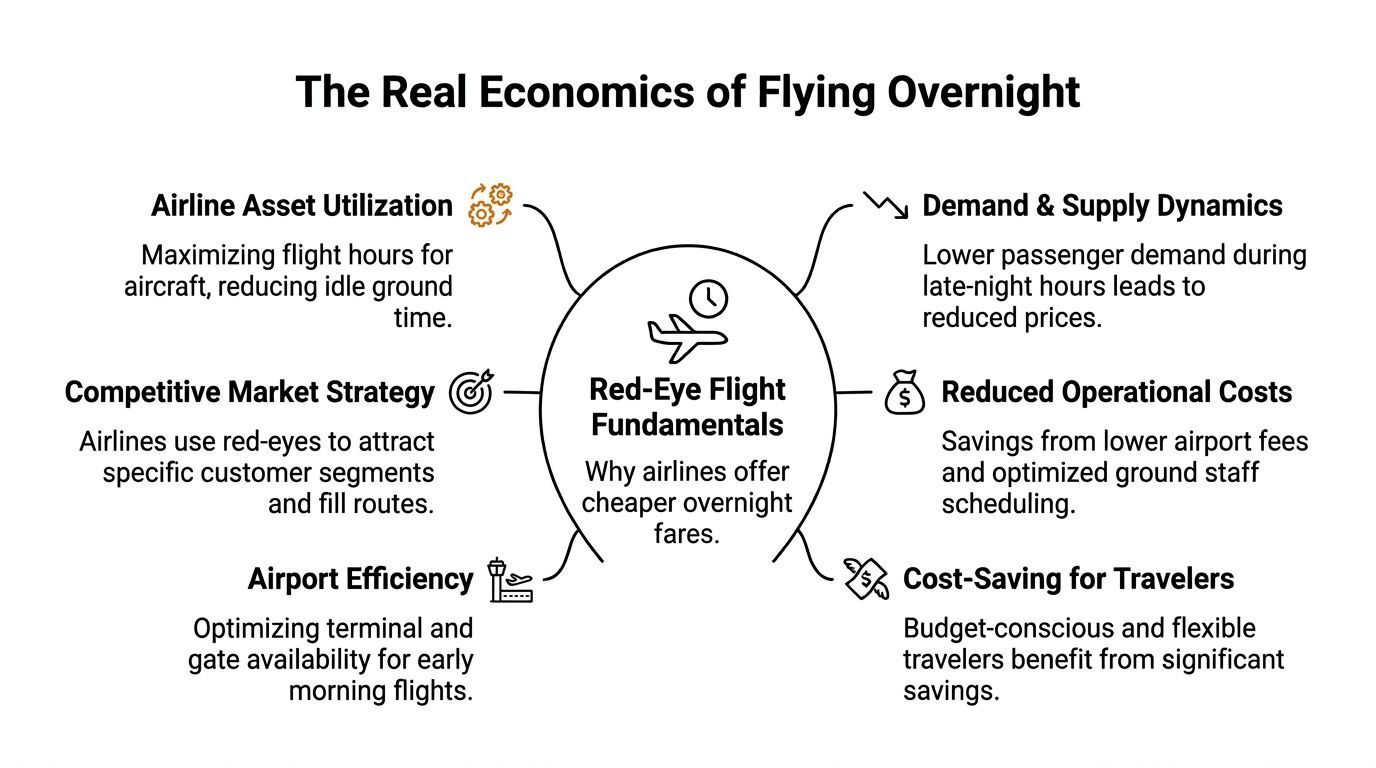
Red-eyes look clever on paper: you save
a hotel night, arrive early, and pay less for the ticket. The red eye flight true cost shows up later.
From multiple price analyses (including GoTriply, Odyssey Packages, and others):
- Red-eyes are often 25–35% cheaper on popular long domestic routes (think LAX–JFK), but not always—especially around holidays.
- They’re discounted because business travelers avoid them, and airlines need to fill those overnight seats.
So where do the hidden costs creep in with these cheap flight time traps?
- Late-night transport: public transit is often limited or closed. You’re pushed into taxis or ride-shares, usually with night surcharges and surge pricing.
- Early-morning arrival gap: you land at 5 a.m., but your hotel check-in is at 3 p.m. That’s hours of
zombie time
to fill somewhere. - Lost first day: on paper you
gain
a day. In reality, if you’re too tired to enjoy it, what did you actually gain?
Here’s the simple test I use now to spot the real cost of red eye flights:
- If I can sleep decently on planes, have a plan for the early arrival, and the savings are substantial, a red-eye can be a smart move.
- If I know I’ll arrive wrecked, and I’m paying extra for taxis and early check-in anyway, I treat the red-eye as fake savings.
Red-eyes aren’t automatically bad. They’re specialized tools. They work brilliantly for some people, on some routes, with the right preparation. But as a default budget
option, they’re often oversold—and the hidden costs of cheap flight times show up in your body the next day.

3. Dawn Departures: When First Flight Out
Costs You a Night of Sleep
There’s a popular mantra: Always take the first flight of the day. It’s cheaper and less likely to be delayed.
I used to repeat that without thinking. Now I’m more skeptical about the early morning flight extra expenses that come with it.
Here’s what the data and my own trips have taught me:
- Early flights are not always cheaper. On some routes, they’re actually more expensive because business travelers want to arrive with a full day ahead.
- When they are cheaper, the discount is often modest—again, around that 12–16% range on average.
The real cost is everything that happens before you even reach the airport:
- You set an alarm for 3:30 a.m. and sleep badly because you’re afraid of oversleeping.
- Public transit may not be running, so you pay for a taxi or ride-share at night rates.
- You pay for a full hotel night but only use a few hours—what some people call a dead hotel night.
By the time you land, you’ve effectively burned a day of energy. If you’re traveling for work, that can mean a foggy meeting or a wasted conference day. If you’re on vacation, your first day becomes a blur of coffee and survival mode.
So I ask myself:
- Is the early flight saving me enough money to justify losing half a night of sleep?
- Would a slightly later flight let me use normal transit, sleep properly, and arrive functional?
Often, the answer nudges me toward a mid-morning or early afternoon departure instead. Not glamorous, just sane—and usually cheaper once you factor in the cost of dawn departures and airport transfers.
4. Ground Transport: When the Airport Ride Costs More Than the Flight
This is the hidden cost almost everyone underestimates. I definitely did.
In the last few years, especially post-2024, late-night and early-morning ground transport has quietly become a profit center for ride-share companies and taxi operators. According to breakdowns like the one on Free Life Journey:
- Between midnight and 6 a.m., ride-share and taxi prices can jump by 35–50%.
- On some ultra-cheap fares, the airport ride can cost more than the flight.
Here’s how I sanity-check this now before I book, especially when I’m comparing late night flight cost options:
- I open my ride-share app and check estimated fares for the actual time I’d be traveling (or a similar day/time).
- I check whether public transit or airport shuttles are running at that hour.
- I add a realistic number to my mental budget:
Okay, this 5 a.m. departure probably means a $60 ride instead of a $20 train.
Once I do that, the cheap
flight often stops being cheap. A $60 fare difference can vanish in one surge-priced ride. That’s the kind of cheap flight schedule hidden fee that never shows up on the booking page.
So when you see a bargain red-eye or dawn departure, ask yourself:
- What will I actually pay to get to and from the airport at those hours?
- Is there a safer, cheaper way to get there without wrecking my sleep?
If the answer is no
, I treat that flight time as artificially expensive, no matter what the booking site says.
5. Layovers, Long Connections, and the Airport Money Trap
Another classic deal
: a cheap ticket with a long layover in a hub city. On paper, it’s just a few extra hours. In reality, airports are designed to separate you from your money when you’re tired, bored, and stuck.
From analyses like TripSense’s breakdown of layover costs, plus my own painful receipts, here’s what usually happens on a 5–8 hour layover:
- Two meals at airport prices.
- Snacks and coffee you wouldn’t buy in normal life.
- Maybe a lounge pass or a day room if you’re exhausted.
- Impulse purchases because you’re bored and slightly delirious.
It’s easy to burn through $40–$100 without noticing. Suddenly that $80 cheaper ticket doesn’t look so clever. The travel fatigue cost of overnight flights and long connections hits both your wallet and your mood.
That said, layovers aren’t always bad. I now think of them in two categories:
- Accidental layovers: long, awkward gaps you didn’t really want. These are usually money and energy drains.
- Intentional stopovers: planned mini-trips where you actually leave the airport, see a city, and maybe stay a night.
When I treat a layover as a mini-destination—with a realistic budget and a plan—it can add value. When I treat it as a necessary evil, it usually just adds cost.
So before you book that long connection, ask:
- Am I actually going to enjoy or use this time?
- How much will I realistically spend in the airport?
- Would a shorter, more expensive connection be cheaper in total?
6. When Cheap
Flight Times Are Actually a Great Deal
After all this skepticism, let me be clear: I still book red-eyes and early flights. I just do it on purpose now, with a realistic cost guide for overnight and dawn flights in my head.
Here’s when those cheap
times genuinely work in your favor:
- You can sleep on planes reasonably well, and you bring what you need (neck pillow, hoodie, eye mask, earplugs).
- You’ve planned the arrival gap: day-use hotel, lounge access, or a safe, comfortable place to rest.
- Ground transport is sane: public transit is running, or you’ve budgeted the taxi cost and it still makes sense.
- The savings are real: not $20, but a meaningful amount relative to your trip budget.
- Your first day is flexible: no critical meetings, no prepaid tours at 9 a.m., no need to be at 100% immediately.
There’s also a hidden opportunity that fare analysts point out, like in I-Reroute’s look at red-eye pricing: when overnight flights are hard to sell, the discount pressure can spill into premium cabins and upgrades. I’ve seen business-class red-eyes price only slightly above economy daytime flights on some routes.
In those cases, the best value might be:
- A red-eye in a better seat where you actually sleep and arrive functional.
- Or a slightly more expensive daytime flight that saves you a hotel night and a taxi, once you do the math.
When you look at red eye vs daytime flight price trade offs this way, the cheapest option on the screen isn’t always the smartest one for your body or your budget.

7. A Simple Framework for Your Next Booking
Here’s the checklist I run through every time I’m tempted by a cheap
flight time. You can tweak it to match your own pain tolerance and budget when you’re budgeting for early and late flight times.
- Compare by time of day, not just price.
Look at morning, midday, evening, and overnight options on the same day. Notice how small the price differences often are once you ignore the myths about the cheapest flight time. - Add ground transport.
Estimate what you’ll pay to get to and from the airport at those specific hours. Include surge risk and night surcharges. - Factor in hotel impact.
Will you waste a night? Need early check-in? Pay for an airport hotel? Add those to the flight time vs total trip cost, not as an afterthought. - Price your energy.
Ask yourself honestly:What is a usable day at my destination worth to me?
If losing that day saves only $40, is it worth it? - Decide your pain threshold.
For me, if a better-timed flight is within $50–$100 on a long trip, I almost always take it. Your number might be different, but pick one and stick to it. - Use tools, not myths.
Ignore the oldbook at 2 a.m. on Tuesday
advice. Instead, set price alerts, watch trends over a week or two, and then choose the flight that optimizes money + time + energy, not just the lowest fare.
Once you start thinking this way, the cheapest
flight on the screen often stops being the obvious choice. And that’s the point.
You’re not just buying a seat on a plane. You’re buying how you’ll feel when you land, how much of your trip you’ll actually enjoy, and how much chaos you’re willing to tolerate along the way.
The next time a red-eye or dawn departure pops up at the top of your search results, pause for a second and ask: What’s the real price I’m paying for this?