I’ve lost count of how many times I’ve heard this: We chose it because it’s cheap.
A week later, the same friend is messaging from their cheap
city, wondering how the bill got so high.
If you’ve ever flown to a so-called budget destination and come home with a bruised bank account, this is for you. The problem isn’t just inflation. It’s that the entire cost curve of many places has shifted, while a lot of us are still planning trips like it’s 2012.
Let’s walk through the traps, patterns, and quiet decisions that turn a cheap
city break into a how did this get so expensive?
story.
1. The Myth of the Cheap Country
: Why Averages Lie
We love simple numbers. Thailand is $40 a day.
Portugal is still cheap.
India is a bargain.
I used to plan entire trips around those averages. It felt efficient. It was also a great way to overspend.
The issue is that a daily average hides the cost structure of a place. As GloboTreks points out, you can’t treat a country like a fixed price tag. Many so-called cheap destinations have very uneven price patterns:
- Cheap food but expensive accommodation (think Iceland, Norway, Japan).
- Affordable guesthouses but pricey internal transport (India, parts of Southeast Asia).
- Low base costs but brutal activity and entrance fees (Iceland, Venice, Kyoto).
Two travelers can both aim for $60/day in the same city and end up hundreds of dollars apart by the end of the week. One understands where the money actually goes. The other is trusting the average and hoping for the best.
If you’re trying to figure out the true cost of budget travel destinations, averages won’t save you. They blur the difference between a place where beds are cheap but trains are not, or where food is a bargain but museums and tours are priced for high spenders.
Takeaway: Stop asking, Is this country cheap?
Start asking, Which categories are expensive here—beds, food, transport, or activities?
Your budget lives or dies on that answer.

2. When Budget
Hotspots Go Luxury: Bali, Marrakech & Friends
Some places are victims of their own success. They were cheap, word got out, Instagram did its thing, and now they’re budget
in reputation only.
Look at Bali, Marrakech, Hoi An, Dubrovnik, Lisbon, Buenos Aires. These were once whispered about in backpacker circles as insanely good value.
Now?
- Bali: Canggu and Ubud are full of digital nomads, yoga retreats, and boutique villas. You can still find homestays, but the gravitational pull is toward $80–$200/night villas and $10 smoothie bowls.
- Marrakech: The medina is increasingly lined with stylish riads and rooftop restaurants. Many of the truly cheap local spots have been pushed out or pushed to the edges.
- Hoi An: Tailor shops, cafes, and boutique hotels have multiplied. Prices for lodging, food, and souvenirs have crept up with every new wave of tourists.
- Dubrovnik: Game of Thrones fame plus cruise ships turned it into one of Europe’s pricier coastal cities, especially inside the Old Town walls.
This is where the hidden cost of cheap destinations shows up. We carry an old story in our heads: Bali is cheap.
So we relax. We upgrade the hotel. We eat in the pretty places. We book the tours. And suddenly our cheap
week in Bali costs more than a carefully planned week in Spain.
On paper, these are still called budget cities that end up expensive. In reality, they’ve slid into mid-range or luxury territory for many travelers. The label stayed; the prices didn’t.
Takeaway: Don’t trust a destination’s old reputation. Treat every cheap
hotspot like a potentially mid-range or even luxury destination until you’ve checked current prices for:
- Accommodation in the exact neighborhood you want.
- Typical restaurant meals where you’re likely to eat.
- Key activities you actually care about.

3. Tourist Zones vs. Real-Life Prices: The Two-Economy Problem
Here’s another trap: many bargain
destinations are only cheap if you step out of the tourist bubble. Inside that bubble, you’re often paying near-Western prices—or more.
Consider:
- Mexico’s resort hubs like Cancun and Playa del Carmen: U.S.-level prices for food, lodging, and activities in hotel zones, plus tourist taxes and transfers.
- Thailand’s hotspots like Phuket and central Bangkok: low base costs, but inflated prices for anything aimed at foreigners—beach bars, tours, taxis, even street food in the wrong area.
- India’s main circuits (Golden Triangle, Goa, Rishikesh): cheap local options exist, but foreigner-priced attractions, mid-range hotels, and private drivers add up fast.
It’s basically a two-economy system: one for locals, one for visitors. If you stay in the visitor economy the whole time, the cheap country
narrative collapses.
This is where the travel cost curve for budget destinations bends sharply. On the surface, the country looks affordable. But if you never leave the tourist zones, you’re effectively in a different economy with its own prices, fees, and expectations.
So I ask myself a slightly uncomfortable question now: Am I willing to step into the local economy enough to actually benefit from the low cost of living?
That might mean:
- Eating where menus aren’t in five languages.
- Using public transport instead of taxis or private transfers.
- Staying a few blocks—or a few neighborhoods—away from the main tourist drag.
If the honest answer is no, then I stop calling the destination cheap
and budget accordingly. A country can be cheap while your trip there is expensive. The difference is how much time you spend in the tourist economy versus the local one.
Takeaway: A destination’s reputation doesn’t matter if you never leave the bubble. Plan for the prices in the areas where you’ll actually sleep, eat, and wander.

4. Iconic = Expensive: When Bucket-List Cities Outgrow Your Budget
Some places have simply crossed a line. They’re not pretending to be budget-friendly anymore. They’re openly expensive—and yet we still try to squeeze them into budget trips.
Think Venice, Santorini, Kyoto, Bora Bora, Iceland. According to Beyond the Journey, hotel rates in many of these spots regularly sit above $300 per night in peak season. That alone can turn a three-night stay into a four-figure decision.
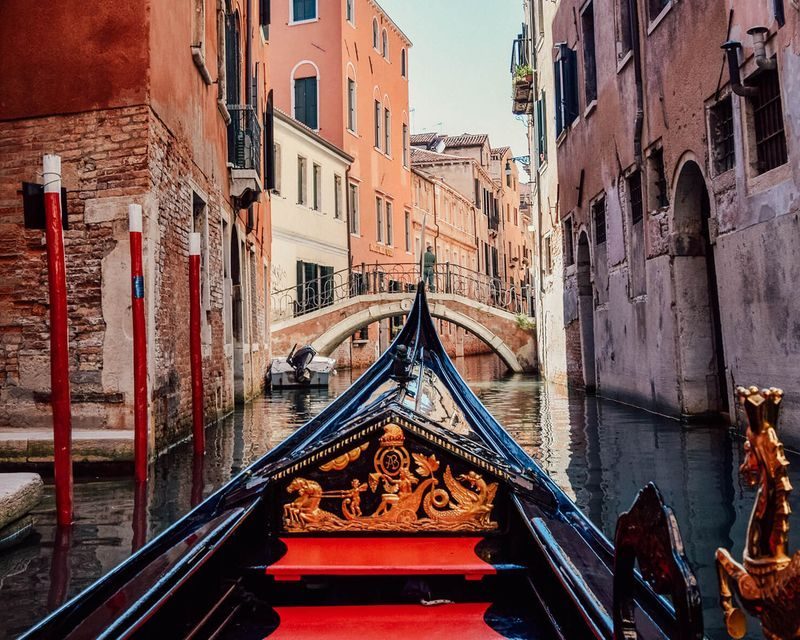
- Venice: High accommodation and dining prices plus a day-tripper entry fee. It’s basically a paid-admission city now.
- Santorini: Caldera-view hotels at $500–$1,000 per night. Limited public transport. Restaurant prices that match the view.
- Kyoto: Ryokans, temple visits, and traditional experiences have shifted from
special but doable
to premium. - Iceland: Hotels, rental cars, and fuel costs have surged. Self-driving the ring road is no longer a budget adventure.
The mistake isn’t visiting these places. It’s pretending they belong in the same budget category as their cheaper neighbors. A week in Santorini is not the same financial decision as a week on a lesser-known Greek island. Venice is not the same as staying in Mestre and commuting in.
If you’re comparing a cheap destination vs popular city costs, this is where the gap really shows. Iconic cities often come with seasonal price spikes, mandatory fees, and limited low-cost options. They’re bucket-list for a reason—and priced accordingly.
Takeaway: Treat iconic destinations like luxury purchases, even if you’re traveling on a budget. Either:
- Shorten your stay and accept the splurge, or
- Base yourself in a cheaper nearby town and commute in, or
- Delay the trip until your budget matches the reality.
5. The Hidden Costs That Quietly Kill Cheap
Trips
Even when you pick a genuinely affordable destination, the small, boring costs can wreck your budget. These rarely show up in those $50/day
blog posts, but they absolutely show up on your credit card statement.
From multiple sources (Country Adventures, Road Ahead You, Kevmrc), the same culprits keep appearing:
- Banking fees: ATM surcharges, foreign transaction fees, bad exchange rates.
- Budget airline traps: Baggage fees, seat selection, airport check-in charges.
- Local taxes & resort fees: City taxes, bed taxes, environmental levies,
facility fees
on hotels. - Transport extras: Airport transfers, prepaid transit cards with minimum top-ups, tolls, parking.
- Connectivity: Roaming charges, overpriced airport SIMs, data add-ons.
- Tipping & service: Especially in the U.S. and other tipping cultures, where 15–20% is standard.
Individually, each one looks small. Together, they can add 10–30% to your total spend. That’s the difference between We stayed on budget
and We’ll be eating instant noodles for a month.
This is the unglamorous side of the true cost of budget travel destinations. It’s not just about cheap meals and hostels. It’s about the budget travel hidden fees and surcharges that quietly pile up: the extra bag on a low-cost airline, the resort fee you only see at checkout, the ATM that takes a cut every time.
Takeaway: Before you declare a destination cheap, add a realistic buffer for hidden costs. I usually assume:
- +10–15% for taxes, tips, and fees in North America and parts of Europe.
- +5–10% for banking and transport surprises almost anywhere.

6. When Cheap
Abroad Beats Normal
at Home (And When It Doesn’t)
Here’s a twist: some classic domestic destinations have quietly become as expensive—or more expensive—than international trips.
Places like Maui, Key West, Las Vegas, Aspen, Jackson Hole, Nantucket, Sedona have seen costs for lodging, airfare, resort fees, dining, and parking climb into special occasion
territory. A long weekend in Key West can easily cost more than a week in a less-hyped Caribbean island or a smaller Mexican beach town.
So the old logic of stay domestic to save money
doesn’t always hold. Sometimes the cheap
choice is actually:
- A lesser-known U.S. town instead of a famous one.
- A second-tier European city instead of a capital.
- A non-resort coastal area instead of a big-name beach.
If you’re serious about the affordability of popular tourist cities vs budget cities, you have to look at the whole picture. Flights might be longer for that international trip, but if hotels, food, and activities are half the price, the math can still favor going farther.
Takeaway: Don’t assume closer = cheaper.
Put your dream domestic destination and a realistic international alternative side by side and compare:
- Flights
- Average nightly accommodation
- Daily food & transport
- Key activities or passes
7. How to Read a Destination’s Cost Curve Before You Book
So how do you avoid being blindsided by unexpected travel expenses in cheap cities? I use a simple process now whenever I’m tempted by a cheap
destination.
- Pick a realistic daily budget (say $50–$80) and break it into categories: beds, food, transport, activities, extras.
- Research each category separately for your specific destination and season:
- Accommodation: What’s the real price for the level you want, in the area you want?
- Food: How much are you likely to spend if you eat the way you actually eat, not the way a hardcore backpacker eats?
- Transport: Internal flights, trains, buses, taxis, airport transfers, passes.
- Activities: Entrance fees, tours, gear rentals, guided experiences.
- Identify the expensive category. Almost every destination has one. That’s where you either:
- Cut back (cheaper lodging, fewer tours), or
- Accept the splurge and trim elsewhere, or
- Change destinations.
- Add the hidden-cost buffer for fees, tips, and surprises.
- Stress-test your plan: What happens if prices are 20% higher than you expect? If that breaks your budget, you’re not ready yet.
This is your personal cost guide for so called cheap destinations. It forces you to see where the money will actually go instead of relying on old blog posts or vague memories from a friend’s trip five years ago.
It also helps you avoid classic mistakes choosing cheap travel destinations: chasing low flight prices to a place where everything on the ground is expensive, or falling for the cheap flights expensive destinations trap where the ticket is a bargain but the city is not.
It’s not about being paranoid. It’s about being honest. When you understand a destination’s cost curve, you can decide if it’s the right trip for you right now, instead of hoping the old cheap
label still applies.
Final thought: The world is full of genuinely good-value places. But they’re not always the ones trending on social media or sitting on your bucket list from ten years ago. The more skeptical and curious you are about prices before you book, the more freedom you’ll have once you’re actually there. That’s how you stop asking, Why do my cheap city trips blow the budget?
and start planning trips that match both your curiosity and your wallet.