I love staying in small places: family-run hotels, quirky B&Bs, hostels with a soul. They’re usually cheaper, more local, and far more memorable than big-box chains. But they’re also where travelers get burned most often.
Why? Because with small properties, almost nothing is standardized. Policies, room sizes, noise, safety, even what “deluxe” means can change from one place to the next. If you book them the same way you book a chain hotel or a package deal, you’re basically playing roulette with your money and your trip.
Let’s walk through how to book small hotels, B&Bs, and hostels like a pro—staying off the package grid, keeping costs low, and avoiding nasty surprises.
1. Stop Trusting Labels: “Boutique”, “Deluxe” and Star Ratings Mean Less Than You Think
Once you step away from big brands and package tours, the marketing language gets wild. Boutique
, design
, deluxe
, superior
—none of these are regulated. A “deluxe double” in one tiny hotel might be a gorgeous corner room with a balcony; in another, it’s just the only room with a window that opens.
If you want to book small hotels safely, you have to look past the labels and focus on the details.
Here’s how to sanity-check a small property before you even think about paying:
- Ignore the label, study the photos. Look at all the room photos, not just the hero shot. Do the bathrooms match the bedroom quality? Are there photos of the cheaper categories, or only the best room in the house?
- Read the room descriptions line by line. In small places, each room can be unique. Look for clues: floor level, view, bed size, ceiling height, whether the bathroom is private or shared.
- Check if rooms in the same category look different. If guest photos show wildly different rooms under the same name, email or call and ask:
Can you confirm which specific room I’m getting?
- Use reviews to decode the vibe. A 4-star “boutique” can feel more special than a 5-star chain if what you care about is atmosphere and personal service, not a spa and three restaurants.
The mindset shift: you’re not buying a label, you’re buying a specific room in a specific building. Treat it that way and you’ll avoid a lot of classic B&B booking mistakes.

2. Location Can Make a “Cheap” Stay Very Expensive
Small hotels and hostels often sit in residential neighborhoods, side streets, or “up-and-coming” areas. That can be amazing—or a daily headache.
Before I book, I always ask: What will this location feel like at 11 p.m. when I’m tired and just want to get back?
That question alone has saved me from a lot of “cheap but painful” stays.
Here’s how to stress-test the location so your “budget” stay doesn’t turn into a taxi-money sink:
- Open a map, don’t trust the description.
10 minutes from the center
can mean 10 minutes by car, not on foot. Check walking time to the places you’ll actually go: old town, beach, train station, conference venue. - Check transport reality. Is there a metro stop or bus within a 5–10 minute walk? How late does it run? In some cities, a cheap room far out can cost you more in taxis than you saved on the rate.
- Scan the area in Street View. Does it look lively or deserted? Are there cafés, supermarkets, people around? Or shuttered shops and empty lots?
- Read reviews for “location”, “safety”, “noise”. Guests will tell you if the street is loud, sketchy at night, or up a brutal hill with luggage.
Think of it this way: you’re not just booking a bed, you’re booking your daily commute. Price + transport + time = the real cost of that “cheap and safe hostel booking”.
3. OTAs vs Direct: Use Booking Sites as Tools, Not a Crutch
Online travel agencies (OTAs) like Booking, Expedia, Hostelworld and others are great for discovery. But with small properties, how you book can change how you’re treated and how easy it is to fix problems.
If you want to avoid common independent hotel booking errors, don’t just click the first “Book now” button you see.
Here’s the approach I use:
- Start on OTAs to compare. Filter by rating, price, neighborhood, and amenities. Shortlist 3–6 places that look promising.
- Then go to the property’s own site. Small hotels and B&Bs often list more room types, clearer photos, and special offers there. Sometimes they include breakfast or free cancellation that OTAs don’t.
- Compare total cost, not just the nightly rate. Look at taxes, cleaning fees, resort fees, breakfast, parking. OTAs and direct sites sometimes show these differently.
- When in doubt, book direct. With small places, direct guests usually get better room assignments, more flexibility, and faster help if something goes wrong. Third-party bookings can get stuck in a blame game between the site and the property.
If you see a big price difference, ask. A quick email like: I see your room at $X on [OTA]. Can you match that if I book direct?
often works, especially for small, owner-run places that prefer direct booking vs apps.
4. Policies, Fine Print and Hidden Fees: Where Small Places Bite Hardest
This is where people lose money. Small hotels, B&Bs and hostels often have stricter rules than big chains, because every no-show or late cancellation hurts them more.
If you’re a budget traveler, these are the booking mistakes that really sting: non-refundable rates you can’t use, surprise fees, and cancellation policies you never noticed.
Before I hit “book”, I always check these five things:
- Cancellation window. Is it 24 hours, 3 days, 7 days, 30 days? Some small properties lock you in weeks ahead, especially in high season.
- Refundable vs non-refundable. If your plans are even slightly shaky, pay more for flexibility. A cheap non-refundable rate is only cheap if your trip actually happens.
- Payment timing. Will they charge your card now, at check-in, or sometime in between? Some B&Bs pre-charge or take a big deposit.
- Check-in rules. Many small places don’t have 24/7 reception. Late arrivals might require a code, a key box, or a fee. Hostels may have strict check-in windows.
- Extra charges. Tourist taxes, resort fees, linen or towel fees (hostels), parking, mandatory breakfast, cleaning fees for apartments—add them up.
My rule: if I can’t clearly see the total cost and the cancellation terms on one screen, I don’t book yet. I email and ask for it in writing. That one message can save you hundreds if plans change.
5. Reviews: How to Read Between the Lines (and Spot Red Flags Fast)
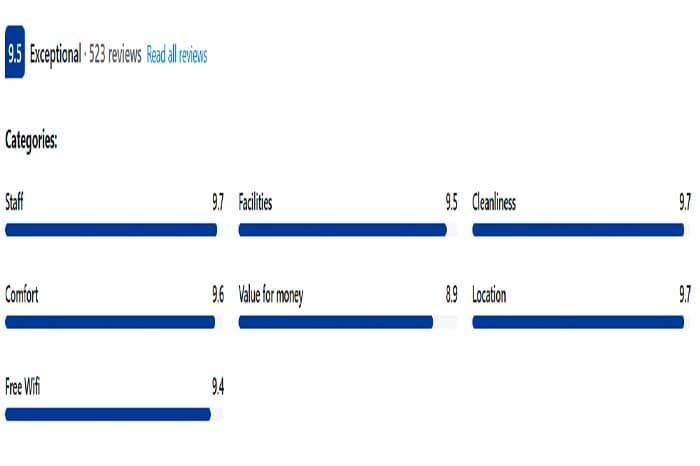
With small properties, reviews are your best friend—but only if you read them the right way. I care less about the overall score and more about patterns in recent reviews.
Done right, reading reviews is one of the best hostel booking safety tips you’ll ever use.
Here’s my quick review triage:
- Sort by most recent. A 9.0 average means nothing if the last 10 reviews complain about new management, cleanliness, or construction.
- Read the 7–8 scores, not just 10s and 1s. These guests usually give the most balanced, specific feedback.
- Search for your deal-breakers. Use the search box:
bed bugs
,noise
,bathroom
,Wi-Fi
,security
,hot water
. If the same issue appears repeatedly, believe it. - Check guest photos. They reveal worn carpets, tiny bathrooms, street-facing windows with no soundproofing, or that “garden view” that’s actually a parking lot.
- Look at management responses. Are they defensive, or do they acknowledge issues and explain fixes? A humble, proactive owner is worth a lot.
Ask yourself: If my stay looked exactly like the average of these reviews, would I be okay with that?
If the answer is no, move on. There’s always another small hotel or B&B around the corner.
6. Room Details That Matter More in Small Places (Noise, Size, Bathrooms, Wi‑Fi)
In big chains, rooms are standardized. In small hotels, B&Bs and hostels, two rooms at the same price can feel like different worlds.
If you want to avoid overpaying for small hotels, pay attention to the details that actually affect your sleep and comfort.
Here’s what I always check or ask about:
- Noise. Is the room facing a busy street, bar, or courtyard where people smoke and talk late? Are there reviews mentioning thin walls or church bells at 6 a.m.?
- Room size. Especially in Europe and older buildings. A “double” can be barely bigger than the bed. Check square meters/feet if listed.
- Bathroom type. Private vs shared, ensuite vs down the hall. In hostels and some B&Bs, this is the difference between comfortable and miserable.
- Climate control. Is there real air conditioning or just a fan? In hot or humid destinations, this is non-negotiable for many people.
- Wi‑Fi quality. If you work remotely or stream, don’t assume. Look for reviews mentioning Wi‑Fi, or email:
Is the Wi‑Fi strong enough for video calls in the room?
When I book, I often add a short note: If possible, a quiet room on a higher floor away from the bar/street would be great.
Small properties actually read these and often try to help—especially if you booked direct.
7. Timing Your Booking: When to Lock It In and When to Wait
With small hotels, B&Bs and hostels, inventory is limited. There might be only one or two rooms with a balcony, a family room, or a quiet back-facing room. Once they’re gone, they’re gone.
So how do you time it without making classic budget traveler booking mistakes?
Here’s how I think about timing:
- High season or big events? Book early—1–3 months ahead for popular cities, even more for tiny destinations or festivals. You’re competing with everyone for the same few good rooms.
- Shoulder or low season? You can often wait a bit, but still watch for limited categories (family rooms, private hostel rooms, accessible rooms).
- Uncertain plans? Book a flexible rate early, then set a reminder a week before the free-cancellation deadline to re-check prices. If they’ve dropped, rebook; if not, you’re still covered.
- Last-minute deals? They exist, but with small places they’re a gamble. You might get a discount—but on the worst-located or noisiest room.
Think of early booking as buying choice, not just a bed. The earlier you book, the more control you have over which specific room you end up in.
8. Safety and Scams: Staying Off the Package Grid Without Getting Burned
Most small hotels, B&Bs and hostels are run by honest people trying to make a living. But when you step away from big brands and package tours, you do need to be a bit more skeptical.
If you want to avoid scams booking hostels or off-the-grid guesthouses, a few simple checks go a long way.
Here’s how I keep it safe and sane:
- Cross-check the property. Does it appear on more than one platform? Does the address match on Google Maps? Are there consistent reviews over time?
- Be wary of prices that are way below the market. Sometimes it’s a genuine deal. Often it’s construction, missing amenities, or a place that’s cutting corners on cleaning or safety.
- Check basic safety features. Reviews will mention if doors don’t lock properly, if anyone can walk in, or if there’s no staff at night.
- Confirm everything important in writing. Late check-in, airport pickup, special requests, early breakfast, parking. If it’s not in an email or message thread, it doesn’t exist.
- Use a card, not bank transfers or cash prepayments. Reputable small properties will take cards or secure payment links. If someone pushes for a wire transfer to a personal account, I walk away. Safe payment methods for hostels and B&Bs are non-negotiable.
Staying off the package grid is absolutely worth it. You get character, local flavor, and often a better price. But you have to book like a skeptic, not a dreamer.
If you remember nothing else, remember this: know exactly what you’re getting, what you’re paying, and how easily you can get out of it. Do that, and small hotels, B&Bs and hostels become one of the best travel hacks you’ll ever use—cheap, memorable, and safe.