
I love a good multi-city trip. But I also see the same painful mistakes over and over: wasted days on trains and planes, blown budgets, and people coming home more exhausted than excited. When you’re stitching together several cities in one journey, the margin for error is tiny.
Let’s walk through the biggest multi city trip planning mistakes, how they quietly drain your time and money, and what to do instead.
1. Treating Each City as a Separate Trip
This is the root mistake. People open a booking site, search City A, then City B, then City C, and book whatever looks good in each place. On paper it feels organized. In reality, it’s chaos.
When you plan city-by-city instead of trip-first, you:
- Accidentally stack long travel days back-to-back
- Overpay because you never compare total route cost, only nightly rates
- End up with check-in/check-out times that don’t match transport schedules
This is one of the most common errors in multi destination itineraries. You’re making decisions in isolation instead of looking at the whole puzzle.
Now I start every multi-city trip with two questions:
- What’s my anchor city? The place I care about most and will spend the most time and money in.
- What’s the logical route? A line or loop that makes geographic sense.
Only after that do I layer in hotels, trains, and flights. Tools like Travorro and multi-city search on Google Flights or Skyscanner help you see the trip as a whole, not as a pile of unrelated bookings.
Takeaway: Design the route and anchor experiences first. Book logistics second. Hotels and flights should serve the itinerary, not dictate it.
2. Cramming in Too Many Cities (and Not Enough Days)

I get the temptation: We’re already in Europe, might as well add three more cities.
But every new city adds friction: packing, checking out, getting to the station or airport, waiting, transit, checking in again. That’s usually half a day gone, minimum.
On a 7–10 day trip, I’ve found the sweet spot is:
- 2–3 cities total
- At least 2 full days per city (not counting arrival/departure days)
When you ignore this, you pay in three ways:
- Money: More transfers, more tickets, more taxis.
- Time: You see more train stations than museums.
- Energy: Travel fatigue kills your enjoyment and your patience.
Overpacking cities in one trip is one of the classic multi city itinerary time and cost traps. You feel like you’re seeing more, but you’re really just moving more.
Now I ask myself a brutal question for every extra city: Is this stop worth losing half a day of my life?
If the answer isn’t a clear yes, I cut it.
Takeaway: Fewer cities, deeper experiences. You’ll spend less and remember more.
3. Building an Inefficient Route (Backtracking and Zigzags)

One of the most expensive mistakes is invisible when you’re just looking at a list of cities: a bad route. I see itineraries like: Paris → Rome → Amsterdam → Florence → Berlin. On a map, that’s a mess of zigzags.
This kind of inefficient multi city route planning leads to extra flights, extra transfers, and a lot of frustration.
Here’s what I do instead:
- Plot everything on a map (Google Maps, travel map planners).
- Look for a line or a loop, not scattered dots.
- Identify outliers that don’t fit this trip and save them for next time.
Then I think in terms of route types:
- Linear: Start in City A, end in City Z, no backtracking.
- Loop: Start and end in the same city, but make a real circuit.
This is where open-jaw and multi-city flights shine. Flying into one city and out of another (for example, NYC → Paris, Barcelona → NYC) often costs the same or less than a simple round-trip, as shown in examples on Daily Dream Travel. You avoid the classic mistake of returning to your starting city just to fly home
.
If you’re wondering how to avoid backtracking on multi city itinerary planning, this is it: map first, then book.
Takeaway: If your route looks like a zigzag, your budget will too. Aim for a clean line or loop and use open-jaw flights to avoid backtracking.
4. Chasing the Cheapest Flight or Nightly Rate (and Ignoring Total Cost)

Another subtle trap: optimizing each leg for the lowest price instead of optimizing the whole trip for value.
Here’s how this usually goes wrong:
- You pick a 6 a.m. flight because it’s $40 cheaper, then spend $60 on a taxi and lose sleep.
- You book a cheap hotel far from the center, then burn money and time on transport every day.
- You mix separate tickets on different airlines to save $80, then have zero protection if your first flight is delayed.
On multi-city trips, the cheapest
option in cash is often the most expensive in time and stress. This is one of the big multi city flight booking pitfalls people don’t see until they’re already on the road.
Now I compare:
- Total trip cost (all legs, all taxes and fees)
- Time cost (door-to-door, not just flight duration)
- Risk cost (separate tickets, tight connections, strict change rules)
That’s where a multi city vs one way flights cost comparison becomes useful. Sometimes a slightly higher fare on a single multi-city ticket saves you hours and protects you if something goes wrong.
Platforms that show full-price visibility per city leg (taxes and fees included) make this much easier. And when I do mix separate tickets or budget airlines, I only do it when the savings are substantial and I can build in generous buffers.
Takeaway: Stop asking, What’s the cheapest flight?
Start asking, What’s the smartest combination of time, money, and risk for the whole route?
5. Underestimating Transit Time and Logistics
Most people only look at the flight or train duration. That’s a mistake. The real question is: How long from hotel door in City A to hotel door in City B?
When you ignore this, you end up with:
- Entire days lost to airports and transfers
- Late-night arrivals that blow your first evening
- Missed tours or non-refundable tickets because you cut it too close
These timing mistakes on multi city trips are sneaky. On paper, a 1-hour flight looks great. In reality, it eats five or six hours once you add everything up.
Here’s how I sanity-check each leg:
- Estimate hotel → station/airport time.
- Add check-in/security time (often 1–3 hours).
- Add actual flight/train time.
- Add arrival → hotel time.
- Add a buffer for delays and getting lost.
Sometimes this reveals that a train beats a plane easily. Routes like Vienna → Budapest → Prague are classic examples where trains are faster, cheaper, and less stressful than flying, as highlighted in multi-city flight planning guides like this one.
Takeaway: Always calculate door-to-door time. If a leg eats most of a day, make sure that city is truly worth it.
6. Booking Inflexible Stays for a Very Flexible Trip
Multi-city trips have more moving parts. That means more chances for something to slip: a delayed flight, a canceled train, a strike, or simply you deciding you love one city and want to stay longer.
The mistake is locking everything in with non-refundable rates to save a few dollars per night. On a complex route, that can backfire badly.
What I do now:
- Use flexible or refundable hotel rates, especially for the first and last cities.
- Keep at least one float day in the itinerary that can absorb delays or be moved.
- Coordinate check-in times with arrival times so I’m not stuck with luggage for hours.
Yes, flexible rates can be slightly more expensive. But on a multi-city trip, they’re often the cheapest insurance you can buy.
Takeaway: Don’t chain yourself to rigid bookings on a trip that’s inherently complex. Pay a bit more for flexibility where it matters most.
7. Ignoring Documents, Money, and Connectivity Until It’s Too Late

Single-city trips are forgiving. Multi-city trips, especially across borders, are not. One missing detail can derail multiple legs.
Here are the big ones I always check now:
- Passport validity: Many countries require 6+ months remaining. I check this before booking anything.
- Entry and transit rules: Visas, transit visas, onward ticket requirements. I verify via official government or airline sources, not random forums.
- Bank and cards: I notify my bank of all countries I’ll pass through so my card doesn’t get blocked mid-route.
- Connectivity: I often use an eSIM so I’m not hunting for Wi‑Fi while trying to find my hotel in a new city.
I also keep digital copies of everything (passport, insurance, bookings) in a cloud folder and a travel app. When you’re juggling multiple borders and check-ins, this saves a lot of stress.
Skip this step and you’ll discover the hidden costs of multi city travel the hard way: last-minute visa runs, emergency calls to banks, and expensive airport Wi‑Fi.
Takeaway: Multi-city trips multiply your points of failure. Tighten up your documents, money, and connectivity before you go.
8. Not Using Rewards and Tools Strategically Across the Whole Route
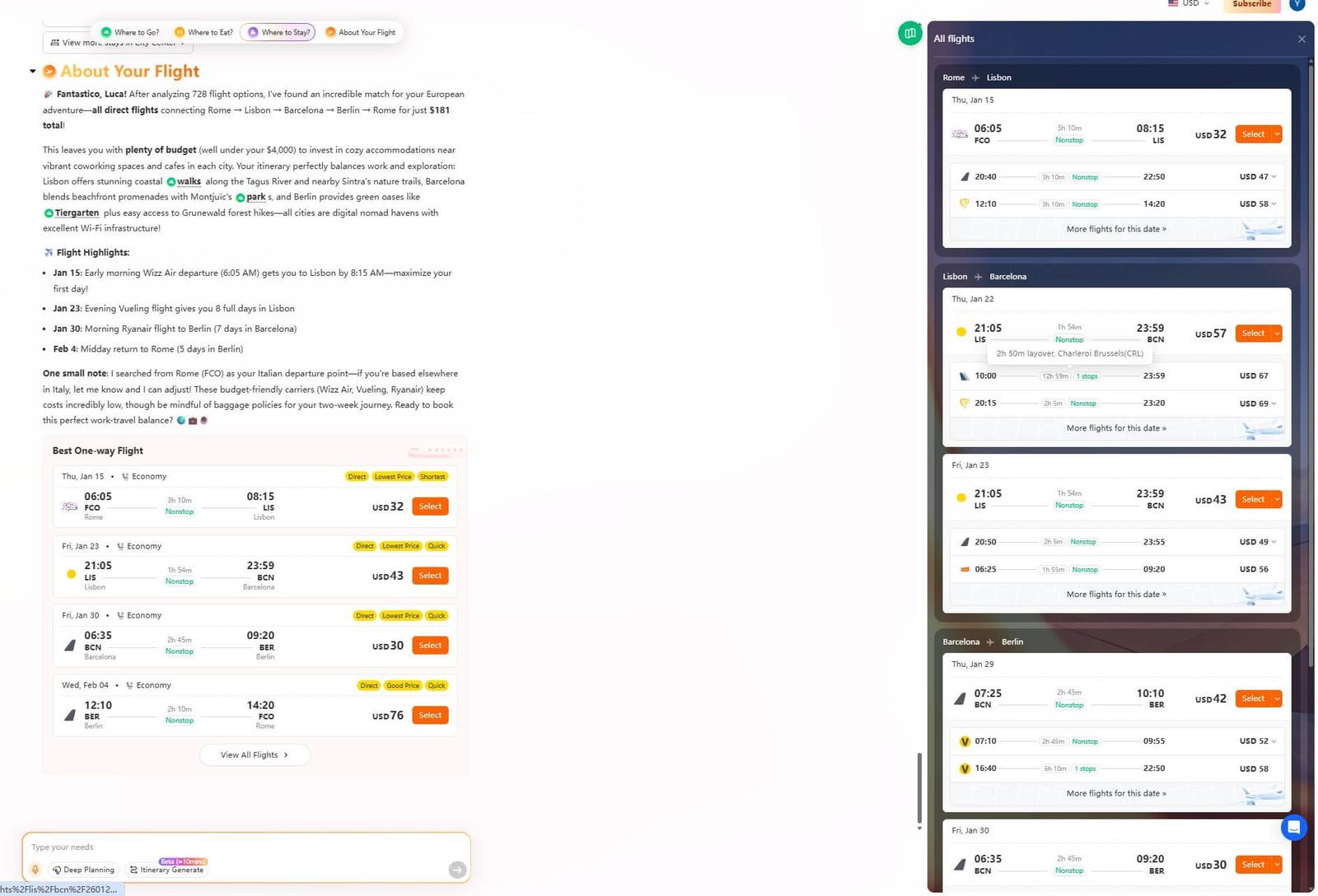
Multi-city trips are actually perfect for squeezing value out of points, miles, and loyalty programs. The mistake is treating each booking as a one-off and leaving value on the table.
Here’s how I approach it now:
- Pick an anchor program (or two) for hotels and flights and try to concentrate stays there.
- Earn on the basics (shorter, cheaper stays) and redeem on the splurge (your anchor city or a special hotel).
- Use multi-city-friendly tools (like Travorro, Booking.com, or Expedia’s multi-city features) to keep all legs visible in one place.
I also track my budget across the whole route with an app. Multi-city trips have more moving prices: different currencies, different city costs, surprise fees. Watching the total in real time helps me adjust on the fly instead of getting a nasty surprise at the end.
Most people don’t realize how many budget leaks in multi city travel planning come from small, repeated decisions: ATM fees, dynamic currency conversion, airport snacks, last-minute taxis. Seeing the full picture helps plug those holes.
Takeaway: Think of your trip as one big puzzle, not a stack of separate bookings. Route-level planning, smart tools, and focused rewards can turn a complex itinerary into a surprisingly efficient one.
If you remember nothing else, remember this: design the route first, then buy the pieces. That one shift alone will save you more time, money, and sanity than any hack you’ll find on a booking site—especially on a multi destination Europe trip or any complex route with lots of moving parts.