How Timing Has Become the Core Risk in Schengen Travel
For nonEU travelers, the question is no longer just Do I need a visa? but When is the system most likely to fail me? Two structural changes are converging in Europe:
- The phased rollout of the EU's biometric Entry/Exit System (EES) at Schengen external borders.
- Persistent, uneven backlogs in Schengen visa processing.
Both are fundamentally timing problems. EES increases the time it takes to process each nonEU traveler at the border, while visa backlogs extend the time it takes to get permission to travel in the first place. The best time to avoid visa backlog is therefore not a single date, but a moving window shaped by three mechanisms:
- How quickly EES enrollment ramps up at airports.
- How consulates' workloads spike by season and destination popularity.
- How these two systems interact to compress or expand your planning horizon.
This article sits in the Destination category: when and where to enter Schengen to minimize the combined risk of visa delays and bordercontrol queues, using structural signals rather than speculation.
Mechanics of the EES Rollout: Why Border Queues Spike at Specific Times
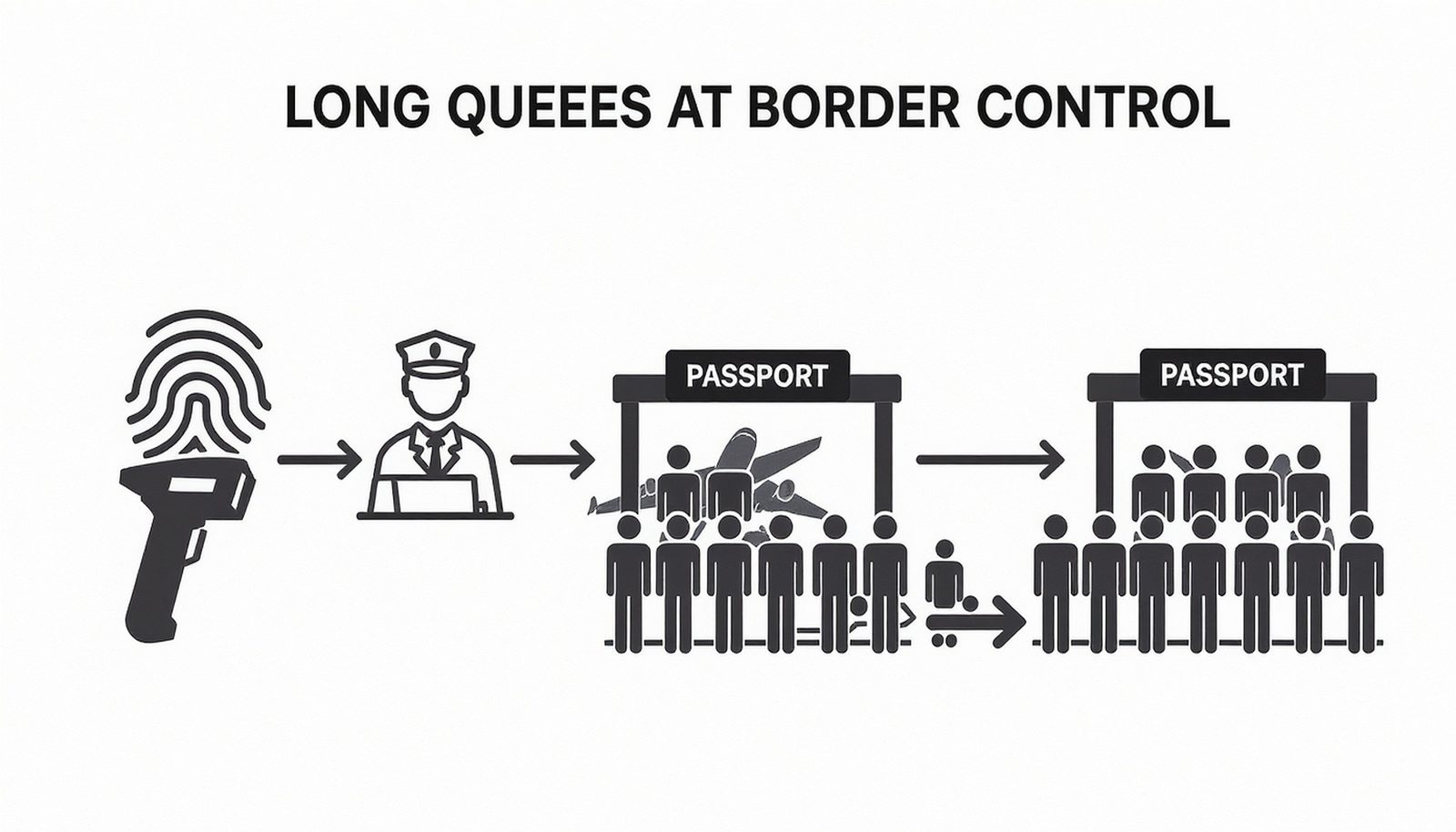
EES replaces manual passport stamping with biometric registration (face and fingerprints) and a central database for nonEU nationals. In theory, automation should speed things up. In practice, early deployment has increased processing times by up to 70% and produced queues of three to four hours at some hubs, even though only about 10% of eligible travelers are currently enrolled.
To understand when queues are most likely, it helps to unpack the mechanisms that create them.
PerPassenger Slowdown: Small Delays, Big Queues
Each nonEU traveler now requires more steps:
- Biometric capture (face and fingerprints).
- Database checks and confirmation.
- Troubleshooting when kiosks or egates fail.
Even a modest increase in processing time per person becomes critical when hundreds of passengers arrive in a short window. If a lane that used to process, for example, 200 passengers per hour now processes only 120, the excess 80 passengers per hour accumulate as a queue. Over a twohour arrival bank, that becomes 160 people waiting, and the queue length grows nonlinearly as more flights land.
Operational Fragility: Why the System Breaks at Peaks
The research highlights several structural weaknesses:
- System outages and configuration mismatches between central EU systems and national implementations, which temporarily halt processing.
- Incomplete or unreliable kiosks/egates, forcing passengers back into manual lanes.
- Chronic borderguard shortages, with staff now spending more time per traveler due to biometrics and troubleshooting.
Airports sometimes respond by metering passenger flows (holding people on aircraft or in corridors) or temporarily suspending EES processing to clear backlogs. This indicates that the system is operating close to its capacity limit even at low enrollment levels.
Timing Risk from the EES RampUp Milestones
The rollout schedule itself creates predictable risk spikes:
- Nowlate 2025: Early deployment at major hubs with roughly 10% of eligible travelers enrolled, but already showing multihour queues in some cases.
- By January 2026: Target of around 35% registration.
- By April 2026: Full coverage planned.
Because capacity is already strained at low volumes, each rampup threshold increases the probability that local bottlenecks turn into wider disruption. The most exposed periods are:
- Immediately after each major rollout phase (when new airports or terminals switch to EES or increase the share of travelers processed).
- Peak travel seasons (summer, major holidays) that coincide with these phases.
In other words, the worst time to arrive at a Schengen external border is when three curves overlap: high seasonal demand, high EES enrollment, and unresolved operational issues.
Visa Backlogs: How Consulate Behavior Shapes the Best Application Window
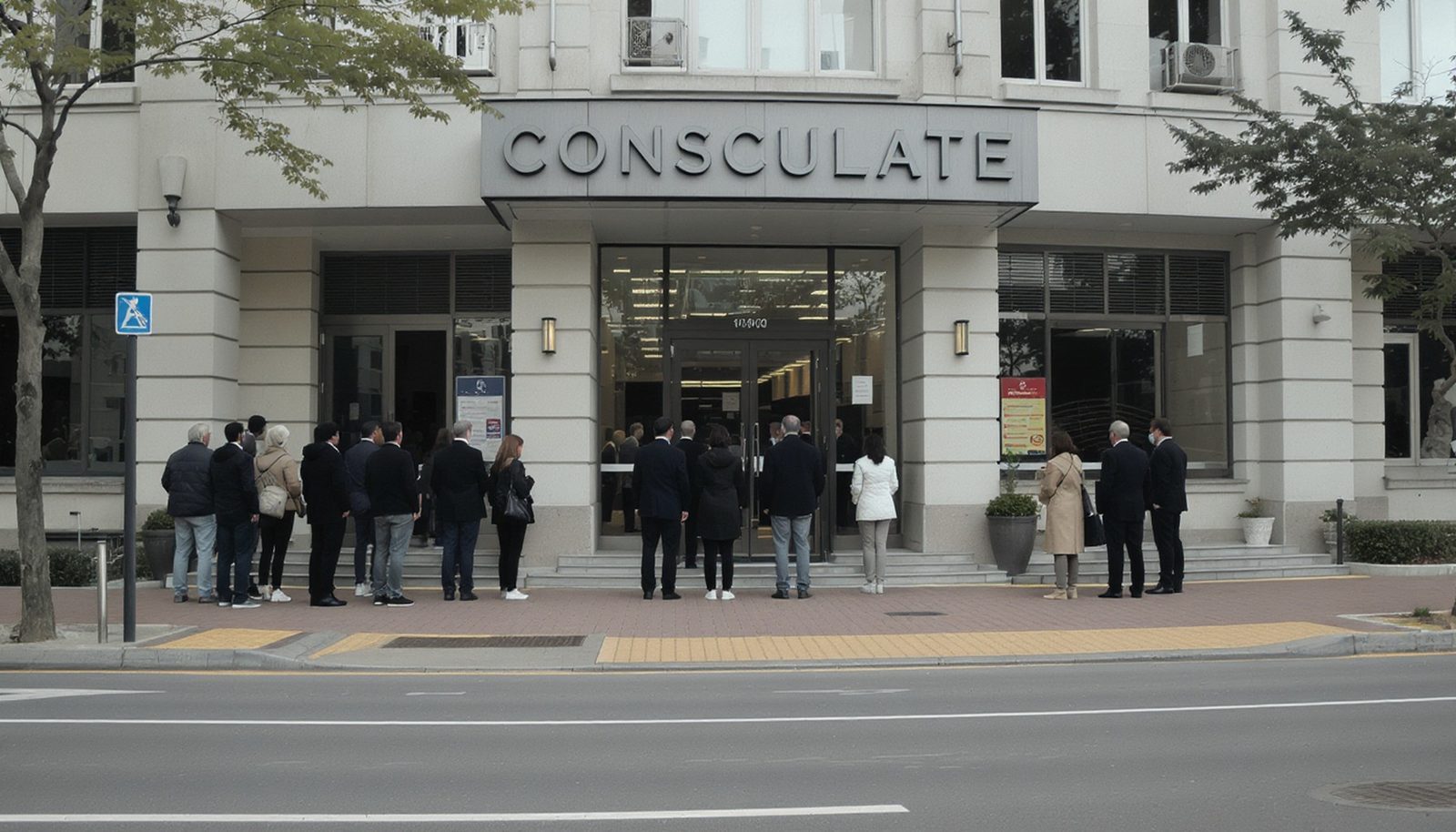
Schengen visa processing is governed by legal time limits, but the real behavior of consulates is driven by volume and verification workload. Understanding this gap between law and practice is key to choosing the best time to apply.
Legal Framework vs. Operational Reality
By law, Schengen shortstay visa processing follows these limits:
- Nominal target: 15 calendar days.
- Standard maximum: 30 days.
- Exceptional maximum: 45 days (for complex cases).
However, the research shows that actual processing times vary widely:
- Lowvolume consulates (e.g., Estonia, Lithuania, Finland) often process in 510 days offpeak.
- Highdemand consulates (France, Spain, Italy, Germany) can take 2045 days in summer.
Outsourced centers (such as VFS) add logistical lag for appointment scheduling and document transfer, but the decision itself is still made by the consulate. There is no paid fasttrack for tourism; priority processing is reserved for documented emergencies and may involve extra fees.
Why Backlogs Form: The Verification Bottleneck
Backlogs are not just about the number of applications; they are about the intensity of verification per application. Consulates may need to:
- Verify employment with employers.
- Confirm hotel or invitation details.
- Request additional documents or schedule interviews.
Each extra verification step adds days or weeks. When many applications require such checks during peak season, the consulate's effective capacity drops, and the queue of pending applications grows. This is why two travelers applying on the same day to different consulates can experience radically different timelines.
Seasonality: When the System Is Most and Least Congested
Although the research does not provide a monthbymonth breakdown, it clearly indicates that:
- Summer and major holiday periods (e.g., JuneAugust, late December) are structurally highrisk for delays at popular destinations.
- Offpeak months (e.g., late autumn, midwinter outside holidays) see faster processing, especially at lowvolume consulates.
This creates a tradeoff:
- Applying early for a peakseason trip increases the chance of timely approval but forces you to commit long before travel, often without certainty.
- Applying closer to departure in offpeak periods reduces waiting time but leaves less buffer for unexpected verification delays.
Because there is no tourism fasttrack, the safest assumption is to treat the legal maximums (3045 days) as realistic upper bounds during busy periods, especially for France, Spain, Italy, and Germany.
Where and When Risk Concentrates: Airports, Seasons, and Consulates
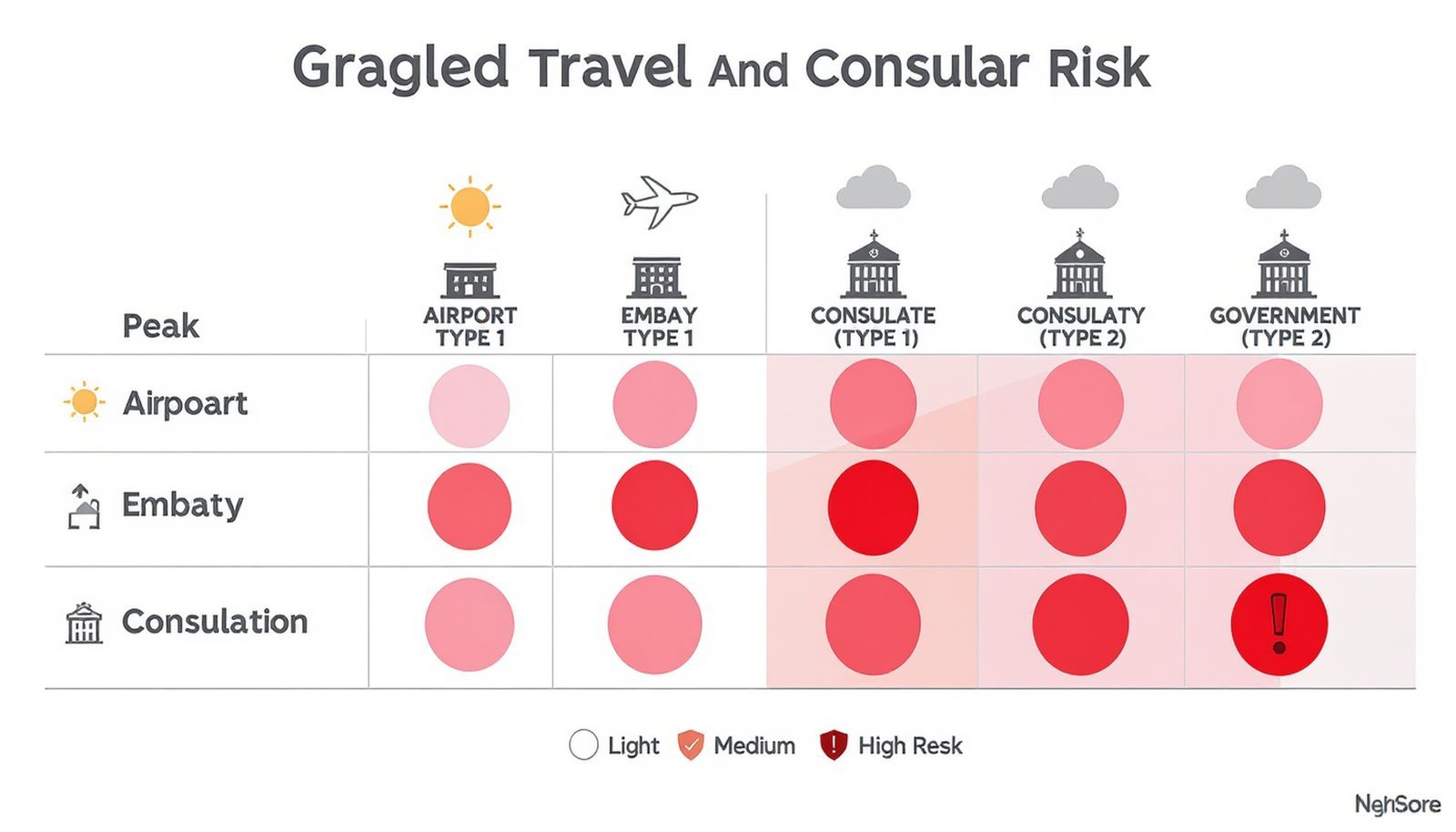
To identify the best time to avoid visa backlog and border chaos, you need to combine two dimensions:
- Entry point risk (EESrelated delays at airports).
- Visa processing risk (backlogs at consulates).
HighRisk Entry Airports Under EES
The research points to structurally exposed airports where nonEU arrivals cluster in tight time windows and infrastructure is constrained. These include:
- Major hubs and leisure gateways in France, Germany, Greece, Iceland, Italy, Portugal, Spain.
- Seasonal gateways like Geneva, where arrivals are heavily banked around holiday and ski seasons.
At these airports, the combination of peak arrival banks, limited queuing space, and staffing shortages makes EESrelated delays more likely, especially when enrollment ramps up.
HighRisk Consulates for Visa Backlogs
On the visa side, the structurally highrisk consulates are those serving the most popular tourist destinations:
- France, Spain, Italy, Germany particularly in summer.
By contrast, consulates of lowervolume states such as Estonia, Lithuania, and Finland often process applications faster, especially outside peak periods.
Combined Risk: When Visa and Border Delays Reinforce Each Other
When you combine these two dimensions, certain patterns emerge:
- Highrisk scenario: Applying for a summer trip to France, Spain, Italy, or Germany via their consulates, then arriving at a major hub in one of these countries during the EES rampup phases.
- Lowerrisk scenario: Applying via a lowvolume consulate (e.g., Estonia, Lithuania, Finland) for offpeak travel and entering Schengen through a less congested external border during a nonholiday period.
Because the research does not provide airportbyairport statistics, we cannot rank specific airports numerically. However, the structural signals are clear: hubs and leisure gateways in the listed countries are more likely to experience EESrelated disruption, especially when combined with peakseason visa demand.
Comparing Timing Strategies: Early vs. Late, Peak vs. OffPeak
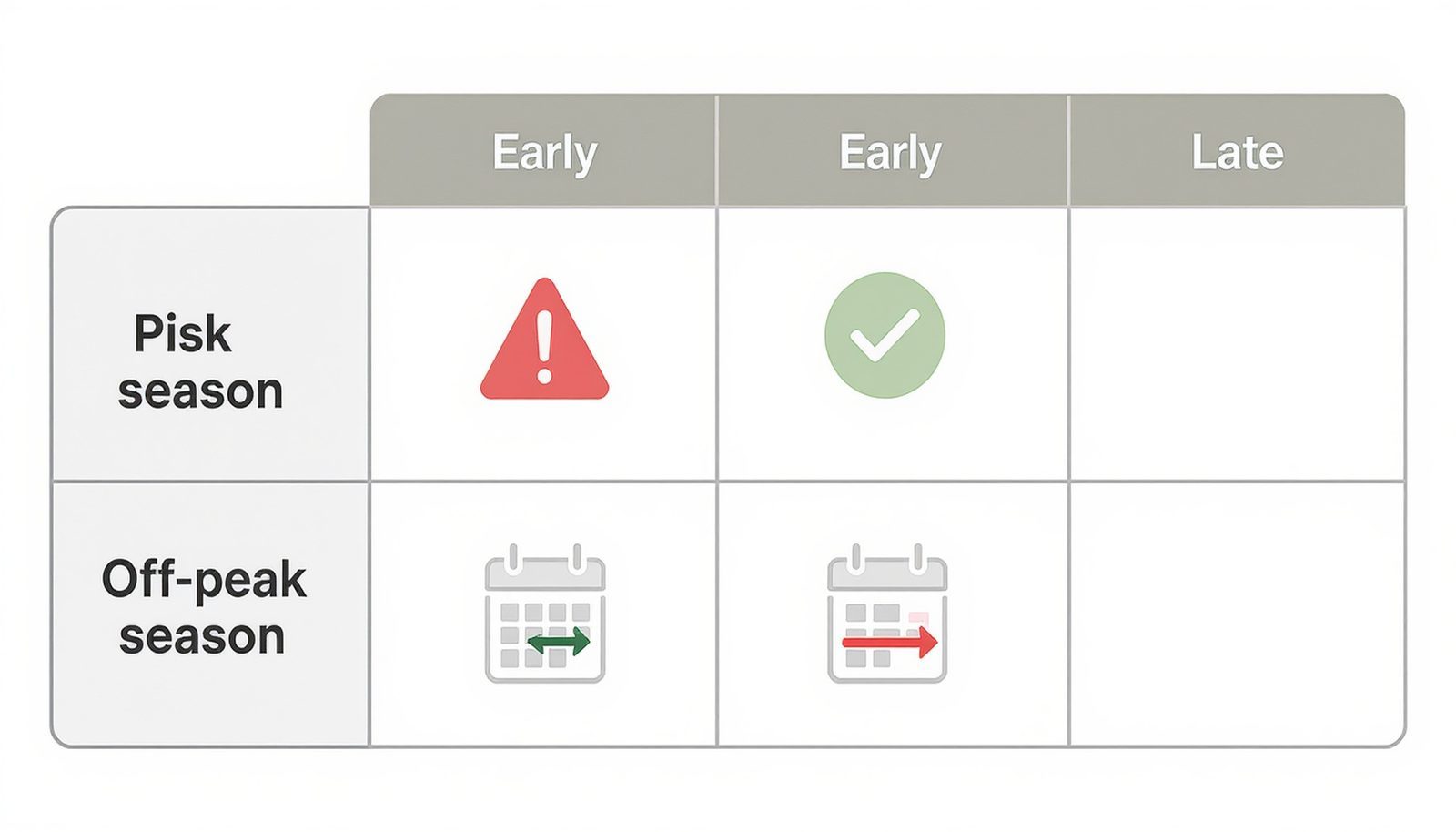
The best time to avoid visa backlog is not universal; it depends on how you trade off certainty against flexibility. The table below summarizes the structural tradeoffs using the mechanisms described in the research.
| Scenario | Visa Processing Risk | EES Border Delay Risk | Planning TradeOff |
| Apply early (812 weeks) for peakseason trip to highdemand country | Lower risk of missing legal 3045 day window, but still exposed to verification delays | High, because travel coincides with peak arrivals and EES rampup | High certainty of having a decision, low flexibility on dates and bookings |
| Apply moderately early (48 weeks) for offpeak trip to highdemand country | Moderate; consulate less overloaded, but still slower than lowvolume states | Moderate; offpeak arrivals reduce pressure on EES | Balanced: some buffer for delays, some flexibility in planning |
| Apply closer to travel (35 weeks) for offpeak trip via lowvolume consulate | Lower; typical 510 day processing offpeak, but limited buffer for exceptions | Lower; offpeak arrivals and potentially less congested entry points | Higher flexibility, but vulnerable if case triggers extra verification |
| Apply late (under 3 weeks) for peakseason trip to highdemand country | High; legal maximums (3045 days) likely to be binding | High; peak arrivals plus EES stress | Maximum flexibility, minimum certainty; structurally risky |
From a structural perspective, the most resilient timing pattern is:
- Offpeak travel (to avoid both visa and EES peaks).
- Application 48 weeks before departure (to allow for verification without locking in too early).
- Use of lowervolume consulates where legally and practically possible (to benefit from shorter typical processing times).
This does not guarantee a smooth experience, but it aligns your timing with the system's least congested states.
Risk and Uncertainty: What We Still Don't Know

The available research is clear about mechanisms but limited in quantitative detail. This creates several important uncertainties that affect timing decisions.
Missing Quantitative Risk Metrics
We lack:
- Airportspecific delay probabilities (e.g., chance of a 2hour queue at a given airport at a given time of day).
- Seasonal breakdowns of EESrelated disruptions (e.g., how much worse summer is than winter at each hub).
- Consulatebyconsulate statistics on average and 90thpercentile processing times across seasons.
Without these, we can identify highrisk patterns (such as summer at major hubs) but cannot precisely quantify the risk for a specific itinerary.
Unclear Future Adjustments to EES Operations
Industry bodies like ACI Europe are calling for an immediate review of EES implementation, signaling that current operations are unsustainable. However, we do not yet know:
- Whether the EU will adjust algorithms, staffing models, or infrastructure funding.
- Whether rollout milestones (35% by January 2026, full by April 2026) will be delayed, softened, or maintained.
- How quickly airports can expand queuing areas or reconfigure flows to improve resilience.
These unknowns mean that any timing strategy must remain adaptable; a policy change could shift the risk profile of certain months or airports.
TravelerSide Financial Risk Is UnderQuantified
The research does not quantify:
- The proportion of trips cancelled due to visa delays.
- The typical value of nonrefundable bookings lost when visas are issued late.
- The cost impact of missed connections caused by EESrelated queues.
We know the mechanisms (late visas and long queues cause cancellations and missed flights), but not the average financial impact. This makes it difficult to calculate the expected cost of applying late or traveling at peak times, even though the direction of risk is clear.
Putting It Together: A Structured Timing Framework for Schengen Trips
Given the structural signals and uncertainties, the best time to avoid visa backlog is better understood as a framework than a date. The framework has three layers: season, destination/entry point, and application lead time.
1. Season: Prefer OffPeak Windows
Because both visa processing and EES queues worsen with volume, offpeak travel is structurally safer. In practical terms, this means:
- Avoiding JuneAugust and major holiday periods for highdemand destinations where possible.
- Targeting late autumn and midwinter (excluding holidays) for trips that require a visa and involve major hubs.
This aligns your travel with periods when consulates and airports are under less pressure, even if exact statistics are unavailable.
2. Destination and Entry Point: Decouple Where You Apply from Where You Land
Where legally possible, there is a structural advantage in:
- Applying via lowervolume consulates (e.g., Estonia, Lithuania, Finland) that typically process faster offpeak.
- Entering Schengen through less congested external borders rather than the busiest hubs in France, Germany, Greece, Iceland, Italy, Portugal, Spain, or Geneva during peak periods.
The key mechanism is decoupling: the consulate that issues your visa does not have to be in the country of your first arrival, as long as you comply with Schengen rules on main destination and length of stay. This allows you to separate the visa backlog risk from the EES queue risk.
3. Application Lead Time: Build a Buffer Around Legal Maximums
Because legal limits (3045 days) can be reached in busy periods, a structurally robust lead time is:
- 48 weeks before departure for offpeak travel, especially via lowervolume consulates.
- 812 weeks before departure for peakseason travel to highdemand countries, recognizing that this reduces flexibility but aligns with the system's slowest state.
This buffer is not about optimism; it is about respecting the system's worstcase behavior as observed in the research.
Balanced Conclusion: Timing as a Structural Lever, Not a Guarantee
The convergence of EES rollout and uneven Schengen visa processing has turned timing into the central strategic lever for nonEU travelers. The research shows that:
- EES is structurally increasing border processing times, with multihour queues already appearing at low enrollment levels.
- Visa processing times are structurally uneven, with highdemand consulates regularly approaching legal maximums in peak seasons.
- Both systems are most fragile under the same conditions: high volume, limited staffing, and rigid infrastructure.
Within these constraints, the best time to avoid visa backlog is not a magic month but a set of choices:
- Favor offpeak seasons over peak holidays.
- Favor lowervolume consulates and less congested entry points where rules allow.
- Favor application lead times that respect the 3045 day legal ceiling rather than the 15day target.
These choices do not eliminate risk; they reposition you within a system whose weaknesses are now well understood but not yet fully fixed. As EES ramps toward 35% registration by January 2026 and full coverage by April 2026, the structural logic remains the same: the closer your travel is to peak demand and rollout milestones, the higher your exposure to both visa backlogs and bordercontrol disruption.
Using timing as a deliberate, analytical toolrather than an afterthoughtoffers the best available protection in a landscape where security automation and operational capacity are still out of balance.