
I don’t look at airfare the way airlines want me to anymore. The price on the search screen is just the cover charge. The real bill shows up later in baggage fees, seat fees, and connection surprises that quietly turn a “$129 deal” into a $300+ hit to your card.
If you’ve ever stood at check-in and heard an agent say, That’ll be $180 in bag fees
, you know the feeling. Let’s walk through where the money really goes—and how to keep more of it in your pocket.
1. The Illusion of a Cheap Fare: Are You Pricing the Whole Trip?
When I compare flights now, I don’t ask, Which ticket is cheapest?
I ask, What will this trip actually cost me by the time I’m at the gate?
Airlines have trained us to chase the lowest base fare. But that number often leaves out the real costs:
- Checked bags (and sometimes even carry-ons)
- Seat selection (especially if you want to sit with family)
- Overweight and oversize penalties
- Change fees, connection risks, and rebooking costs
On many U.S. routes in 2026, the first checked bag alone runs about $45–$50 each way on legacy carriers, and often more on ultra-low-cost airlines. Round-trip, that’s roughly $90 per person just to bring one suitcase. For a family of four with two checked bags, you’re easily looking at $360+ in bag fees before anyone buys a snack.
So instead of sorting by lowest fare and clicking, I build a quick all-in price for each airline. It’s a simple cheap flight extra charges breakdown:
- Base fare
- + checked bags (outbound + return)
- + carry-on fees (if applicable)
- + seat selection (if I care where I sit)
Once you do that, the “cheap” airline often stops being cheap. A slightly higher fare that includes a bag or better terms can be the smarter buy when you compare a cheap flight vs full service airline cost.
2. Baggage Fees: The Silent Budget Killer
Baggage is where “cheap” flights quietly explode. Most airlines now treat bags as a separate revenue stream, not part of transportation. That’s why fees have climbed steadily since 2008 and jumped again in 2026.
Before I ever click Book
, I think about how baggage fees inflate airfare and what that means for the final price.
Know the standard limits (and the traps)
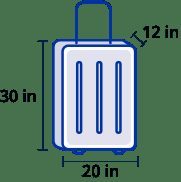
- Typical checked bag limit: 50 lbs (23 kg) and 62 linear inches (length + width + height).
- Go over that and you’re in overweight/oversize territory, which can easily add $100–$200+ per bag, per direction.
- Some airlines are stricter on certain routes (e.g., Caribbean, Central America, Cuba) or don’t accept oversize bags at all during peak periods.
Those limits are where the hidden costs of cheap flights really start to show up. The bag looks the same, but the bill doesn’t.
Why the same bag costs different amounts
The exact fee for the same suitcase can change based on:
- Airline (legacy vs ultra-low-cost)
- Route (domestic vs international, Hawaii, territories, etc.)
- Fare type (Basic Economy vs standard economy vs bundled fares)
- When you pay (online in advance vs at the airport)
- Status/credit cards (elite tiers and co-branded cards often include free bags)
For example, American’s updated policy (details here) has first-bag fees starting around $50 at the airport on many U.S./Canada/Caribbean/Mexico routes, with a small discount if you pay online. Basic Economy usually pays more. United, Delta, and others are in the same ballpark, and ultra-low-cost carriers often charge more than that, especially if you wait until check-in.
That’s why comparing budget airline baggage fees is just as important as comparing ticket prices.
Use calculators before you book, not at check-in
Two tools I actually use:
- Airline calculators – United’s checked bag fee calculator (see it here) lets you plug in your route and fare to see exact costs.
- Independent calculators – Tools like the luggage fee calculator on TravelClosely estimate total baggage cost across airlines, including extra, overweight, and oversize charges.
When I’m comparing flights, I run the numbers before I decide which airline is “cheapest.” It’s amazing how often the winner changes once baggage is included and the cheap ticket price vs final fare gap becomes obvious.
3. Overweight & Oversize: The Most Expensive Mistake in the Airport
If there’s one fee that feels like a punch in the gut, it’s the overweight/oversize charge. You think you’re paying $50 to check a bag, and suddenly it’s $150+ because you’re a few pounds over.
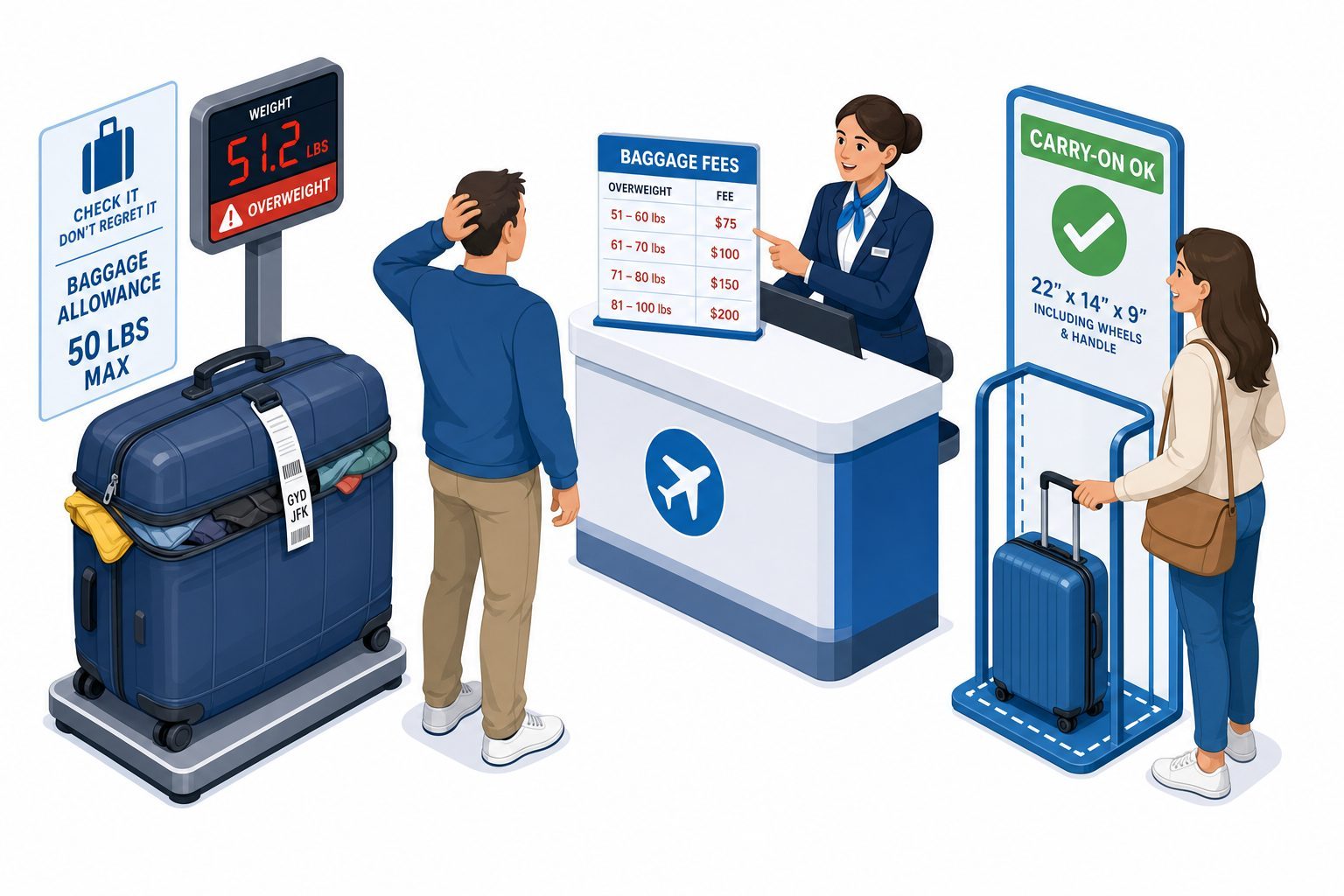
Most airlines draw a hard line at 50 lbs. Some allow up to 70 lbs for business/first or elite members, but economy passengers usually don’t get that grace. And the penalty isn’t small:
- Overweight (51–70 lbs): often $100–$200+ per bag, per direction.
- Oversize (over 62 linear inches): similar or stacked on top of overweight fees.
- Some routes simply refuse oversize/overweight bags during busy seasons.
Here’s how I avoid that last-minute repacking circus on the airport floor:
- Weigh bags at home with a cheap luggage scale. I aim for 45–47 lbs max to leave room for error.
- Know your airline’s exact limits – United, for example, spells out size and weight rules clearly on its checked baggage page (see details).
- Split heavy items across bags if you’re traveling as a couple or family. Two bags at 45 lbs each are cheaper than one at 55 lbs and one at 35 lbs.
- Watch special routes (Cuba, some Caribbean, Australia/New Zealand) where airlines like American and United have extra restrictions or different allowances.
Ask yourself: is that extra pair of boots or full-size shampoo really worth a potential $200 fee? Most of the time, it’s not.
4. Carry-Ons, Basic Economy, and the Seat-Selection Trap
We used to assume carry-ons were free. That’s no longer safe. On some ultra-low-cost carriers, and even on certain Basic Economy fares with major airlines, your carry-on is a paid upgrade.
Here’s where people get burned by the hidden costs of cheap flights:
- Basic Economy fares often have the highest bag fees and the most restrictions.
- Some airlines only include a personal item (under-seat bag) with the cheapest tickets.
- Others charge more for carry-ons than checked bags if you pay at the gate.
Then there’s seat selection. That $129 fare looks great until you realize:
- Standard seats cost extra to choose in advance.
- Families may be split up unless they pay to sit together.
- Exit rows, extra legroom, and front-of-cabin seats can add $20–$80+ per person, per flight.
Those seat selection fees on low cost flights can quietly add more than the ticket itself, especially on round-trips with connections.
So I ask myself two questions before I book:
- Do I actually need a carry-on and a checked bag? If I can go carry-on only, I’ll choose a fare that includes it, even if the base price is higher.
- Do I care where I sit? If I’m traveling with kids or on a long flight, I factor seat fees into the total price from the start.
Sometimes, upgrading from Basic Economy to standard economy (or a bundled fare that includes a bag and seat) is cheaper overall than buying the rock-bottom fare and adding everything later. It’s one of the simplest ways of avoiding extra airline fees.
5. Families and Groups: Why Your “Deal” Multiplies in the Worst Way
Solo travelers feel bag fees. Families get crushed by them.
Think about it: a $50 bag fee each way is $100 per person round-trip. For a family of four, that’s $400 just to bring one checked bag each. Add a second bag for the group and you’re easily in the $360–$600+ range, especially if anyone goes overweight.
Here’s how I keep family trips from turning into fee festivals:
1. Price the trip per family, not per person
When comparing airlines, I literally write out:
- Base fares for everyone
- + total checked bags (both directions)
- + seat selection for everyone (if needed)
Only then do I decide which airline is actually cheapest. That’s when you really see whether budget airlines are really cheaper once all the add-ons are included.
2. Put everyone on one reservation
Many airlines extend elite status or credit card bag benefits to companions on the same booking. If one adult has a co-branded card or status, that can mean free bags for the whole family – but only if you’re all on the same reservation.
3. Use status and credit cards strategically
Co-branded cards (Citi AAdvantage, Delta SkyMiles Gold Amex, United Explorer, Southwest Rapid Rewards, etc.) often include:
- 1+ free checked bags for the cardholder
- Free bags for companions on the same reservation
If you fly a couple of times a year with family, the bag savings alone can offset the annual fee. But you have to:
- Book with the right airline
- Use the card correctly (often to pay for the ticket)
- Double-check that benefits apply on your specific route and fare
Families also benefit the most from prepaying bags online. Many airlines charge $10–$20 more per bag if you wait until the airport. Multiply that by four people and two directions, and you’re paying a premium for procrastination.
6. Connections, Codeshares, and the “Whose Rules Apply?” Problem
Connections are where baggage rules get messy. You might book on one airline’s website, fly a partner airline on the first leg, and discover at check-in that the other airline’s baggage policy applies.

Here’s what I watch for:
- First operating carrier – On many itineraries, the baggage rules of the airline operating the first flight segment control the whole trip.
- Codeshares – If you book an American Airlines ticket but your first flight is operated by a partner, your elite benefits or free bags may not carry over.
- Voluntary changes – If you change your first leg to another airline, you may suddenly be under that airline’s baggage rules and fees, not the ones you originally priced.
United even calls this out: if the first leg of your trip is changed to another airline, that airline’s baggage policies apply. American notes that elite and credit card bag benefits often don’t extend to partner-operated codeshares.
So before I book a multi-airline itinerary, I ask:
- Who is operating my first flight?
- What are that airline’s bag fees and limits?
- Do my status or card benefits actually apply on that carrier?
If the answer is unclear, I either choose a simpler itinerary (one airline end-to-end) or assume the worst-case baggage cost when I budget. That’s especially important when connection fees on low cost carriers and partner airlines can change the rules mid-trip.
7. How to Beat the System: Practical Moves That Actually Work
Airlines aren’t going to stop charging these fees. But we can stop walking into them blind. Here’s the playbook I use now—basically my personal airline add-on fees explained in plain English.
1. Always run the baggage math first
- Use airline calculators (like United’s) and independent tools (like the TravelClosely luggage fee calculator) before you book.
- Compare total trip cost across airlines, not just base fares.
2. Prepay bags online
- Most airlines are cheaper online than at the airport by $10–$20 per bag.
- Some let you use miles to pay for bags on domestic routes.
3. Consider carry-on only
- On short trips, a strict carry-on strategy can wipe out most baggage fees.
- But only if your fare includes a carry-on and your bag meets size rules. A quick carry on baggage fees comparison between airlines can save you from a nasty surprise at the gate.
4. Use status and cards intentionally
- If you fly one airline often, a co-branded card or low-tier status can be worth it just for the free bags.
- Make sure everyone who needs the benefit is on the same reservation.
5. Pack smarter, not heavier
- Weigh bags at home and aim for a buffer under 50 lbs.
- Split heavy items across bags to avoid a single overweight fee.
6. Question the “cheapest” fare
- Basic Economy is often a trap once you add bags and seats.
- Sometimes a higher fare with a free bag and seat selection is the real bargain.
Next time you see a too-good-to-be-true fare, pause. Ask yourself: What will this cost me once I add the way I actually travel?
Run the numbers. Check the baggage rules. Look at seat fees. Only then decide if it’s really a deal.
Cheap flights still exist. But in 2026, the only way to find them is to stop thinking like a passenger and start thinking like a skeptic with a calculator—and a clear view of how baggage and seat fees inflate your fare.