
You never really think it’ll be your flight that gets canceled at 11:47 p.m. Then the gate agent picks up the mic, the whole gate groans, and suddenly you’re scrolling through airport hotels that cost more than your entire weekend budget.
This isn’t about panic. It’s about math. Overnight disruptions are common, expensive, and rarely included in trip budgets. Time to change that.
1. What Does “Stranded Overnight” Actually Cost?
Before you can build a backup budget for flight disruptions, you need a realistic price tag for getting stuck.
One study looked at what stranded passengers spend on six basics during an overnight delay: a fast-food meal, coffee, bottled water, transport into the city, a nearby three-star hotel, and a toothbrush. The range was huge. In New Delhi, the total was about the cost of a casual dinner. At New York JFK, it looked more like a painful hotel bill for two. Same needs, same situation, totally different damage.
So let’s put some numbers on it. For a typical overnight disruption, you might face:
- Hotel (or airport sleep pod): $60–$250+ depending on city and season
- Food and drinks: $25–$80 (airport prices are brutal)
- Transport: $10–$60 (train, bus, rideshare, or taxi)
- Toiletries / basics: $5–$30
Realistically, one overnight disruption can easily run $100–$300 per person in a mid- to high-cost destination. For a family of four, that’s a whole extra “mini-trip” you never planned for—the true cost of an unexpected overnight layover.
So ask yourself: If my flight got canceled tonight, could I calmly swipe my card for $200–$400 without wrecking the rest of my trip?
If not, it’s time to build a backup budget for flight disruptions.
2. How Big Should Your “Stranded” Backup Budget Be?
Think of this as a separate pot of money. It’s not for nicer dinners or last-minute tours. It’s a disruption buffer—cash that only exists for when things go sideways: cancellations, missed connections, long delays.
Here’s a simple way to size that buffer and answer how much to save for flight cancellations without guessing:
- Start with a base overnight cost.
- Low-cost region (SE Asia, parts of Eastern Europe, India): $75–$125 per person
- Mid-cost region (most of Europe, Latin America): $125–$200 per person
- High-cost region (US, UK, Switzerland, Nordics): $200–$300 per person
- Multiply by your risk level.
- Direct daytime flights, non-peak season: 1x
- Connections, winter weather, tight layovers: 1.5x
- Multiple connections, peak holidays, known weather issues: 2x
- Adjust for group size. Families don’t always need four hotel rooms.
- Solo: full amount
- Couple: 1.5x solo amount
- Family (3–5): 2–2.5x solo amount
Example: You’re a couple flying through London in winter on a connection. High-cost region, higher risk of delays and missed connections.
- Base: $200 per person
- Risk multiplier: 1.5x
- Couple multiplier: 1.5x
Rough buffer: $200 × 1.5 × 1.5 ≈ $450 set aside just for disruptions.
That’s your trip-specific disruption buffer—your flight delay emergency cash budget. On top of that, you still want a general emergency fund for bigger problems: medical issues, lost documents, or having to fly home early.

For that broader safety net, a solid rule of thumb is the digital nomad classic: 3–6 months of living expenses in an accessible emergency fund, adjusted for your risk tolerance and income stability. You don’t need to carry it all with you, but you should be able to reach it quickly.
3. What Will the Airline Actually Pay For (and What’s On You)?
Many travelers assume the airline will “take care of everything” during a disruption. Sometimes they do. Often they don’t. The key is knowing when you’re entitled to help and when the cost of that unexpected airport hotel is entirely on you.
In the US, the Department of Transportation has an Airline Cancellation and Delay Dashboard that shows what each major airline promises during controllable delays and cancellations—things like maintenance, crew issues, or baggage problems.
For those controllable disruptions, airlines may commit to:
- Meal vouchers after a certain delay
- Hotel accommodation if you’re stuck overnight
- Ground transportation to and from the hotel
- Rebooking on the next available flight
But there are catches:
- Weather, air traffic control, and security issues are usually labeled
not our fault
in airline language. That often means no hotel, no meal vouchers, just rebooking. - Even when they owe you something, you may have to ask and reference their customer service plan.
- Policies differ wildly by airline and country. A generous European carrier under EU rules is not the same as a bare-bones budget airline in the US.
One more key point: refund rights are separate from amenities. If your flight is canceled or significantly changed and you decide not to travel, you’re generally entitled to a refund of the unused portion—even on a non‑refundable ticket. That’s different from getting a hotel or meal covered.
So when you’re doing your flight cancellation budget planning, assume this:
- Best case: the airline covers hotel and meals for controllable issues, and you use your buffer for extras or better options.
- Worst case: weather or other non-controllable issue, the airline only rebooks you, and you pay everything else out of pocket.
If your emergency travel fund for flight delays can handle the worst case without panic, you’re in good shape.
4. Should You Rely on Travel Insurance or Just Self-Insure?
Here’s the uncomfortable part: most people buy travel insurance without really knowing what it covers. Then they’re shocked when a claim is denied and those overnight layover costs come straight out of pocket.
For disruptions, you’re mainly looking at three benefits:
- Trip Cancellation: reimburses prepaid, non‑refundable costs if you cancel before departure for a covered reason (illness, injury, certain disasters).
- Trip Interruption: kicks in if you have to cut the trip short or are delayed for a covered reason; can cover unused trip costs and extra transport.
- Travel Delay: reimburses reasonable expenses (hotel, meals, transport) after a specified delay threshold, often 6–12 hours.
Without travel insurance for flight disruption costs, if you cancel or get badly delayed, you’re often eating the full cost of flights, hotels, and tours. Claims data from one insurer shows payouts ranging from tiny amounts to nearly $100,000, with an average around $5,000. That’s the scale of risk you’re playing with on big, prepaid trips.
So how do you decide between buying insurance and self-insuring with your own emergency fund?
Insurance makes more sense when:
- Your prepaid, non‑refundable costs are high (think $5,000+).
- You’re booking complex itineraries or remote destinations.
- You’d struggle to absorb a total loss without debt.
- You want coverage for medical emergencies abroad (which can dwarf flight costs).
Self-insuring can work when:
- Your trip is relatively cheap and flexible.
- You have a solid emergency fund and low financial stress.
- You’re comfortable taking the risk and reading airline policies carefully.
If you do buy insurance, read the delay and interruption sections like a lawyer:
- What delay length triggers coverage? 6 hours? 12?
- What counts as a covered reason?
- What’s the per-day and total maximum for hotels and meals?
- Do you need to keep every receipt? Almost always yes.
Think of insurance as a way to rebuild your emergency fund after a disaster, not as a magic shield that prevents hassle. You still need the cash upfront; the policy just helps you get some of it back later.
5. How Do You Build a Backup Budget Without Delaying Your Trip?
It’s easy to say, Just save more.
It’s harder when you’re already stretching to afford the trip itself. So treat your disruption buffer as its own mini-project with its own rules—and avoid the classic money mistakes during flight disruptions, like putting everything on a high-interest card with no plan.
Here’s a simple system:
- Calculate your number. Use the formula from earlier and write down a specific target:
$350 disruption buffer for this trip.
- Open a separate “trip buffer” bucket. This can be a sub-account, a separate savings pot, or even a labeled envelope if you’re old-school. The key: don’t mix it with your main spending money.
- Automate tiny transfers. Move a small, fixed amount every week. $15–$25 per week adds up faster than you think and hurts less than big one-off transfers.
- Redirect small cuts. Skip one takeout meal, one bar night, or one impulse Amazon purchase per week and move that exact amount into the buffer. Make it a game:
Can I turn this $18 I almost spent into future flight-cancellation armor?
- Keep it separate on the trip. When you travel, treat this buffer as
break glass in case of emergency
money. Don’t raid it for nicer cocktails or souvenirs.

Over time, you can scale this up into a full emergency fund—3–6 months of living expenses, plus a disruption buffer for each major trip. That’s when travel stops feeling like a financial gamble and starts feeling like a controlled risk.
6. What Can You Do Before You Fly to Make a Disruption Cheaper?
Money isn’t your only lever. A bit of planning can turn a $300 disaster into a $60 annoyance and help you avoid overspending during delays.
Before you book:
- Compare airlines on disruption policies. Use the DOT dashboard (for US carriers) and airline customer service plans. If one airline clearly offers hotels and meals for controllable delays and another doesn’t, that’s worth a few extra dollars.
- Avoid razor-thin connections. A 40-minute winter connection in Chicago is basically a bet against reality.
- Consider earlier flights. Morning flights are less likely to suffer from the day’s cascading delays.
Before you leave home:
- Pack a micro “stranded kit” in your carry-on: toothbrush, travel-size toothpaste, face wipes, a change of underwear, light t-shirt, basic meds, and snacks. These cost almost nothing at home and a lot at the airport.
- Bring a refillable water bottle. Airport bottled water is a quiet budget killer.
- Download your airline’s app. You’ll often see rebooking options there before the line at the gate even starts moving.
- Know your hotel options. Save a short list of 2–3 reasonably priced hotels near each major transit airport on your route. When everyone else is frantically Googling, you’re just tapping a saved link—an easy way to find affordable options when stranded at the airport.
And one more thing: know your refund and complaint options. If you decide not to travel after a cancellation or major schedule change, you can usually get your money back instead of accepting a credit. If the airline resists, you can escalate—sometimes all the way to regulators like the DOT.
7. What If the Disruption Is Bigger Than a Night? (Illness, Emergencies, and Last-Minute Trips)
Not every disruption is a simple overnight delay. Sometimes you’re flying last-minute for a family emergency. Sometimes you get sick abroad and need to change everything. That’s when your emergency travel fund for flight delays and interruptions really matters.
For emergency trips (like bereavement travel), a few airlines still offer bereavement fares—slightly discounted or more flexible tickets if you’re traveling due to a death or imminent death in the family. They’re not bookable online; you have to call, and you’ll usually need documentation. The list is short and changes, but it has included airlines like Alaska, Delta, Air Canada, Hawaiian, and WestJet.
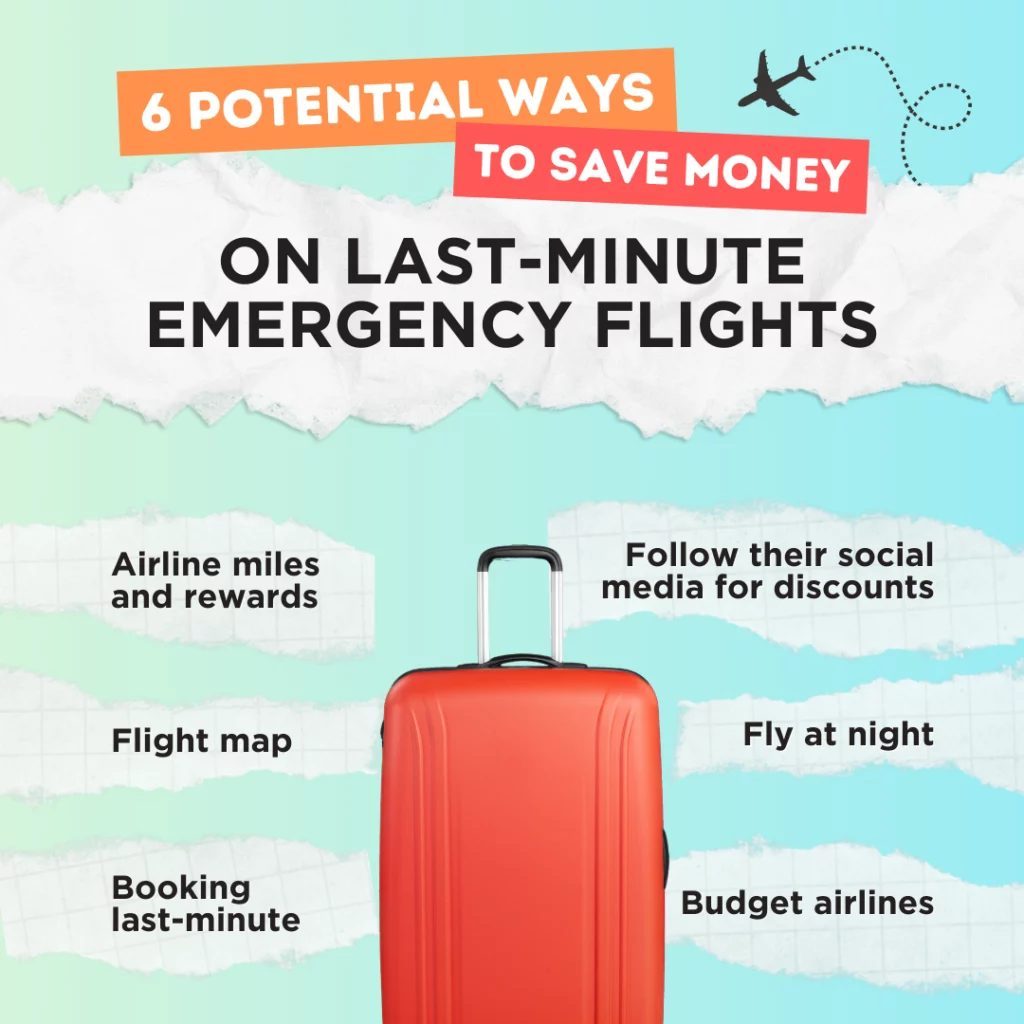
In reality, bereavement fares aren’t always cheaper than a good sale fare, but they can be more flexible. That flexibility matters when plans are uncertain and you’re trying to avoid money mistakes during flight disruptions.
For bigger disruptions mid-trip—serious illness, broken equipment if you work remotely, lost documents—your backup plan needs to be more than one night of hotel money:
- Emergency fund: that 3–6 months of living expenses is what keeps a medical issue or forced early return from turning into debt.
- Trip interruption coverage: can reimburse unused trip costs and extra transport if you have to go home early for a covered reason.
- Remote-friendly banking: low-fee cards and accounts you can access abroad so you’re not paying extra just to reach your own money.
Ask yourself: If I had to stay an extra week somewhere expensive, or fly home tomorrow, could I do it without panic?
If not, that’s your next financial project.
8. Turning “What If” Into “I’ve Got This”
Most people treat flight disruptions as bad luck. I treat them as a line item.
Here’s the condensed playbook for budgeting for missed connections and delays without blowing your trip:
- Assume at least one serious delay or cancellation on any multi-leg or winter trip.
- Price out a realistic overnight cost for your route and set aside a disruption buffer.
- Decide consciously: travel insurance vs self-insuring, based on your actual numbers.
- Use tools like the DOT dashboard and airline policies to choose carriers with better disruption support.
- Pack small, cheap essentials that become expensive when you’re stranded.
- Keep receipts, know your refund rights, and don’t be shy about asking for what’s in the airline’s customer service plan.
The goal isn’t to eliminate risk. That’s impossible. The goal is to make a canceled flight annoying, not catastrophic. When you’ve already budgeted for the worst night of the trip—and you’ve thought through comparing airline compensation vs self booking—everything else gets a lot easier to enjoy.