I don’t plan international trips around worst‑case scenarios. But I do budget for them. Because the numbers are brutal.
Recent analyses show U.S. travelers lose around $484 on average when a trip is disrupted, and about 73% of disrupted passengers lose money they never get back. That’s before we even talk about stress, missed events, or the value of your time.
If you’re flying abroad in the next year or two, assume this: Something will go wrong.
Your job is to make sure it doesn’t wreck your finances or your trip.
Here’s how I think about the hidden cost of flight disruptions—and how to build a realistic, worst‑case budget for your next international journey.
1. Start With the Real Risk: How Likely Is Chaos on Your Route?
Before I book anything nonrefundable, I ask one question: How fragile is this itinerary?
We’re not dealing with random bad luck anymore. Disruptions are now a structural problem. In the U.S. alone, delays and cancellations are estimated to cost $30–34 billion a year in lost time, airline costs, and economic spillover. Roughly 1 in 5 flights arrives late, and many delays stretch well beyond an hour.
On top of that, we’re in a world of:
- Jet fuel shocks driving up costs and forcing airlines to cut routes or entire subsidiaries.
- Chronic staffing shortages in air traffic control and ground operations.
- IT failures and single points of failure that can ground fleets worldwide.
- Early schedule cuts (often more than two weeks out) to dodge compensation obligations.
So I treat disruption as a probability problem, not a surprise.
- Short‑haul, off‑peak, nonstop on a major carrier: lower risk, but not zero.
- Multi‑stop, tight connections, peak season or smaller airlines: high risk.
- Regions with strikes, political tension, or infrastructure issues: very high risk.
My rule of thumb: if my itinerary has two or more of these risk factors, I automatically increase my flight disruption travel budget and assume I’ll need more cash to absorb chaos.
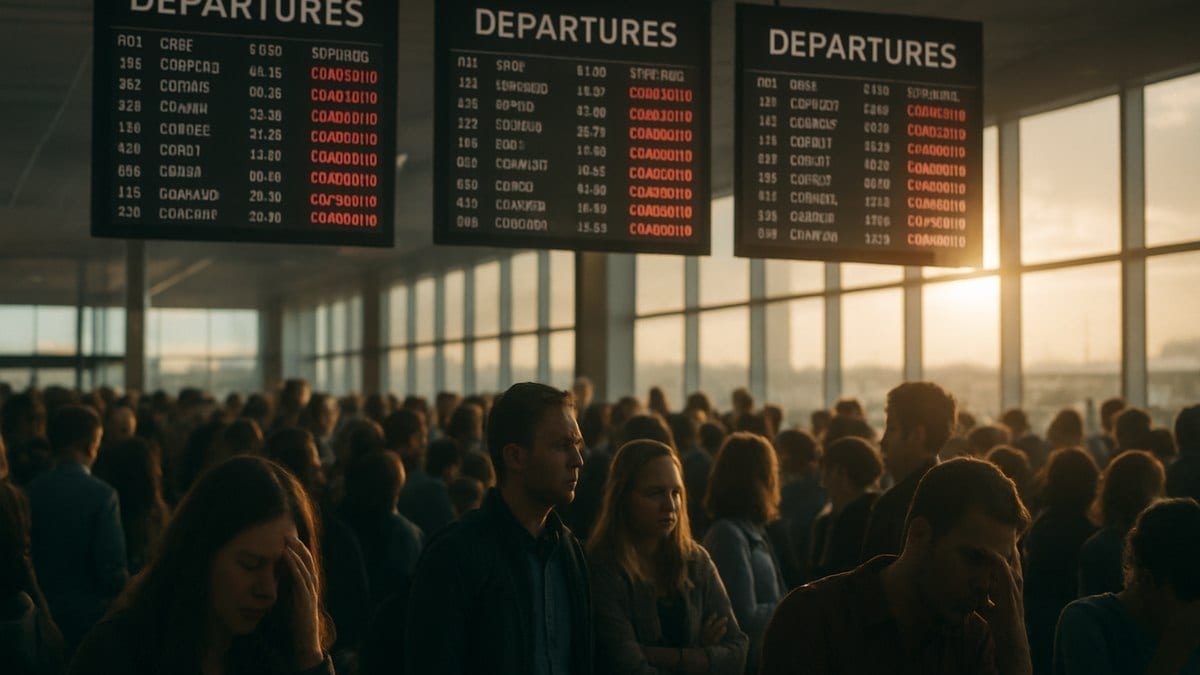
Takeaway: Don’t ask Will something go wrong?
Ask How much chaos can this itinerary realistically handle?
Then budget for that level of trouble.
2. Price the Hidden Line Items: What a Bad Delay Really Costs
Most people only think about the ticket price. That’s why delays and cancellations feel so expensive: they expose all the costs you never planned for.
From recent traveler data, a single disrupted trip often includes:
- Extra accommodation: around $200–$312 for an unplanned hotel night near the airport.
- Airport food and drinks: roughly $50–$115 per person for a long delay.
- Local transport changes: about $100–$150 (missed trains, new taxis, rebooked transfers).
- Last‑minute rides: up to $200+ if you land at a different airport or at 2 a.m.
- Replacement essentials: around $50–$100 if your bag is delayed (toiletries, clothes, chargers).
- Lost earnings or billable time: often $400–$500+ for business travelers.
And that’s just the obvious stuff. The real pain is in the knock‑on effects and the cost of missed flight connections:
- Nonrefundable hotel nights you never use.
- Prepaid tours, excursions, or event tickets you miss.
- Business meetings that don’t happen, or deals that quietly die.
When I plan an international trip, I assume a serious disruption could add $400–$800 per person to the total cost if I’m unlucky and unprepared. That’s the kind of international trip emergency fund I aim for.
Takeaway: If your budget only covers the ticket and planned hotels, you’re underestimating your real exposure by hundreds of dollars in unexpected travel expenses during delays.
3. Build a Worst‑Case Budget: A Simple Formula You Can Actually Use
Let’s turn this into numbers you can plug into your own trip and answer the question: How much should I save for flight problems?
I use a simple framework: Base Trip Cost + Disruption Buffer.
Step 1: Calculate your base trip cost
- Flights (including taxes and fees)
- Accommodation (all nights)
- Planned transport (trains, transfers, rental cars)
- Prepaid activities (tours, tickets, passes)
That’s the number you already know. Now for the part most people skip.
Step 2: Add a disruption buffer
I usually budget a disruption buffer of 10–25% of the base trip cost, depending on risk:
- Low‑risk trip (nonstop, shoulder season, major carrier): ~10–15%.
- Medium‑risk (one connection, busy season, mixed carriers): ~15–20%.
- High‑risk (multiple connections, tight layovers, smaller airlines, or volatile regions): ~20–25%.
Then I break that buffer into specific buckets so I’m not guessing at the airport:
- Emergency hotel: 1 night near a major airport at realistic prices.
- Food: 2–3 airport meals per person at inflated prices.
- Transport: one missed train + one extra taxi or rideshare.
- Essentials: a small clothing/toiletry run if bags are delayed.
For a $3,000 international trip, a 20% buffer is $600. That sounds high until you price one missed connection that forces an overnight stay, a rebooked train, and maybe rebooking fees for international flights. Suddenly, $600 looks conservative.
Takeaway: If you can’t afford the trip plus a realistic disruption buffer, you can’t really afford the trip.
4. Decide What to Prepay (and What to Keep Flexible)
Here’s where a lot of people quietly lose hundreds of dollars: they prepay everything, then flight chaos turns into a cascade of forfeited bookings.
I split trip costs into two categories: fragile money and resilient money.
Fragile money is anything that disappears if you’re late:
- Nonrefundable hotel nights on arrival day.
- Prepaid tours or excursions within 24 hours of landing.
- Timed museum or event tickets with strict entry windows.
- Nonchangeable train tickets tied to a specific flight arrival.
Resilient money is flexible by design:
- Fully refundable or
pay at property
hotels. - Tours with free cancellation up to 24–48 hours before.
- Flexible train tickets or open‑time passes.
- Airline fares that allow changes for a reasonable fee.
On high‑risk itineraries, I try to keep arrival‑day and day‑two plans as resilient as possible. That might mean:
- Booking the first hotel night as refundable, even if it costs a bit more.
- Scheduling big, expensive activities for day 2 or 3, not day 1.
- Choosing a slightly pricier flexible train ticket over the rock‑bottom nonrefundable one.
Yes, flexible options cost more upfront. But they also shrink your disruption buffer because you’re less likely to eat big losses if your flight implodes.
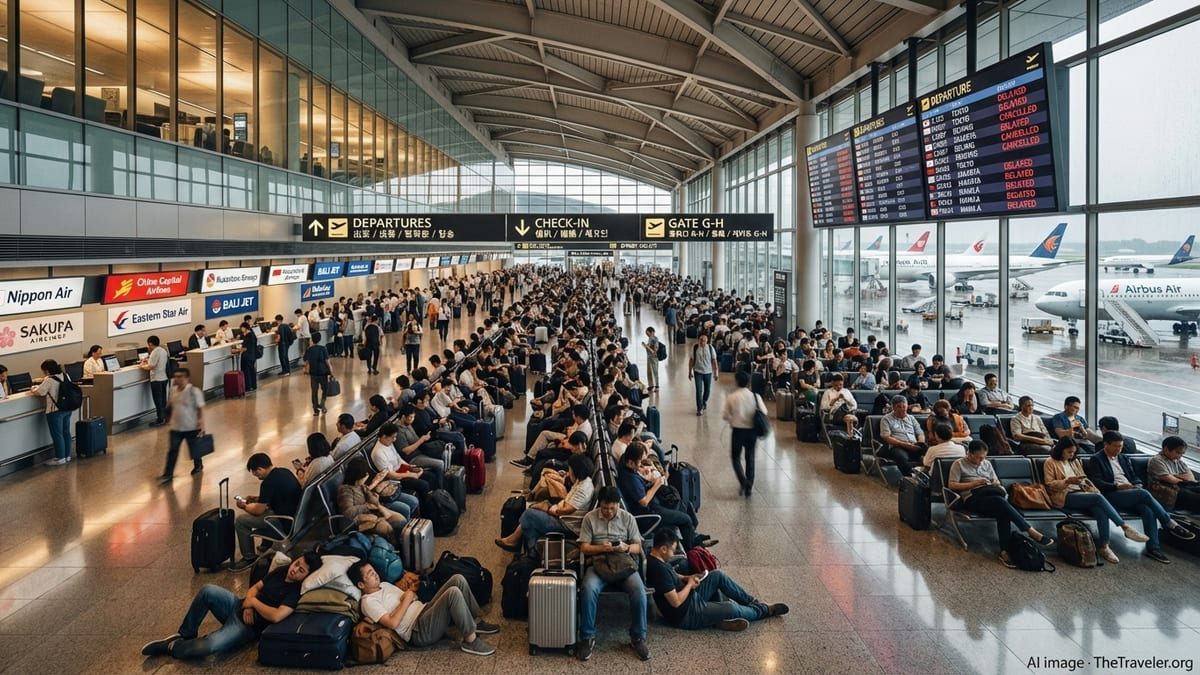
Takeaway: Don’t just chase the lowest price. Ask: If my flight is 8 hours late, how much of this money survives?
That’s the real financial planning for flight disruptions.
5. Know Your Rights Before You Need Them (EU vs. U.S. vs. Everyone Else)
Most travelers only learn about passenger rights after they’ve already paid for their own hotel and dinner. That’s backwards.
Here’s the uncomfortable reality:
- In the EU and UK, regulations like EU261 can entitle you to fixed cash compensation and care (meals, hotels) for many delays and cancellations within the airline’s control.
- In the U.S., there’s no equivalent standardized cash compensation. Airlines focus on rebooking; hotels and meals are often a goodwill gesture, not a legal obligation.
- Elsewhere, rules vary wildly. Some countries have strong protections; others leave you almost entirely on your own.
Even where rights exist, they’re often underused. Over half of affected U.S. travelers don’t claim compensation they might be eligible for, often because they simply don’t know they can.
Before an international trip, I do three things:
- Check the rules for my route. Am I flying from or within the EU/UK? If so, I read a quick summary of EU261 (services like AirHelp and official EU pages explain it clearly).
- Look up my airline’s disruption policy. Many carriers publish what they’ll cover in delays and cancellations. It’s not always generous, but it’s better than guessing at the gate.
- Save the links. I keep a note on my phone with: airline policy page, local passenger rights page, and my booking references.
Why this matters for budgeting: if I’m on a route with strong protections, I can assume the airline will cover some hotel and meal costs in certain scenarios. That lets me shave my disruption buffer slightly. On U.S. domestic or weak‑protection routes, I assume I’m paying for everything unless the airline surprises me.
Takeaway: Your rights are part of your financial plan. If you don’t know them, you’re budgeting blind.
6. Travel Insurance: When It’s Worth It (and When It’s Not)
Travel insurance is one of those things people either buy blindly or avoid on principle. I try to be more surgical.
Insurance can help with:
- Trip interruption (covering extra hotels, meals, and transport when your trip is disrupted).
- Trip cancellation (reimbursing nonrefundable costs if you can’t travel for covered reasons).
- Missed connections (paying for rebooking and catch‑up costs).
- Baggage delay/loss (covering essentials or the value of your belongings).
But here’s the catch: policies are full of conditions and exclusions. Not every delay or cancellation is covered. Some policies only kick in after a certain number of hours, or only for specific causes.
So I ask myself:
- How much nonrefundable money is at stake? If I’ve prepaid $4,000 in hotels and tours, insurance looks more attractive than if I’ve kept everything flexible.
- What does my credit card already cover? Many premium cards include trip delay, interruption, and baggage coverage if I pay for the flight with that card.
- What’s the disruption risk? High‑risk itineraries + high nonrefundable costs = strong case for insurance.
When I do buy a policy, I read the sections on trip delay, trip interruption, and missed connections very carefully. I want to know:
- After how many hours of delay does coverage start?
- What’s the per‑day and total limit for hotels and meals?
- Do they cover strikes, fuel crises, or airline insolvency?
Takeaway: Insurance isn’t a magic shield. It’s a tool. Use it when your potential losses are big and your itinerary is fragile, not just because a booking site nudged you. Always compare travel insurance vs out of pocket costs for your specific trip.
7. Cash, Cards, and Receipts: How to Be Financially Ready on the Day Chaos Hits
When a flight melts down, the people who cope best aren’t necessarily the calmest. They’re the ones who can pay quickly, document everything, and claim later.
Here’s how I set myself up before I even leave home:
- Multiple payment options: At least two cards (ideally from different networks) and some local or widely accepted cash. If one card gets blocked, I’m not stuck.
- Dedicated disruption fund: I keep a separate account or mental bucket for my disruption buffer so I know I can spend it without panicking.
- Receipt discipline: I photograph every disruption‑related receipt: hotels, meals, taxis, replacement clothes. Even if I’m not sure I’ll be reimbursed.
- Single point of truth: I keep all booking confirmations, policy links, and emergency numbers in one offline‑accessible note or app.
On the day chaos hits, my priorities are:
- Secure a new plan (rebooking via app, then phone, then desk).
- Lock in a bed if an overnight looks likely (airport hotels fill fast and flight cancellation hotel costs climb quickly).
- Document everything (screenshots of delay notices, cancellation messages, boarding passes).
Later, when I’m home, I can calmly decide whether to:
- Claim compensation under EU/UK rules.
- File a claim with my insurer or credit card.
- Push the airline for vouchers or partial refunds.
Takeaway: You don’t control the disruption. You do control how fast you can adapt financially when it happens.
8. Design Trips That Can Survive a Bad Day
Budgeting for chaos isn’t just about money. It’s about designing trips that can take a hit and keep going.
When I plan international travel now, I quietly build in resilience:
- Arrive a day early for anything important (weddings, cruises, conferences). That extra hotel night is cheaper than missing the event.
- Pad connections on separate tickets. If I’m self‑connecting, I treat it like two separate trips with a generous buffer in between.
- Favor nonstop flights when possible, even if they cost more. Every connection is another failure point.
- Keep the first 24 hours light. No expensive, nonrefundable plans right after landing.
- Know my escape routes: alternative airports, train options, or even buses if flights fall apart.
None of this is glamorous. But it’s what makes the difference between That trip was a disaster
and That trip was chaotic, but we handled it.
Final thought: International travel in this era isn’t about avoiding disruption. It’s about pricing it in. If you treat chaos as a line item in your budget and a design constraint in your itinerary, you’ll spend less, stress less, and recover faster when the inevitable happens.
Before you book your next long‑haul flight, ask yourself: If this trip goes sideways, have I already paid for that possibility?
If the answer is yes, your extra budget for travel disruptions is doing its job—and you’re ready.