
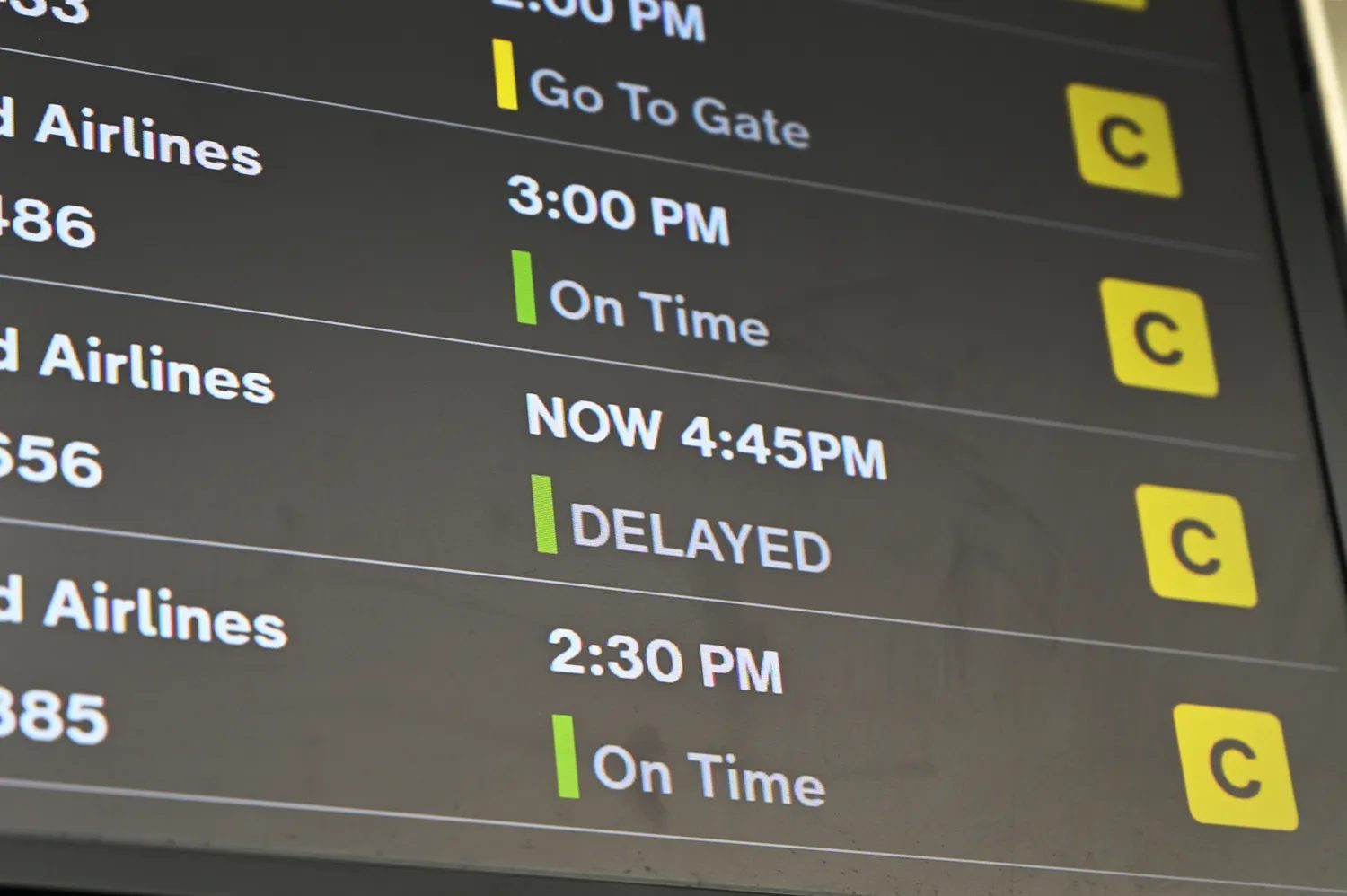
I don’t plan trips around worst-case scenarios. But I do budget for them. After watching delays and cancellations quietly drain hundreds of dollars from otherwise well-planned trips, I’ve learned this: the real cost of a disruption is almost never just the new flight.
It’s the missed hotel night you already paid for. The extra airport meals. The last-minute Uber across town. The tour you can’t reschedule. And the stress of doing math in your head while a departure board flashes DELAYED
in bright orange.
Let’s walk through how to put real numbers on those hidden costs of travel disruptions, and how to build them into your travel budget so a bad delay is annoying, not financially devastating.
1. Start With a “Disruption Number”: How Much Can One Bad Delay Really Cost?
Most of us underestimate this by a mile. Data from AirHelp and other analyses show that a single serious disruption can easily run into the hundreds:
- U.S. travelers report average out-of-pocket costs around $450–$500 per disruption once everything is added up.
- AirHelp’s global data puts the average at about €362.50 for long delays and cancellations.
- On a typical disrupted trip, people spend extra on accommodation, food, local transport, replacement essentials, and lose money on missed activities or work.
To budget for flight delays and cancellations, I like to start with a personal “disruption number” before I even book:
- Accommodation risk: 1–2 nights of your average hotel cost.
- Food & drink: 2–4 extra airport/restaurant meals per person.
- Local transport: 1–2 extra taxi/ride-share rides plus maybe a train or bus.
- Activities: The value of 1–2 key prepaid tours or tickets.
- Work/earnings (if relevant): 1 day of lost income or penalties.
When I plug in my own numbers for a typical international trip, I often land between $400 and $800 of potential exposure per person. That’s the number I use to decide how much to save for travel emergencies, and whether insurance or more flexible tickets are worth it.
Takeaway: Don’t guess. Put a rough dollar figure on what one bad disruption could cost you, and use that as your planning baseline—your personal travel disruption cost guide.
2. Missed Nights & Double-Paying for Beds: How to Budget for Accommodation Chaos
Accommodation is where delays quietly get expensive. In some studies, extra accommodation alone averaged over $300 per disrupted traveler. That’s not just new hotels; it’s also the nights you paid for but never used.
Think about two separate buckets when you’re using any kind of unexpected travel expenses calculator in your head:
- Bucket A – Lost nights: Nonrefundable hotel or rental nights you can’t use because you arrive late or leave early.
- Bucket B – Extra nights: Unexpected overnight stays near the airport or in a transit city.
Here’s how I budget and reduce the damage from extra hotel nights in my travel budget:
Decisions that matter before you book
- Front-load flexibility: For the first and last night of a trip, I strongly prefer
free cancellation until 24–48 hours before
rates, even if they’re slightly more expensive. Those are the nights most likely to be affected by flight chaos. - Check check-in rules: Some hotels will let you arrive very late or shift your first night if you call. Others won’t. I treat that as a financial policy, not a courtesy.
- Avoid nonrefundable chains of bookings: If your flight, first hotel, and first tour are all nonrefundable on the same day, you’ve stacked your risk.
How much to budget for accommodation risk
- Domestic trips: I assume the risk of 1 lost night + 1 emergency night at a mid-range hotel near the airport.
- International trips: I assume up to 2 nights of exposure (one lost, one extra) because long-haul disruptions are more brutal.
Example: If your average hotel is $180/night and an airport hotel is $220/night, you might quietly be exposed to $400–$600 in accommodation risk alone.
Takeaway: Treat your first and last nights as high-risk expenses. Pay a bit more for flexibility there, and budget for at least one extra night somewhere you didn’t plan to sleep.
3. Extra Meals, Airport Prices, and “Stranded Day” Spending
Food is the most obvious cost during a delay, but we still underestimate it. Surveys show disrupted travelers often spend $100+ per incident on extra meals and snacks, especially in airports where prices are inflated.
When a delay stretches from two hours to eight, your spending pattern changes:
- You eat airport-priced meals instead of cheaper local options.
- You buy extra drinks, coffee, and snacks out of boredom and stress.
- You may pay for lounge access or day passes just to have a quiet place to sit.
Here’s how I plan for a stranded day
of food and comfort:
Build a “delay food” line into your budget
- Per person, I assume 2 extra meals + 2 snacks at airport prices.
- That’s often around $40–$70 per person in many airports, more in expensive hubs.
- If I know I’ll be in a notoriously pricey airport, I bump that number up.
Decide in advance how you’ll handle comfort spending
- Lounge access: Day passes can run $40–$80. I decide before the trip whether I’m willing to pay that if a delay passes a certain threshold (say, 4+ hours).
- Water & snacks: I usually carry a refillable bottle and some snacks. It sounds trivial, but over a long delay, that can easily save $20–$30 per person.
Takeaway: Assume at least one stranded day
of airport-priced food in your budget. If it doesn’t happen, you’ve just underspent—and avoided one of the most common unreimbursed airline delay expenses.
4. Lost Activities, Tours, and Events: Pricing the Emotional Stuff
This is where the money and the emotions collide. Studies show travelers lose over $100 per disruption on missed prepaid excursions on average, but the real pain is often missing something you can’t repeat: a concert, a wedding, a once-a-year festival.

When I plan a trip, I separate activities into two categories:
- Replaceable fun: Museum tickets, food tours, hop-on-hop-off buses. These are annoying to lose but not life-defining.
- Non-negotiable events: Weddings, milestone birthdays, major sports events, performances with fixed dates.
How I budget and protect against lost activities
- For replaceable fun: I assume I might lose one prepaid activity per trip. If I’ve booked $300 worth of tours, I mentally treat $100–$150 as at risk. That’s my personal cost of missed tours and activities line item.
- For non-negotiable events:
- I try to arrive at least one full day early.
- I’m more willing to pay for flexible tickets and better connections.
- I look closely at trip interruption coverage in travel insurance, not just medical.
Also consider the secondary costs that rarely get counted:
- Childcare or pet-care penalties if you return late.
- Nonrefundable show tickets, spa appointments, or day passes.
- Conference or convention fees if you miss key days.
Takeaway: Put a dollar value on the activities you absolutely can’t afford to miss, then decide if you’re protecting them with timing, flexibility, or insurance—or just accepting the risk.
5. Local Transport, Last-Minute Rerouting, and the “Scramble Tax”
Delays don’t just affect flights. They ripple through your ground plans. In some analyses, travelers reported spending over $100–$200 extra on local transport when things went wrong.
Here’s where the money leaks out:
- Airport transfers you can’t use because you arrive too late or on a different day.
- Surge-priced ride-shares when a wave of delayed flights lands at once.
- Last-minute trains or buses to alternative airports or cities.
- Rebooking fees for missed connections on separate tickets (like low-cost carriers or trains).
How I budget for the “scramble tax”
- I assume I might need 1–2 extra taxi/ride-share rides at premium times.
- If I’m using separate tickets (e.g., a low-cost carrier plus a train), I treat the second leg as fully at risk unless I’ve built in a huge buffer.
- For complex itineraries, I add a small “rerouting fund”—maybe $100–$200 per person—to cover emergency trains, buses, or regional flights.
Takeaway: Any time you’re relying on tight connections or separate tickets, assume you’ll pay a scramble tax in extra transport. Budget for it up front to avoid money mistakes during travel delays.
6. Baggage, Essentials, and the Cost of Being Unprepared
Even if your flight eventually goes, your bag might not. Travelers often estimate the value of their baggage and contents at around $250+, but the immediate cost is usually in replacement essentials:
- Toiletries and basic clothes.
- Chargers, adapters, headphones.
- Medication or personal items you can’t easily replace.
Studies show disrupted passengers often spend around $90+ on replacement essentials when things go wrong. That’s not counting the value of what’s actually in the bag.
How I reduce baggage-related costs
- Carry-on strategy: I always pack one
stranded day kit
in my carry-on: a change of clothes, meds, chargers, and minimal toiletries. - Value check: If I’m carrying expensive gear (camera, laptop, sports equipment), I check whether my home insurance, credit card, or travel insurance covers it—and up to what limit.
- Budget: I assume I might need to spend $50–$100 per person on essentials if a bag goes missing for a day or two.
Takeaway: A small, well-packed carry-on can save you from a surprising amount of emergency shopping. Budget a bit for essentials, but pack in a way that makes that budget unlikely to be used.
7. Should You Pay for Flexibility and Insurance—or Just Self-Insure?
Once you know your disruption number, you can make a more rational decision: Do I pay more up front for flexibility and insurance, or do I accept the risk and self-insure?

When I lean toward paying for flexibility
- Trips with non-negotiable events (weddings, big conferences, once-in-a-lifetime shows).
- Itineraries with multiple connections or separate tickets.
- Travel during high-risk seasons (winter storms, peak summer congestion).
- When my disruption number is high (e.g., expensive hotels and tours).
In those cases, I’m more willing to:
- Pay extra for refundable or changeable fares.
- Choose airlines with better disruption reputations over the absolute cheapest option.
- Buy travel insurance that clearly covers delays, missed connections, and trip interruption—not just medical emergencies.
If you’re comparing travel delay vs trip interruption insurance, look closely at what each one actually pays for: hotels, meals, lost activities, or only the unused portion of your trip.
When I self-insure
- Short, simple trips with low prepaid costs.
- Flexible plans where missing a day doesn’t ruin the whole point of the trip.
- When I’ve set aside a specific disruption fund and I’m comfortable using it if needed.
Takeaway: Compare the cost of flexibility and insurance to your disruption number. If the protection costs more than the realistic risk, self-insuring might be smarter.
8. Know Your Rights and How to Get Money Back (So Your Budget Survives)
Here’s the part many travelers skip: you might be entitled to money or care you never claim. Surveys show that over half of passengers don’t file for compensation simply because they don’t know they can, and most say they were never informed of their rights.
Depending on where you’re flying, you may have strong protections:
- Europe (EC 261): On many flights to, from, or within the EU/UK, you may be entitled to meals, accommodation, and cash compensation up to €600 for long delays and cancellations, depending on the cause and timing.
- Brazil (ANAC 400): Similar rules around care and assistance.
- U.S.: Protections are weaker, but airlines often have their own policies for meals, hotels, and rebooking—especially for issues within their control.
What I do on every disrupted trip:
- Keep every receipt: Food, hotels, transport, essentials. Take photos if needed.
- Ask clearly: At the desk or via chat, I ask:
What are you providing in terms of meals, hotels, and transport under your policy?
- Check my route against EC 261 or local rules: A quick search or a rights guide (AirHelp and others provide these) can tell you if you’re eligible for compensation.
- File claims: With the airline, my travel insurer, and sometimes my credit card, if it offers trip delay coverage.
Takeaway: Your disruption budget should assume you’ll spend money in the moment—but also that you’ll aggressively try to get some of it back afterward.
Putting It All Together: Your Personal Disruption Budget
If you want a simple framework, here’s how I build a disruption budget for any trip. Think of it as your own unexpected travel expenses calculator, but on paper:
- Estimate your disruption number per person:
- Accommodation risk: $X
- Extra food & comfort: $Y
- Transport & rerouting: $Z
- Lost activities/work: $W
- Essentials & baggage issues: $V
- Decide your strategy:
- Pay more for flexibility and insurance, or
- Self-insure by setting aside a disruption fund.
- Adjust your bookings:
- More flexible first/last nights.
- Safer connection times.
- Earlier arrival for critical events.
- Travel with a plan:
- Know your rights on your routes.
- Know your
walk-away
decisions: when you’ll pay for your own hotel, when you’ll reroute yourself, when you’ll buy lounge access.
You can’t control the weather, air traffic, or mechanical failures. But you can control how exposed you are to the hidden costs of travel disruptions. Once you start treating delays and cancellations as a budget category instead of a freak accident, the whole experience becomes less chaotic—and a lot less expensive.
In other words: decide your emergency travel fund amount, build it into your plans, and let future-you thank you when the departure board lights up with delays.