
I don’t care how seasoned a traveler you are – if you don’t build a realistic daily travel budget, hidden costs will eat you alive. Taxes that weren’t in the price. Resort fees. Tipping norms you didn’t know about. That “cheap” flight that doubles in price once you add a bag and a seat.
This guide walks through how to build a realistic daily travel budget that survives actual travel, not just Instagram highlights. We’ll borrow ideas from a few smart budget calculators (like this one and this one) and turn them into a simple, repeatable system you can use for any trip.
By the end, you’ll know:
- How to turn a messy list of costs into a clean daily, per-person number
- How big a buffer you really need (and when 10% is not enough)
- Which hidden travel expenses abroad quietly blow up most budgets
- How to adjust your daily travel budget for travel style, destination, and season
1. Stop Thinking in “Trip Cost” – Start Thinking in Daily Cost
Most people start with, How much will this trip cost?
A better first question is: What’s my realistic daily travel budget?
Once you know your daily number, everything else gets easier. You can compare a 5-day city break with a 12-day road trip. You can see whether adding three extra days is actually expensive or surprisingly cheap once flights are spread out over more days.
A simple framework (inspired by the Super Global daily budget calculator) looks like this:
Total trip cost ≈ (Daily expenses × Number of days) + Flights + Pre-trip costs + Buffer (15–20%)
Daily expenses usually include:
- Accommodation (per night, per room/apartment)
- Food & drinks (per person, per day)
- Local transport (passes, metro, rideshares, fuel)
- Activities & attractions (average per day)
- Small stuff (coffee, snacks, laundry, SIM cards)
Tools like the MiniWebTool Travel Budget Calculator do the math for you: they combine flights, accommodation, food, transport, activities, insurance, extras, and a buffer, then spit out a per-person, per-day number. That’s the number to obsess over when you’re figuring out how to budget for travel per day.
Here’s the mental shift:
- Don’t ask:
Can I afford this trip?
- Ask:
Can I afford $X per day for Y days, plus flights and a buffer?
Once you see your daily travel budget vs real costs, decisions about where to go and how long to stay become much clearer.
2. Choose Your Travel Style First (It Drives Everything Else)
Before you open a single booking site, decide who you are on this trip. Not who you wish you were. Who you actually are when you’re tired, hungry, and in a new country.
Many calculators (like the Funify travel budget tool) use a travel style multiplier:
- Ultra-budget: ~0.7–0.8× base costs
- Budget: ~0.9–1.0×
- Standard / mid-range: ~1.1–1.3×
- Comfortable / premium: ~1.4–1.6×
- Luxury: 1.7–2.0×+
Accommodation is the anchor. It quietly dictates everything else in your international trip daily spending plan:
- Stay in hostels or basic guesthouses → you’re more likely to cook, walk, and pick cheaper activities.
- Stay in mid-range hotels → you’ll eat out more, use taxis more, and pay for convenience.
- Stay in luxury hotels → your baseline for
normal
spending jumps.
In the U.S., for example, realistic daily ranges (from several cost guides) look like this:
- $50–75: ultra-budget (hostels, camping, cooking, public transit)
- $100–150: budget (cheap hotels, some eating out, transit passes)
- $200–350: mid-range (decent hotels, restaurants, some paid attractions)
- $400–600: comfortable (central hotels, frequent dining out, tours)
- $700+: luxury (high-end hotels, fine dining, private tours)
Pick your tier honestly. Then use it as a multiplier on your base daily estimates. If you’re not sure how much to budget per day when traveling, start with mid-range, price a few real hotels and meals, and adjust from there.
3. Break Costs into Fixed vs Daily – Then Amortize the Pain
One reason people under-budget is that they treat everything as a random list of numbers. I split costs into two buckets:
- Fixed costs: flights, visas, pre-trip gear, travel insurance, big one-off tours
- Daily costs: accommodation, food, local transport, activities, small extras
Then I amortize the fixed costs over the number of days. This is where longer trips often win, especially for long-term travel where your daily budget matters more than the total.
Example:
- Return flight: $800
- Daily costs: $120/day
5-day trip:
- Daily costs: 5 × $120 = $600
- Total: $800 + $600 = $1,400 → $280/day effective
12-day trip:
- Daily costs: 12 × $120 = $1,440
- Total: $800 + $1,440 = $2,240 → ~$187/day effective
Same flight, very different daily reality. This is why tools like the Super Global daily budget calculator are so useful: they force you to see the full picture instead of obsessing over airfare alone.
If you like spreadsheets, the MyTimeCalculator Travel Budget Calculator goes further: it lets you create custom categories and compare planned vs actual spending, then gives you a Spending Efficiency Score
. In plain language: Did your travel cost breakdown per day match reality, or did you lie to yourself?
4. Hunt Down the Hidden Costs That Kill Your Budget
This is where most people get burned. The base prices look fine. The real prices… not so much.
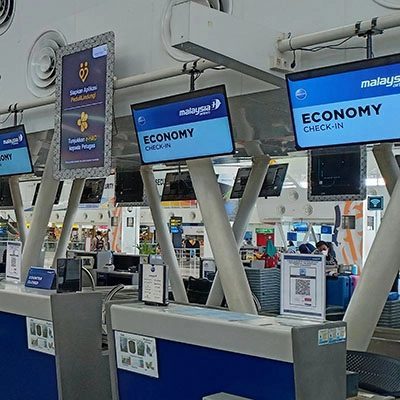
Here are the big hidden-cost categories I always budget for when I’m planning daily travel costs with hidden fees in mind:
4.1 Flights: junk fees and add-ons
- Baggage: checked and sometimes even carry-on bags
- Seat selection: especially on low-cost carriers
- Airport check-in / printing boarding passes on some budget airlines
- Onboard extras: food, drinks, Wi‑Fi, headphones
Comparison sites often show only the base fare. Airlines like Frontier, Spirit, Ryanair, and Wizz Air are notorious for add-ons. The trick is to compare the final price with bags and a seat against a more traditional airline that includes most of that.
When I budget flights, I add a line called “airline extras” and throw in a realistic number (often $30–80 each way, depending on the airline and route). It’s a simple way to avoid one of the most common travel budget mistakes to avoid.
4.2 Accommodation: taxes, resort fees, and parking
- Local taxes (often 10–15% on top of the room rate)
- Resort fees ($20–50+ per night in some cities and resorts)
- Parking ($15–70 per night in big cities)
In the U.S., it’s common for the price you see to exclude taxes and fees. That $150 room can easily become $190+ after everything is added. I assume an extra 10–20% on top of the advertised rate unless I see a fully-loaded price.
4.3 Food: tipping and service charges
In many countries, especially the U.S., menu prices are not the final price. You’ll add:
- Sales tax: often 5–10%
- Tip: usually 15–25% on the pre-tax amount
That $20 main course can quietly become $26–28. Over a week, that’s a lot. I usually multiply restaurant prices by 1.25–1.30 to get a realistic final cost.
When you’re budgeting for tips and local transport together, it’s easy to underestimate how much these small extras add up to in your daily budget.
4.4 Transport: the car-rental trap
- Insurance (CDW, liability, etc.)
- Fuel (and higher prices in remote areas)
- Tolls and toll transponder fees
- Parking (again!)
When I budget a road trip, I don’t just write car rental: $40/day
. I write:
- Car rental base: $40/day
- Insurance: $15/day
- Fuel: $20/day
- Parking & tolls: $10–20/day
Suddenly that $40/day car
is more like $85–95/day. That’s the number that belongs in your daily travel budget and your cost guide for daily travel expenses.
5. Use a Buffer That Matches Your Risk (10% Is Often Too Low)
Most calculators suggest a 10–20% buffer. That’s a decent starting point, but I don’t use the same percentage for every trip.
I ask myself three questions:
- How volatile is the currency? (e.g., traveling with a weak home currency)
- How many big things are unbooked? (tours, internal flights, long transfers)
- How remote / complex is the trip? (island hopping, road trips, multiple countries)
Then I pick a buffer:
- 10–12%: simple city break, most things pre-booked, stable currency
- 15–18%: typical international trip, some unknowns, moderate volatility
- 20–25%+: remote destinations, peak season, lots of unplanned activities
Tools like MiniWebTool and MyTimeCalculator let you plug in a buffer percentage and see the impact instantly. I like to run two scenarios:
- Lean scenario: lower buffer, fewer paid activities
- Realistic scenario: higher buffer, honest activity list
If the realistic scenario scares you, that’s useful information. It means the trip needs to change, not that your calculator is wrong.
6. Adjust for Destination, Season, and Daily Rhythm
Two travelers can both say, I spent $150/day in the U.S.
and mean completely different things. One might have camped in national parks. The other stayed in a cheap motel off the highway and ate fast food.
So I always adjust my daily travel budget for three things:
6.1 Destination and region
Within one country, prices can vary wildly. In the U.S., for example:
- New York, San Francisco, Hawaii → very high accommodation and food costs
- Smaller cities and rural areas → often half the price for the same comfort
Don’t use a single country average
for a multi-stop trip. Break it down by region or city and weight it by nights. Your daily budget for long-term travel across several regions will be much more accurate this way.
6.2 Season
Off-season can cut accommodation costs by 40–60% in some places. That’s not a rounding error. That’s the difference between a $120 and a $70 hotel.
If you’re flexible, start with your budget and then pick the season that makes it work, not the other way around.
6.3 Daily rhythm (what you actually do all day)
The Funify calculator has a smart idea: different day types (sightseeing, adventure, relaxation) change your spending pattern.
- Sightseeing day: more museum tickets, transit passes, snacks
- Adventure day: higher activity costs (tours, gear), maybe fewer meals out
- Chill day: lower activity costs, but maybe more coffee and slow lunches
I like to sketch my trip as a row of day types and assign a slightly different daily budget to each. Then I average them. It’s more work, but it’s much closer to reality than pretending every day costs the same.
7. Sanity-Check Your Budget Against Reality (Before You Go)
Once I have a draft daily budget, I try to break it. I assume I’m being optimistic and go hunting for proof.

Here’s my sanity-check routine for travel money management abroad:
- Price 3–5 real hotels for your dates and area, including taxes and fees. Use the average, not the cheapest.
- Check restaurant menus on Google Maps or local apps. Add tax and tip mentally.
- Look up local transport: metro passes, bus fares, or typical rideshare prices between key spots.
- List your must-do activities and price them now, not later.
- Convert everything into your home currency using a slightly worse exchange rate than today.
If your carefully researched numbers are consistently higher than your original budget, believe them. Adjust the budget, or shorten / simplify the trip.
Tools like the MyTimeCalculator’s Planned vs Actual tab are gold after the trip. They show where you were off – food, activities, transport – so your next travel cost breakdown per day is sharper. Think of it as training data for your future travels.
8. Turn Your Daily Budget into a Simple Rule You Can Use on the Road
A beautiful spreadsheet is useless if you can’t remember it when you’re jet-lagged and staring at a menu.
So I compress my entire budget into a few simple rules I can carry in my head:
- One daily number: e.g.,
$140/day all-in, not counting flights.
- Category caps: e.g.,
$60 for accommodation, $40 for food, $20 for transport, $20 for everything else.
- Trip buffer rule: e.g.,
Keep at least $300 untouched until the last 2 days.
Then I track loosely:
- Round to the nearest $5 or $10.
- Check in every 2–3 days, not every hour.
- If I’m consistently over in one category, I compensate in another.
One more thing to watch: foreign transaction feesATM fees and currency exchange costs. If your bank charges 3% on every card purchase and $5 per withdrawal, that’s part of your daily budget too. Either switch to a better card or pad your numbers.
The goal isn’t perfection. The goal is to avoid that sinking feeling on day 5 of a 10-day trip when you realize you’ve already burned 80% of your money.
Build a daily travel budget that assumes you’ll be human, not a robot. Price the hidden costs, add a real buffer, and sanity-check your numbers against actual prices. Do that, and your budget won’t just survive hidden costs abroad – it will give you room to say yes
to the good surprises when they show up.