

Travel doesn’t have to be a once-a-year blowout that wrecks your budget. It also isn’t some mystical art where you manifest
cheap flights and everything else magically falls into place.
If you want to afford 3–4 trips a year without wrecking your finances, you need a system. Not a vision board. Not a random sale alert. A boring, repeatable setup that quietly builds a year round travel fund in the background.
Here’s how to build that system, step by step.
1. Stop budgeting trip-by-trip and decide your annual travel number
The first shift is mental: stop treating every vacation like a one-off splurge. Treat travel like rent, groceries, or your phone bill – a recurring part of your life.
Instead of asking, Can I afford this trip?
every time a friend sends a flight deal, ask: What’s my annual travel budget?
Here’s a simple way to get there:
- Calculate your discretionary pool. Start with your monthly take-home pay. Subtract fixed living costs (rent, utilities, groceries, insurance), debt payments, and core savings (retirement, emergency fund, big goals). What’s left is your discretionary pool – the money for everything non-essential: eating out, hobbies, gadgets, and yes, travel. This is the pot your vacation savings plan has to compete with.
- Pick a realistic percentage for travel. A common range is 5–10% of your annual discretionary pool. If your discretionary pool is $12,000 a year, 10% gives you $1,200 for travel. Not glamorous, but real. If it feels too low, don’t just bump the number – decide what you’re willing to cut elsewhere.
- Convert that into a monthly amount. If your annual travel number is $2,400, that’s $200/month. That’s your
travel bill
. You pay it to yourself instead of to an airline. This is your baseline monthly savings for travel.
This is usually the moment you think, That’s not enough for the trips I want.
Good. That tension is useful. It forces you to choose, not drift.

Key takeaway: Decide your annual travel number based on what’s truly left after essentials, not on your salary or your Instagram feed.
2. Turn that annual number into a dedicated, automated travel fund
Once you have your annual number, the next question is simple: will you actually protect that money, or will it disappear into random Amazon orders and takeout?
Make it hard to sabotage yourself. That’s the whole game.
Here’s the setup for a simple travel sinking fund strategy:
- Open a separate travel account. Not a mental account. A real one. Ideally at a different bank or as a separate
pocket
in a digital bank. Label it something obvious like Travel 2025. This keeps your travel fund vs emergency fund clearly separated, which most budgeting guides strongly recommend. - Automate a monthly transfer. Remember that $200/month example? Set a recurring transfer for the day after payday. No decisions. No willpower. Just a quiet drip into your travel fund. This is how you automate travel savings instead of relying on good intentions.
- Keep it one-way (mostly). You can withdraw for trips, but don’t use this account as a buffer for random overspending. If you raid it for a new phone, you’re literally choosing the phone over a future trip. Make that choice consciously.
Over time, this does something subtle: it removes guilt. You’re not splurging
on a flight; you’re using money that was always meant for travel.

Key takeaway: A year-round travel fund is just a dedicated account plus automation. If it’s not automated, it’s wishful thinking.
3. Plan your year: 3–4 trips on paper before you book anything
Now for the fun part: deciding what those 3–4 trips actually are.
This is where a lot of people go off the rails. They grab the first cheap flight they see, burn half their annual budget by May, and then wonder why the winter trip feels tight.
Instead, plan the whole year in one view, then adjust. Think of it as financial planning for regular travel, not just a one-off splurge.
Try this framework:
- List all the trips you’d like to take this year. Be honest and specific: a friend’s wedding, a long weekend in a nearby city, a one-week international trip, a family visit, a solo retreat. Don’t censor yet.
- Rate each trip on two axes:
- Importance: How much does this matter to you personally? (1–5)
- Time sensitivity: Is this a
now or never
trip (wedding, aging relative, rare event) or something you could easily push to next year? (1–5)
- Prioritize using those scores. High importance + high time sensitivity goes first. That might mean a cousin’s wedding beats a dream trip to Japan this year. That’s not failure; that’s alignment.
- Assign rough budgets per trip. Use categories to build a realistic budget for multiple trips a year: weekend getaway, domestic week, international week. For example:
- Weekend road trip: $200–$400
- Domestic 5–7 days: $600–$1,200
- International 7–10 days: $1,200–$2,500+
Now add them up. Do those rough budgets fit inside your annual travel number?
If not, you have three options:
- Downgrade. Cheaper destinations, shorter stays, different seasons.
- Delay. Push a trip to next year instead of forcing everything into one calendar.
- Replace. Swap one big trip for two smaller ones, especially if you love short trips and weekend getaways.
Key takeaway: Plan all 3–4 trips on paper first. Don’t let the first cheap flight you see decide your entire year.
4. Estimate full trip costs (and stop lying to yourself about cheap
trips)
A $99 flight is not a $99 trip. You know that. I know that. Yet it’s amazing how often we pretend otherwise when we’re itching to book.
To keep your 3–4 trips realistic, you need full-trip estimates, not just flight prices. This is where a solid short trip travel budget or week-long budget really earns its keep.
Break each trip into these categories:
- Transportation: Flights, trains, buses, gas, tolls, parking, airport transfers, local transit, rideshares.
- Accommodation: Hotels, hostels, rentals, resort fees, taxes.
- Food: Eating out, groceries, snacks, coffee (yes, it adds up).
- Activities: Tours, museum tickets, excursions, day trips.
- Extras: Baggage fees, tips, souvenirs, SIM cards, data, travel insurance.
- Buffer: 10–20% for surprises – delays, price changes, last-minute plans.
Use tools like cost-of-living sites, flight search engines, and trip cost estimators (for example, the AI-based estimators on sites like GetOutTrip) to get realistic ranges instead of guessing. Ranges are more honest than a single magic number
.
Two things usually surprise people:
- Flights are often the minority of the cost. A $200 domestic flight can easily sit inside a $900 total trip once you add lodging and food.
- Group size matters. Sharing accommodation and transport can dramatically lower per-person costs for groups of 2–4. Solo travelers often pay a
solo premium
for private rooms and taxis.
Once you have a realistic total, divide by the months until the trip. If you need $1,200 and you have 6 months, that’s $200/month. Does that fit inside your existing travel fund contributions?
If not, something has to give: either the trip shrinks, the date moves, or your monthly savings for travel goes up.

Key takeaway: A cheap flight
is not a cheap trip. Estimate the full cost and check if your monthly savings can actually support it.
5. Use timing and destination to stretch your travel fund
Once your annual number is set, the easiest way to afford more trips isn’t to earn more or cut harder. It’s to be strategic about where and when you travel.
Think of timing and destination as levers you can pull to make affordable frequent travel planning actually work.
- Travel in shoulder season. Prices in many destinations drop 40–100% between peak and shoulder/low season. Same city, same attractions, fewer crowds, less money. If you’re flexible, this alone can turn two trips into three.
- Pick destinations that match your budget tier. A $1,500 budget goes much further in a lower cost-of-living country or a nearby city than in a capital during peak season. Don’t fight the math.
- Be flexible on days. Midweek flights and off-peak departure times often cost less. Use tools like Google Flights, Skyscanner, or Hopper to compare options.
- Consider driving or trains for shorter trips. Sometimes a road trip or regional train beats flying once you factor in baggage, airport transfers, and time. This can dramatically lower the cost of a 3 day getaway.
- Stay longer in fewer places. Weekly rates on rentals can be cheaper per night than short stays. Fewer check-ins, fewer transfers, less friction.
Also, be honest about your lodging and food expectations. If you want 3–4 trips a year, you probably can’t do luxury hotels and restaurant meals three times a day on every trip. Something has to flex: either frequency, comfort, or destination.
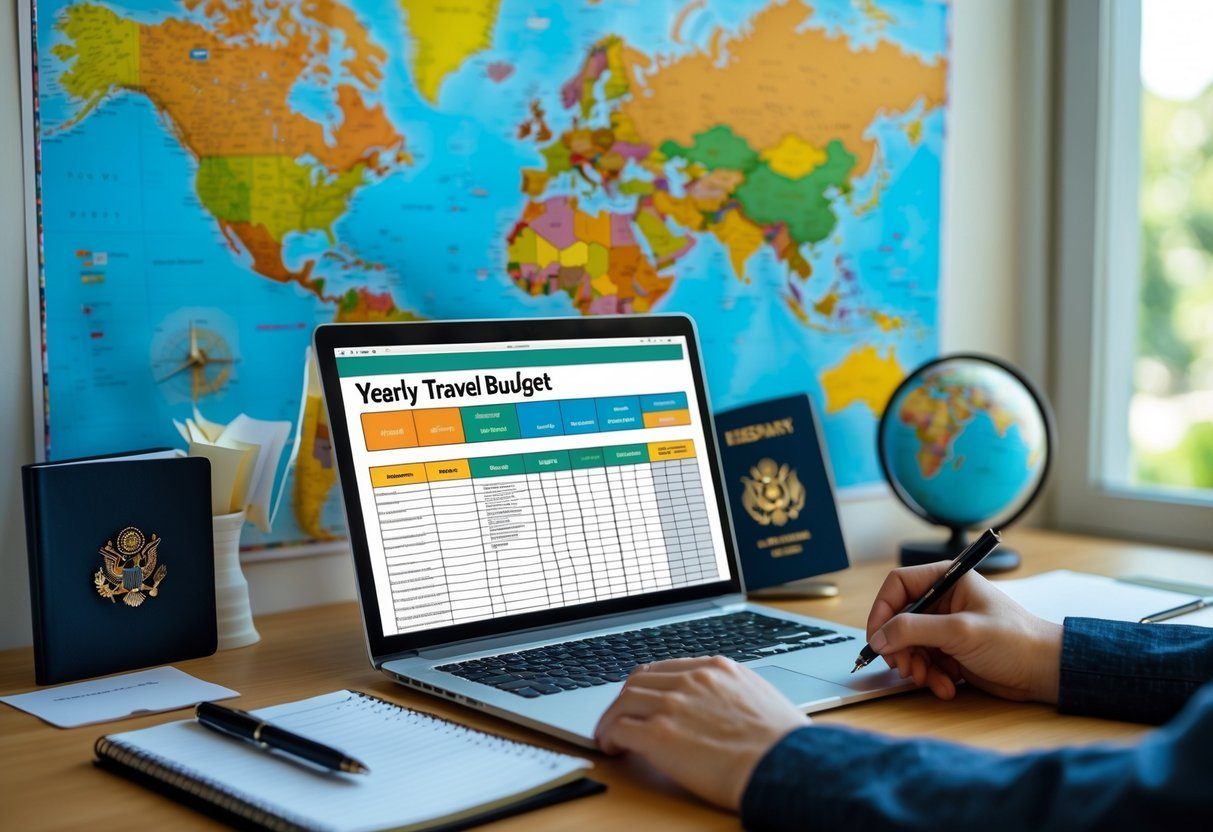
Key takeaway: You don’t have to out-earn expensive trips. You can out-smart them with timing, destination choice, and realistic comfort trade-offs.
6. Protect your trips (and your future self) with guardrails
Even with a solid plan, things go sideways: delays, medical issues, surprise fees, or just your own impulse spending. If you want to travel multiple times a year without dragging debt behind you, you need guardrails.
Think of these as frequent traveler budgeting tips that keep your future self from paying for today’s spontaneity.
Here are the ones I consider non-negotiable:
- Separate emergency buffer. For each trip, set aside ~10% of the total cost as an emergency mini-fund. Keep it in a separate pocket or sub-account so you don’t blow it on souvenirs.
- Travel insurance. Not glamorous, but skipping a $50–$100 policy can cost you thousands if something goes wrong. Use comparison tools (like SquareMouth or similar) to find a policy that fits your trip.
- Multi-trip insurance if you travel often. If you’re doing 3–4 trips a year, an annual or multi-trip policy can be cheaper and simpler than buying coverage each time.
- Clear credit card rules. Use travel cards for rewards if you want, but pay in full every month. If you can’t, you’re not funding travel; you’re renting it at high interest.
- Track spending on the road. Use apps or a simple spreadsheet to log daily spending. Most people overspend in the first few days when everything feels
vacation-y
. Tracking keeps you honest and helps you avoid overspending on weekend trips and longer stays.
One more thing: don’t mix your travel fund with your true emergency fund. When those blur, you either overspend on travel or underfund emergencies. Neither ends well.

Key takeaway: Guardrails don’t kill spontaneity; they protect your future trips from the fallout of this one.
7. Put it all together: a simple 3–4 trip blueprint
Let’s pull this into something you can actually use.
Imagine your discretionary pool is $18,000/year. You decide to allocate 10% to travel: $1,800/year, or $150/month into your travel fund. That’s your standing travel on a tight budget plan.
You sketch out a year like this:
- Trip 1 – Spring weekend road trip: $300
- Trip 2 – Summer domestic week: $800
- Trip 3 – Fall long weekend flight: $400
- Trip 4 – Winter family visit: $300
Total: $1,800.
You plan them in advance, estimate full costs, and adjust dates and destinations to fit your budget. You book flights early when possible, use off-peak dates, and choose mid-range or budget stays. Over time, this becomes your personal vacation savings plan for 3–4 trips a year.
Is this glamorous? Not particularly. Is it sustainable? Yes. And once the system is in place, you can tweak the dials:
- Increase your travel percentage if your income rises or other expenses drop.
- Swap one domestic trip for an international one by trimming elsewhere.
- Use points and miles to upgrade flights or hotels without raising your cash budget.
The point isn’t to copy this exact mix. It’s to see that 3–4 trips a year isn’t magic. It’s math, priorities, and a bit of discipline.
Final question to sit with: If you treated travel as a permanent line in your budget – not a guilty splurge – how many trips could you realistically take next year?
Once you have that answer, the rest is just execution.