
I don’t care how “cheap” a flight looks. If the final bill is double what I expected, that deal is dead to me.
The problem isn’t that travel is expensive (we already know that). The problem is that most of us only budget for the headline price—the flight, the hotel—and ignore the slow drip of “little” extras that quietly turn a $500 getaway into a $1,200 hit to your bank account.
In this guide, I’ll walk you through how I build a total trip cost budget that includes the boring, sneaky, and ugly fees before I book anything. The goal: no nasty surprises, no mid-trip panic, and no coming home to a credit card bill that makes you question your life choices.
1. Start With the Real Question: “What Will This Trip Actually Cost Me?”
Most people start with: Can I afford this flight?
I start with: What will this entire trip cost me, door to door?
It sounds obvious, but it changes everything. Instead of asking whether a $99 flight is a bargain, you ask whether the full vacation cost—with bags, airport transfers, food, activities, and all the weird fees—fits your budget.
Here’s the mental shift I use when I estimate total vacation cost:
- Think in totals, not pieces. A cheap flight to an expensive city can cost more overall than a pricier flight to a cheaper destination.
- Think per person, per day, and total. I want three numbers: total trip cost, cost per person, and cost per day. That’s how I compare trips.
- Think in one currency. Pick a base currency and convert everything into it. Mixing dollars, euros, and “I’ll figure it out later” is how budgets die.
If you like calculators, tools like the MiniWebTool travel budget calculator or the more detailed TrueTripCost style approach can help you see that full number clearly: flights, accommodation, food, transport, activities, insurance, extras, and a buffer.
Takeaway: Before you fall in love with a destination or a flight deal, commit to answering one question: What’s the all-in cost of this trip?
2. List Every Category That Can Take Your Money (Yes, Every One)
Running out of money mid-trip usually isn’t about prices being higher than expected. It’s about forgetting entire categories.
When I build a realistic travel budget, I literally go line by line and put a number next to each item, even if that number is zero. That’s how you avoid the classic travel budget mistakes.
Core travel costs
- Flights or long-distance transport (train, bus, ferry)
- Checked baggage and carry-on fees
- Seat selection, priority boarding, early check-in
- Airport transfers (taxis, rideshare, train, shuttle)
- Local transport (metro, buses, scooters, rental car, fuel, tolls, parking)
Accommodation & lodging extras
- Nightly rate (hotel, hostel, Airbnb, home exchange fees)
- Resort fees, city taxes, service charges
- Cleaning fees (especially for vacation rentals)
- Parking at the hotel
- Wi‑Fi, laundry, late checkout
Food & drink
- Daily meals (breakfast, lunch, dinner)
- Coffee, snacks, water (bottled water adds up fast)
- Alcohol and “just one more drink” nights
- Room service, minibar, hotel bar
Activities & experiences
- Museums, attractions, day passes
- Tours, excursions, classes, shows
- Gear rental (bikes, skis, snorkel gear, beach chairs)
- Special “hell-yes” experiences (hot air balloon, fine dining, big concert)
Money & fees
- Foreign transaction fees on your card
- ATM fees and currency exchange markups
- Tips and service charges (restaurants, guides, hotel staff)
Protection & admin
- Travel insurance (medical + trip interruption)
- Visas, entry fees, exit taxes
- SIM card or eSIM, roaming charges
Everything else
- Shopping and souvenirs
- Work-related costs (co-working, extra data, calls)
- Pet sitting, house sitting, airport parking back home
- Emergency buffer (we’ll talk about how big this should be)
Tools like the TravelChecklist budgeting approach and simple one-page planners (like the Trusty Travel Tips planner) are built around this idea: put everything in one place so nothing slips through.
Takeaway: Don’t trust your memory. Use a checklist and force yourself to assign a number to every category, even if it’s small.
3. Turn Prices Into a Simple Formula: Per Person, Per Night, Per Day
Once you know what to include, the next trap is number soup
. You’ve got nightly rates, per-person tickets, group totals, and random one-off costs. It’s messy.
To keep my total trip cost calculator simple, I run everything through three lenses:
- Per person (flights, activities, some meals)
- Per night (accommodation)
- Per day (food, local transport, small extras)
Here’s how I structure it, similar to how the MiniWebTool calculator and other planners do it:
Step 1 – Fixed per-person costs
- Flights and long-distance transport
- Visas, big tours, major tickets
- Travel insurance (if priced per person)
Step 2 – Group costs per night
- Accommodation total per night (including taxes and fees)
- Divide by number of people to get per-person-per-night if you want to compare options
Step 3 – Per-day spending
- Food and drink per person per day
- Local transport per person per day
- Small daily extras (coffee, snacks, tips, laundry, etc.)
Step 4 – One-off group costs
- Airport parking at home
- Pet sitter, house sitter
- SIM card, gear you buy specifically for the trip
Then I add a buffer at the end (not hidden inside other categories). Most calculators and planners suggest 10–20%. I lean toward the high end for expensive or unpredictable destinations.
Takeaway: Don’t just list numbers. Structure them. When you know what’s per person, per night, and per day, you can actually compare trips and make smart trade-offs.
4. Hunt Down the Hidden Fees That Blow Up “Cheap” Trips
This is where most budgets go to die. The flight looks cheap. The hotel looks fine. Then the hidden fees show up and quietly double your cost.
Here are the ones I actively hunt for now, thanks to tools and checklists like those at TrueTripCost and other planners. If you’ve ever wondered why your trip cost vs actual spend is so different, this is usually why.
Airline traps
- Checked bag fees (both ways, per person)
- Carry-on fees on ultra-low-cost carriers
- Seat selection (especially if you care about sitting together)
- Priority boarding or early check-in upsells
- Airport check-in fees if you don’t check in online
Accommodation traps
- Resort fees and “facility” fees that aren’t included in the headline price
- City or tourist taxes per person per night
- Cleaning fees on vacation rentals (sometimes higher than a night’s stay)
- Mandatory linen/towel fees in some hostels and apartments
- Parking, especially in city centers or resorts
Money traps
- Foreign transaction fees (often ~3% on every purchase)
- Dynamic currency conversion (when a terminal offers to charge you in your home currency at a terrible rate)
- ATM fees + your bank’s own fee + bad exchange rates
Activity & tour traps
- Equipment rental that’s not included in the tour price
- Mandatory tips or “service charges” for guides and drivers
- Photo packages, locker fees, towel rentals at attractions
How I deal with them:
- I assume I’ll pay at least one bag fee unless I’m 100% sure I can go carry-on only.
- I add a line for resort/city fees even if I haven’t seen them yet, then confirm before booking.
- I use a no-foreign-transaction-fee card for all international trips and verify terms directly with the issuer.
- I budget a fixed amount for tips and service charges based on local norms.
Takeaway: If a price looks too good, assume it’s missing 20–40% in extras. Go looking for them on purpose and add them to your budget before you book.
5. Use the 1/3 Rule to Stress-Test Your Budget
Once I’ve got a draft budget, I run it through a simple stress test inspired by the 1/3 rule
used in some travel budgeting checklists.
The idea: your total trip budget roughly splits into three buckets:
- 1/3 for transport + accommodation
- 1/3 for food + fun (activities, experiences)
- 1/3 as a safety net and extras
It won’t be perfect, but it’s a great way to spot red flags:
- If flights + accommodation are eating over half your budget, you’ll feel squeezed every single day.
- If you have almost no buffer, one surprise (a missed train, a medical visit) can wreck the trip.
- If food + fun are tiny, you’re basically paying to sit in a hotel room in another country.
I also look for spike days—those irregular, high-cost days that average daily budgets hide:
- Long travel days (extra meals, taxis, airport food)
- Big tours or excursions
- Special dinners or events
I plan those spikes in advance and make sure the buffer can handle them.
Takeaway: Don’t just ask, Is this total number okay?
Ask, Is this budget balanced?
If one category is crushing the others, adjust the plan before you book.
6. Add a Real Buffer (and Stop Pretending You Won’t Overspend)
Every serious travel budgeting tool I’ve seen—whether it’s a calculator, a spreadsheet, or printable worksheets—agrees on one thing: you need a buffer.
Not a vague I’ll try to spend less
buffer. A line item in your budget.
Here’s how I handle it:
- Minimum 10% buffer for simple, domestic trips with lots booked in advance.
- 15–20% buffer for international trips, peak season, or places with volatile prices.
- Separate emergency fund (about 10% of the total) that I treat as
break glass only
money.
I also like the idea from some budgeting guides of giving a portion of your budget a specific job: around 20% for “hell-yes” experiences. That way you’re not just protecting yourself from bad surprises—you’re funding the good ones on purpose.
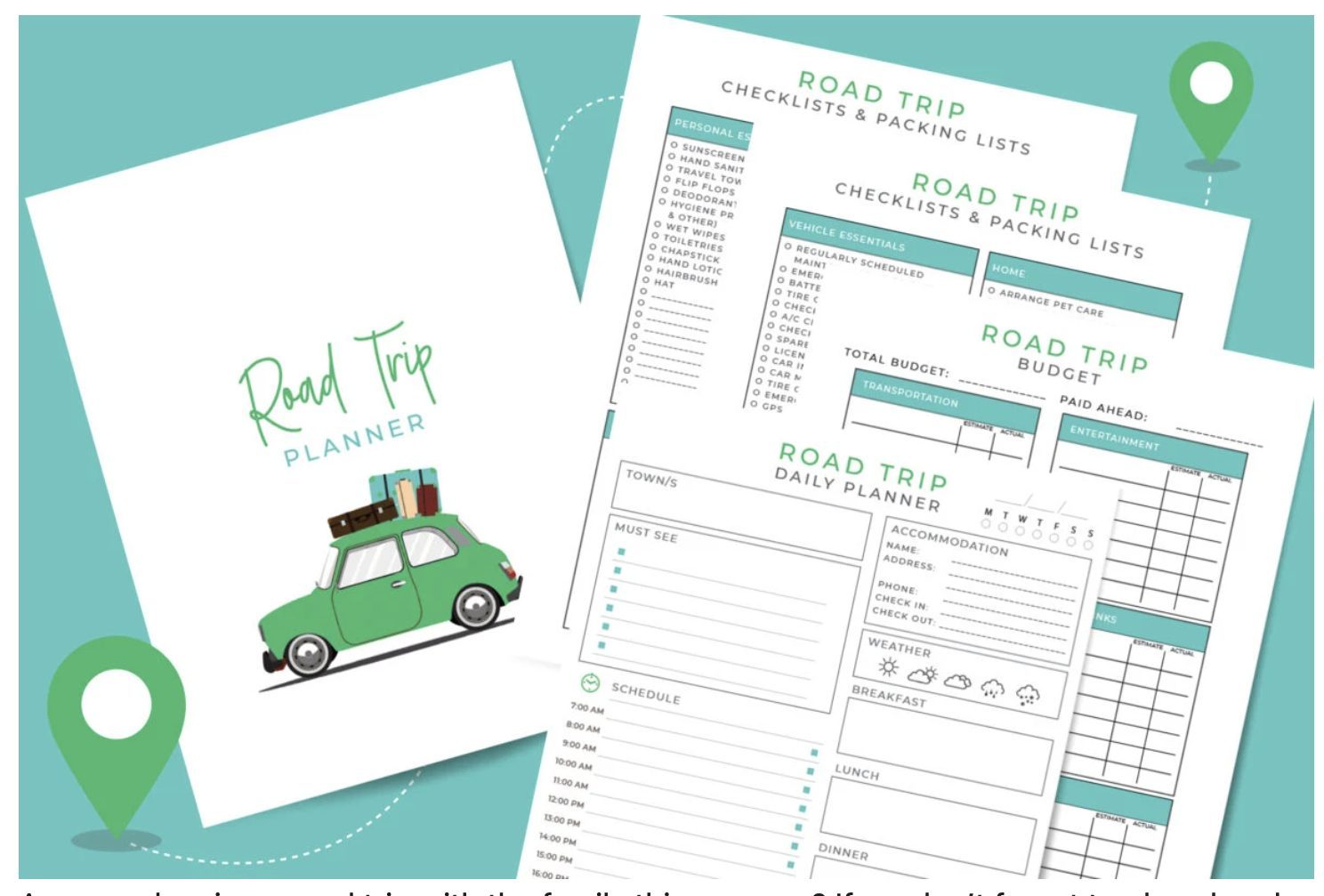
Printable planners and worksheets, like those from Frugal Confessions, often build this in: they ask for projected costs, actual costs, and then encourage you to add ~10% on top if you know you tend to overspend.
Takeaway: If your budget has no explicit buffer, it’s not a budget. It’s a wish list.

7. Track in Real Time So Your “Total Trip Cost” Stays True
A perfect pre-trip budget is useless if you never look at it again.
Most people overspend in the first few days of a trip, when everything is new and exciting and the budget is just a vague memory. The fix is boring but powerful: track in real time.
Here’s the simple system I use for realistic travel budget planning that actually holds up:
- One source of truth. A single spreadsheet or app where every expense goes. No scattered notes.
- Daily check-in. 3–5 minutes each night to log what I spent and see where I stand.
- Category view. I want to see if I’m burning through food, activities, or transport faster than planned.
You don’t need fancy tools, but they help. A few options that match the strategies we’ve talked about:
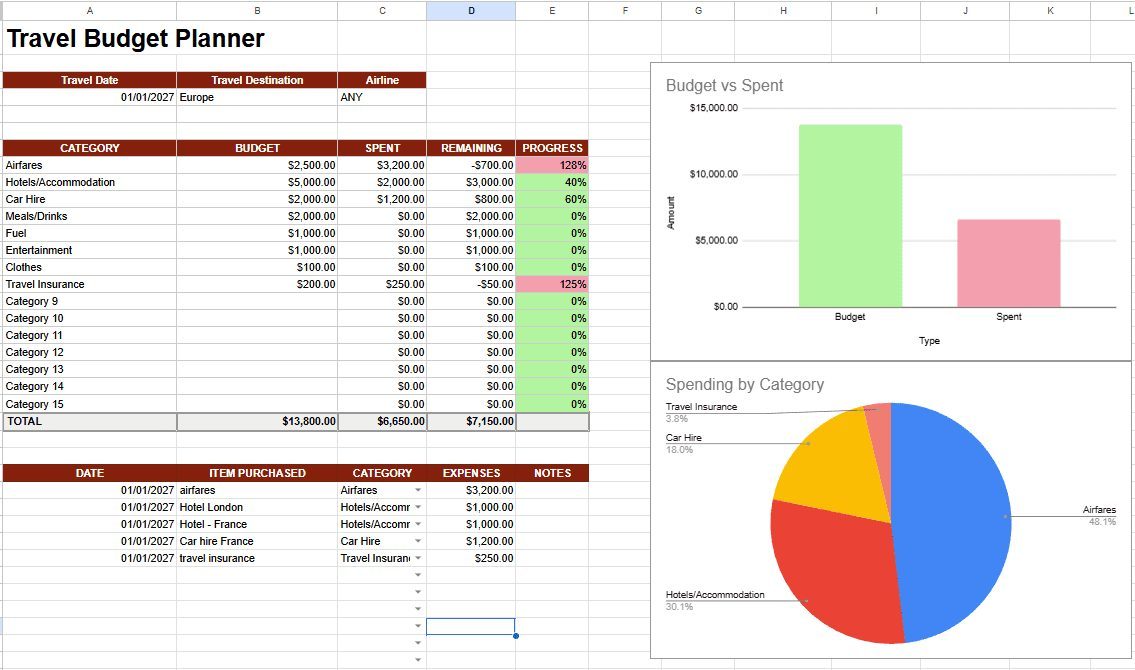
- Google Sheets with live currency conversion for simple, flexible tracking.
- Apps like Splitwise, TravelSpend, Spendee, or Trail Wallet for group trips and on-the-go logging.
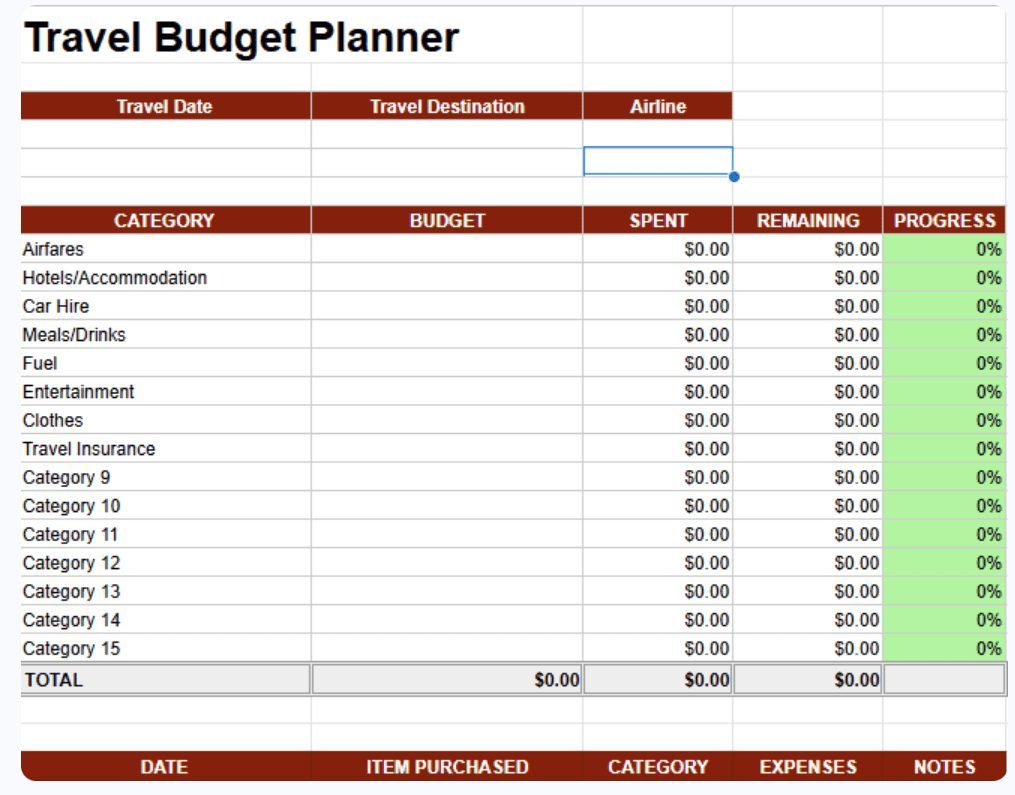
- Single-page planners like the Trusty Travel Tips spreadsheet if you like a visual overview with charts.
When I see I’m ahead of budget in one category, I can relax a bit. When I see I’m behind, I adjust quickly—cheaper meals for a day, fewer taxis, or swapping a pricey tour for a free walking route.
Takeaway: Your “total trip cost” isn’t fixed the day you book. It’s a living number. Track it, and you stay in control.

8. Put It All Together: A Simple Total Trip Cost Blueprint
Let’s pull this into a simple, repeatable process you can use for every trip. Think of it as your all-in travel budget template.
- Pick your base currency and decide your total budget ceiling.
- List every category (transport, accommodation, food, activities, insurance, money fees, extras, buffer).
- Assign costs as per person, per night, per day, or one-off group totals.
- Hunt for hidden fees—bags, resort fees, cleaning fees, foreign transaction fees, tips, parking.
- Apply the 1/3 rule to see if your budget is balanced or lopsided.
- Add a real buffer (10–20%) plus a separate emergency fund.
- Choose your tools (calculator, spreadsheet, or app) and set up your tracking before you leave.
- Track daily and adjust on the fly so your actual spending stays close to your plan.
When you do this, something interesting happens: you stop being scared of the total number. You know what’s in it. You know where you can cut, where you can splurge, and what you’re actually saying yes to.
That’s the real point of a total trip cost budget. Not to travel cheap at all costs, but to travel on purpose—without hidden travel fees ambushing you halfway through your vacation.