
I’ve lost count of how many times I’ve seen this play out: someone brags about snagging a crazy cheap
fare into a far-flung airport… then quietly spends more on Ubers, rental cars, and lost time than they saved on the ticket.
If you’ve ever wondered whether that bargain flight into the other
airport is actually worth it, this guide is for you. I’ll walk you through how I compare a cheap airport vs main airport, what costs I add up, and when I’m happy to pay more to land at the closer, major hub instead.
1. The Big Illusion: Ticket Price vs Trip Price
Most of us make the same mistake: we compare ticket prices, not trip prices.
Here’s how it usually looks:
- Flight to the main airport (say, BOS or LAX): $320
- Flight to the
cheap
airport (PVD, BUR, OAK, etc.): $220
On paper, that’s a $100 win. But now add what actually happens after you land:
- Ground transport (rideshare, train, bus, rental car)
- Extra time in transit (often 1–3 hours more)
- Parking or tolls if someone drives to pick you up
- Food and coffee during the extra travel time
Articles that dig into airport choice cost comparison all land on the same point: you can’t judge a flight by its fare alone. You need the full equation:
Total Trip Cost = Airfare + Ground Transport + Parking + Time Value + Hassle
Once you start thinking in terms of total trip cost by airport choice, a lot of “cheap” airports stop looking so cheap.
2. How Far Is Too Far? The Distance Trap
Distance is where many travelers get burned. A secondary airport might be 40–80 miles from where you actually need to be. That doesn’t sound terrible… until you hit traffic, limited transit, or a late-night arrival.
Think about some common pairings:
- Boston: BOS vs Providence (PVD) or Manchester (MHT)
- Los Angeles area: LAX vs Burbank (BUR), Long Beach (LGB), Ontario (ONT)
- San Francisco Bay Area: SFO vs Oakland (OAK) or San Jose (SJC)
- Miami / South Florida: MIA vs Fort Lauderdale (FLL) or West Palm Beach (PBI)
- Washington, DC: Dulles (IAD) vs BWI or DCA
Sometimes the alternative airport is actually closer to where you’re going (BWI for Baltimore suburbs, OAK for parts of the East Bay). Other times, it’s a long slog that quietly eats your savings and turns that budget airport vs major hub decision into a bad call.
Here’s the question I ask myself every time:
“If someone offered me $X to sit in a car or on a train for an extra 2–3 hours, would I take it?”
For many trips, the answer is no. That’s why some frequent travelers are willing to pay $150–$200 more each way to land at the closest airport to their final destination. They’ve done the math on their time, stress, and the risk of delays.
3. Ground Transport: The Silent Budget Killer
This is where the cheap airport
often quietly wins or loses. The airfare looks great; the secondary airport transportation costs do not.
Large hubs usually have:
- Multiple public transit options (metro, commuter rail, buses)
- Competitive rideshare pricing due to volume
- More rental car choices and sometimes lower daily rates
Smaller or secondary airports can be a mixed bag:
- Some are well-connected (OAK with BART, BWI with Amtrak/Metro, FLL with Tri-Rail)
- Others rely heavily on taxis, rideshares, or long drives
- Late-night arrivals may mean no public transit at all
Let’s say your cheap
airport saves you $80 on the ticket but requires:
- $45 rideshare each way, or
- $60+ in rental car plus gas and parking, or
- Two extra hours on a train or bus
That $80 evaporates fast. This is the classic cheap flight, expensive airport transfer problem.
I like to do a quick back-of-the-envelope calculation before I book:
- Check rideshare estimates from each airport to my actual destination.
- Look up train/bus options and schedules (especially for late arrivals).
- Add a realistic buffer for traffic if I’m landing during rush hour.
If the ground transport from the cheap
airport costs more than half of what I’m saving on the ticket, I usually skip it. At that point, the hidden costs of cheap airports are doing more damage than the airfare is helping.
4. Time, Stress, and Connections: The Hidden Costs You Feel Later
Money is easy to count. Time and stress are not. But they matter just as much.
Smaller airports often have real advantages:
- Shorter security lines
- Less walking and fewer crowds
- Faster baggage claim and exit
That can easily save you 30–60 minutes compared to a mega-hub. For some travelers, that’s worth real money. If you bill your time or have limited vacation days, you can literally put a dollar value on those hours.
But there’s a flip side: connections.
- Major hubs: more direct flights, more daily frequencies, better backup options if something goes wrong.
- Smaller airports: often require a connection through a hub, with fewer flights per day.
That means:
- More chances for delays and missed connections
- Longer total travel time
- Less flexibility if your plans change
So I ask myself:
- Is this a trip where I can absorb delays? (vacation, flexible schedule)
- Or is this a trip where I absolutely must arrive on time? (weddings, important meetings, tight itineraries)
For high-stakes trips, I often pay more for the airport with the most direct, frequent flights. The cheap
airport isn’t cheap if a missed connection ruins the whole reason for the trip.

5. When Secondary Airports Really Do Save You Money
Now for the good news: sometimes the alternative airport is a genuine win. Not a trick, not a trap. A real, solid deal.
Patterns I’ve noticed (and that data backs up):
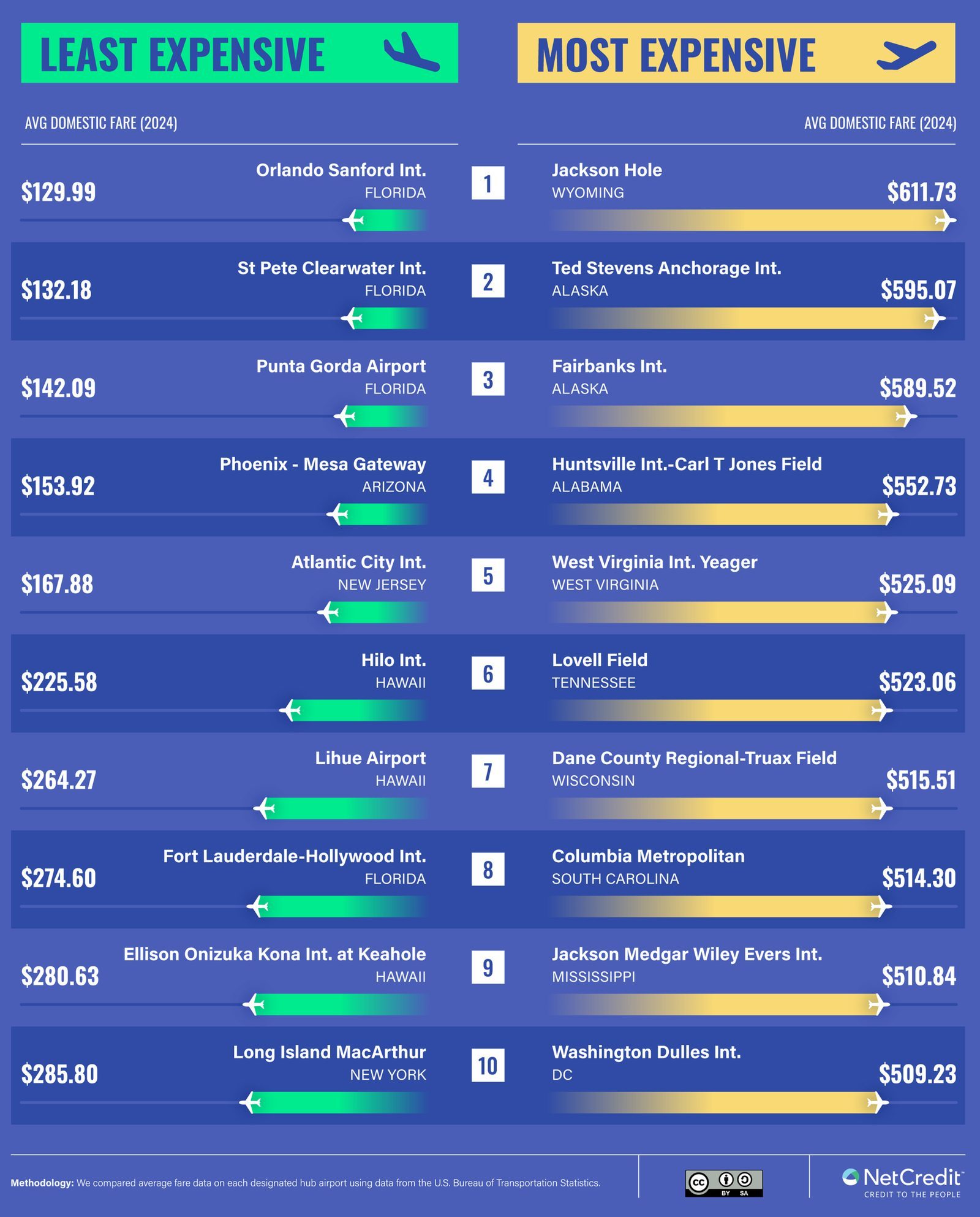
- Some secondary airports consistently have lower average fares than their big-city counterparts.
- Budget carriers love these airports because of lower fees and less congestion.
- On-time performance can be better simply because there are fewer flights clogging the runways.
Examples where the other
airport can be a smart play:
- Chicago: Midway (MDW) vs O’Hare (ORD) – often cheaper, especially with Southwest.
- Bay Area: Oakland (OAK) or San Jose (SJC) vs SFO – lower fares, less chaos, still good transit.
- DC area: BWI vs Dulles (IAD) – strong Southwest presence, Amtrak/commuter rail options.
- South Florida: FLL vs MIA – one of the lowest average fare airports in the country.
- Orlando region: MCO vs Sanford (SFB) – SFB can be extremely cheap with certain carriers.
These airports shine when:
- They’re actually closer to where you’re staying.
- You’re renting a car anyway.
- You’re flexible on schedule and don’t mind fewer flight options.
- You’re traveling light and don’t need complex connections.
In those cases, the cheap
airport can genuinely cut your total trip cost without adding much pain. This is where a flying into smaller airports cost guide actually works in your favor.

6. A Simple Framework: How I Decide Between Airports
Let’s make this practical. Here’s the quick framework I use when I’m staring at two (or more) airport options and trying to avoid classic mistakes choosing the wrong airport.
Step 1: Compare fares, not just once.
- Check multiple dates and times.
- Look at both one-way and round-trip options.
- Factor in baggage fees and seat fees, especially with ultra-low-cost carriers.
Step 2: Price out ground transport.
- Rideshare estimates (both directions).
- Public transit fares and schedules.
- Rental car daily rate + taxes + parking.
Step 3: Put a value on your time.
- Estimate total door-to-door time for each option.
- Ask yourself what an extra hour of travel is worth to you.
- Remember: late-night arrivals + long drives = higher stress.
Step 4: Consider risk and flexibility.
- Does one airport offer more daily flights on your route?
- Is one airport more prone to weather or congestion issues?
- How painful would a missed connection be for this particular trip?
Step 5: Decide your personal threshold.
Some travelers have a rule of thumb, like:
I’ll pay up to $150 more each way to land at the closest airport.
If the total savings are under $75, I default to the more convenient airport.
You don’t have to copy those numbers, but you should know your own. Otherwise, you’ll keep getting seduced by fares that don’t actually fit your priorities and end up on the wrong side of the airfare vs ground transport trade off.

7. When the ‘Cheap’ Airport Actually Costs You More
Let’s pull this together with a few scenarios where the cheaper-looking airport is usually a bad deal. This is where when cheap airports aren’t cheaper stops being theory and becomes real life.
Scenario 1: You’re visiting a smaller city near a big hub.
Example: Flying to Los Angeles (LAX) to get to Santa Barbara or Palm Springs.
- Yes, LAX might be cheaper on paper.
- But add 2+ hours of driving, traffic, rental car, and parking.
- Suddenly, a slightly more expensive flight directly into SBA or PSP looks smarter.
Scenario 2: Your arrival time is late at night.
- Public transit may be limited or shut down.
- Rideshares surge or become scarce.
- That
cheap
airport can turn into a $70–$100 taxi ride.
Scenario 3: You’re on a tight schedule.
- Connections through smaller airports add risk.
- One delay can cascade into missed meetings or events.
- The cost of being late often dwarfs the savings on the ticket.
Scenario 4: You’re traveling with kids or a lot of luggage.
- Long transfers after a flight are exhausting.
- Multiple modes of transport (plane + train + bus) multiply the hassle.
- In those cases, convenience is worth more than you think.
In all of these, the cheap
airport looks good in the booking engine, but not in real life. The cost of getting from airport to city quietly flips the math.
8. The Takeaway: Don’t Be Fooled by a Low Fare
If there’s one habit I’d love you to walk away with, it’s this:
Never judge a flight by its fare alone.
Ask yourself:
- Where am I actually going, not just where I’m landing?
- How much will it cost to get from the airport to my real destination?
- How much extra time will that take, and what is that time worth to me?
- What’s the risk if something goes wrong with this routing?
Sometimes the secondary airport is a brilliant hack that saves you money and stress. Sometimes it’s a trap that quietly drains your wallet and your energy.
The trick is to stop thinking in terms of cheap vs expensive
airports and start thinking in terms of smart vs costly choices for your specific trip. That’s the real airport selection cost strategy.
Next time you see that tempting low fare into the other
airport, pause. Run the numbers. Picture the full journey, not just the flight. You might still book it. Or you might decide the “expensive” airport is actually the better bargain.
Either way, you’ll be making a conscious choice—not falling for a cheap ticket that costs you more in the end.