
I love a good deal as much as anyone. But after enough nights half-asleep on plastic airport chairs, I stopped asking How cheap is this ticket?
and started asking: What is this trip actually going to cost me?
Not just in dollars. In time, energy, stress, and how functional you are when you finally land. So let’s walk through how to weigh cheap flights vs direct flights, and when that long layover or extra connection is a clever hack – and when it’s just self-inflicted misery.
1. Start With the Real Price: Money + Time
Most of us compare flights like this: Option A is $450, option B is $380. I’ll take B.
That’s how the booking sites want you to think. But that price tag hides the real cost of the journey.
I use a simple mental formula, similar to tools like the TripSense cost breakdown, to evaluate the time cost of cheap flights:
Effective Trip Cost = Ticket Price + (Total Travel Hours × Your Hourly Value) + Extra Trip Expenses
Here’s how I break it down:
- Ticket price: obvious, but only step one.
- Total travel hours: door-to-door, not just flight time. Count layovers, airport transfers, security lines, and those awkward hours you spend killing time because your flight is at 6 a.m.
- Your hourly value: pick a number. It doesn’t have to match your salary. Think about what your free time feels worth to you. $10/hour? $30/hour? More?
- Extra expenses: airport food, hotel for an overnight layover, taxis when public transit stops running, lounge passes, and all the little things that sneak onto your card.
Example:
- Option A: Direct flight, $450, 8 hours door-to-door.
- Option B: Two layovers, $350, 18 hours door-to-door.
If you value your time at $15/hour:
- Option A: $450 + (8 × 15) = $570
- Option B: $350 + (18 × 15) = $620 before extra food, fatigue, and chaos.
On paper, B is $100 cheaper. In reality, it’s more expensive. That’s the hidden time cost of travel that most people never calculate.
If you hate doing time math across time zones, a simple flight time calculator like the one at The Simple Toolbox can help you add up segments and layovers without frying your brain.
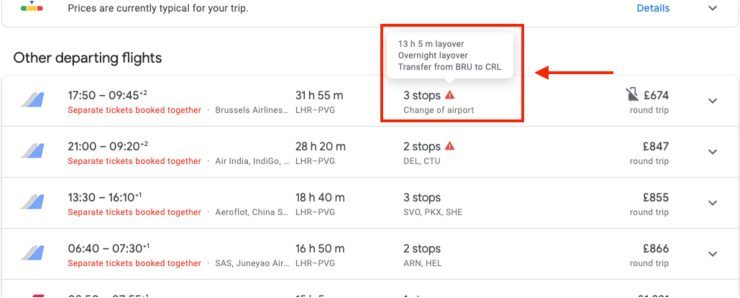
Takeaway: If a cheap
itinerary doubles your travel time, it’s probably not actually cheap once you price your time honestly. That’s where the real flight time vs money trade off shows up.
2. Are You Playing With House Money or Your Own? (Ticket Risk)
Not all layovers are created equal. The same 60-minute connection can be mildly annoying in one scenario and financially dangerous in another.
I think about it like this:
- Single ticket (protected connection): All legs are on one booking. If you miss a connection because of delays, the airline is responsible for rebooking you. You might lose time, but usually not a ton of money.
- Separate tickets (self-transfer): You stitched together your own itinerary to save money. If you miss the second flight, that’s on you. New ticket, hotel, meals – all out of pocket.
This is where the hidden costs of long layovers and DIY itineraries really show up. I match layover length to financial risk:
- Low-risk scenario: Single ticket, multiple daily flights on the route, domestic only. I’m okay with a 60–90 minute layover if the airport is efficient.
- High-risk scenario: Separate tickets, long-haul, or a route that only runs once a day. I want 3–5 hours minimum, sometimes more.
There’s also Minimum Connection Time (MCT) – the legal minimum the airline uses. That’s not a comfort guideline. It’s the under perfect conditions, this is barely possible
number. Booking engines love to show you connections right at that limit because it makes itineraries look fast and attractive.
My rule: MCT is the floor, not the target. If the system offers a 45-minute connection, I ask myself: If my first flight is 60–90 minutes late, do I still have a realistic shot at making this without sprinting?
If the answer is no, I pick a longer layover or a different route.
Takeaway: The tighter the layover and the more self-constructed your itinerary, the more that cheap
ticket becomes a gamble. Don’t risk hundreds of dollars to save $40. That’s one of the classic cheap flight booking mistakes.
3. How Much Airport Stress Can You Actually Handle?
Some people treat airports like a necessary evil. Others secretly enjoy the buzz, the shops, the people-watching. Your tolerance matters more than you think when you’re weighing cheap flights vs convenience.

Here’s what I ask myself before booking a long layover:
- Do I get anxious with tight connections? If the idea of a 50-minute layover makes your heart race, the
cheap
option is already costing you in stress. - Do I actually rest in airports? If you can’t relax in noisy terminals, a 6-hour layover is just 6 hours of low-grade irritation.
- Do I like wandering new cities? If yes, a long layover can be a mini-trip. If no, you’re just stuck in transit longer.
Risk tolerance isn’t just about money. It’s about your nervous system. A lot of advice says, Just book the cheapest and bring a neck pillow.
I disagree. If you arrive exhausted, wired, and already annoyed, that cheap ticket has already damaged your trip.
Takeaway: If a layover-heavy itinerary makes you tense just looking at it, that’s your brain telling you the time cost is too high. That’s when a long layover is simply not worth it.
4. When a Long Layover Becomes a Bonus Trip (and When It Doesn’t)
Long layovers can be brilliant if you treat them like a tiny, intentional trip – not an afterthought.
Some airlines even encourage this with stopover programs (think Icelandair’s up-to-7-day stopovers). You’re basically getting a vacation within a vacation
without buying separate tickets. In a way, it turns a budget flight with long layovers into a mini city break.
Here’s how I decide if a long layover is worth it:
- Is the city easy to access? Fast, cheap transit from airport to downtown? Great. If it’s a 90-minute taxi each way, your
mini-trip
is mostly traffic. - Do I need a visa? Some countries require visas even for short exits from the airport. If you can’t or don’t want to deal with that, you’re stuck airside.
- Are there layover perks? Some airports offer free city tours, discounted hotels, or transit passes for long layovers. That can flip the math in your favor.
- What’s the schedule? A 10-hour daytime layover is very different from a 10-hour overnight layover when everything is closed.

I treat a long layover like a micro-itinerary:
- Look up transit options and costs.
- Pick 1–2 things to see or eat, not a full checklist.
- Budget for meals and maybe a shower or day room.
If I can’t turn it into something I’d actually enjoy, I stop pretending it’s a bonus
and call it what it is: extra transit time.
Takeaway: A long layover is only a perk if you’d choose that mini-trip on purpose. If you wouldn’t, it’s just a longer, more tiring commute, and a clear sign of the true cost of budget airline tickets.
5. Red-Eye vs Long Layover: Which Kind of Tired Do You Want?
On long-haul routes, the choice often isn’t just cheap vs direct.
It’s red-eye vs long layover. Both have a time cost; they just distribute it differently.
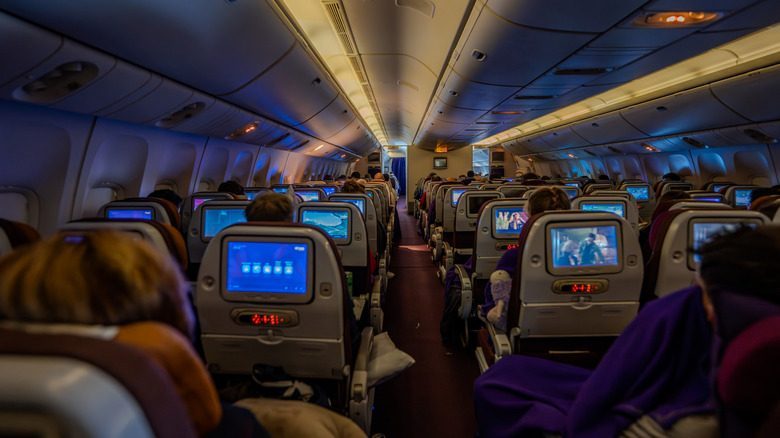
Here’s how I think about it:
Red-eye (overnight, usually non-stop)
- Pros: Less time in airports, fewer queues, fewer chances for missed connections or lost bags. You land in the morning and have the day ahead.
- Cons: If you can’t sleep on planes, you arrive wrecked. Jet lag can hit harder. Your first day may be a write-off.
Long layover with a break
- Pros: You can get a real bed in an airport hotel, shower, reset. Great if you’re a terrible plane sleeper.
- Cons: Longer total travel time, more chances for delays, more mental load managing multiple flights.
I ask myself three questions:
- Can I sleep on planes at all? If the answer is
not really
, a red-eye might save clock time but cost you a full day of functionality. - How quickly do I need to be sharp? Important meeting the same day you land? Maybe a long layover with real rest is smarter than a brutal overnight flight.
- Do I hate airports more than I hate being tired? That’s the trade-off in plain language.
Takeaway: Don’t just ask Which is cheaper?
Ask Which version of tired am I willing to accept?
Then choose the itinerary that matches that answer in your own personal multi stop flight cost comparison.
6. The Hidden Costs You Forget to Add (But Always Pay)
Long layovers and extra connections come with a bunch of quiet, predictable costs that rarely show up in the booking engine.
- Airport food: A couple of meals and snacks can easily add $20–$40 per person on a long layover.
- Hotels: Overnight layover? That’s another $80–$200, depending on the city.
- Ground transport: Secondary airports or late-night arrivals often mean taxis or rideshares because public transit is limited or closed.
- Sleep debt: You pay for this later – in lost productivity, cranky mornings, or needing an extra recovery day at your destination.
- Luggage risk: More connections = more chances for bags to go missing. Traveling carry-on only can reduce this, but that’s not always realistic.
Then there’s the emotional cost: the stress of watching the clock, the frustration of delays, the feeling of your vacation shrinking while you sit at gate B27.
When you evaluate the cost of overnight airport layovers, these extras often erase the savings from that ultra cheap fare.
Takeaway: If your cheap
itinerary requires a hotel, multiple meals, and a taxi, add those numbers now – not after you’ve already committed.
7. A Simple Framework: When to Say No to the Cheap Option
To keep myself honest, I run every too good to be true
fare through a quick checklist. It’s my way to evaluate the time cost of travel without overthinking every single route.
- Is the total travel time more than 1.5× the direct option?
If yes, the cheap option has to be significantly cheaper to justify it – usually at least $150–$200 difference for long-haul, less for short-haul. - Am I on separate tickets?
If yes, I avoid tight layovers entirely and treat long layovers as the default. If that makes the itinerary miserable, I look for a different route. - Will I arrive at a weird hour?
Landing at 1 a.m. at a secondary airport with no public transit can erase your savings in one taxi ride. - Do I have to be functional soon after landing?
If I need to be sharp within 12–24 hours, I lean toward fewer connections, reasonable arrival times, and enough rest built in. - Does this itinerary make me feel tense just imagining it?
If my gut saysthis is going to be a slog
, I listen. That feeling is part of the cost.
When the answer to several of these is uncomfortable, I stop chasing the lowest fare and start asking a better question:
What’s the cheapest trip that still feels good?
That’s the sweet spot: where your wallet, your time, and your sanity all get a vote. It’s the line between a smart extra connection flight cost analysis and simply punishing yourself for a small discount.
Because in the end, you’re not just buying a flight. You’re buying how it feels to get from your front door to wherever you’re going – and back again. And sometimes, the long layover not worth it is the one you can see coming a mile away.