I’ve lost count of how many times a “cheap” hotel quietly turned into the most expensive part of a trip. The room rate looked amazing. The final bill? Not so much.
If you’ve ever booked a bargain place and then bled money on Ubers, early check‑in fees, resort charges, or sheer exhaustion, this guide is for you. Let’s pull the curtain back on the hidden costs of cheap accommodation so you can stop overpaying for savings that only exist on paper.
1. The Location Trap: When a Cheap Room Is in the Wrong Place
Most bad hotel decisions start with one thought: I’ll just stay a bit outside the center. It’s cheaper.
On paper, that’s true. Suburban or out‑of‑town hotels often have much lower nightly rates than city‑center properties. Plenty of budget guides still recommend this as a default move.
But here’s what experience teaches you fast: location is the biggest hidden cost in accommodation.
- That $60 you save per night can disappear in two round‑trip rideshares.
- Public transport might look great on a map but run infrequently, stop early, or be unreliable.
- Late‑night returns from dinner or a show usually mean surge pricing or taxis, not cheap buses.
And then there’s the time cost. Commuting 45 minutes each way means you’re losing 1.5–2 hours a day just getting to and from where you actually want to be. That’s a museum, a long lunch, or a nap you’re trading for traffic and train platforms.
Staying in the city center—or at least in a well‑connected neighborhood—usually means:
- You can walk to major sights instead of paying to reach them.
- You can pop back to your room to drop bags, change clothes, or rest.
- You actually experience the city at night instead of watching it from a highway.
So when I compare options now, I don’t ask, Which hotel is cheaper?
I ask: What’s the total daily cost of sleeping here and living my trip the way I want?
That total cost includes:
- All transport to and from the hotel (airport + daily sightseeing).
- Time lost commuting, especially on short trips.
- How likely I am to skip experiences because they’re “too far” from where I’m staying.
Once you look at the accommodation cost breakdown by location, the “expensive” central hotel often turns out to be the real bargain. The cheap place on the outskirts? That’s the one that quietly kills your budget with transport and lost time.

2. Check‑In, Check‑Out and the Cost of Awkward Hours
Most people obsess over the nightly rate and completely ignore the clock. That’s a mistake. Check‑in and check‑out times can quietly cost you a lot of money.
Think about these scenarios I’ve personally paid for (and regretted):
- Red‑eye arrival, 9 a.m. in the city. Check‑in is at 3 p.m. You’re exhausted, carrying luggage, and not in the mood to wander. Your options? Pay for early check‑in, book the night before, or spend money on cafés and lockers while you wait.
- Late‑night arrival. You land at 11 p.m., reach the hotel at 1 a.m., and still pay for the full night. Sometimes a capsule hotel or airport hotel for that first night is cheaper and more logical.
- Evening flight home, noon check‑out. You either pay for late check‑out, store luggage (sometimes for a fee), or burn money killing time in restaurants and malls.
Cheap hotels know this game. They often monetize these pain points:
- Early check‑in hotel fees that add a surprising chunk to your bill.
- Late check‑out fees when your flight is hours after noon.
- Luggage storage charges that sound small but add up over a few trips.
By the time you’ve paid to bridge the gap between your flight times and their rigid schedule, that bargain rate doesn’t look so clever. The late check in hotel cost impact and awkward departures can easily wipe out the savings.
What I do now:
- Match flights to hotel times whenever possible. A slightly more expensive flight that lands mid‑afternoon can be cheaper overall than a red‑eye that forces you into extra costs.
- Ask in advance if early check‑in or late check‑out is free or discounted for loyalty members or direct bookings.
- Use “bridge” stays—hourly hotels, airport lounges, or day‑use rooms—when I know I’ll be in limbo for half a day. Sometimes a 6‑hour day room is cheaper than paying for an extra full night.
The trick is to stop thinking in nights and start thinking in usable hours of rest and comfort. That’s where the real value is.
3. Transport: The Silent Budget Killer
Transport is where “cheap” accommodation really shows its teeth. A low nightly rate far from the action almost always means higher daily transport costs.
Here’s how I break it down now, before I book:
- Airport to hotel. How much is a taxi, rideshare, or train? Does the hotel offer a free or cheap shuttle? A $30 cheaper hotel that needs a $50 taxi each way is not a deal. That’s the cost of airport hotel vs city hotel in action.
- Daily movement. How many rides per day will I realistically take? (Not the optimistic version of me who “will just walk everywhere.”) Then I multiply that by the average cost of a ride or transit ticket.
- Late‑night safety. Will I feel comfortable using public transport at night? If not, I assume I’ll be paying for taxis after dinner or events.
When I actually do the math, I often find:
- The “cheap” out‑of‑town hotel plus daily transport costs more than a mid‑range central hotel.
- Staying near a major transit hub—even if the area isn’t the trendiest—is a sweet spot between price and convenience.
- Walkable neighborhoods save me money on both transport and impulse spending in tourist traps.
This is where the real cost of staying outside city center shows up. The room is cheap, but the transport costs with budget hotels quietly eat your savings. It’s the classic case of hotel savings killed by transport.
Also, watch out for trapped locations: resorts or budget hotels in isolated areas where you’re forced to use their overpriced shuttles, restaurants, or tours because there’s nothing else nearby. The room is cheap because everything else is not.
Before I book, I always:
- Open the hotel on Google Maps and check walking times to the places I care about.
- Look at public transport routes and schedules, not just the existence of a station.
- Read reviews specifically mentioning
location
,transport
, andUber
to see what real guests experienced.
Once you start doing this, the cheap hotel location mistakes become obvious. A slightly pricier place in the right spot often wins the cheap hotel vs central hotel total cost battle without even trying.
4. Hotels vs Airbnb vs Hostels: The New Price Reality
For years, the advice was simple: Airbnb is cheaper than hotels.
That’s not automatically true anymore. In many cities, especially for short stays, standard hotels now beat entire‑home Airbnbs on total price.
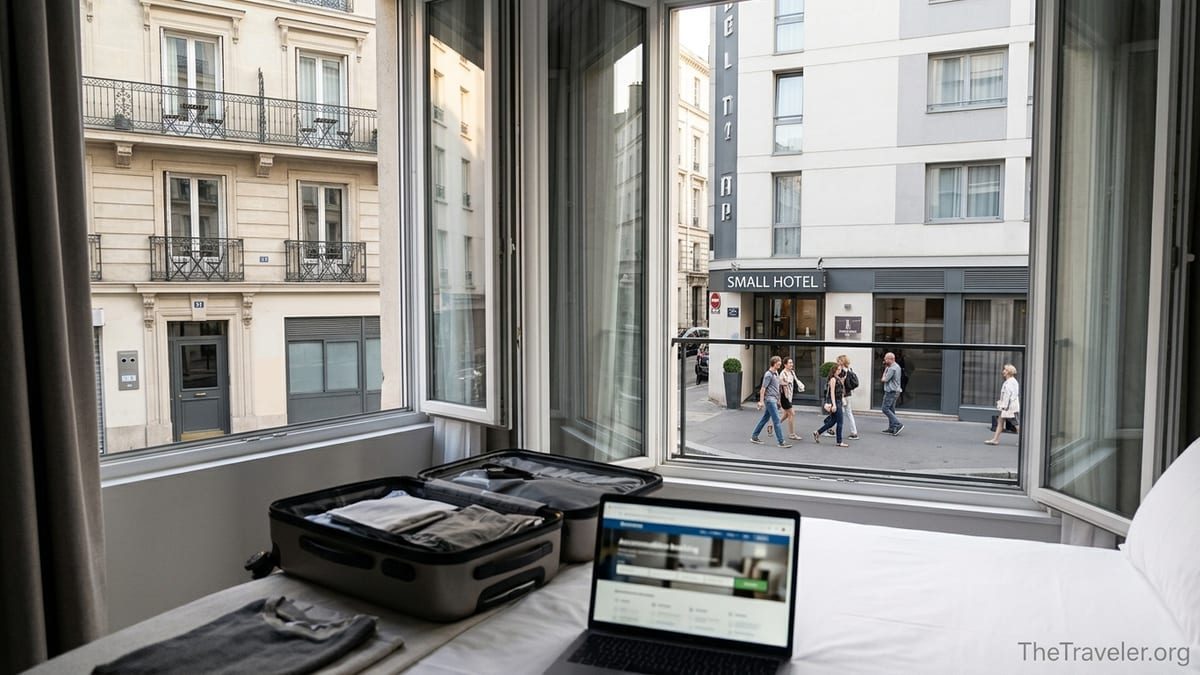
Why? Because the headline Airbnb price is only half the story. You also get:
- Cleaning fees (brutal on 2–3 night stays).
- Service fees.
- Taxes that only appear at checkout.
Hotels have their own tricks—resort fees, parking, Wi‑Fi charges—but for solo travelers and couples on short trips, I’m seeing more and more cases where a regular hotel is cheaper and more flexible.
So how do I compare fairly and avoid the classic cheap hotel booking mistakes to avoid?
- Ignore nightly rates. I only look at the final price for the full stay on the last booking screen.
- Divide total cost by usable nights. If I’m arriving at 1 a.m., I mentally treat that first night as a half‑night and adjust my sense of value.
- Factor in extras. Free breakfast, Wi‑Fi, and parking can easily be worth $20–$40 per day.
Hostels and guesthouses still often win on pure price, especially if:
- You’re solo or don’t mind sharing space.
- You’ll use the kitchen to cook some meals.
- You value location and social atmosphere over privacy.
But the same rules apply: check location, transport, and check‑in times. A cheap hostel in the wrong place can cost more than a mid‑range hotel in the right one once you factor in the overall trip cost vs hotel price.
5. Hidden Fees: The Fine Print That Eats Your Savings
Even when you nail the location and timing, fees can still ambush you. I’ve seen “great deals” explode at checkout because of charges that were barely mentioned upfront.
Here’s what I actively hunt for now:
- Resort fees / destination fees. Mandatory daily charges for Wi‑Fi, pools, gyms, or “amenities” you may never use. Often $20–$50 per night.
- Parking. City hotels can charge more for parking than you paid for the rental car. If I’m driving, I always filter for free or cheap parking.
- Wi‑Fi and “business center” fees. Still a thing in some places, especially older or business‑oriented hotels.
- Cleaning and service fees on vacation rentals that double the cost of a short stay.
- Extra person fees. Some hotels charge more for a second or third guest, even if you’re sharing the same bed.
My rule: never compare deals until I’ve seen the final, all‑in price. If a site makes it hard to see the total, I assume they’re hiding something and move on.
I also cross‑check:
- Third‑party sites vs booking direct. Loyalty rates, member discounts, or things like AAA and senior rates can beat OTAs.
- Flexible vs non‑refundable rates. Sometimes the flexible rate is only a few dollars more and lets me rebook if prices drop later.
It takes a few extra minutes, but it’s the difference between a real bargain and a booby trap. This is where the hidden costs of cheap accommodation like to hide.

6. The Non‑Money Costs: Stress, Safety and Sleep
There’s another layer most “budget travel hacks” ignore: the emotional and physical cost of a bad stay.
I’ve had cheap rooms that were technically safe but so noisy, dirty, or uncomfortable that I barely slept. I’ve stayed in neighborhoods that felt fine in daylight but intimidating at night. I’ve watched people, especially travelers of color, talk about feeling unwelcome or disrespected in places they chose purely because they were cheap.
Those experiences have a cost:
- Lost sleep = wasted days.
- Feeling unsafe = avoiding going out, missing nightlife, rushing back early.
- Constant stress = less enjoyment, more arguments, more impulse spending to “fix” the situation.
So now, when I’m tempted by a low price, I ask myself:
- Would I feel comfortable walking here at night?
- What do recent reviews say about cleanliness, noise, and staff attitude?
- If something goes wrong, how easy is it to move? Central locations usually give you more backup options.
Sometimes I’ll pay more for a place with consistently good reviews from people who travel like I do. That extra $20–$30 per night is often the cheapest way to buy peace of mind.

7. How to Actually Book Smart: A Simple Decision Framework
Let’s pull this together into something you can actually use next time you book. Think of it as a quick filter for the budget accommodation transport trade offs and all the other moving parts.
When I’m choosing where to stay, I walk through this checklist:
- Start with the map, not the price.
I pick 1–3 neighborhoods that are central for my plans (not just what’s trendy). I’d rather find a modest place in the right area than a fancy place in the wrong one. This is where the city center hotel vs outskirts cost question really gets answered. - Filter by essentials.
Things like free Wi‑Fi, decent reviews, and (if needed) parking or breakfast. I remove anything with consistently bad comments about cleanliness, noise, or safety. - Compare all‑in prices across types.
I look at hotels, hostels, and rentals, but only after I’ve clicked through to see the final price with all fees. I ignore the nightly rate until this step. - Match to my flight times.
I check how check‑in/check‑out lines up with my arrival and departure. If there’s a big gap, I factor in the cost of early/late options or a day room so I’m not surprised by the late check in hotel cost impact or early arrival fees. - Estimate daily transport.
I roughly calculate what I’ll spend getting around from each option. If a cheaper hotel adds $20–$30 a day in transport, I treat that as part of its price. That’s how I see the overall trip cost vs hotel price clearly. - Read reviews with a purpose.
I search for keywords:location
,noise
,safe
,Wi‑Fi
,clean
,Uber
,train
. I ignore the one‑off rants and look for patterns. - Book flexible when it matters.
If prices are volatile or my plans might change, I choose a cancelable rate and set a reminder to re‑check prices a week or two before the trip.
When I follow this process, something interesting happens: the “cheapest” option is rarely the one with the lowest nightly rate. It’s the one that gives me the best balance of location, timing, transport, comfort, and flexibility for the total price I’ll actually pay.
That’s the real cost of accommodation. Once you start seeing it clearly, those fake bargains are a lot easier to walk away from.