I love a bargain flight as much as anyone. But after enough red-eye specials, missed connections, and surprise fees, I’ve learned something the hard way: the cheapest long-haul ticket on the screen is rarely the cheapest trip in real life.
Once you factor in airport transfers, food, baggage, seat fees, and the value of your time (and sanity), that “deal” can quietly turn into a bad call. Let’s unpack the hidden costs of cheap long-haul flights so you can see when a budget ticket is smart – and when it’s a trap.
1. Are You Really Saving Money, or Just Buying a Bare Seat?
Most long-haul low-cost carriers follow a simple playbook: sell the seat cheap, sell everything else later.
The base fare looks incredible because it often includes almost nothing.
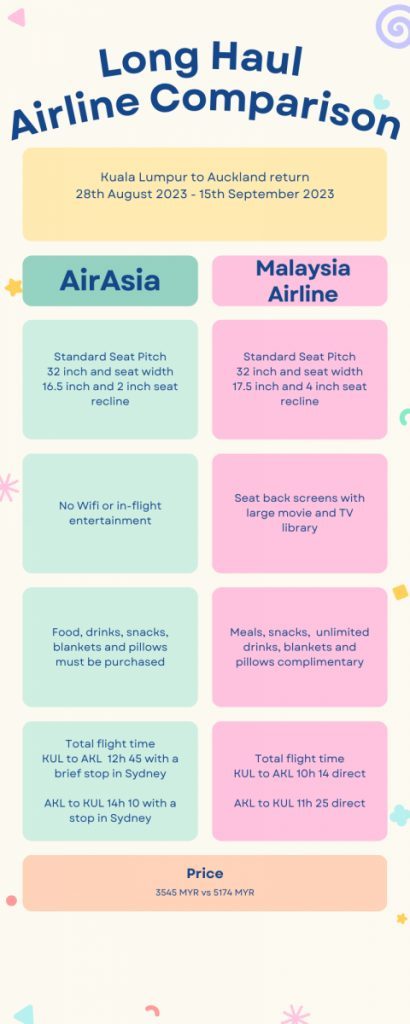
On some routes, the gap between a budget airline and a full-service carrier looks huge. One comparison on the Kuala Lumpur–Auckland route found a low-cost ticket about 1,320 MYR cheaper than a full-service airline. Sounds like a win, right? But here’s what that cheaper fare didn’t include:
- Only one basic meal and a small bottle of water
- No in-flight entertainment or power outlets
- Extra charges for snacks, extra drinks, and sometimes even a second meal
- Standard seat with tight pitch and no extra comfort
The full-service option, on the other hand, bundled in:
- Multiple meals, snacks, and unlimited drinks
- Seatback entertainment and power
- Amenity kits and slightly better seat comfort
- Similar baggage allowance
So the real question isn’t Is this ticket cheap?
but What will I end up paying to make this flight bearable?
That’s the true cost of budget long-haul tickets.
Quick self-check:
- Will you definitely check a bag?
- Do you care where you sit (aisle/window, not middle)?
- Do you need at least two proper meals on a 10–14 hour flight?
- Do you need power for a laptop or tablet?
If you answered “yes” to most of these, your all-in cost on a low-cost carrier may end up close to a full-service fare. That’s not necessarily wrong – but you should know it before you book, especially when doing a cheap long-haul vs direct flight cost comparison.
2. The Airport Trap: Cheap Ticket, Expensive Ground
One of the easiest things to overlook is where your cheap flight actually lands and departs. Many long-haul budget airlines love secondary airports: cheaper for them, often pricier for you.
You’ve seen the names: airports branded as “City Name” that are actually an hour or more away. The fare is low, but then you discover:
- Longer, more expensive transfers (express trains, coaches, or taxis)
- Fewer late-night or early-morning transport options
- Extra hotel nights because your flight time doesn’t match public transport
Some budget airlines also use low-cost terminals with fewer amenities: fewer lounges, fewer food options, and sometimes long walks or bus gates. That can mean more time, more stress, and more money spent just to get to and from the plane.
How to sanity-check the airport cost:
- Search
Airport X to City Y transfer cost
before booking. - Check arrival times against the last train/bus – will you need a taxi or hotel?
- Add a realistic transfer budget (both ends) into your flight comparison.
If your “cheap” flight uses a remote airport and your “expensive” one uses the main hub, the transfer difference alone can wipe out the fare savings. When you calculate the total trip cost of cheap international flights, this is often where the numbers flip.
3. Food, Water, and the 12-Hour Hunger Games
On a 2-hour hop, paying for a snack is no big deal. On a 10–15 hour long-haul, it’s a different game. Many low-cost long-haul tickets include:
- One basic meal (often small)
- Limited or no free drinks beyond water
- Paid snacks and extra meals at airline prices
Full-service airlines usually include:
- Two main meals plus snacks
- Soft drinks, tea/coffee, and often alcohol included
- Special meals (vegetarian, vegan, etc.) at no extra cost if pre-ordered
On a long flight, you will eat and drink. The only question is where and at what price. That’s where the airport transfer and food costs on cheap flights start to matter.
Say you skip the airline’s meal bundle to keep the fare low. You might then buy:
- Airport dinner before departure
- Snacks and water for the flight
- Breakfast or coffee during a layover
Airport prices are often worse than airline pre-order prices. And some carriers restrict outside food, or at least make it awkward to eat your own meal on board.
My rule of thumb: if the flight is over 8 hours, I price in two full meals and several drinks one way. Then I compare:
- Low-cost fare + pre-ordered meal bundle + water/snacks
- Full-service fare with meals included
Only then do I know if I’m actually saving money or just signing up for a long, hungry night in the sky.
4. Baggage, Seats, and Dark UX: The Add-On Minefield
Ultra-low-cost carriers are masters of the upsell. The base fare is a loss-leader
– they expect to make their money on everything else. On some airlines, ancillary fees can be around half of their total revenue. That’s where the real budget airline hidden fees on long-haul live.
Here’s where your savings quietly leak away:
Baggage
- Only a tiny under-seat personal item is free.
- Standard carry-on and checked bags can cost more than the base fare, especially if added later.
- Overweight fees are brutal; even 1–2 kg over can trigger a big charge.
Seat selection
- Algorithms may split groups who don’t pay, nudging you to buy seats together.
- Aisle/window seats, extra legroom, and front-of-cabin seats all cost more.
Check-in and payment tricks
- Fees for airport check-in or printing a boarding pass.
- Dynamic currency conversion at checkout: prices shown in your home currency but at a poor exchange rate.
On a long-haul, you’re more likely to want a proper carry-on, a checked bag, and a specific seat. That’s exactly what the airline is counting on.
How I compare fairly:
- Decide what I actually need (1 checked bag, 1 carry-on, seat choice, meals).
- Price those add-ons at booking time (not later).
- Turn off dynamic currency conversion and pay in the airline’s native currency.
- Compare that total against a full-service airline with the same baggage and seat assumptions.
Only then do I trust the “cheap” price. Without this, any travel cost breakdown for cheap long-haul tickets is basically fiction.
5. Time vs Money: Is That Stopover Really Worth the Savings?
Long-haul tickets with one or two stopovers are often much cheaper than nonstops. Airlines discount these longer, less popular itineraries to fill seats. Sometimes you can save hundreds by accepting a longer route.
But there’s a trade-off: your time and your energy.
Stopovers make sense if:
- You’re flexible on arrival time.
- You want to explore an extra city on the way.
- You’re prioritising budget over speed.
Direct flights are usually better if:
- Your trip is short and every day counts.
- You need to arrive rested (business meeting, event, tight schedule).
- You’re travelling with kids, older relatives, or anyone who finds travel exhausting.
There’s also risk: more segments mean more chances for delays, missed connections, and lost baggage. On some low-cost itineraries, especially when you book separate tickets, you have no protection if you miss the next flight.
One simple metric I use: I calculate the saving per extra hour of travel to understand the time cost of long layovers.
- If I save $300 but add 8 hours of travel, that’s $37.50 per extra hour.
- Then I ask:
Would I work an extra 8 hours for $300 under these conditions?
(sleep-deprived, in airports, with luggage).
Sometimes the answer is yes. Often, it’s not. And when you compare the cost of a long layover vs saving on airfare, that answer matters more than the headline fare.
6. Comfort, Sleep, and the Cost of Feeling Human
On long-haul flights, comfort isn’t a luxury; it’s part of the cost equation. Poor sleep and cramped seating can spill into the next day or two of your trip.
Low-cost long-haul carriers often squeeze in more seats per row, which means:
- Narrower seats
- Less legroom
- More chance of feeling boxed in for 10+ hours
Some don’t offer seatback entertainment or power outlets, even in their “premium” cabins. You’re expected to bring your own device, your own content, and your own power bank.
Full-service airlines – and especially premium economy or business – can change the entire experience: more space, better recline, better food, and a higher chance of arriving functional. This is where the full-service vs low-cost long-haul airlines comparison stops being theoretical and starts being about how you feel when you land.
One useful idea from upgrade advice: cost per hour. Take the price difference between a cramped low-cost option and a more comfortable one, then divide by flight duration.
- If an upgrade or better airline costs $250 more on a 10-hour flight, that’s $25/hour.
- Ask yourself:
Is it worth $25/hour to sleep, move, and not hate my life?
For an overnight flight before an important day, the answer is often yes. For a daytime leisure flight where you can recover at a beach the next day, maybe not.
7. Risk: What Happens If Things Go Wrong?
There’s another hidden cost that never shows up in the booking engine: risk.
Long-haul low-cost airlines often run on thin margins. Aviation history is full of carriers that expanded fast, offered ultra cheap long-haul tickets, and then collapsed when fuel prices spiked or demand dipped. When that happens, passengers are left scrambling for refunds and replacement tickets.
Even when the airline is stable, customer service is usually lean:
- Fewer rebooking options during disruptions
- Less generous compensation policies
- Longer waits to reach support
Full-service airlines usually have more levers to pull: premium cabins, cargo revenue, and alliances that help them absorb shocks and rebook passengers more easily.
Questions I ask before booking a very cheap long-haul:
- Is this airline part of a larger group or alliance, or is it a small standalone carrier?
- How long has it been operating long-haul routes?
- What happens if my flight is cancelled – do they have multiple daily flights or just one?
Sometimes I’ll still take the risk for a big saving. But I treat it as what it is: a calculated gamble, not a guaranteed bargain.
8. When a Cheap Long-Haul Is Actually Worth It (and When It’s Not)
So, are cheap long-haul flights worth it? Sometimes. It depends less on the headline price and more on who you are and what you value.
Cheap long-haul usually makes sense if:
- You’re young(ish), healthy, and don’t mind discomfort for a day.
- You travel light (no checked bag, minimal carry-on).
- You’re flexible on dates and times.
- You’re willing to bring your own food, entertainment, and power.
- You’ve done the math on add-ons and it’s still significantly cheaper.
It’s often a false economy if:
- You need to arrive rested and functional.
- You’ll pay for bags, seats, meals, and airport transfers anyway.
- You’re travelling with kids, older relatives, or anyone who needs comfort.
- The airline uses remote airports that add hours and costs on the ground.
- The total saving is small (around 10–15%) compared with a more stable, full-service carrier.
Before you click “book” on that unbelievably cheap fare, pause and run through this quick checklist. It’s how I calculate the real cost of cheap flight deals and avoid the classic mistakes people make booking ultra cheap long-haul tickets:
- Total price, not ticket price: Add bags, seats, meals, and transfers. Look at the cheap long-haul flight extra expenses, not just the base fare.
- Time cost: Compare total travel time and stopovers, not just departure times.
- Comfort cost: Ask what your sleep, mood, and first day of the trip are worth.
- Risk cost: Consider airline stability and what happens if things go wrong.
If, after all that, the cheap long-haul is still clearly cheaper and you’re okay with the trade-offs, go for it. You’re making an informed choice, not falling for a headline price.
If not, paying more upfront might actually be the cheapest decision you make on your trip.