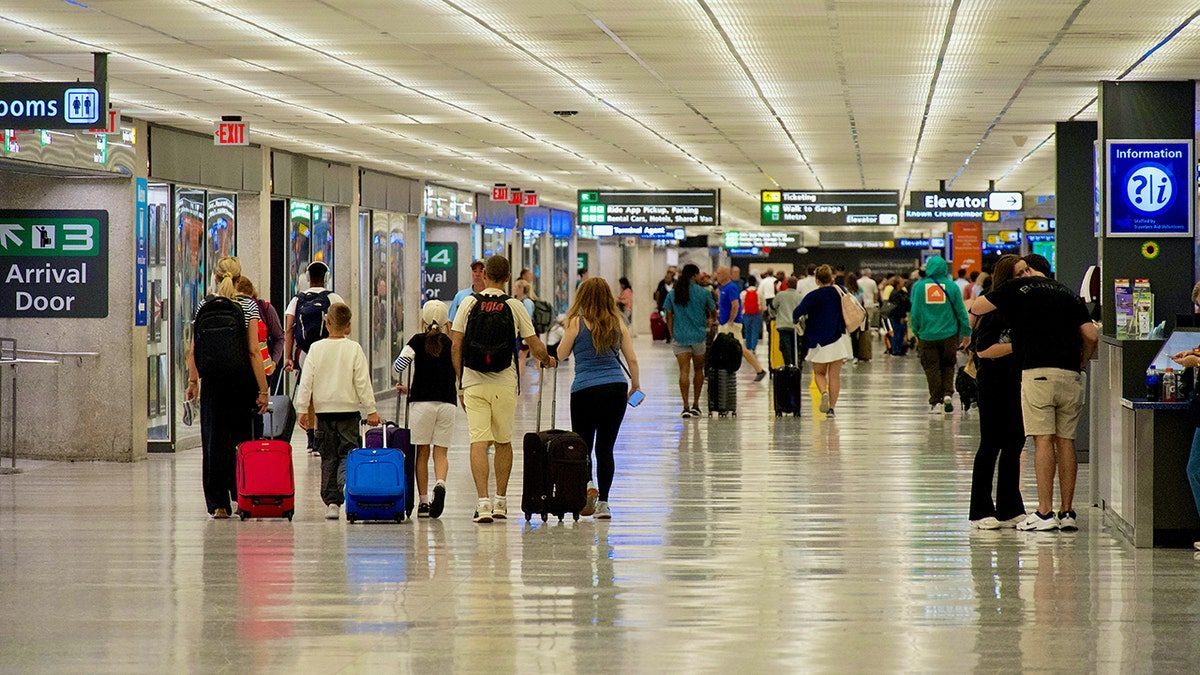
You’ve seen it before: one airport is $80 cheaper than the other and your brain instantly says, Done. I’m booking the cheaper one.
Then you add rideshares, parking, bags, maybe an extra connection… and that deal
quietly turns into the most expensive option on the page.
This is where most people get burned. They look at the fare, not the full trip.
In this guide, I’ll walk through how to compare airports the way travelers actually experience them: from your front door to your final bed. Not just the ticket price, but the door-to-door trip cost in money, time, and stress. By the end, you’ll know when that cheaper airport is a trap—and when it’s a genuine win.
1. Start With the Right Question: Door-to-Door, Not Airport-to-Airport
Most people start with the wrong question: Which airport has the cheapest ticket?
A better question is: What does this trip cost me from my front door to my final bed?
That means you’re not just comparing a $280 ticket from Airport A vs a $340 ticket from Airport B. You’re comparing the total trip cost for each option:
- Ticket price (including taxes and mandatory fees)
- Ground transport to and from each airport
- Parking or rideshare costs
- Baggage and seat fees (especially on budget carriers)
- Extra meals and snacks caused by long layovers or early arrivals
- Time cost: how many extra hours you’re burning
- Risk cost: missed connections, tight layovers, limited flights
Tools like Travelmath can help you estimate driving time and distance, and trip calculators like TrueTripCost or Proculator’s trip cost calculator can keep all the numbers in one place. They’re handy for a quick door-to-door trip cost analysis, but the mindset matters more than the tool: you’re building a full trip budget, not just chasing a low fare.
Here’s the rule I use to keep myself honest:
If I’m not including ground transport, bags, and time, I assume my cheap
airport is lying to me.
2. The Ground Transport Trap: When a Farther Airport Erases Your Savings
Smaller or secondary airports often flash eye-catching fares. Think St. Petersburg–Clearwater (PIE), Orlando Sanford (SFB), or Punta Gorda (PGD) with sub-$150 tickets thanks to ultra-low-cost carriers. On paper, they crush the big hubs.
But then reality shows up.
- They’re farther from where you live or where you’re staying.
- Public transit is limited or non-existent.
- Rideshares are expensive or surge-priced at odd hours.
- Rental cars are basically mandatory.
Meanwhile, major airports like Fort Lauderdale (FLL) or Las Vegas (LAS) often have:
- Cheaper shuttles, buses, or trains into the city
- More frequent rideshares (and more competition on price)
- Better parking options, including off-site lots
This is where the hidden costs of cheaper airports show up. That $80 you saved on the ticket can quietly turn into:
- $40 extra in gas and tolls
- $30–$60 more in rideshares because of distance or lack of transit
- $20–$50 more in parking if you have to leave your car longer or closer
Suddenly, your cheap
airport is $10–$50 more expensive overall—and that’s before we talk about your time.
Quick test: If the cheaper airport adds more than 45–60 minutes each way in ground travel, I assume it needs to be at least $75–$100 cheaper per person to be worth it. If it’s not, I usually skip it.
When you compare a cheaper airport vs a main airport, don’t just look at the fare. Look at the flight price vs airport distance, parking, gas, and rideshares together. That’s the real comparison.

3. The Fee Minefield: Budget Carriers vs Full-Service Airlines
Ultra-low-cost carriers are masters of the headline price. You’ll see a $49 fare and feel like you’ve hacked the system. But as Going and others point out, the base fare is just one piece of the puzzle.
Before I call anything cheap
, I force myself to add:
- Bags: carry-on and checked, both ways
- Seat selection: especially if you care about sitting together
- Priority boarding: sometimes necessary just to guarantee overhead bin space
- Airport check-in fees: some carriers charge if you don’t check in online
Full-service airlines often look more expensive at first glance, but they may include:
- At least one free carry-on and sometimes a checked bag
- Free seat selection (or at least a decent free option)
- Snacks or meals that save you from buying airport food
Sites like TrueTripCost are built around this exact problem: the gap between the headline
price and the real price once you add baggage, resort fees, cleaning fees, and more. If you want a true all-in flight cost calculation, you have to include how you actually travel.
My rule here is simple:
Always compare the all-in price for how you actually travel, not how a minimalist backpacker on YouTube travels.
If you know you’ll check a bag, pick a seat, and buy a snack, price those in from the start. Don’t pretend you’ll suddenly become a different person at the airport.
4. Time Is Money: How Many Hours Are You Really Paying For?
We talk a lot about dollars and not enough about hours. But time is a cost, too. Sometimes a cheaper
airport is really just asking you to pay with your time instead of your wallet.
Here’s where time quietly piles up:
- Longer drive to a remote airport
- Needing to arrive earlier because security is unpredictable
- Extra connections from smaller airports with fewer direct flights
- Long layovers because there are fewer daily departures
Large hubs often win here. They usually have:
- More direct flights
- More frequent departures (easier to rebook if something goes wrong)
- Better transit options that are predictable and fast
Smaller airports can still be great. Security is often faster, parking is closer, and the whole experience can be less stressful. But you have to be honest about the trade:
How many extra hours are you spending to save that $60?
I like to put a rough value on my time. For example, if I value my time at $25/hour and a cheaper airport adds 3 hours of travel and waiting, that’s $75 of time cost
. If the ticket only saves me $40, I’m not actually winning.
When you do a real door-to-door trip cost analysis, those extra hours matter just as much as the extra dollars.

5. The Competition Effect: Why Some Airports Are Just Expensive
Not all airports play the same game. Some are structurally expensive, and no amount of timing or tricks will turn them into a bargain.
Data from U.S. airports shows big differences:
- Washington Dulles (IAD) is one of the most expensive major airports, with average domestic fares around $475.
- Salt Lake City (SLC) and Charlotte (CLT) also sit on the pricey side.
- Fort Lauderdale (FLL) and Las Vegas (LAS) are among the cheapest major airports, with average fares closer to $280.
- Some tiny airports with ultra-low-cost carriers (PIE, SFB, PGD, BLV, LCK) can drop under $150 on average.
Why? A few big reasons:
- Competition: Routes with multiple airlines, especially including budget carriers, tend to be cheaper.
- Monopolies: If one airline dominates an airport or route, prices stay high.
- Destination type: Resort towns and mountain destinations with strong seasonal demand and limited competition are often expensive, even if the airport is small.
This is where multi-airport regions shine. If you live near several airports, you can often save hundreds by being flexible. But again, only if the ground transport and time costs don’t erase the savings.
Here’s how I usually handle a secondary airport cost comparison when I have options:
- List every airport within 60–90 minutes of home.
- Search all of them for your dates (or flexible dates if you can).
- Flag any option that’s at least $75 cheaper per person.
- Then run the full cost comparison: transport, parking, bags, time.
Sometimes the smaller airport wins. Sometimes the big hub does. The point is to let the total numbers decide, not just the fare.

6. Timing, Myths, and When to Stop Obsessing Over the Fare
You’ve probably heard all the myths: book on Tuesday, clear your cookies, use incognito mode or the airlines will punish
you. The reality, backed by data from places like Going and KAYAK, is less dramatic.
- Dynamic algorithms set prices based on demand, seat inventory, competition, and seasonality.
- Your search history and incognito mode don’t reliably move the needle.
- There is no magic
book on Tuesday at 3 p.m.
rule.
What actually matters more:
- Booking window: Domestic flights often price best around 30 days out; international can be 1–2 months out, but that’s risky in peak seasons.
- Travel days: Flying Tuesday or Wednesday is often cheaper than Friday or Sunday, especially for returns.
- Seasonality: Summer, Christmas, spring break, and big events (Olympics, World Cup) push prices up across the board.
So where does this fit into the airport decision?
If you’re flexible on dates but not on airports, you might be leaving money on the table. Sometimes the best move is:
- Choose the airport that’s overall cheaper and easier once you factor in transfers, parking, and time.
- Then use flexible dates and midweek flights to squeeze the fare down.
At some point, you have to stop chasing the absolute lowest possible fare and ask a different question:
Does this total price fit my budget and my sanity?
7. A Simple Framework: How to Compare Two Airports in 10 Minutes
Let’s put this into a quick, repeatable process. When I’m torn between a cheaper airport and a closer or more convenient one, I run this checklist. It’s basically my go-to airport choice travel cost breakdown.
Step 1: List the real costs for each option
- Ticket price (round-trip, per person)
- Baggage fees (carry-on + checked, both ways)
- Seat selection and any add-ons you realistically buy
- Parking or rideshare to/from the airport
- Airport meals caused by long layovers or odd times
This is your basic all-in flight cost calculation. No wishful thinking, just what you’ll actually pay.
Step 2: Add the time cost
- Drive time to/from each airport
- Extra time needed for security and check-in
- Layovers and connections
Put a rough value on your time (even $20–$30/hour) and multiply by the extra hours one option requires. That’s the time cost of driving to a cheaper airport This is the part most people skip. But when you’re doing a true door-to-door trip cost analysis, stress and risk belong in the equation. Before you compare, set a rule like: Then do the math. If the cheaper airport doesn’t clear your threshold, you walk away without second-guessing yourself. No more late-night spirals over whether you should have driven to that airport two hours away. You can track all of this in a spreadsheet, or plug the pieces into tools like TrueTripCost or Proculator’s trip cost calculator to keep it organized. Either way, you’re no longer guessing—you’re comparing the true cost of cheap airfare. It’s easy to obsess over shaving $30 off a fare and completely ignore the $200 you’re bleeding in other parts of the trip. Airlines and booking sites count on that. They know we anchor on the big bold number and forget the rest. If you remember nothing else, remember this: The cheapest airport is the one that gives you the lowest total cost in money, time, and stress—not the one with the smallest number on the search results page. So next time you see that tempting low fare from a faraway airport, pause. Run the numbers. Ask yourself: When you start thinking this way, you stop making those classic travel mistakes choosing a cheaper airport just because the fare looks good. You stop chasing fake deals—and start booking trips that are actually affordable, from your driveway to your destination.Step 3: Factor in risk and comfort
Step 4: Decide with a threshold, not a feeling
I’ll only choose the farther/less convenient airport if it saves at least $100 per person after all costs.
I’ll only accept a connection if it saves at least $150 and doesn’t add more than 3 hours.
8. The Real Goal: A Trip That’s Cheap, Not Just a Ticket