
Why “low tourist tax” cities now matter more than cheap room rates
When you search for a hotel, the price you see is increasingly disconnected from what you actually pay. The gap is driven not only by higher base rates, but by a growing stack of tourist taxes and fees: state and local sales tax, hotel occupancy tax, tourism improvement district (TID) assessments, and flat nightly surcharges. If you want cities with genuinely low tourist taxes, you now have to think in terms of how these layers combine, not just a single percentage.
This article fits the Destination category, but treats destinations as cost systems rather than postcard backdrops. Instead of listing “cheap cities,” it explains how different tax structures work, why some cities are becoming high-tax hotspots, and what kinds of destinations are structurally more likely to keep tourist taxes lower.
Because there is no complete, comparable dataset for every city, this analysis focuses on mechanisms and relative patterns, not precise rankings. The aim is to help you reason about which types of cities tend to have lower all-in tourist taxes, and how to spot hidden high-tax traps before you book.
How tourist tax stacks actually work: the mechanics behind your bill
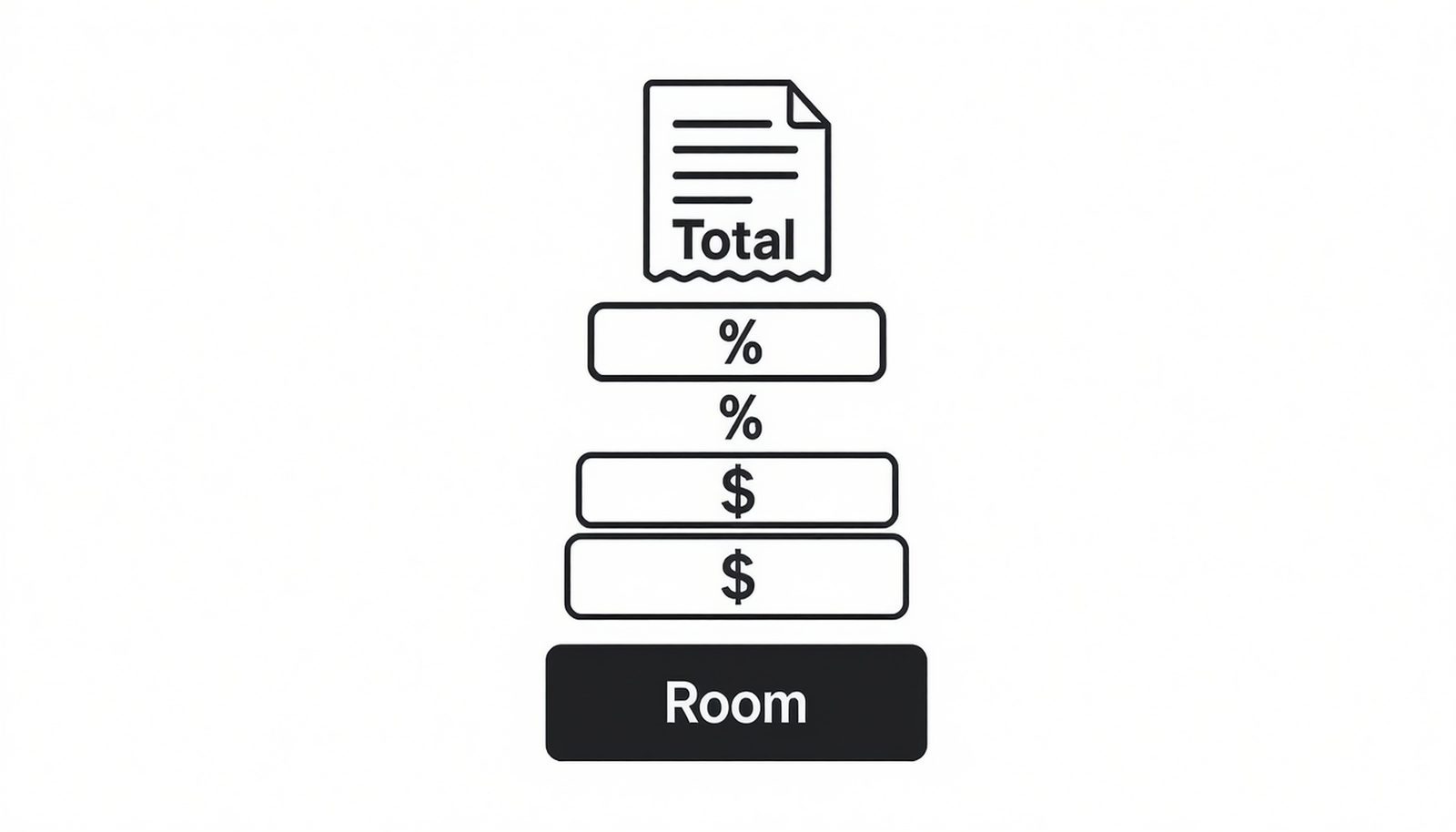
To identify cities that are better for low tourist taxes, you first need to understand the stack that sits on top of the room rate. Across U.S. and many global cities, four layers dominate:
- General sales tax: A percentage applied to many goods and services, including hotel rooms in most U.S. jurisdictions.
- Hotel occupancy or lodging tax: A dedicated tax on short-term stays, often set by cities or counties.
- Tourism or improvement district assessments: Extra percentage-based charges or flat nightly fees earmarked for convention centers, stadiums, destination marketing, or street services.
- Special visitor levies: Overtourism-driven charges, often flat per night or percentage-based, explicitly framed as “tourist taxes.”
The key mechanism is compounding. A city might advertise a 10% hotel tax, but the effective burden can be much higher once you add sales tax and district fees. Because many of these are percentage-based, they scale with the room rate. When a city hosts a major convention or event, base prices spike, and the tax stack amplifies the increase.
Consider two simplified scenarios for a $150 and a $400 room in a high-tax city with a 10% hotel tax, 8% sales tax, and a 3% tourism district fee:
| Base nightly rate | $150 | $400 |
| Sales tax (8%) | $12 | $32 |
| Hotel tax (10%) | $15 | $40 |
| Tourism district fee (3%) | $4.50 | $12 |
| Total tax/fees | $31.50 | $84 |
| Effective markup | 21% | 21% |
The percentage looks the same, but the dollar impact is much larger on the expensive room. This is why high-end stays in high-tax cities feel disproportionately costly, and why “low tourist tax” destinations matter most for mid-range and luxury travelers.
Short-term rentals are increasingly pulled into the same system. Regulatory crackdowns (for example, in New York) reduce supply and push up base prices, while cities apply similar or additional taxes to these stays. The long-standing assumption that “Airbnb is cheaper” is weakening, especially in high-tax, high-demand urban cores.
Patterns that reveal lower-tax destinations (without exact city rankings)
Because we lack a full, comparable table of tax rates for every city, publishing a precise “top 10 low tourist tax cities” list would be misleading. Instead, we can identify structural patterns that make some destinations more likely to have lower tourist taxes than others.
1. Cities without tourism improvement districts or convention-focused funding
Many high-tax U.S. cities—such as New York, Chicago, Seattle, Denver, San Diego, Nashville, and Los Angeles—use tourism improvement districts or similar mechanisms to fund convention centers, stadium debt, and destination marketing. These districts add extra percentage-based assessments or flat nightly fees on top of standard hotel taxes.
By contrast, cities that do not rely heavily on large convention centers or stadium financing are less likely to have these extra layers. Smaller regional cities, secondary business hubs, or destinations that focus on local rather than national events often have simpler tax structures: sales tax plus a modest hotel tax, and no district fee.
Mechanism: when a city issues bonds for big projects, it needs a dedicated revenue stream. Hotel and tourism district taxes are politically attractive because they fall on non-voters (visitors). Cities that have not made these commitments have less incentive to stack extra fees.
2. Destinations outside overtourism hotspots
Globally, overtourism is a major driver of new or higher tourist taxes. Cities like Kyoto and London are moving toward explicit visitor levies to manage crowding and fund infrastructure and heritage preservation. The policy goal is to shift from “more visitors” to “higher-spending, fewer visitors,” using taxes to filter demand and pay for impacts.
That means cities that are not facing severe crowding or heritage strain are less likely to introduce aggressive tourist taxes. Emerging destinations, smaller cultural cities, and less-famous coastal or nature towns often have lower or simpler levies because they are still in a “growth” phase of tourism policy rather than a “manage and restrict” phase.
Mechanism: when local residents feel squeezed by crowds, housing pressure, and infrastructure strain, tourist taxes become politically popular. Where tourism is still seen as an economic opportunity rather than a burden, governments are more cautious about adding friction.
3. Regions with lower general sales tax and simpler governance
In the U.S., the baseline sales tax can already be high before any hotel-specific charges. Cities in states with lower or no sales tax naturally start from a lower base. Similarly, jurisdictions with fewer overlapping layers (state, county, city, district) tend to have simpler and often lower total burdens.
Mechanism: each layer of government that can levy a tax has an incentive to do so, especially on visitors. Fewer layers usually mean fewer opportunities to add charges. For travelers, this often translates into lower effective tourist taxes in smaller metros or in regions with streamlined governance.
4. Cities earlier in the policy cycle
Timing matters. Several cities are in the process of raising tourist taxes over the next few years:
- San Diego is implementing a three-zone system in 2025, with higher rates in core tourism areas.
- Los Angeles is considering a 2026–2028 increase linked to the 2028 Olympics.
- Kyoto plans a 2026 tiered tax hike.
- London is moving toward a 5% visitor levy.
Travelers who visit these cities before the new policies take effect will face lower tourist taxes than those who visit later. Conversely, cities that have already completed their big tax hikes may be more stable in the near term.
Mechanism: once a tax is in place and bonds are issued against it, it becomes structurally difficult to roll back. The policy cycle tends to move in one direction—upward—especially in high-demand cities. Low-tax destinations are often those that have not yet entered this cycle or have limited capacity to issue tourism-backed debt.
Comparing city types: where tourist taxes tend to be lower
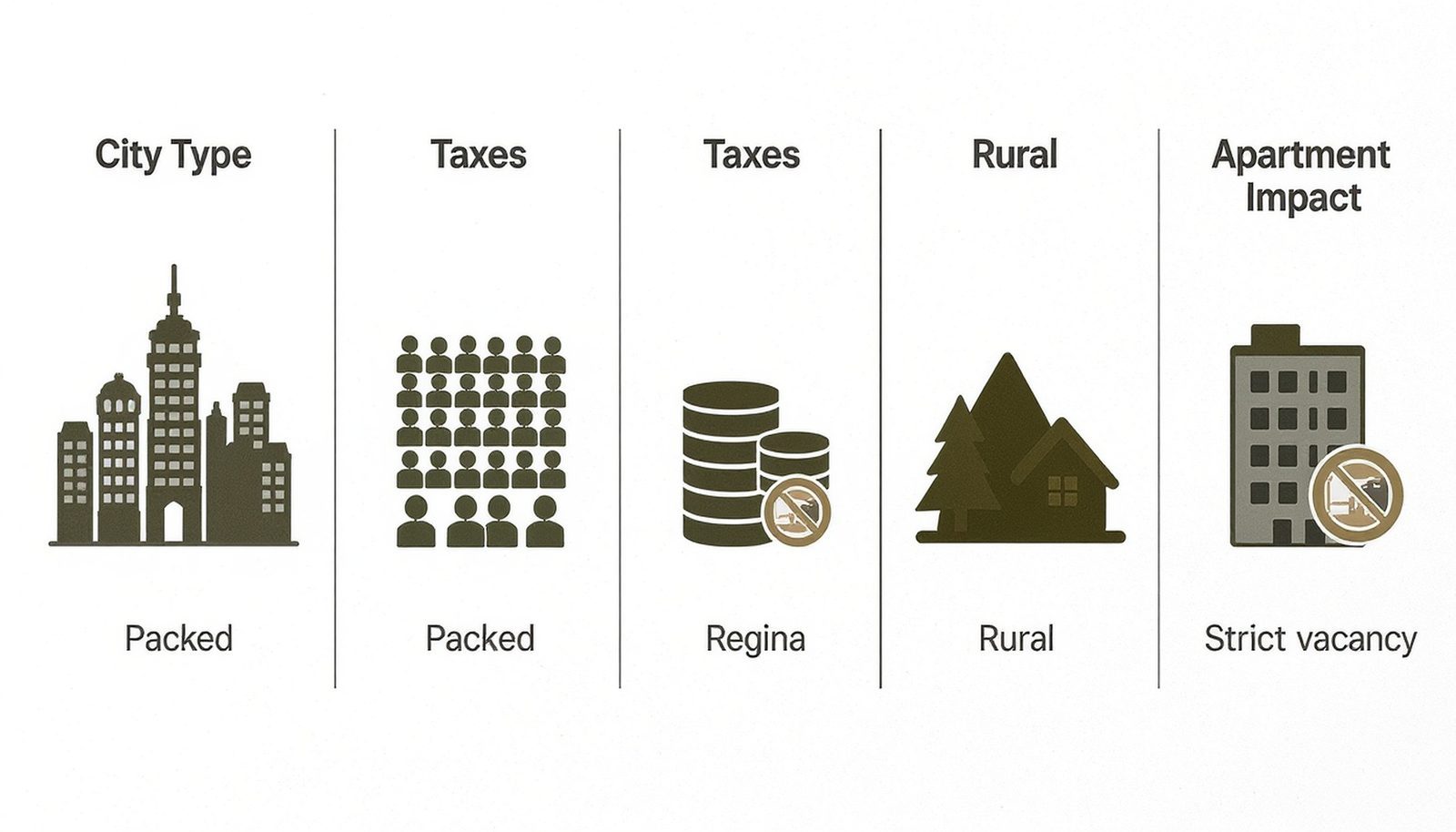
Without inventing specific percentages, we can still compare types of cities and how their tax structures usually differ. This helps you choose destinations that are structurally more favorable for low tourist taxes.
| City type | Typical tax stack | Drivers | Implication for travelers |
| Big U.S. convention cities (e.g., New York, Chicago, San Diego, Nashville) | Sales tax + hotel tax + tourism district fee; sometimes extra stadium or convention surcharges | Funding convention centers, stadium debt, destination marketing, city services | High and volatile effective tax burden, especially during major events and in core zones |
| Global overtourism hotspots (e.g., Kyoto, London) | Standard lodging taxes plus explicit visitor levies; future increases planned | Managing crowding, preserving heritage, funding infrastructure | Rising taxes over time; higher costs concentrated in central, historic areas |
| Secondary or regional cities with modest tourism | Sales tax + basic hotel tax; often no tourism district | General revenue needs; limited large-scale tourism projects | Lower and more predictable tax burden; fewer hidden line items |
| Rural or nature-focused destinations | Sometimes flat per-night fees; otherwise simple tax structure | Funding parks, roads, basic services | Moderate but transparent costs; flat fees can be regressive on cheap stays |
| Cities with strict short-term rental rules | Hotel-like taxes applied to rentals; higher base prices due to constrained supply | Housing protection, neighborhood control, revenue capture | Smaller price gap between hotels and rentals; both can be expensive in high-demand areas |
The trade-off is clear: big-name cities with strong brands and major events tend to have higher tourist taxes, while smaller or less globally famous destinations tend to have lower ones. Choosing a lower-tax city often means accepting fewer direct flights, smaller event calendars, or less iconic landmarks—but the savings can be substantial over a multi-night stay.
Short-term rentals vs hotels: why the “cheap alternative” is disappearing
For years, travelers assumed that short-term rentals (like those on major platforms) were a way to escape high hotel taxes. That assumption is weakening as cities bring rentals into the same tax net and tighten regulations.
Regulation-driven price effects
In cities with strict registration and hosting limits, such as New York, the supply of legal short-term rentals shrinks. With fewer units available, base prices rise. At the same time, cities increasingly apply hotel-like taxes to these stays, sometimes with additional platform-specific fees.
Mechanism: regulation reduces supply faster than demand falls, pushing up prices. When tax policy then treats rentals like hotels, the historical price advantage erodes. Travelers who once saved by renting an apartment may now face similar or higher all-in costs, especially in central neighborhoods.
Parallel tax stacks
Many jurisdictions now require platforms to collect and remit lodging taxes on behalf of hosts. This can include:
- Standard sales tax.
- Hotel or lodging tax applied to rentals.
- Tourism district assessments, if the property falls within a designated zone.
Because these charges are often embedded in the “taxes and fees” line, travelers may not realize that rentals are subject to the same stack as hotels. The main difference becomes the base rate and cleaning fees, not the tax structure.
When rentals still help
Rentals can still be cost-effective in cities or regions that:
- Have not yet extended hotel taxes to short-term rentals.
- Do not operate tourism improvement districts.
- Have abundant supply and relatively light regulation.
But these conditions are becoming less common in major urban centers. For low tourist taxes, the more reliable strategy is to choose lower-tax cities, not just alternative accommodation types within high-tax cities.
Timing risk: how the same city becomes more expensive over time
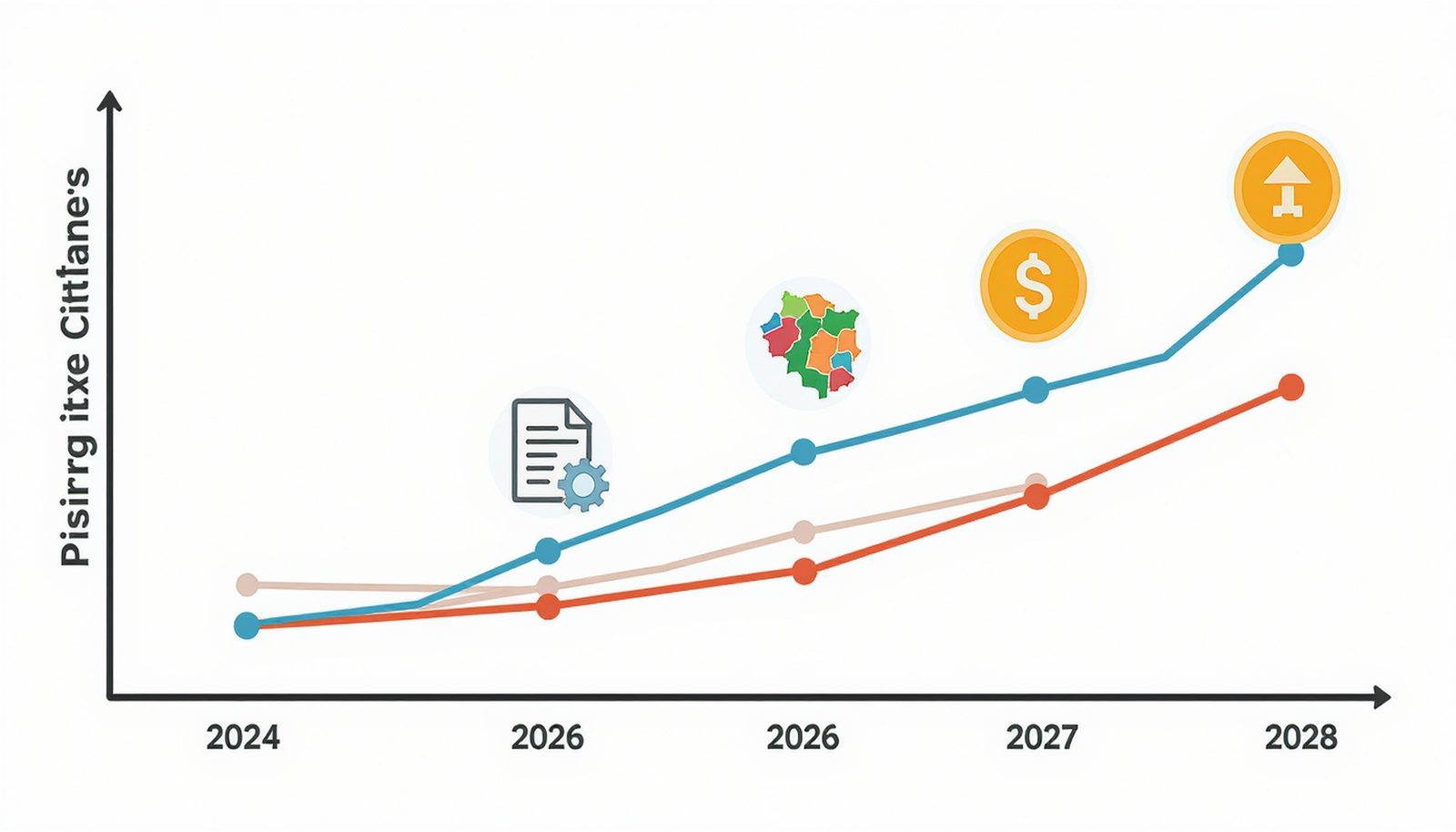
One of the most important, and least understood, aspects of tourist taxes is timing risk. The same city can have very different tax burdens depending on the year—and sometimes the month—you visit.
Phased increases and event-linked hikes
Several cities are phasing in higher tourist taxes over multiple years. San Diego’s 2025 three-zone system, for example, will raise rates more in core tourism areas than in outlying zones. Los Angeles is considering increases tied to the 2028 Olympics, with changes starting as early as 2026. Kyoto and London have announced or signaled future hikes.
Mechanism: cities align tax increases with major events or infrastructure timelines. When a convention center expansion or global event is on the horizon, they introduce or raise levies to ensure revenue streams are in place. Travelers who book before these dates effectively “lock in” lower tax environments.
Peak events and compounding volatility
Even without formal tax rate changes, percentage-based levies create volatility around major events. When base rates double for a convention or festival, the tax amount doubles too. In cities with multiple stacked percentages, this can add hundreds of dollars over a multi-night stay.
For travelers seeking low tourist taxes, this means that off-peak timing can matter as much as city choice. A moderately taxed city during a quiet week may be cheaper than a lower-tax city during a major event, once you account for both base rates and tax compounding.
Risk and uncertainty: where hidden costs still lurk
Even if you target structurally lower-tax destinations, several uncertainties can still distort your final bill.
Opaque disclosure practices
One of the biggest risks is how platforms and hotels disclose taxes and fees. In many jurisdictions, tourism district fees and other assessments appear only at the final checkout stage, or are broken into multiple small line items that obscure the total burden.
Mechanism: when costs are fragmented, travelers underestimate the true price and may choose higher-tax cities or properties than they would if the full amount were visible upfront. This opacity also makes it hard to compare destinations on a like-for-like basis.
Inconsistent enforcement and presentation
Disclosure standards vary by jurisdiction and platform. Some require all taxes and fees to be shown before booking; others allow partial disclosure until the final step. Enforcement can be uneven, especially for smaller properties or cross-border bookings.
Because we lack detailed, comparable data on enforcement, there is uncertainty about how reliably you can see the full tax stack in advance. Two hotels in the same city may present charges differently, even if the underlying taxes are identical.
Policy shifts and political pressure
Tourist taxes are politically attractive because they fall on non-residents. When cities face budget gaps, infrastructure needs, or resident backlash against tourism, raising visitor levies is often easier than raising local taxes. This creates ongoing upward pressure, especially in high-demand destinations.
Uncertainty arises because policy debates do not always translate into predictable timelines. A proposed levy might be delayed, watered down, or suddenly accelerated after a political deal. Travelers planning trips years in advance cannot be certain what the tax environment will be when they arrive.
Decision frameworks: how to choose lower-tax cities using incomplete data
Given these uncertainties and data gaps, how can you systematically favor cities with lower tourist taxes?
1. Classify your target cities by type
Before comparing specific rates, classify candidate destinations into the types described earlier: big convention city, overtourism hotspot, secondary regional city, rural/nature destination, or strict-rental city. This gives you a first-pass expectation of tax intensity.
Mechanism: city type is a proxy for underlying fiscal and political incentives. Even without exact numbers, you can infer that a major convention hub with a new stadium is likely to have higher tourist taxes than a mid-sized regional city without such projects.
2. Look for tourism districts and visitor levies
Search for terms like “tourism improvement district,” “hotel assessment district,” or “visitor levy” alongside the city name. The presence of these mechanisms is a strong signal of a higher tax stack, especially in central zones.
If you find multiple overlapping districts or zone-based systems, assume that core tourist areas carry the highest burden. Consider staying just outside these zones if transit connections are good.
3. Compare all-in prices, not just base rates
When evaluating cities or properties, always click through to the final booking step to see the full “taxes and fees” line. Compare the total nightly cost, not just the advertised rate. This is the only way to capture the effect of stacked percentages and flat surcharges.
Mechanism: by forcing the comparison at the all-in level, you neutralize differences in disclosure practices and see the real impact of tourist taxes. A city with slightly higher base rates but lower taxes may end up cheaper than a city with low base rates but heavy levies.
4. Use timing as a lever
Once you have a shortlist of cities, check for upcoming policy changes or major events. If a city is about to introduce a new levy or host a large event, consider visiting earlier or shifting to a different destination in the same region that has not yet entered the high-tax phase.
Mechanism: timing allows you to exploit the lag between policy decisions and implementation. Early movers benefit from lower taxes before the new structures lock in.
Balanced conclusion: what “best cities for low tourist taxes” really means
In the current landscape, asking for the “best cities for low tourist taxes” is less about a fixed list of names and more about understanding which kinds of cities are structurally cheaper for visitors. The decision logic from recent trends points to several clear patterns:
- Big convention and overtourism cities are building durable, politically palatable funding streams on the backs of visitors, using stacked percentage-based taxes and district fees.
- Short-term rentals are increasingly subject to the same or higher tax stacks as hotels, especially where regulation is tight and supply is constrained.
- Timing is a powerful but underused lever: visiting before planned tax hikes or outside major events can materially reduce your effective tax burden.
- Smaller regional cities, emerging destinations, and places without large convention or stadium projects are structurally more likely to offer lower and simpler tourist taxes.
The trade-off is that low-tax destinations may offer fewer marquee attractions, less frequent direct flights, or smaller event calendars. High-tax cities, by contrast, often deliver dense cultural, business, and entertainment ecosystems funded in part by those very levies.
For travelers, the most robust strategy is not to chase a static list of “cheap” cities, but to apply a structured lens: classify city types, identify tourism districts and visitor levies, compare all-in prices, and pay attention to policy timing. Within that framework, you can consistently tilt your itineraries toward destinations where tourist taxes are lower, more transparent, and less likely to surprise you at checkout—without relying on invented numbers or outdated rankings.