Destination Category Focus: Why 2026 World Cup Flights Are a Different Kind of Trip
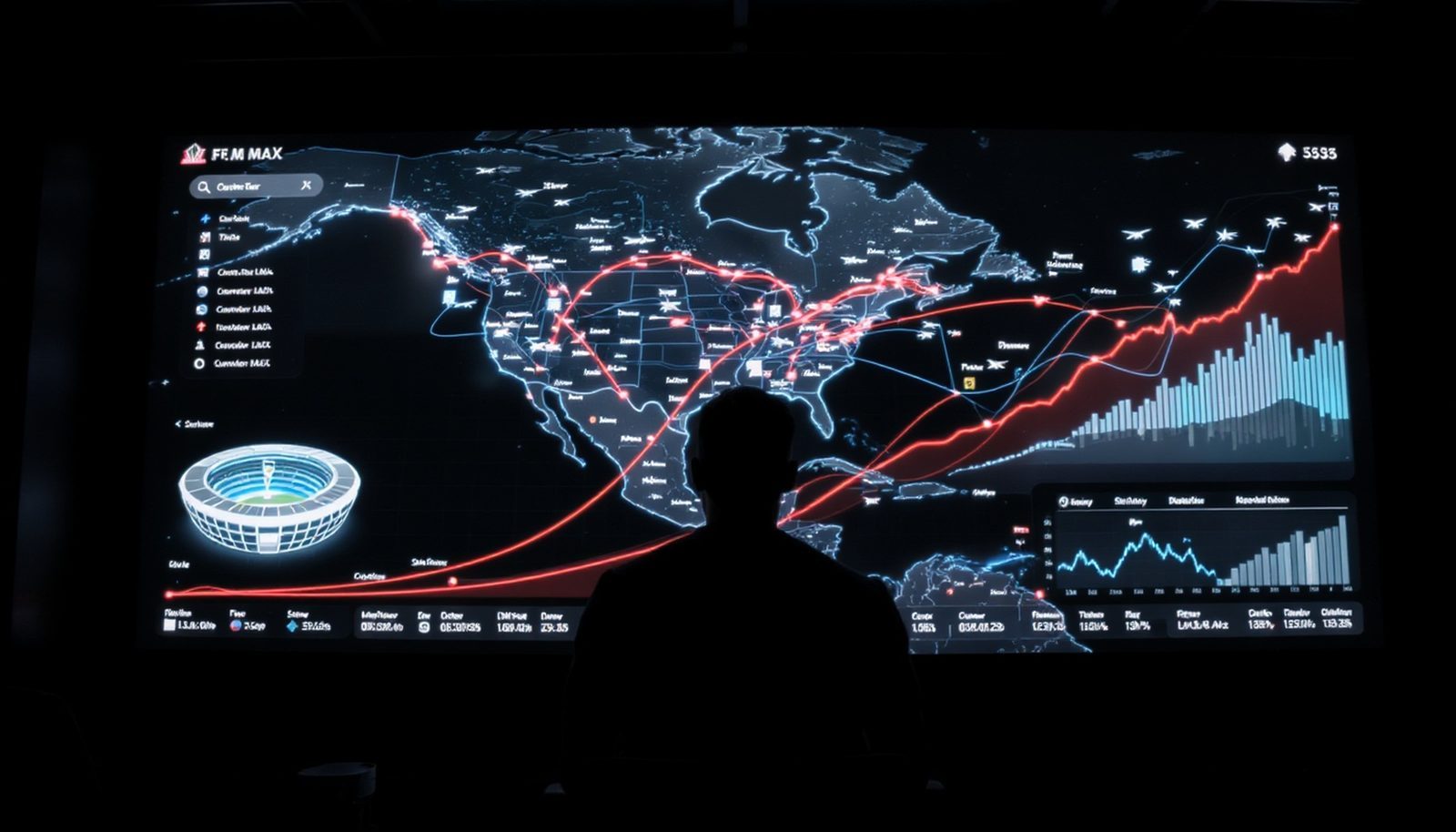
The 2026 World Cup is not just another peak travel season; it is a multi-city, multi-country mega-event layered on top of already complex airline pricing systems. For travelers, especially fans planning intercontinental and intra-North American flights, the core destination decision is no longer just where to fly, but when to buy and from which device and data trail to purchase those flights.
Airlines already use dynamic pricing to adjust fares based on demand, remaining seats, and competitive routes. What makes the 2026 World Cup different is the combination of three forces:
- Event-driven demand spikes tied to match schedules, ticket releases, and knockout progression.
- Growing use of cookies and behavioral data to segment travelers by willingness to pay.
- FIFA’s move toward dynamic ticket pricing, which normalizes volatility and uncertainty across the entire trip stack.
In this environment, the destination choice (host city vs nearby city, direct vs connecting hub) is tightly coupled with how airlines interpret your digital footprint. The same route can show very different prices to different users, not only because of classic yield management, but also because your browsing history, device, and timing signal your intent and budget.
Understanding cookie-driven fare inflation is therefore part of understanding the destination strategy for the 2026 World Cup. The mechanisms that shape what you see on the screen will influence which cities appear “affordable,” which airports become de facto fan gateways, and how flexible you can be in following your team through the tournament.
The Mechanism: How Cookies Feed Dynamic Airline Pricing Around Mega-Events
Cookie-driven fare inflation is not a separate pricing system; it is an extra layer of information feeding into existing dynamic pricing engines. For 2026 World Cup travel, it helps to break the mechanism into three stages: data capture, traveler classification, and price response.
1. Data capture: what airlines and intermediaries can infer
When you search for flights to a host city during the World Cup window, multiple actors can observe your behavior:
- Airlines via their own websites and apps.
- Online travel agencies (OTAs) and metasearch engines.
- Advertising networks that track your clicks from football news, ticketing pages, and accommodation sites.
Cookies and similar identifiers allow these actors to link multiple actions over time:
- Repeated searches for the same route and dates (for example, New York to Mexico City around a specific match).
- Visits to FIFA ticketing pages or fan forums that suggest high intent to travel.
- Browsing of higher-end accommodation or hospitality packages, which signals a higher budget segment.
Even without personally identifiable information, this behavioral trail can be enough to classify you into a segment with a different expected willingness to pay.
2. Traveler classification: from anonymous user to demand signal
Dynamic pricing engines are designed to respond to demand intensity and composition. Cookies help refine that demand picture. For a World Cup route, the system can distinguish between:
- Low-intent, price-sensitive users (occasional searches, broad date ranges, multiple destinations).
- High-intent fans (frequent searches for specific match windows, visits to ticketing and fan content).
- Corporate or hospitality travelers (searches for business-class cabins, flexible dates, or bundled packages).
Each segment implies a different elasticity of demand. High-intent fans following a team through the group stage and knockouts are less likely to abandon the trip entirely, even if prices rise. That makes them attractive targets for yield optimization.
3. Price response: how the system turns signals into fares
Once the system has a sense of demand intensity and composition, it can adjust fares in several ways:
- Inventory reallocation: moving seats from lower fare buckets to higher ones more quickly on routes with strong fan signals.
- Temporal sensitivity: raising prices faster as the departure date approaches if searches spike after key World Cup milestones (group draw, knockout qualification).
- Route-level repricing: increasing fares not only on direct flights to host cities but also on nearby hubs that fans might use as alternatives.
Cookies do not always mean that the system shows a different price to you personally than to another user at the same moment. More often, they help shape the overall demand profile that drives dynamic pricing. However, in some cases, repeated searches from the same cookie or device can be interpreted as urgency, which can accelerate fare bucket changes and create the perception that “the more I search, the more prices go up.”
For 2026, this mechanism will be amplified by the tournament’s structure: multiple host cities across the U.S., Canada, and Mexico, staggered match schedules, and fans following teams across borders. Each new search wave around a match announcement or ticket release becomes a fresh demand shock that the pricing engine must absorb.
Timing Waves: How World Cup Milestones Interact with Airline Fare Dynamics
The 2026 World Cup will generate distinct demand waves that interact with dynamic pricing. Understanding these waves is crucial for interpreting fare movements and the role of cookies in amplifying them.
Wave 1: Schedule announcement and host city focus
When the full match schedule and host city assignments are public, fans begin to anchor their travel plans. Search volumes for specific city pairs (for example, European hubs to major U.S. host cities) rise sharply. Cookies allow pricing systems to see not just the volume but the pattern of searches: repeated checks on the same dates, cross-referencing with accommodation searches, and spikes in football-related browsing.
Mechanism: this wave pushes airlines to re-evaluate capacity and initial fare levels. Static pricing would underreact, leaving money on the table. Dynamic systems can start nudging fares upward on routes where search intensity and booking conversion are strongest.
Wave 2: Ticket release and lottery outcomes
When FIFA releases ticket batches or lottery results, a second, more concentrated wave of demand hits. Fans who secure tickets move from “maybe” to “definitely going,” and their searches become more focused: specific dates, specific cities, and less flexibility.
Mechanism: cookies link earlier browsing (for example, reading about specific matches or joining fan forums) with new, high-intent flight searches. The pricing engine now sees a cluster of users with confirmed plans and limited alternatives. This can accelerate fare increases on key dates and routes, especially if capacity has not yet been expanded.
Wave 3: Knockout qualification and late reallocations
As teams qualify for the knockout stages, fans adjust plans: some extend stays, others add new legs to follow their team to a different host city or country. This creates short-notice, high-intent demand for intra-North American flights.
Mechanism: dynamic pricing responds to sudden spikes in searches and bookings on specific city pairs over a narrow date range. Cookies help distinguish between general tourists and fans reacting to match outcomes. The system can justify steeper last-minute price increases on routes where fan demand is concentrated and alternatives are limited.
Wave 4: Late-stage matches and corporate demand
For semi-finals and the final, corporate guests, sponsors, and high-spend fans enter the market. Their behavior—searching for premium cabins, flexible tickets, and bundled hospitality—signals a different willingness to pay.
Mechanism: the pricing engine may prioritize higher fare classes and reduce availability of lower buckets, even if some seats remain unsold. Cookies and booking histories help identify these segments, reinforcing a pattern where late, high-budget demand pushes average fares higher than in a static system.
Destination Trade-Offs: Host Cities vs Nearby Hubs Under Dynamic Pricing
For World Cup travelers, the destination decision is not binary. Many will consider flying into nearby non-host cities or secondary airports to manage costs. Dynamic pricing and cookie-driven demand signals change the trade-offs between these options.
| Option | Mechanism | Potential Cost Exposure | Key Trade-Off |
| Fly directly into host city | High search and booking intensity flagged by cookies and demand data; pricing engines prioritize yield on these routes. | Higher baseline fares; steeper increases around match days and ticket releases. | Convenience and time savings vs paying a premium for being in the core demand corridor. |
| Fly into nearby non-host city | Lower initial demand; some spillover as fans search alternatives. Cookies reveal substitution behavior. | Moderate fares that may rise as spillover demand grows, but often less volatile than direct host routes. | Extra ground travel and time vs more stable pricing and potentially lower total trip cost. |
| Use major hub with onward low-cost carrier | Hubs see mixed demand (business, leisure, fans). Cookies help segment, but competition can dampen fare spikes. | Long-haul segment may be less volatile; short-haul legs to host cities can be highly dynamic. | Complex itineraries and connection risk vs ability to arbitrage between carriers and routes. |
Cookies influence these trade-offs by revealing how many travelers are considering each alternative. If many fans start searching for flights into a particular “escape” city to avoid host-city prices, that city’s routes can quickly lose their cost advantage as dynamic pricing responds to the new demand pattern.
Risk and Uncertainty: Where Cookie-Driven Fare Inflation Hits Travelers Hardest
Dynamic pricing and cookie-driven demand signals do not guarantee higher prices for every traveler, but they do change who bears the risk of price movements and when that risk materializes.
1. Early vs late booking risk
Under static pricing, early booking is usually rewarded with lower fares. In a dynamic, cookie-sensitive environment, the relationship is less predictable:
- Early bookers risk locking in fares before airlines fully understand demand. If demand turns out weaker than expected, later buyers may see lower prices.
- Late bookers face the opposite risk: if demand is stronger than expected, especially after key World Cup milestones, fares can spike sharply.
Because cookies allow systems to track repeated searches, both early and late bookers can inadvertently signal urgency, which may accelerate fare increases on specific routes and dates.
2. Segment-specific exposure
Different traveler segments experience this uncertainty differently:
- Budget fans are most exposed to sudden fare spikes, as they have limited flexibility to absorb higher costs or switch to more expensive routes.
- Families face multiplied risk because fare changes apply per seat; a modest increase per ticket becomes significant across multiple travelers.
- Corporate guests are less price-sensitive but may face availability constraints if dynamic pricing prioritizes higher fare classes and reduces lower buckets.
Cookies can reinforce these differences by associating each segment with distinct browsing patterns—budget fans comparing many options, families searching for multiple seats, corporate travelers focusing on premium cabins.
3. Information asymmetry and automation
Professional operators—such as travel management companies or large tour aggregators—can use tools that monitor fare changes across multiple routes and dates, sometimes even automating purchase decisions. Individual fans, by contrast, rely on manual searches that feed more data into the system without offering equivalent analytical power in return.
This asymmetry means that the same dynamic pricing environment that helps airlines and sophisticated buyers optimize outcomes can leave casual travelers exposed to higher volatility and less predictable final costs.
Interaction with Dynamic Ticket Pricing: Compounded Volatility Across the Trip
FIFA’s move toward dynamic ticket pricing introduces a second layer of volatility that interacts with airline fares. Both systems rely on similar mechanisms—continuous repricing based on demand and inventory—but they operate on different parts of the trip.
1. Shared mechanism, different levers
For tickets, dynamic pricing adjusts seat prices in the stadium based on demand for specific matches, team popularity, and timing. For flights, dynamic pricing adjusts seat prices in the aircraft based on route demand, remaining capacity, and competitive pressure. Cookies and behavioral data feed into both systems, but in different ways:
- Ticket platforms may use browsing history and prior purchases to prioritize certain offers or release batches.
- Airlines and OTAs use search patterns and cross-site behavior to refine demand forecasts for specific routes and dates.
The result is a compounded uncertainty: fans cannot easily predict either the final ticket price or the final flight price, and the two decisions are interdependent.
2. Timing dilemmas for fans
Fans face a sequence of decisions with incomplete information:
- Book flights before securing tickets, risking overpaying for a trip that may not align with actual match attendance.
- Wait for ticket clarity, risking higher flight prices as dynamic systems respond to rising demand.
Cookies intensify this dilemma by making each search part of the demand signal. Checking flight prices repeatedly while waiting for ticket news can contribute to the very fare increases fans are trying to avoid.
3. Perceived fairness vs revenue optimization
From a system perspective, dynamic pricing is a rational response to scarce inventory and volatile demand. From a fan perspective, it can feel like a moving target that penalizes commitment. The perception that cookies and behavioral tracking are used to extract more value from committed fans can fuel backlash, especially when early buyers see later price drops or when last-minute travelers face extreme fare spikes.
This tension between revenue optimization and perceived fairness is likely to be a defining feature of 2026 World Cup travel, just as it is for accommodation and ticketing.
Structured Trip Frameworks: Mapping Your Exposure to Cookie-Driven Fare Inflation
This article does not offer prescriptive advice, but it is possible to outline frameworks that clarify where and how cookie-driven dynamic pricing affects different types of World Cup trips. These frameworks help travelers understand the mechanisms shaping their options.
Framework 1: Route archetypes and volatility profiles
Consider three archetypal route types:
- Core fan corridors: direct flights from football-intense regions (for example, Europe or South America) to major host cities. These routes are likely to see the strongest cookie-amplified demand signals and the highest fare volatility.
- Peripheral access routes: flights into nearby non-host cities or secondary airports. These may start with lower volatility but can become more dynamic as fans discover and share them as alternatives.
- Domestic repositioning routes: intra-North American flights between host cities as fans follow teams. These routes are highly sensitive to knockout progression and late-stage demand waves.
Cookies help pricing systems distinguish between these archetypes by revealing where fans are searching from, which cities they are combining in multi-city itineraries, and how their behavior changes after key tournament events.
Framework 2: Traveler intent and data footprint
Another way to structure the problem is by intent level and data visibility:
- Low-signal travelers: occasional searches, broad date ranges, limited football-related browsing. Their data footprint contributes less to demand spikes and may align more closely with traditional leisure pricing patterns.
- Medium-signal travelers: regular searches for specific host cities and dates, some engagement with World Cup content. They form the bulk of the fan demand that dynamic systems respond to.
- High-signal travelers: frequent searches, multi-city itineraries aligned with specific teams, heavy engagement with ticketing and fan platforms. Their behavior strongly signals high intent and lower elasticity.
In aggregate, these segments shape how quickly and how far fares move. Cookies are the connective tissue that turns individual actions into segment-level demand signals.
Balanced Conclusion: What Cookie-Driven Fare Inflation Means for 2026 World Cup Travel
Cookie-driven airline fare inflation for the 2026 World Cup is best understood as an intensification of existing dynamic pricing, not a completely new phenomenon. The same mechanisms that allow airlines and event organizers to respond to real-time demand also create a more volatile, less predictable environment for travelers.
On the positive side, dynamic pricing can:
- Encourage airlines to add capacity on high-demand routes, making more seats available overall.
- Allow some travelers to benefit from lower prices when demand is weaker than expected.
- Help distribute demand across multiple airports and dates, potentially reducing extreme congestion.
On the negative side, especially from the traveler’s perspective, cookie-driven dynamics can:
- Shift more risk onto fans, who must make decisions under uncertainty about both ticket and flight prices.
- Amplify price spikes on key routes and dates, particularly for high-intent segments with limited flexibility.
- Reinforce information asymmetries between professional operators with sophisticated tools and casual travelers relying on manual searches.
For the 2026 World Cup, the destination decision—where to fly, when to commit, and how to structure multi-city itineraries—will be shaped as much by these pricing mechanisms as by geography or personal preference. Understanding how cookies feed into dynamic pricing does not eliminate the volatility, but it clarifies why prices move the way they do and why different travelers experience the same event very differently.
As dynamic pricing becomes the norm across flights, accommodation, and tickets, the 2026 World Cup will serve as a visible test case for how far travelers are willing to accept algorithmic price setting in exchange for access to a global mega-event. The outcome will influence not only this tournament’s travel patterns but also the future of destination planning for major events worldwide.