
I used to think saving on flights was all about finding the “magic time to book” or clearing cookies like some secret hack. After digging into how airlines really price tickets, something else became obvious: your flexibility with time matters a lot more.
Early flights, long layovers, and flexible tickets don’t exactly scream “bargain” when you first see them. They look inconvenient. But when you factor in all the costs – money, time, stress, and risk – they often beat that perfect 10 a.m. nonstop you were eyeing.
Let’s walk through the real trade-offs so you can decide when it’s worth waking up at 4 a.m., sitting through a 7-hour layover, or paying extra for flexibility.
1. Are Early Flights Actually Cheaper – Or Is That a Myth?
You’ve probably seen advice like “book at 2 a.m.” or “prices drop in the morning.” It sounds clever. It’s also mostly wrong.
Airlines use dynamic pricing systems that run 24/7. Fares move constantly based on demand, remaining seats, competition, and historical data. In practice, that means:
- There’s no guaranteed cheap time of day to book.
- Prices can change several times a day as fare classes sell out.
- Competitor price changes can trigger instant adjustments.
So why do early-morning and late-night flights often look cheaper when you compare airfare timing price options?
- Most travelers want “normal” hours. Business travelers, families, and anyone who values sleep prefer mid-morning to early evening.
- That leaves early dawn and late-night departures with lower demand.
- To fill those off-peak flights, airlines often discount them instead of letting planes sit at the gate.
On many routes, those “inconvenient” times can be 10–15% cheaper than peak daytime flights. But it’s a pattern, not a rule. Sometimes the 6 a.m. flight is cheapest. Sometimes the 9 p.m. one is. Sometimes neither is.
How I use this: I don’t chase a specific hour to book. Instead, I open a calendar or time-of-day view (Google Flights, Skyscanner, etc.), compare several departure times on the same day, and look for the off-peak sweet spot where the price drops more than my pain level rises. That’s where early morning flight cost savings usually show up.

2. The Hidden Superpower of Early Flights: Reliability, Not Just Price
Even when early flights aren’t dramatically cheaper, they can still save you money indirectly because they’re often more reliable.
Think about how a typical travel day unfolds:
- Morning: planes and crews are already at the gate from overnight.
- Midday: delays start to stack up across the network.
- Evening: you’re dealing with every delay that started hours earlier.
Early flights tend to have:
- Better on-time performance – fewer cascading delays from earlier flights.
- Less congestion – shorter lines at security and boarding.
- Calmer operations – often less air traffic and fewer bottlenecks.
That reliability has a real financial value, especially when you think about tight connection flight risks:
- If you miss a tight connection later in the day, you might pay for last-minute hotels, meals, or even a new ticket.
- If you’re heading to a cruise, tour, or important event, a delay can cost you the entire experience.
So when I compare a 6 a.m. flight vs. a 2 p.m. one, I don’t just ask, “Which is cheaper?” I ask:
- What’s the cost if this flight is delayed or canceled?
- Is this the first flight of the day on that route? (Often a good sign.)
- How tight is my connection or schedule on the other end?
Sometimes I’ll pay a bit more for the earliest flight because it lowers the hidden costs of missed connections and reduces the chance of expensive chaos later. Other times, if my schedule is loose and I’m not worried about risk, I’ll happily take the cheaper mid-morning option.

3. Longer Layovers: Annoying Time Sink or Secret Money Saver?
Most people slam the filter to “shortest travel time” and avoid long layovers like the plague. That’s exactly why longer layovers can hide some of the best value if you’re playing a smart flight layover strategy to save money.
When I stretch my tolerance for layovers, a few patterns show up:
- Itineraries with 5–9 hour layovers often price lower than tight connections.
- Adding a stop (or even a full stopover) can sometimes make the total fare cheaper than a simple nonstop.
- On ultra-long routes, breaking the journey can reduce jet lag and overall fatigue.
There are two main ways to use longer layovers:
- Airline-built layovers on one ticket
You book a normal round-trip or one-way, and the airline gives you a long connection in its hub. Sometimes, if the layover is very long and unavoidable, airlines offer perks like free or discounted hotels (often called STPC – Stopover Paid by Carrier) or free transit tours in cities like Istanbul, Singapore, Seoul, Doha, or Taipei. These can turn cheap flights with long layovers into surprisingly comfortable journeys. - DIY layovers using separate tickets
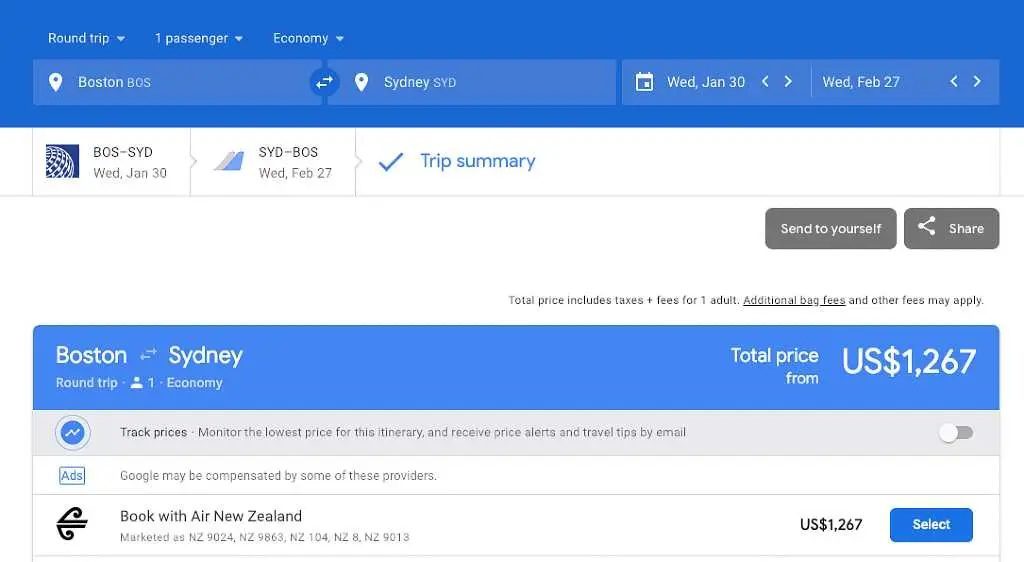
You intentionally book two separate tickets to create a long layover or mini-stopover. For example, instead of a single Boston–Sydney ticket, you might book Boston–LAX and LAX–Sydney separately if that combination is cheaper.
The DIY route can save serious money, but it comes with risk: if your first flight is delayed and you miss the second, the second airline doesn’t have to help you. You’re on your own for rebooking and any extra costs.
My rule of thumb:
- On one ticket: I’m comfortable with 2–3 hour layovers for domestic, 3–4 hours for international.
- On separate tickets: I treat them like two separate trips. I’ll often leave 6–12 hours between flights, or even overnight, especially when crossing borders.
When you compare long layover vs short layover cost, remember: you’re not just trading time for money. You’re also trading risk. A slightly longer layover can be cheap insurance against a missed connection.
4. Turning Layovers into Stopovers: See More, Sometimes for Less
Here’s where things get fun. A stopover is basically a super-long layover – usually 24 hours or more – that lets you actually visit the city instead of just wandering the terminal.
Some airlines have formal stopover programs that let you add a city for little or no extra airfare. For example:
- Turkish Airlines often lets you stop in Istanbul and may include a free hotel night on qualifying tickets.
- Icelandair has long promoted free stopovers in Reykjavik for up to several days between North America and Europe.
On top of that, you can build your own stopovers using tools like the Multi-city search on Google Flights. Sometimes, adding a stop can even lower the total price because of how airlines structure their fares and compete on certain routes.
But there are trade-offs:
- You’ll pay for extra hotels, meals, and local transport in the stopover city.
- Basic economy tickets may not allow changes, checked bags, or seat selection, which can turn a “cheap” stopover into a stressful one.
- Not every stopover is a deal; sometimes the multi-city option is more expensive than a simple round-trip.
How I decide if a stopover is worth it:
- Price out three options side by side:
- Nonstop (if available)
- One-stop with a normal layover
- Multi-city with a 1–7 day stopover
- Add realistic costs for the stopover: hotel, food, airport transfers, maybe a tour or two.
- Ask: “Would I pay this much to visit this city on its own?” If yes, the stopover is usually a win.
Sometimes the stopover doesn’t save money, but it turns a brutal 20-hour travel day into two manageable segments plus a bonus mini-trip. That’s still value, especially if you’re into budget travel layover tips and want to see more places without extra long-haul flights.

5. Flexible Tickets vs. Rock-Bottom Fares: Which Is Cheaper in the End?
It’s easy to grab the absolute cheapest fare you see and feel like you’ve won. But the lowest number on the screen isn’t always the lowest number you’ll pay.
When I compare airfare cost vs convenience trade offs, here’s what I look at beyond the headline fare:
- Change and cancellation rules – Can I move my flight if plans change? What’s the fee?
- Baggage – Does the fare include a carry-on? A checked bag? Or will I pay extra at the airport?
- Seat selection – Am I okay with a random middle seat on a 10-hour flight?
- Connection risk – If I miss a connection on a basic economy ticket, what happens?
Sometimes paying $30–$80 more for a flexible or standard economy fare is the smarter move because:
- You can change dates with a smaller penalty if prices drop or plans shift.
- You avoid surprise baggage fees that can easily wipe out your savings.
- You reduce the risk of having to buy a last-minute replacement ticket.
When I compare the cost of flexible airline tickets vs the cheapest option, I mentally add in:
- Bag fees (both ways)
- Seat fees (if I care where I sit)
- Change/cancellation risk (based on how likely my plans are to move)
Only then do I decide whether the rock-bottom fare is truly cheaper than a more flexible ticket. A “flexible flight ticket worth it” moment is usually when one change or one missed connection would cost more than the upgrade to a better fare.

6. How to Actually Use This: A Simple Strategy for Cheaper, Smarter Flights
Let’s pull this together into something you can actually use the next time you’re staring at a flight search screen, wondering how timing affects flight prices and what booking mistakes might quietly increase your costs.
Step 1: Start wide, then narrow
- Search across a few days or a full month if you can.
- Look at early morning, late night, and midday options side by side.
- Watch where prices drop sharply – that’s usually where demand is lower and red eye flight price advantages or off-peak deals show up.
Step 2: Play with layovers and stopovers
- Try adding a connection instead of nonstop to see if the long layover vs short layover cost difference is worth it.
- Test a multi-city search to see if a stopover city makes the fare cheaper or just more interesting.
- Check if any airline on your route has a stopover program you can use.
Step 3: Compare total cost, not just ticket price
- Add baggage, seat, and change fees.
- Factor in airport transfers at weird hours (early taxis or rideshares can be pricey).
- Consider the cost of delays or missed connections, especially on separate tickets or very tight layovers.
Step 4: Decide what you’re willing to trade
- Would you trade 2 hours of sleep for $80 in savings and a more reliable early flight?
- Would you trade a 3-hour layover for a 7-hour one if it saves $200 and lets you explore a new city?
- Would you pay $50 more now to avoid a $200 change fee later?
There’s no universal right answer. But once you start thinking in terms of risk, flexibility, and total cost, early flights, longer layovers, and flexible tickets stop looking like sacrifices and start looking like tools.
Next time you’re scrolling through flight options, ask yourself: “Am I paying for comfort, or am I paying for certainty?” Then pick the mix that actually fits your trip – and your wallet. That’s how you avoid the booking mistakes that quietly increase flight costs and turn timing into an advantage instead of a gamble.