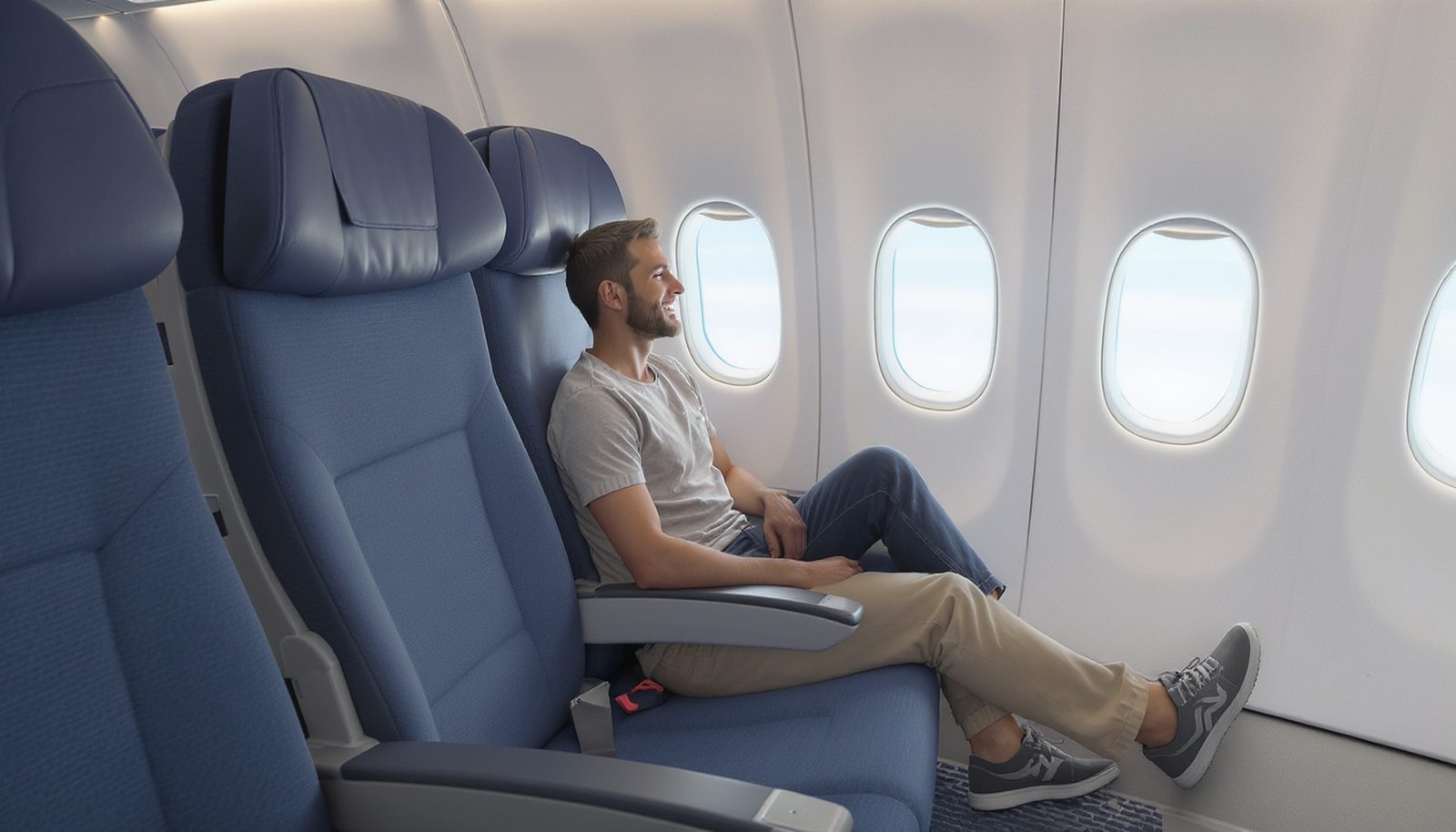
Featured decision: Should you pay the fare difference for Emirates Premium Economy or stick with extra‑legroom Economy?
On long‑haul Emirates flights, you often face a tricky choice: pay a higher fare for Premium Economy, or stay in Economy and add an extra‑legroom seat. This is not only about comfort. It is also about fare classes, change penalties, and upgrade rules, and how they interact with your chance of changing plans.
This article fits the Compare category and focuses on one clear decision: when the class fare difference may be charged for Premium Economy is worth paying, and when extra‑legroom Economy gives better value. The analysis uses how modern airline fare rules work (change and refund penalties, fare buckets, and non‑refundable fees) and applies that logic to Emirates cabins without guessing specific prices.
Instead of a simple pros and cons list, each section looks at a specific trade‑off: comfort vs. flexibility, fare difference vs. penalty risk, and booking direct vs. using third‑party sites. I want you to see why one option fits your situation, not just what to choose.
Decision 1: Comfort vs. structural value – what actually changes when you move from extra‑legroom Economy to Premium Economy?
At first, Emirates Premium Economy looks like a straight comfort upgrade: more space, a better seat, and nicer service. Extra‑legroom Economy is usually the same Economy seat and service, just with more space at the exit row or bulkhead.
The real question is about structural value: what changes in your rights, risks, and long‑term cost when you move up a cabin.
Based on how airlines build fare classes, the main differences usually fall into four areas:
- Seat and physical comfort: Premium Economy usually gives you a wider seat, more recline, a leg rest or footrest, and a roomier layout. Extra‑legroom Economy gives you more knee room but keeps the same seat width, padding, and recline as standard Economy.
- Service and soft product: Premium Economy often comes with upgraded meals, better drinks, and sometimes priority boarding. Extra‑legroom Economy usually keeps standard Economy service; you pay for space, not a higher service level.
- Fare class and flexibility: Premium Economy tickets often sit in different fare buckets than Economy. That can mean different change and refund penalties, different upgrade options, and different mileage earning. Extra‑legroom Economy is usually an add‑on to an Economy fare, so your fare rules stay at the Economy level.
- Upgrade and rebooking pathways: Moving from Economy to Premium Economy later (via an upgrade) often triggers a class fare difference plus any change fees. Buying extra‑legroom Economy is often treated as a seat fee on top of your ticket. That fee may be non‑refundable, but it does not change your fare class.
So the structural value question becomes simple:
- If you are already paying for extra space, does Premium Economy give you extra rights or protections that justify the higher fare difference?
- Or are you just paying more for comfort that you can roughly match with a cheaper extra‑legroom seat, while keeping the same Economy‑level risk?
Because Emirates, like other big airlines, uses several fare buckets inside each cabin, the answer depends on how your specific Premium Economy fare compares with the Economy fare you would otherwise buy. The next sections turn this into clear decision rules.
Decision 2: Fare difference vs. change and refund risk – when does Premium Economy’s higher base fare make sense?
Modern airline pricing runs on fare classes (letter codes). These codes define change and refund rules, penalties, and flexibility. Discount Economy buckets are often non‑refundable or heavily penalized, especially close to departure. Higher‑priced fares, including many Premium Economy options, may be more flexible – but not always.
You need to see how the class fare difference interacts with your chance of changing plans.
How the “class fare difference may be charged” works in practice
When you move from one fare class to another (for example, upgrading from Economy to Premium Economy, or changing dates within Premium Economy), airlines usually add two types of cost:
- Change penalty: A fixed fee per passenger per direction, often higher as departure gets closer.
- Class fare difference: The gap between what you paid and the current fare in the new class for your route and dates.
In practice, the fare difference is usually one‑way. If the new fare is cheaper, many airlines do not refund the difference, or they refund only part of it after penalties and non‑refundable fees. This one‑way rule means “flexibility” often protects you from a big loss rather than giving you money back.
Comparing Premium Economy vs. extra‑legroom Economy under change scenarios
We cannot use real Emirates prices here, so the table below shows a generic structure. It compares total out‑of‑pocket cost for a Premium Economy fare vs. an Economy fare with an extra‑legroom seat, under typical airline rules. The numbers are placeholders and only show relative behavior.
| Scenario | Premium Economy ticket | Economy ticket + extra‑legroom seat |
| 1. No changes, trip flown as booked | Pay higher base fare; enjoy Premium Economy comfort and service. | Pay lower base fare + seat fee; enjoy extra legroom but Economy service. |
| 2. Change 7+ days before departure | Change penalty (if applicable) + class fare difference to the new Premium Economy fare. Higher base fare may mean a smaller relative jump if prices rise. | Change penalty on the Economy fare + class fare difference to the new Economy fare. Extra‑legroom seat fee may be non‑refundable and must be paid again. |
| 3. Change within 24–12 hours of departure | Higher change penalty; some discounted Premium Economy buckets may become non‑changeable or very costly to change. Fare difference still applies. | Similar or higher penalty on Economy; the cheapest Economy buckets may be non‑changeable. Seat fee is usually lost. |
| 4. No‑show (missed flight) | In many systems, most of the fare is lost; only taxes may be refundable. Premium Economy’s higher base fare increases the total loss. | Same pattern: fare mostly lost, taxes sometimes refundable. Extra‑legroom seat fee is lost. The total loss is lower because the base fare was lower. |
The trade‑off looks like this:
- If your plans are very stable, your main question is whether Premium Economy comfort and service are worth the higher base fare compared with Economy plus extra‑legroom.
- If your plans are uncertain, you need to ask: does the Premium Economy fare you see have clearly better change and refund rules than the Economy fare you would buy instead? If not, you are only raising the amount of money at risk if you cancel or no‑show.
Practical decision rule
- Choose Premium Economy when the fare you see sits in a flexible or semi‑flexible bucket with lower penalties or better change rights than the Economy fare you would otherwise book, and you care about both comfort and lower downside risk.
- Choose extra‑legroom Economy when the Premium Economy fare is in a similarly strict bucket (non‑refundable, high penalties) and the main difference is comfort. In that case, you pay more for the same risk profile.
Decision 3: Direct Premium Economy booking vs. upgrading from Economy later
Another common question is whether to book Premium Economy from the start or book Economy (maybe with extra‑legroom) and upgrade later if prices drop or miles open up. With dynamic pricing and modern fare rules, this choice can have a big impact.
How upgrade paths interact with fare classes
In many airline systems, upgrading from Economy to Premium Economy means:
- Paying the class fare difference between your original Economy fare and the current Premium Economy fare for your route and date.
- Paying any change penalty tied to your original Economy fare class.
- Sometimes paying a separate upgrade fee or using miles, with pricing that can depend on your original fare class.
Booking Premium Economy from the start locks in one fare class and can avoid some of these stacked costs. But you lose the option to drop down to a cheaper Economy fare if demand falls.
Trade‑offs between booking Premium Economy now vs. upgrading later
- Price direction risk: If demand is high, Premium Economy fares may rise as departure nears, so late upgrades become expensive or impossible. If demand is low, last‑minute upgrades or mileage offers may be cheaper than booking Premium Economy upfront.
- Fare class restrictions: Very cheap Economy fares may be ineligible for some upgrade types or may need more miles or cash to upgrade. Booking a slightly higher Economy fare class can unlock better upgrade options, but it raises your base cost.
- Penalty stacking: If you upgrade later and then change dates, you may face penalties based on the new Premium Economy fare, plus any non‑refundable seat or upgrade fees you already paid.
When booking Premium Economy directly is usually better
- You travel on peak dates (major holidays, school breaks, big events) when Premium Economy is likely to sell out or become very expensive.
- You need reliable comfort (for example, for medical reasons or to work on board) and cannot risk staying in regular Economy if upgrades do not clear.
- The Premium Economy fare you see has clearly better change and refund rules than the Economy fare, so it cuts your downside risk if plans change.
When starting in Economy + extra‑legroom can be rational
- Your travel dates are flexible, and you are willing to move your trip to chase better fares or upgrade offers.
- You are fine flying in extra‑legroom Economy if upgrades never appear.
- You are booking far ahead and expect promotional upgrade offers or mileage sales closer to departure.
Treat “I’ll upgrade later if it’s cheap” as a speculative strategy. The downside is real: you may pay more than if you had booked Premium Economy from the start, or you may not get Premium Economy at all.
Decision 4: Extra‑legroom Economy vs. Premium Economy for different traveler profiles
Because fare rules and penalties are complex, the best choice depends a lot on your traveler profile. Below are structured decision guides for common cases, focused on how each option handles risk and value.
Solo leisure traveler with flexible dates
- Risk profile: Moderate; you can often move dates if prices change.
- Key constraint: Budget; you want comfort, but price still matters.
- Decision logic:
- If Premium Economy is only a small step up from Economy (for example, similar to what you would pay for extra‑legroom seats on both legs), Premium Economy often gives better overall value: more comfort, better service, and sometimes better mileage earning.
- If Premium Economy is a big price jump and the Economy fare you are looking at is very restrictive (non‑refundable, high penalties), extra‑legroom Economy is usually the smarter move. You keep more cash in reserve and limit your maximum loss if plans change.
Business traveler on a tight schedule
- Risk profile: High; meetings move and delays can cascade.
- Key constraint: Reliability and productivity; you need to arrive rested and on time.
- Decision logic:
- Check if your company policy allows Premium Economy and if it requires flexible fare classes. If yes, Premium Economy in a flexible bucket is often the best balance between cost and productivity.
- If your company forces you into strict Economy fares, extra‑legroom Economy may be your only option. Then focus on reducing penalty exposure by avoiding the very cheapest, most restrictive fare buckets when you can.
Family with children
- Risk profile: High; illness and schedule changes are more likely.
- Key constraint: Total cost for all travelers.
- Decision logic:
- Modern fare rules often treat infants and children as separate pricing lines with their own fees. Upgrading a whole family to Premium Economy multiplies both the fare difference and the possible loss if you cancel.
- For many families, a mixed approach works best: one adult in Premium Economy (if allowed) and others in extra‑legroom Economy, or everyone in extra‑legroom Economy with careful fare choice.
- Check if any special discounts (for example, for certain family categories) apply only to specific fare classes or to direct bookings. These can shift the value toward one cabin or the other.
Frequent flyer with miles to burn
- Risk profile: Variable; you may be comfortable with more complex plans.
- Key constraint: Getting the most value from each mile and each dollar.
- Decision logic:
- Check how many miles you earn in Premium Economy vs. Economy on your route. If Premium Economy earns a lot more miles or status credits, the real cost gap shrinks.
- Think about using miles to upgrade from a mid‑range Economy fare to Premium Economy instead of buying Premium Economy outright. But confirm that your Economy fare class can be upgraded and that the mileage co‑pay is reasonable.
- Be careful about upgrading from the cheapest Economy fares with miles. These often have poor upgrade space and may still carry high penalties.
Decision 5: Channel and fee structure – booking direct vs. third‑party when comparing cabins
Fare rules do not sit alone. They interact with where you book. Airlines often use different service fees, discounts, and change handling depending on whether you book direct or through an online travel agency (OTA) or a traditional agent.
How channel choice affects your Premium Economy vs. extra‑legroom decision
- Service fees and convenience charges: Some channels add non‑refundable service fees on top of the airline’s own penalties. If you change or cancel, you may pay both the airline’s change penalty and the agency’s fee, and you may not get any of those fees back.
- Access to special discounts: Some social or promotional discounts (for example, for specific passenger groups) are often limited to direct digital channels and may apply only to certain fare classes. If such a discount applies to Premium Economy but not Economy, it can narrow the fare gap.
- Change handling and response time: When plans change close to departure, the window to avoid a no‑show penalty can be tight (for example, 12 hours). If you booked through an intermediary, you may need to go through them to change your ticket. That can cause delays and raise the risk of moving into a more expensive penalty window.
Practical implications for cabin choice
- If you see a high chance of changes, booking directly with Emirates often makes changes smoother and gives you clearer visibility into penalties and fare differences when you compare Premium Economy with Economy.
- If an OTA shows a slightly lower base fare but adds non‑refundable service fees, that saving can vanish after a single change or cancellation.
- When you compare cabins, always look at the total cost of change through your chosen channel, not just the first fare difference you see.
Risks, uncertainties, and edge cases that can distort the value comparison
Even with a clear framework, some uncertainties can skew the Premium Economy vs. extra‑legroom Economy decision. Knowing these helps you avoid over‑confidence in any single plan.
Dynamic pricing and opaque fare buckets
- Airlines change fares constantly based on demand, competition, and booking patterns. The Premium Economy fare you see today may be very different tomorrow, and the same goes for Economy.
- Public fare labels like “Saver” or “Flex” often hide several fare classes under one name. The underlying letter codes can have different penalties and upgrade rules. If you cannot see the exact fare class, you may misjudge how risky a ticket is.
Mixed‑cabin and mixed‑fare itineraries
- On trips with several segments or cabins (for example, one leg in Premium Economy and another in Economy), change and refund penalties can get complex. Some systems apply the most restrictive rule to the whole ticket.
- If your trip includes partner airlines, each carrier’s rules may apply to its own segments, and penalties can stack in ways that are hard to predict.
Non‑fare fees and partial refunds
- Ticketing service fees, seat selection fees, and some convenience charges are often non‑refundable, even when your fare is technically refundable.
- Often, when you cancel, you get only part of the base fare back (after penalties) plus taxes, while all service and seat fees are lost. This can make a Premium Economy ticket that looks flexible less valuable than you expect.
Marketing cookies and personalized offers
- Airlines use marketing cookies and conversion tracking to measure ads and personalize offers. If you accept these, you may see more targeted promotions, including cabin upgrade offers, but the real effect on prices is not clear.
- If you decline marketing cookies, you may see fewer targeted upgrade offers, and the airline collects less data about you. There is no guarantee that accepting cookies gives you better Premium Economy deals; it mainly changes how the airline tracks and targets you.
How to manage these uncertainties
- Focus on relative risk: compare how much money is at risk in each cabin under realistic change and cancellation scenarios, instead of trying to predict exact future prices.
- When you can, pick fare options (in any cabin) that clearly show change penalties and refund rules, and avoid mixes of segments or carriers that make the rules hard to read.
- Look at travel insurance or credit card protections as a separate safety layer, but do not assume they cover all change penalties or fare differences. You need to read the policy details.
Summary: A practical framework for deciding between Emirates Premium Economy and extra‑legroom Economy
To decide if the class fare difference for Emirates Premium Economy is worth paying compared with extra‑legroom Economy, you can use this simple framework:
- Step 1 – Clarify your risk profile: How likely are you to change dates, cancel, or no‑show? The higher the risk, the more you should focus on fare rules and penalties, not just comfort.
- Step 2 – Compare fare flexibility, not just cabin labels: Check if the Premium Economy fare you see has clearly better change and refund rules than the Economy fare you would buy. If both are similarly strict, Premium Economy mainly raises the amount of money at risk.
- Step 3 – Evaluate upgrade pathways: If you plan to start in Economy and upgrade later, treat that as a speculative move. Include possible change penalties, fare differences, and the upgrade eligibility of your Economy fare class in your thinking.
- Step 4 – Account for channel and fees: Compare the total cost of change (airline penalties + agency fees + non‑refundable seat charges) for each cabin and booking channel. A slightly cheaper OTA fare can become more expensive after one change.
- Step 5 – Match to your traveler profile: For business travelers and anyone who needs predictable comfort, Premium Economy in a flexible or semi‑flexible fare often makes sense. For budget‑focused leisure travelers and families with high change risk, extra‑legroom Economy plus careful fare choice is often more sensible.
When you make these trade‑offs clear, you move beyond generic tips. You can decide, for your specific trip, whether Emirates Premium Economy’s fare difference is a smart investment in comfort and risk control, or an unnecessary extra exposure compared with extra‑legroom Economy.