
I plan every family trip with a spreadsheet open and a skeptical eye on exchange rates. Not because I love numbers, but because I’ve seen how a 5–10% swing in currency or hidden fees can quietly blow a carefully saved family budget.
If you’ve ever thought, We can totally afford this trip
and then watched your card statement say otherwise, this guide is for you. Let’s walk through how different currencies, fees, and local prices really shape what your family can afford on the road, especially when you’re juggling a family travel budget in different currencies.
1. Are You Really Comparing Destinations Fairly?
When we plan family trips, we usually compare headline prices: flights, hotels, maybe a few activities. But that’s only half the story. The other half lives in exchange rates and local price levels.
Two families can each budget 3,000 USD for a week. One goes to Japan, the other to Mexico. On paper, same budget. In reality, the value of that 3,000 USD depends on:
- The exchange rate (how many yen or pesos you get per dollar, euro, or pound)
- Local price levels (is the country generally expensive or cheap?)
- Fees and markups (what your bank, card, or ATM quietly takes)
Sites like Budget Your Trip aggregate real travelers’ costs. I like to start there to see average daily costs per person for food, accommodation, and transport. Then I layer on currency reality and think about how exchange rates and travel costs actually play out for our family.
- Check today’s rate with a live converter (XE, OANDA, etc.)
- Assume I’ll lose 3–5% to spreads and fees unless I actively fight it
- Add a 5–10% buffer for currency moves before we travel
Suddenly, that “same” 3,000 USD trip looks very different. A weaker destination currency can create a value window
where nicer hotels or extra activities become affordable. A stronger one can turn a cheap-looking trip into a constant game of cutting corners.
Takeaway: Don’t just compare prices in your home currency. Compare daily cost levels, then adjust for realistic exchange rates, local price levels, and the real travel budget after exchange fees.
2. Are Exchange Rates Quietly Shrinking Your Family Budget?
Exchange rates move all the time. Sometimes slowly, sometimes violently. For a family, that volatility matters more than we like to admit.
Imagine you’ve saved 4,000 EUR for a trip to the US. When you start planning, 1 EUR = 1.10 USD. Great. That’s 4,400 USD of spending power. A few months later, the euro weakens to 1 EUR = 1.00 USD. Your 4,000 EUR is now effectively 4,000 USD. You just lost 400 USD of purchasing power without spending a cent.
That’s a couple of theme park tickets, a nicer hotel night, or several restaurant meals gone. This is how exchange rates affect a travel budget in a way that doesn’t show up in glossy brochures.
Here’s how I handle this in practice:
- Convert big-ticket items into the destination currency early in planning: accommodation, car rental, passes, internal flights.
- Build a 5–10% FX buffer into the budget. If we don’t need it, great. If we do, we’re not panicking.
- Watch historical trends (even casually). Some currencies have seasonal patterns; others are just volatile. I don’t try to outsmart the market, but I avoid converting everything at the last minute.
Even a tiny difference in rate matters. A 0.01 difference on a 2,000 USD conversion is 20 USD. Multiply that across multiple conversions, and you’re talking about real money for a family.
Takeaway: Treat exchange rates as a line item in your budget, not background noise. Plan for them the way you plan for flights or hotels, especially if you’re budgeting for fluctuating exchange rates on a multi-currency family trip.
3. Are Banks, ATMs and Cards Taking a Bigger Cut Than You Think?
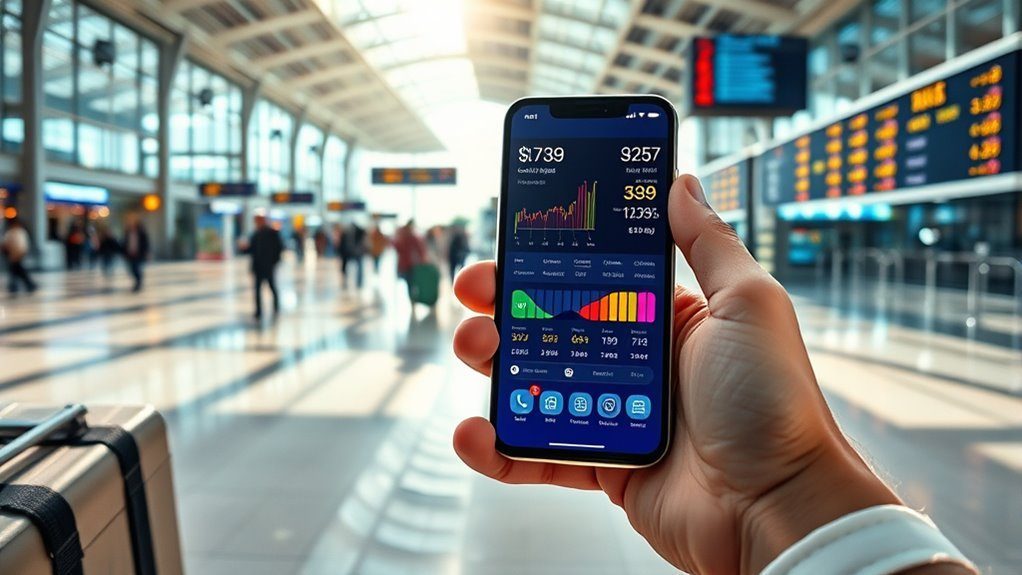
This is where most families quietly bleed money. We obsess over saving 50 USD on flights, then hand 200 USD to banks in hidden fees without noticing.
Here’s the uncomfortable truth: the rate you see on Google is the mid-market rate. It’s the midpoint between buy and sell prices on the interbank market. You almost never get that rate as a retail customer.
Common traps:
- Bank spreads and foreign transaction fees: Many traditional banks add 3% foreign transaction fees plus 1–2% rate markups. On a 5,000 USD family trip, that’s easily 200–250 USD gone.
- Airport and hotel exchange desks: Convenient, yes. But often 3–5% worse than a decent online or bank rate. I treat them as emergency-only.
- Dynamic Currency Conversion (DCC): That friendly prompt at the card terminal:
Pay in your home currency?
It’s almost always a trap. You’re paying for the merchant’s bank to convert at a terrible rate.
Sound familiar? That’s how foreign transaction fees on a family vacation quietly stack up.
My rules now:
- Always pay in the local currency at shops, restaurants, and ATMs. If the terminal offers your home currency, I say no.
- Use at least one card with 0% foreign transaction fees. This is low-effort, high-impact.
- Avoid airport exchanges unless I absolutely need a small amount of cash to get into the city.
Multi-currency platforms like Wise or Revolut, or fee-free ATM cards (e.g., some Schwab accounts), can dramatically cut these costs. They’re not magic, but they’re usually closer to the real rate and more transparent about fees.
Takeaway: Assume your default bank setup is expensive until proven otherwise. One good card and a better ATM strategy can save more than any coupon code and give you a more honest family vacation cost breakdown abroad.
4. Should You Lock In Rates Early or Wait and Hope?
This is the classic dilemma: convert now or later? Families feel this more acutely because the numbers are bigger. You’re not just buying a weekend away; you’re funding flights, accommodation, and daily costs for multiple people.
There’s no perfect answer, but there are smarter ways to manage the risk.
Option 1: Convert gradually
Instead of converting everything at once, I often break it into several smaller conversions over a few months. That way, I’m averaging out the rate. If the currency moves against me, I haven’t converted everything at the worst moment. If it moves in my favor, I benefit on at least part of the budget.
Option 2: Pre-buy with multi-currency accounts
Tools like Wise, Revolut, or some digital wallets let you hold balances in multiple currencies. When the rate looks reasonable, I’ll move a chunk of our trip budget into the destination currency. It’s not speculation; it’s risk management for a multi-currency family trip budget.
Option 3: Hedge big-ticket items
For large expenses (like a 3,000 USD villa rental), I sometimes convert or pay earlier if my home currency is strong. I’d rather lock in a good rate than gamble on it staying that way.
What I don’t do:
- Try to time the market perfectly. That’s a losing game.
- Convert everything at the last minute at an airport kiosk.
- Ignore the risk and hope it all works out.
Takeaway: You don’t need to predict the future. Just avoid putting your entire family budget at the mercy of a single conversion on a random day.

5. How Do Local Price Levels Change What Your Kids Actually Experience?
Exchange rates are only half the story. The other half is what things cost locally. A strong home currency doesn’t help much if you’re visiting a country that’s inherently expensive.
Think of it this way:
- In some countries, 100 USD buys a basic hotel room and simple meals.
- In others, 100 USD buys a family suite, restaurant dinners, and a couple of attractions.
That difference shapes your kids’ experience more than any Instagram inspiration. When you compare travel costs across countries, this is what really matters.
Here’s how I factor local price levels into planning:
- Start with data: Use tools like Budget Your Trip to see typical daily costs for families in different countries.
- Compare regions: Japan vs. Thailand, Switzerland vs. Portugal, US vs. Mexico. The gap can be huge.
- Match destinations to your budget: If your budget is tight, a weaker currency + lower price level country can mean more experiences, not fewer.
Sometimes, the smartest move is to shift the destination entirely. A family that can barely afford a week in an expensive city might enjoy two or three weeks in a cheaper region with a weaker currency. Same savings, more memories.
Takeaway: Don’t just ask, Can we afford to go?
Ask, What kind of trip does this budget actually buy in this currency and price level?
That’s the real family travel cost guide by currency.
6. Are You Controlling Daily Spend or Letting It Drift?
Even with a good plan, daily spending can drift. A snack here, a taxi there, a souvenir for each kid. In a foreign currency, it’s easy to lose track. It’s only 200
of something doesn’t feel real until the statement arrives.
I’ve found that simple tracking makes a huge difference, especially for families:
- Use an app that supports multi-currency tracking and group splitting (MemoGo, YNAB, etc.).
- Log big expenses daily: accommodation, transport, major activities.
- Set a daily budget per adult and per child in the local currency.
It doesn’t have to be obsessive. The goal is to see patterns early. If we’re burning through the budget faster than planned, we adjust: more picnics, fewer taxis, maybe one less paid attraction.
Another underrated move: separate cards for different purposes. One for accommodation and big pre-booked costs, another for daily spend. It keeps the mental math cleaner and makes it easier to see where the money is going, especially when you’re balancing cash vs card abroad with kids.
Takeaway: A family trip can easily drift 20% over budget without feeling extravagant. A bit of tracking keeps you in control without killing the fun.
7. What’s the Minimum Setup Before You Fly?
If all of this feels like a lot, here’s the minimalist setup I recommend before any family trip involving another currency.
Step 1: One good card
- A debit or credit card with 0% foreign transaction fees.
- Clear policy on ATM fees and refunds.
Step 2: One multi-currency option
- Wise, Revolut, or a similar multi-currency account.
- Use it to pre-buy some local currency when rates look reasonable.
Step 3: A realistic budget with buffer
- Estimate daily costs using a site like Budget Your Trip.
- Add 5–10% FX buffer plus a small emergency fund.
Step 4: A simple ATM strategy
- Withdraw larger, less frequent amounts to reduce flat fees.
- Always choose local currency at ATMs and terminals (avoid DCC).
Step 5: One tracking habit
- Pick an app or a simple shared note.
- Log daily spend in either local currency or your home currency.
You don’t need to become a currency trader. You just need to stop donating 5–10% of your family budget to avoidable fees, bad rates, and classic currency exchange mistakes on vacation.
Final thought: Every family trip is a trade-off between time, money, and experience. Understanding how currencies, fees, and local prices interact doesn’t make the trip less spontaneous. It just means more of your hard-earned money goes into actual memories instead of bank profits.