
I used to plan trips like this: pick dates, pick a destination, search flights, get shocked, book anyway, then complain. If that sounds familiar, your flights are quietly eating your entire travel budget.
In a world where airfare can change thousands of times per day
, a normal travel budget for fluctuating flight prices just isn’t enough. You need a flight-proof budget – one that assumes prices will move, sometimes violently, and still holds up.
Here’s how I build mine, step by step, so price spikes don’t kill the trip.
1. Stop Letting Flights Dictate Your Entire Trip
Most people plan in the worst possible order:
- Pick exact dates
- Pick a specific city
- Then beg the flight gods for mercy
That’s how you end up paying 40–80% more than you need to. Airlines use dynamic pricing, not vibes. They don’t care that it’s your only week off.
So I flip the script when I’m planning around volatile airfare:
- Start with: what’s my total trip budget? (Example: $2,000 for 7 days.)
- Cap flights at a percentage – usually 25–35% of the total.
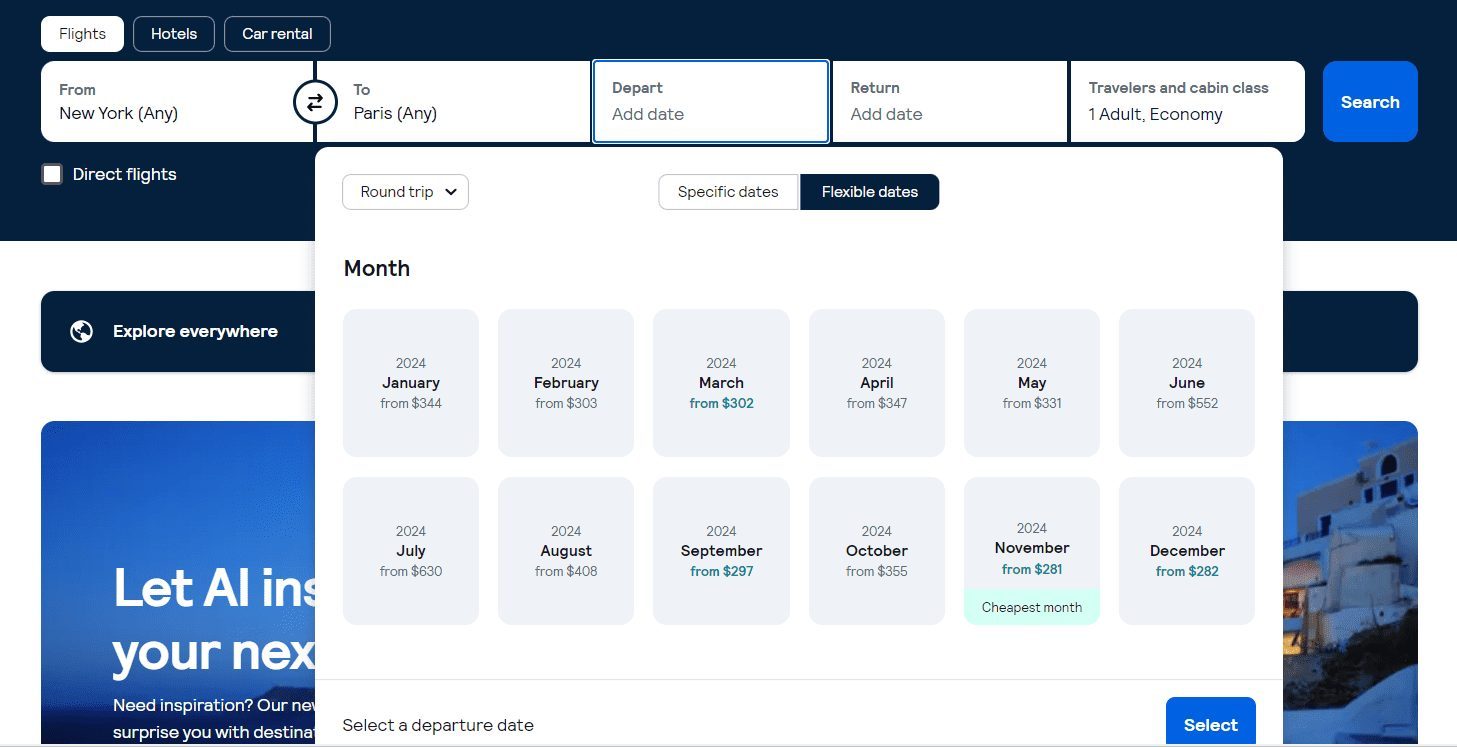
- Let deals decide where and when I go, if I can be flexible.
With a $2,000 budget, I’ll aim for flights around $500–$700. If everything I see is $1,100+, I don’t stretch the budget. I change the plan: different dates, different airport, or a different region entirely.
This is exactly what deal-focused tools and sites recommend: reverse the usual planning order
and let cheap routes guide you. Tools like Google Flights Explore, Skyscanner, and Going (source) are built for this kind of flexibility.
Budget rule: decide your flight cap first. The destination is negotiable. Your savings are not.
2. Build a “Price Shock” Cushion Into Your Budget
Even with smart planning, prices move. A sale ends. A competitor drops a route. A big event gets announced. If your budget has no slack, one spike can wreck the whole trip.
To protect my travel savings from flight costs, I build in a price shock cushion from day one.
Here’s how I structure it:
- Base flight cap: 25–35% of total trip budget
- Shock cushion: extra 5–10% of the total budget, reserved only for flight volatility
Example on a $2,000 budget:
- Flights target: $500–$700
- Shock cushion: $100–$200
- Everything else (lodging, food, activities, local transport): $1,100–$1,400
If prices jump from $600 to $720, I don’t panic. I dip into the cushion. If I never need it, that money becomes upgrade fuel
for better food, a nicer hotel night, or a future trip fund.
Key mindset shift: assume flights will move. Don’t fight it. Budget for it.
3. Use Timing & Flexibility as Your First Line of Defense
Most viral cheap flight hacks
are nonsense. No, Tuesday at 3:17 p.m. is not a magic booking time. Incognito mode doesn’t suddenly unlock secret fares. Airlines use algorithms, not superstition.
What actually matters when you’re trying to avoid overspending on flights:
- Seasonality: summer, Christmas, spring break, and big events are expensive. Shoulder seasons (spring and fall) are usually cheaper.
- Travel days: flying on Tuesdays and Wednesdays is often cheaper than Fridays and Sundays because fewer people want those days.
- Time of day: early morning and late-night flights are often cheaper than prime-time departures.
- Booking window: too early or too late both cost you. The sweet spot shifts by route and season.
Instead of guessing, I do this:
- Use Google Flights or Skyscanner’s calendar view to see a full month of prices at once.
- Shift departure/return by 1–3 days and watch how the price changes.
- Avoid peak departure days (Friday after work, Sunday afternoon) when everyone else is flying.
Often, moving a trip by just 48 hours can save $150–$300. That’s not a small tweak; that’s an extra night in a decent hotel or several great meals.
Budget rule: before you raise your budget, test your flexibility. Dates and airports are usually more flexible than your bank account.
4. Let AI Track Prices So You Don’t Lose Your Mind
You will never out-refresh an airline’s pricing system. Prices can change dozens or hundreds of times between the moment you first search and the day you fly.
Instead of obsessively checking, I outsource the monitoring.
There are two types of tools I use when I’m planning a vacation budget with volatile airfare:
Prediction tools (before you book)
Services like AirTrackBot and AirHint analyze:
- Days until departure
- Historical price patterns
- Route popularity and seasonality
- Real-time demand and availability
They then give you a simple recommendation: buy now
or wait
, plus a confidence score. AirHint even claims 80%+ accuracy on some airlines. Is it perfect? No. But it’s better than guessing based on a hunch and a meme.
How I use them:
- If the tool says
buy now
with high confidence and the price is within my flight cap, I book. - If it says
wait
, I set alerts and give it a few days (within reason – I don’t wait forever).
Monitoring tools (after you book)
Here’s where most people leave money on the table. Prices don’t just go up. They often drop after you book. But almost no one tracks that, because who wants to babysit a ticket for weeks?
That’s where tools like Refare come in. You forward your confirmation email, and they:
- Monitor your exact itinerary across airlines
- Detect price drops
- Handle the refund/credit process for you
- Keep your same seats and loyalty benefits when possible
They report average savings of around $218 per traveler. That’s not pocket change. That’s a serious chunk of your budget coming back to you.

Budget rule: treat booking as phase one. Phase two is automated monitoring to claw back money if prices drop.
5. Design Your Itinerary to Work With Prices, Not Against Them
Most people plan a trip like a straight line: fly into City A, stay, fly out of City A. Simple, but often expensive and inefficient.
When I’m trying to protect my travel budget from flight price spikes, I play with the structure of the trip itself:
- Open-jaw tickets: fly into one city, out of another. Example: into Paris, out of Rome. This can avoid backtracking and sometimes costs the same or less than a simple roundtrip.
- Nearby airports: check secondary airports both at home and at your destination. A smaller airport 60–90 minutes away can be dramatically cheaper.
- Layovers as mini-trips: a longer layover can cut the fare and give you a bonus city for a few hours.
- Stopover programs: some airlines let you stay in their hub city for a few days at little or no extra cost – sometimes with hotel or tour perks.
All of this matters for your budget because it gives you more ways to say yes to a good price. If you’re only willing to fly nonstop, on exact dates, from one airport, you’re basically telling airlines: charge me whatever you want.
Budget rule: build flexibility into the itinerary itself – not just the dates. Routes, airports, and stopovers are all levers you can pull.
6. Use Points, Miles & Discounts Before They Lose Value
There’s a quiet inflation happening in the background: your miles and points are slowly dying.
Airlines regularly devalue their loyalty programs. That means the same flight that costs 40,000 miles this year might cost 55,000 next year. Waiting for the perfect
redemption often just means paying more later.
Here’s how I protect my cash budget using points and discounts, especially when flight prices are rising:
- Redeem sooner, not later: if you have enough miles for a flight that fits your plans, seriously consider using them now instead of hoarding.
- Compare cash vs miles: sometimes a flight is cheap in cash and expensive in miles – in that case, pay cash and save miles for pricier routes.
- Ask for hidden discounts: some airlines still offer unadvertised senior discounts if you call. They’re not always huge, but on expensive routes they can be meaningful.
- Stack tactics: use miles for one leg, a deal fare for the other, and a monitoring tool to catch post-booking drops.
For travelers on fixed or shrinking budgets, especially retirees, this is critical. Points and discounts aren’t just perks; they’re how you keep flying without blowing up your savings.
Budget rule: treat miles and discounts as part of your flight budget, not a separate universe. Their job is to keep your cash intact.
7. Decide When to Stop Waiting and Just Book
There’s a point where waiting for a better price
becomes a very expensive hobby. Modern airline revenue systems are designed so that last-minute deals are rare and unreliable, especially on popular routes and dates.
So how do you know when to stop waiting and avoid classic travel budget mistakes with flight costs?
Here’s the decision framework I use:
- Is the current price within my flight cap + shock cushion?
If yes, that’s a green light. - What are the tools saying?
If prediction tools saybuy now
with decent confidence, I listen. - How close am I to departure?
For international trips, once I’m inside 60–90 days (earlier for peak seasons), I lean heavily toward booking. - Are there warning signs?
Messages likefew seats left at this price
or a clear upward trend over several days usually mean it’s time to lock it in.
And then I do one more thing: I remove the fear of what if it drops later?
by using a monitoring service like Refare to watch for post-booking price drops and recover the difference when possible.
Budget rule: don’t chase the absolute lowest possible price. Aim for a good price that fits your budget, then use tools to protect you if it drops later.
8. Put It All Together: Your Flight-Proof Budget Blueprint
Let’s turn this into something you can actually use for your next trip.
- Set your total trip budget.
Example: $2,000. - Define your flight cap.
25–35% of total: $500–$700. This keeps your airfare vs total trip budget ratio under control. - Add a price shock cushion.
Extra 5–10%: $100–$200 reserved for flight volatility. - Search flexibly.
Use calendar views, multiple airports, and open-jaw options. Let deals suggest destinations and dates so you’re planning around airfare changes instead of reacting to them. - Use AI tools before booking.
Check AirTrackBot or AirHint for buy/wait guidance. Set alerts. - Book when the price is good enough.
Within your cap + cushion, with timing and tools aligned. - Activate phase two.
Forward your confirmation to a monitoring service like Refare so you get money back if the price drops. - Redeem points strategically.
Use miles and discounts to keep cash costs inside your budget, especially on expensive routes.

The goal isn’t to win some imaginary game of who paid the least
. The goal is simpler: stop letting flights quietly steal your savings.
Build a budget that expects volatility, uses tools intelligently, and gives you permission to book without regret. Then go enjoy the trip – your money is already working for you.