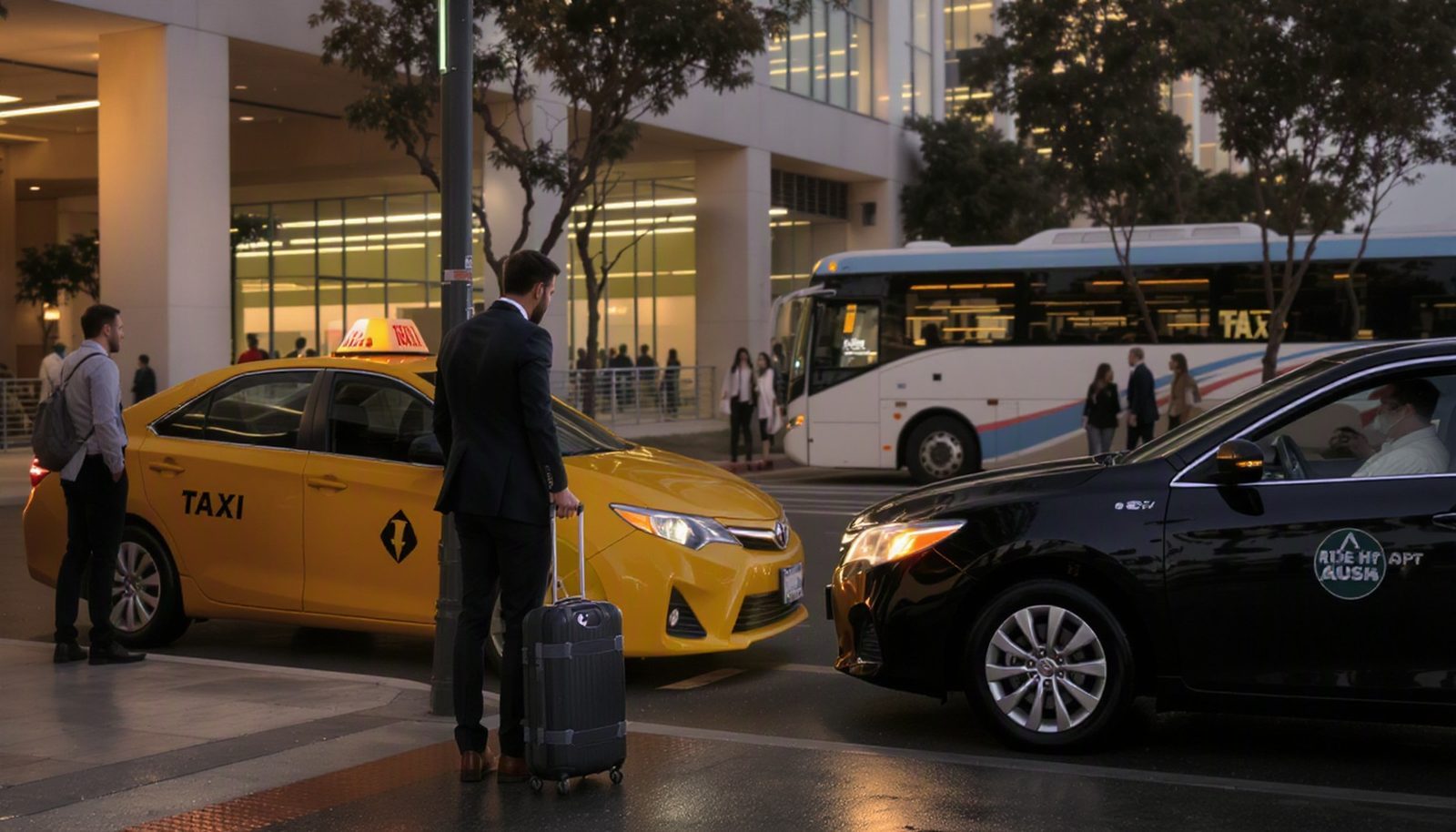
Most companies leak money on ground transportation because their policy is vague, outdated, or impossible to follow. Taxis, black cars, shuttles, Uber, Lyft, local apps, hotel shuttles – they all quietly pile into your business travel ground transport costs. If you don’t spell out when to use what, your travelers will make their own rules.
This guide walks through how to design a cost effective corporate transport policy that balances cost, safety, and traveler sanity – and doesn’t fall apart the first time someone lands late at LAX.
1. Start With the Real Question: What Are You Optimizing For?
Before you debate taxi vs Uber vs shuttle, pause and ask: What is our ground-transport policy actually trying to optimize?
Most companies say cost
. In reality, a good corporate ground transportation policy is juggling at least four competing goals:
- Cost control – predictable, auditable spend, not just the cheapest ride on the screen.
- Duty of care – knowing where people are and that they’re reasonably safe.
- Productivity – not burning an hour to save $8.
- Compliance – rules simple enough that people actually follow them.
If you don’t rank these, your ground transport rules in your travel policy will be a mess. So write it down. For example:
- Priority 1: Safety and duty of care.
- Priority 2: Total trip cost (not just per-ride price).
- Priority 3: Traveler time and experience.
Once your priorities are clear, every decision – taxi vs rideshare, shuttle vs car service – becomes easier to justify, easier to explain, and easier to enforce.
2. Map the Real World: How Your People Actually Move
Policies fail when they’re written for an imaginary traveler. To avoid the usual mistakes in corporate ground transport policies, start with reality, not theory.
Here’s how to map what’s really happening:
- Pull expense data for the last 6–12 months: taxis, Uber, Lyft, car services, shuttles, parking, mileage.
- Segment by city and trip type: airport runs, hotel–office, client dinners, late-night returns.
- Talk to frequent travelers: ask when they choose Uber vs taxi vs shuttle and why.
- Ask finance and legal: where do they see risk, confusion, or abuse?
Patterns usually jump out fast:
- Executives using black cars where a standard rideshare would be fine.
- Teams defaulting to Uber even when a free hotel shuttle exists.
- Late-night arrivals where taxis are safer or more regulated than rideshares.
Only after you see these patterns does it make sense to write company guidelines for Uber, Lyft, and taxis. Otherwise, you’re guessing – and paying for it.
3. Cost vs Convenience: When Each Mode Should Win
Now to the practical part. A smart corporate ground transportation policy doesn’t pick a single winner. Instead, it defines default modes by scenario and lets travelers deviate when it’s clearly justified.
Think in use cases, not brands:
- Airport to hotel/office (standard hours)
Default: Rideshare or taxi, whichever is cheaper and reasonably safe.
Why: Predictable, quick, easy to expense. Tools like RideGuru (mentioned in the State of California guidance at this link) can help compare fares in advance and support a clear taxi vs ride hailing cost comparison. - Airport to hotel/office (late night, high-risk areas)
Default: Regulated taxi or vetted car service.
Why: As one legal analysis points out, taxis often have stricter background checks and clearer accountability than rideshares. In some cities, that matters more than saving $5. - Short hops in-city (meetings, client visits)
Default: Rideshare, public transit, or walking, depending on distance and safety.
Why: Flexibility and speed. You can still control business travel transportation cost by capping per-ride spend or requiring transit when it’s clearly faster and safe. - Group travel (3+ people)
Default: Shared rides, van services, or pre-booked shuttles.
Why: Per-person cost drops quickly, and it’s easier to track everyone. - Known shuttle routes (airport–hotel, campus–office)
Default: Shuttle first, then rideshare/taxi if the shuttle is unavailable or unsafe.
Why: You’re already paying for the shuttle, directly or indirectly, so it should be the first choice in any corporate shuttle vs taxi vs ride hailing decision.
Notice the pattern: you’re not saying always Uber
or never taxi
. You’re saying, For this scenario, this is the default – and here’s when you can deviate.
That’s how you optimize taxi and ride hailing spend without making travelers miserable.
4. Safety and Liability: Taxis vs Rideshare vs Your Duty of Care
Cost is easy to measure. Liability isn’t. But it’s where you can get badly burned if your corporate travel taxi reimbursement rules and rideshare guidelines ignore risk.
Here’s the uncomfortable reality:
- Taxis are usually more heavily regulated. Many cities require fingerprint-based background checks, in-person interviews, and more extensive history checks. That can reduce the chance of serious offenders slipping through.
- Rideshares (Uber, Lyft, etc.) rely on third-party background checks, often limited to seven years. They offer great tracking and ratings, but corporate oversight and legal accountability can be weaker.
- After an incident, it can be legally simpler to pursue a regulated taxi company than a rideshare platform that classifies drivers as independent contractors.
So how do you turn this into policy that stands up when something goes wrong?
- Do a formal risk review with legal and HR before you officially endorse rideshares in your program (as suggested in corporate travel guidance like this analysis).
- Define higher-safety defaults for late-night travel, high-risk cities, and solo travelers in unfamiliar regions.
- Standardize safety steps for rideshares: verify car make/model and plate, confirm driver name, sit in the back seat, and cancel if anything feels off.
- Clarify reporting: who employees contact internally after an incident, and how you’ll support them.
Your duty of care isn’t about picking the safest
mode on paper. It’s about showing you’ve thought through the trade-offs and given employees clear, realistic guidance they can follow at 11 p.m. in a crowded arrivals hall.
5. Money Talks: Direct Billing, Caps, and Expense Rules
Now to the part finance actually cares about: how the money moves, how you control business travel ground transport costs, and how you keep the admin overhead sane.
There are three levers that make a big difference:
1. Direct billing where it makes sense
Programs like Uber for Business (used in the California Statewide Travel Program) let you bill rides directly to the company or agency. That means:
- No personal card float for employees.
- Cleaner data for analysis and duty of care.
- Less manual expense reporting.
But you still need guardrails. For example:
- Direct billing allowed only for business profiles in approved cities.
- Personal tips charged to the traveler’s own card, with clear reimbursement rules.
2. Price caps by city and scenario
Instead of a single global cap, set contextual limits using benchmarking data (ADR, typical airport transfer costs, etc.). This is where your business travel transportation cost breakdown becomes useful:
- Max $X for airport–hotel in City A, $Y in City B.
- Higher caps for late-night or high-risk areas where safer options cost more.
These caps need to be realistic. If they’re too low, people will go off-policy or waste time hunting for a cheaper ride that doesn’t exist.
3. Simple, non-negotiable expense rules
- Receipts required above a certain threshold.
- No luxury upgrades (e.g., Uber Black) unless pre-approved or for specific roles.
- No personal detours on the company dime – clearly define what’s business vs personal.
- Bleisure clarity: the company covers the business-equivalent route; the employee covers any extra distance or days.
The trick is to keep these rules short enough that people remember them, and to embed them directly into your booking and expense tools so they’re enforced automatically, not argued about later.
6. One Source of Truth: Tools, Tracking, and Compliance
If travelers can book anything, anywhere, with any app, your policy is a suggestion, not a control. To make your cost effective corporate transport policy stick, you need a single source of truth.
Mandate a primary booking and expense channel. That might be a travel management platform, a corporate card with integrated expense, or a combination. The key is:
- All flights and hotels go through one system.
- Ground transport is either booked in that system or linked via approved business profiles (e.g., Uber for Business).
- Data flows into a single dashboard for finance, HR, and security.
Why this matters:
- Visibility: you can see who is where, and what you’re spending, in near real time.
- Negotiation power: consolidated data helps you negotiate better rates with car services, shuttle providers, or even rideshare programs.
- Compliance by design: the system can nudge travelers toward compliant options and flag out-of-policy rides automatically.
And don’t underestimate communication. A simple one-page ground-transport cheat sheet goes a long way. It should answer:
- What do I use from the airport?
- Can I use Uber/Lyft here?
- What’s the max I can spend?
- What if I arrive late at night?
If your travelers can’t answer those in 30 seconds, your policy is either too complex or too hard to find.
7. Tiered Rules: Executives, High-Risk Trips, and Edge Cases
Not all travelers – or trips – are equal. Pretending they are usually backfires and creates quiet exceptions that never make it into the official corporate ground transportation policy.
A better approach is a simple tiered structure:
- Standard travelers
Use the default modes and caps. Rideshare or taxi for airport runs, shuttles where available, no premium car classes without approval. - Executives / VIPs
Slightly higher caps, access to car services for key client meetings or high-profile events, but still within defined limits. The goal isn’t luxury for its own sake; it’s risk management and time efficiency. - High-risk destinations
Pre-arranged car services, vetted drivers, or secure shuttles. In some markets, rideshares may be banned or strongly discouraged. - Travelers with specific needs
Clear guidance on ADA-accessible options, airport pickup zones, and who to contact for support.
The key is transparency. If executives get more flexibility, explain why: higher security risk, tighter schedules, client expectations. People accept differences when they’re honest and visible, not when they’re hidden.
8. Turning Policy Into Behavior: Make It Hard to Do the Wrong Thing
Writing a smart policy is the easy part. Getting people to follow it – especially when they’re tired, jet-lagged, and standing in a taxi queue – is the real work.
Here’s how to make your ground transport rules in your travel policy actually show up in day-to-day behavior:
- Embed rules into tools: caps, preferred modes, and approved vendors built into your booking and expense systems.
- Use soft blocks and warnings: flag out-of-policy rides at booking time, not three weeks later in an expense audit.
- Train managers: they approve trips and set the tone. If they ignore the policy, everyone else will too.
- Review quarterly: look at data – where are people going off-policy, and why? Sometimes the policy is wrong, not the traveler.
- Tell stories: share anonymized examples of good decisions (and expensive mistakes). People remember stories more than rules.
In the end, a cost-effective ground-transport policy isn’t about declaring taxis the winner over rideshare, or the other way around. It’s about making deliberate trade-offs, writing them down clearly, and wiring them into how your company actually travels.
If you can’t answer, in one page, What should I take from the airport, and how much can I spend?
for your travelers, it’s probably time to rewrite your policy – and this time, make it something people can actually use.