I’ve lost count of how many times I’ve stepped off a plane thinking, Nice, I got a cheap ticket
… and then watched my wallet bleed between the gate and the hotel lobby.
If that sounds familiar, this guide is for you. We’re not talking about obvious stuff like the ticket price or the hotel bill. We’re going after the quiet charges that hit you from the moment the wheels touch down until you finally drop your bags in your room.
These are the hidden airport arrival costs most people don’t think about: airport transfer money traps, airport to hotel hidden fees, and all those little extras that sneak in after landing.
Here are nine airport arrival money traps I see all the time – and how I avoid them now.
1. The Invisible Airport & Security Fees You Already Paid
Before you even land, you’ve probably paid a stack of airport and security fees that never looked like fees
at all. They’re buried in your ticket under taxes and charges
or some vague code.
In the U.S., for example, every one-way flight includes a mandatory security fee (often called the September 11 Security Fee). Many airports also add Passenger Facility Charges or airport improvement fees to fund terminals, runways, and infrastructure. On multi-leg trips, these can quietly add up and turn a bargain into a bad deal.
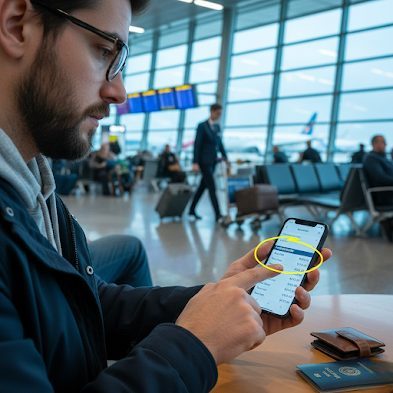
Why does this matter if you’ve already paid?
- Because those fees can make a
cheap
ticket more expensive than a slightly higher fare on another airline. - Because some of them are refundable if you never actually flew.
Here’s how I handle it:
- Always click the fare breakdown when booking. If one airline’s
taxes and fees
are much higher than another’s on the same route, that’s a red flag. - If I cancel or don’t use a nonrefundable ticket, I ask for a refund of the security fees. In the U.S., regulations (like 49 C.F.R. § 1510.9(b)) allow refunds on unused tickets. It’s not automatic; you have to request it.
- On international routes, I compare the total price, not just the base fare. Some airlines hide fuel surcharges and airport fees in the
taxes
line, others don’t.
The takeaway: the cheapest-looking fare isn’t always the cheapest. If you ignore the fee breakdown, you’re playing blind.
2. Baggage Shock at the Carousel
Nothing kills the post-landing mood like being pulled aside at baggage claim because your suitcase is overweight. Or realizing your free
carry-on isn’t actually free on this airline.
Overweight and extra-bag fees are some of the nastiest unexpected costs after landing because they’re often charged at the highest possible rate when you pay at the airport. I’ve seen people pay more in baggage fees than they did for their ticket.
Here’s what I do now, every single trip:
- Check baggage rules before I book, not after. Different airlines, different rules. Some allow a free carry-on, some don’t. Some include a checked bag on international routes, others charge for everything.
- Buy extra allowance online if I know I’ll need it. It’s almost always cheaper than paying at the airport.
- Use a small luggage scale at home. I aim 1–2 kg under the limit to allow for airport shopping or packing mistakes.
- If I’m borderline, I shift heavy items into my personal item (laptop bag, backpack) – many airlines don’t weigh that as strictly.
Ask yourself before you pack: If my bag is overweight, am I willing to pay $50–$150 at the airport?
If the answer is no, adjust at home, not at the check-in counter.
3. Visa-on-Arrival & Immigration Desk Surprises
Visa-on-arrival sounds convenient: land, queue, pay, done. But it’s often the most expensive way to enter a country.
Here’s what many travelers don’t realize:
- Visa-on-arrival can include extra processing or biometric fees that aren’t obvious on tourism websites.
- Some airports only accept cash in local currency, so you’re forced into a bad exchange rate at the airport ATM or currency counter.
- In some countries, the visa-on-arrival price is higher than the e-visa you could have applied for online.
My rule now is simple:
- I always check if there’s an e-visa or pre-arranged visa option and compare the total cost (including bank fees) with visa-on-arrival.
- I read at least one recent traveler report (forums, blogs, or official updates) to see if there are extra airport-only charges.
- If I must do visa-on-arrival, I bring exact or close-to-exact cash in the required currency to avoid bad exchange rates.
Visa-on-arrival isn’t always a trap. But walking up to that counter without knowing the price is like agreeing to a bill without seeing the menu.
4. Airport Food, Coffee & Convenience
Purchases
By the time you land, you’re tired, hungry, and maybe a bit dehydrated. That’s exactly when airports make their money.
Airport food and drinks can easily cost 2–3 times what you’d pay in the city. Add a coffee, a snack, a bottle of water, and a quick meal, and you’ve burned through a surprising chunk of your travel budget before you even leave the terminal.
Here’s how I keep this under control without being miserable:
- Eat before the airport when possible. A proper meal at home or near your departure airport is almost always cheaper.
- Carry a reusable water bottle. Many airports have water fountains or refill stations after security. I refill as soon as I land.
- I pack simple, non-messy snacks (nuts, granola bars, crackers) in my carry-on. Check local rules, but in most places, dry snacks are fine.
- If I know I’ll arrive late at night, I check if my hotel has late-night food options or a nearby 24/7 store. That’s often cheaper than a last-minute airport meal.
Ask yourself: Am I paying for food, or am I paying for being unprepared?
Most of the time, it’s the second one.
5. Duty-Free & Airport Shopping That Isn’t Really Free
Duty-free feels like a reward for surviving the flight. Bright lights, shiny bottles, tax-free
signs everywhere. But tax-free doesn’t mean cheap.
Here’s what I’ve learned the hard way:
- Perfumes, cosmetics, and alcohol are not always cheaper than city prices or online deals.
- Some airports quietly add airport improvement fees and other charges into the overall pricing structure. You don’t see it as a line item, but you feel it.
- Buying heavy items duty-free can push your luggage over the weight limit on your next flight.
My approach now:
- If I’m tempted by something expensive (like a bottle of whisky or a perfume), I quickly check the price on my phone from a major retailer. If the difference is small, I skip it.
- I avoid impulse electronics at airports. Cables, headphones, adapters – they’re almost always overpriced.
- I treat duty-free as a convenience store, not a bargain paradise. If I wouldn’t buy it at home at that price, I don’t buy it there.
Duty-free can be a good deal in specific cases (like certain spirits or local specialties), but only if you know the real-world price. Otherwise, it’s just a very expensive souvenir shop.
6. Ground Transfers: Taxi Lines, Surge Pricing & Fixed
Rates
This is where many travelers lose the most money between the airport and the hotel. You’re tired, maybe jet-lagged, and the taxi line looks like the easiest option. Or you open a ride-hailing app and accept whatever surge price pops up.

Meanwhile, there are usually at least three cheaper options:
- Pre-booked shared shuttles that group passengers going in the same direction. They’re slower but often much cheaper per person.
- Pre-booked private transfers with fixed prices. These can be surprisingly affordable if you’re traveling as a couple or group.
- Public transport (airport trains, buses, metro) that cost a fraction of a taxi.
Here’s how I decide:
- Before I fly, I check three numbers: taxi estimate, ride-hail estimate, and public transport cost. I write them down or save them in my notes.
- If I’m arriving late at night or with a lot of luggage, I often pre-book a transfer with a fixed price and free cancellation. That way I avoid surprise surcharges and long lines.
- For solo travel, I lean toward shared shuttles or public transport. For groups, a private transfer often wins on a per-person basis.
The key is to decide before you land. If you wait until you’re standing in the arrivals hall, you’ll pay for convenience, not value.
7. Shared vs Private Shuttles: Paying in Time or Cash
Airport shuttles sit in that interesting middle ground between taxis and buses. They can be a smart move – or a slow, frustrating one – depending on what you choose.

Here’s the trade-off:
- Shared shuttles are cheaper per person but make multiple stops. You pay in time, not money.
- Private shuttles cost more upfront but take you directly to your hotel. Split between 2–4 people, they can be close to shared-shuttle pricing.
What I look at:
- Arrival time. If I land late at night, I’m less willing to sit through 5–6 stops. I’ll pay more for a direct ride.
- Group size. Two or more people? I always compare the total cost of a private shuttle vs shared. It’s often closer than you’d think.
- Luggage. If I’m carrying a lot, I prefer a private ride so I’m not wrestling bags in and out at every stop.
One more thing: many shuttle companies offer fixed, all-inclusive pricing. That means no meter, no surge, no traffic delay
excuses. I like that predictability, especially in cities known for heavy traffic and extra charges on airport transport.
Ask yourself: Is my time or my cash more valuable on this trip?
Your answer will tell you which shuttle option makes sense.
8. Airport Convenience
Fees: Carts, Printing & Check-In Traps
Once you land, the small charges start stacking up. None of them look huge on their own, but together they can easily equal a decent meal or a night’s accommodation in a budget hotel.
Common culprits:
- Luggage carts that cost a few dollars in airports where they used to be free.
- Boarding pass printing fees if you didn’t check in online or your phone dies.
- Seat selection fees that pop up during online check-in, even after you’ve already paid for your ticket.
Here’s how I avoid most of them:
- I check in online as soon as it opens and download the boarding pass to my phone and wallet app. I also take a screenshot in case the app fails.
- I carry a small power bank so my phone doesn’t die right when I need to show a QR code.
- I only pay for seat selection if it genuinely matters (overnight flight, long-haul, or I need to sit with someone). Otherwise, I let the system assign me a seat for free.
- If I know I’ll need a luggage cart, I factor that into my budget and ask myself if I can pack lighter instead.
These fees are designed to feel too small to fight. But they’re also the easiest to eliminate with a bit of planning.
9. The Just This Once
Mindset That Blows Your Budget
There’s one last trap that doesn’t show up on any receipt: the way we justify spending when we’re tired, stressed, or excited.
It sounds like this:
It’s just one taxi, I’ll figure out cheaper options later.
It’s just one overpriced meal, I’m starving.
It’s just one duty-free splurge, I’m on vacation.
Individually, none of these are a disaster. But stack them together on arrival day and you’ve quietly added $50–$150 to your trip before you even check in. That’s the hidden cost of getting from airport to hotel that most people never track.
Here’s what I do now:
- Before I travel, I set a simple arrival budget for everything from landing to hotel: food, transport, visas, carts, the lot.
- I decide in advance where I’m willing to pay for comfort (maybe a private transfer after a red-eye flight) and where I’m not (airport shopping, random snacks).
- I remind myself that
just this once
is rarely just once. It becomes a pattern unless I call it out.
The goal isn’t to squeeze every cent. It’s to spend deliberately, not reactively.
Final Thoughts: Land Prepared, Not Surprised
Between landing and reaching your hotel, you’re at your most vulnerable as a traveler: tired, overloaded with information, and surrounded by businesses designed to monetize your convenience.
If you remember nothing else, remember this:
- Know your fees before you book – not just the base fare.
- Plan your baggage, visa, and transfers in advance so airport arrival mistakes don’t blow your budget.
- Decide your arrival budget before you step off the plane, including taxis, shuttles, and any late night airport surcharge you might face.
Do that, and those hidden airport arrival costs stop being traps. They become just another part of the trip you’ve already planned for – and that’s when travel starts to feel a lot more under your control.