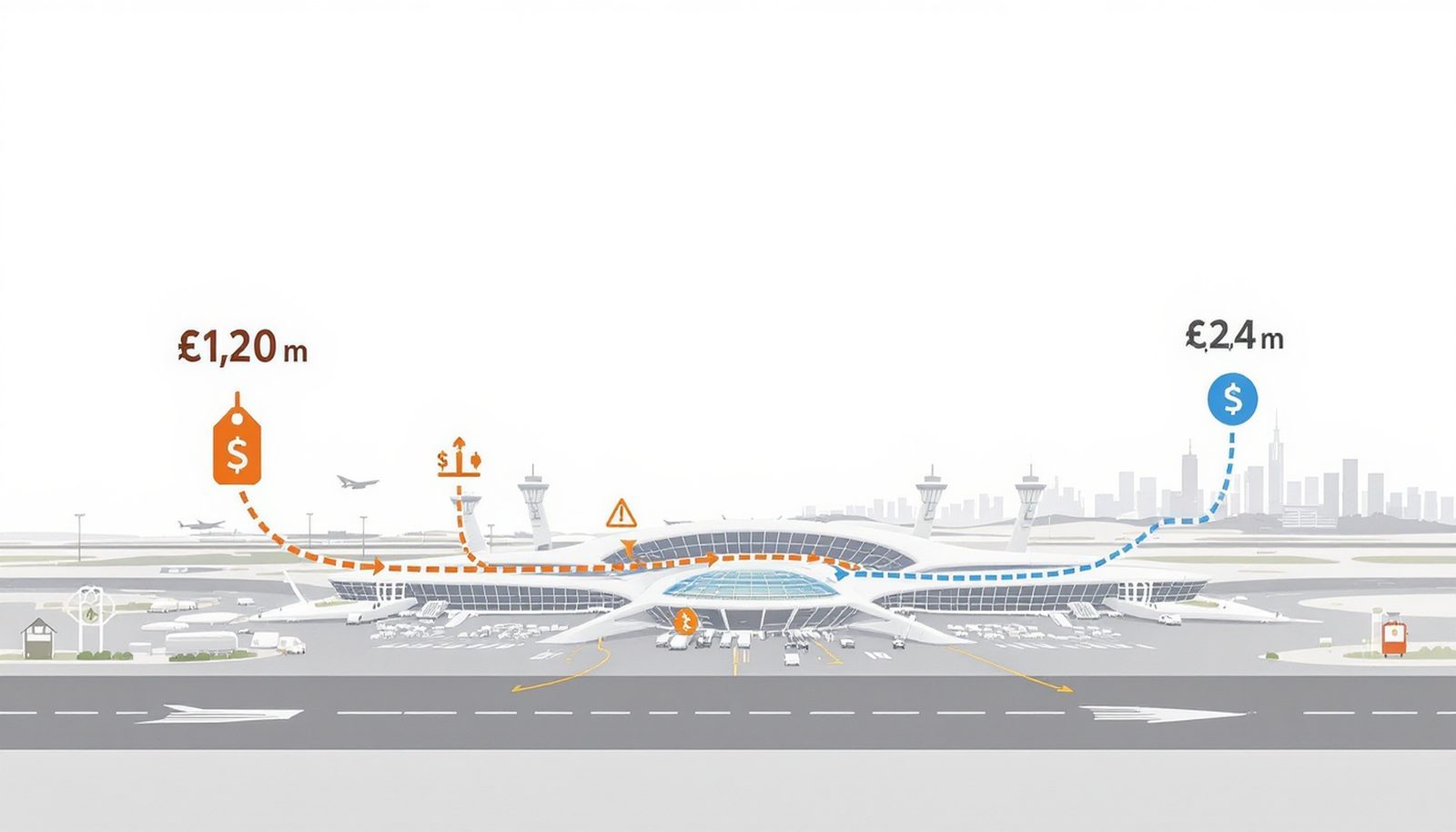
Category Focus: Destination Pricing, Not Distance
This article sits in the Cost Guide category, but its core mechanism is destination pricing. Hidden-city ticketing (often called skiplagging) exists because airlines price by city pair and demand, not by miles flown. Understanding that structure is essential to understanding both the savings and the penalties.
In a hub-and-spoke network, a major hub city (for example, a big airline’s home base) often has very high demand and limited competition on nonstop routes. A short, direct flight into that hub can be priced high because business travelers and time-sensitive passengers will pay for it. Meanwhile, a longer itinerary that connects through that same hub on the way to a less popular city may be cheaper, because the airline is trying to stimulate demand on the full city pair.
Hidden-city ticketing exploits this gap. Instead of buying an expensive nonstop to the hub, a traveler buys a cheaper ticket to a farther destination that connects through the hub, then gets off at the connection and skips the final leg. The price distortion is not about distance; it is about how the airline’s revenue management system values each origin–destination pair.
From the airline’s perspective, the ticket is a contract to fly all segments in sequence. From the traveler’s perspective, the ticket is a way to reach a specific airport at the lowest available cost. The conflict between these two interpretations drives the entire debate around hidden-city pricing.
How Hidden-City Pricing Distortions Arise
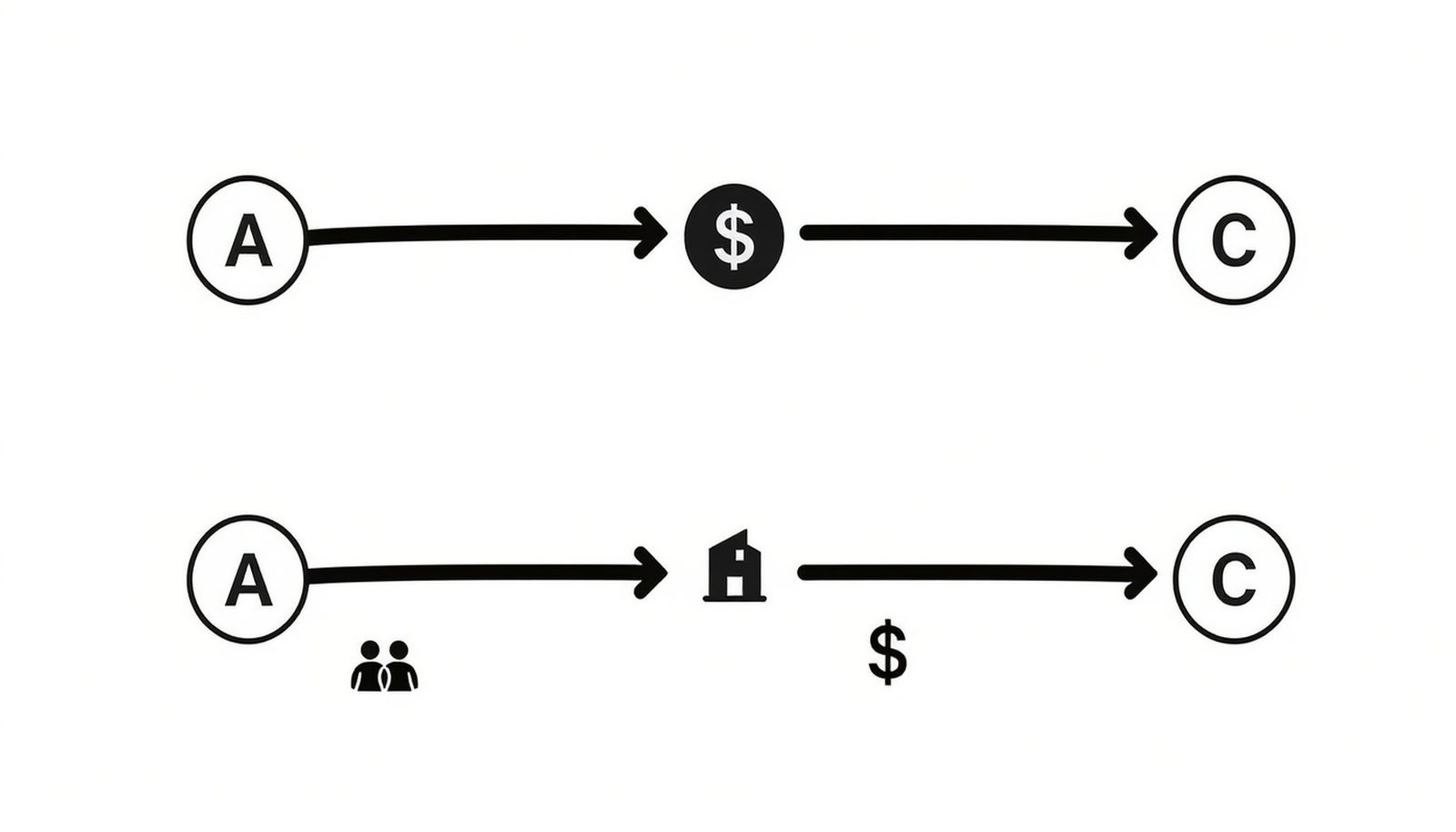
To see why hidden-city opportunities appear, it helps to unpack the logic of airline pricing and network design. Airlines do not price each leg separately; they price origin–destination (O&D) markets. A seat from City A to City C via hub B is not just A–B plus B–C; it is a single A–C product in the pricing system.
Hub-and-spoke networks and demand-based pricing
In a hub-and-spoke system, the hub airport is where many routes converge. That hub often has:
- High local demand (business centers, major population areas).
- Strong loyalty capture (frequent-flyer bases, corporate contracts).
- Limited nonstop competition on some routes.
Revenue management systems use historical data, booking curves, and competitive information to set fares. They may keep fares to the hub high because they know a certain share of travelers will pay. At the same time, they may discount connecting itineraries that pass through the hub to stimulate traffic to smaller cities.
This creates a structural pattern:
- Nonstop A–B (to the hub) can be expensive.
- Connecting A–B–C (through the hub to a smaller city) can be cheaper, even though it uses more flying and more resources.
Hidden-city ticketing is simply choosing the A–B–C ticket and exiting at B.
Why the distortion persists
Airlines could, in theory, raise the price of A–B–C whenever A–B is expensive. But that would make them uncompetitive in the A–C market against other carriers or routings. The pricing system is constantly balancing:
- Yield on high-demand hubs (keep prices high where possible).
- Stimulation of low-demand endpoints (discount to fill seats).
- Competitive pressure (match or beat rivals on key city pairs).
Hidden-city opportunities are a side effect of this balancing act. Eliminating them entirely would require either flattening prices (which would sacrifice revenue) or tightly policing passenger behavior (which is costly and unpopular). Instead, airlines rely on contractual rules and selective enforcement to discourage the practice while keeping their pricing flexibility.
Structural Constraints: When Hidden-City Tactics Break
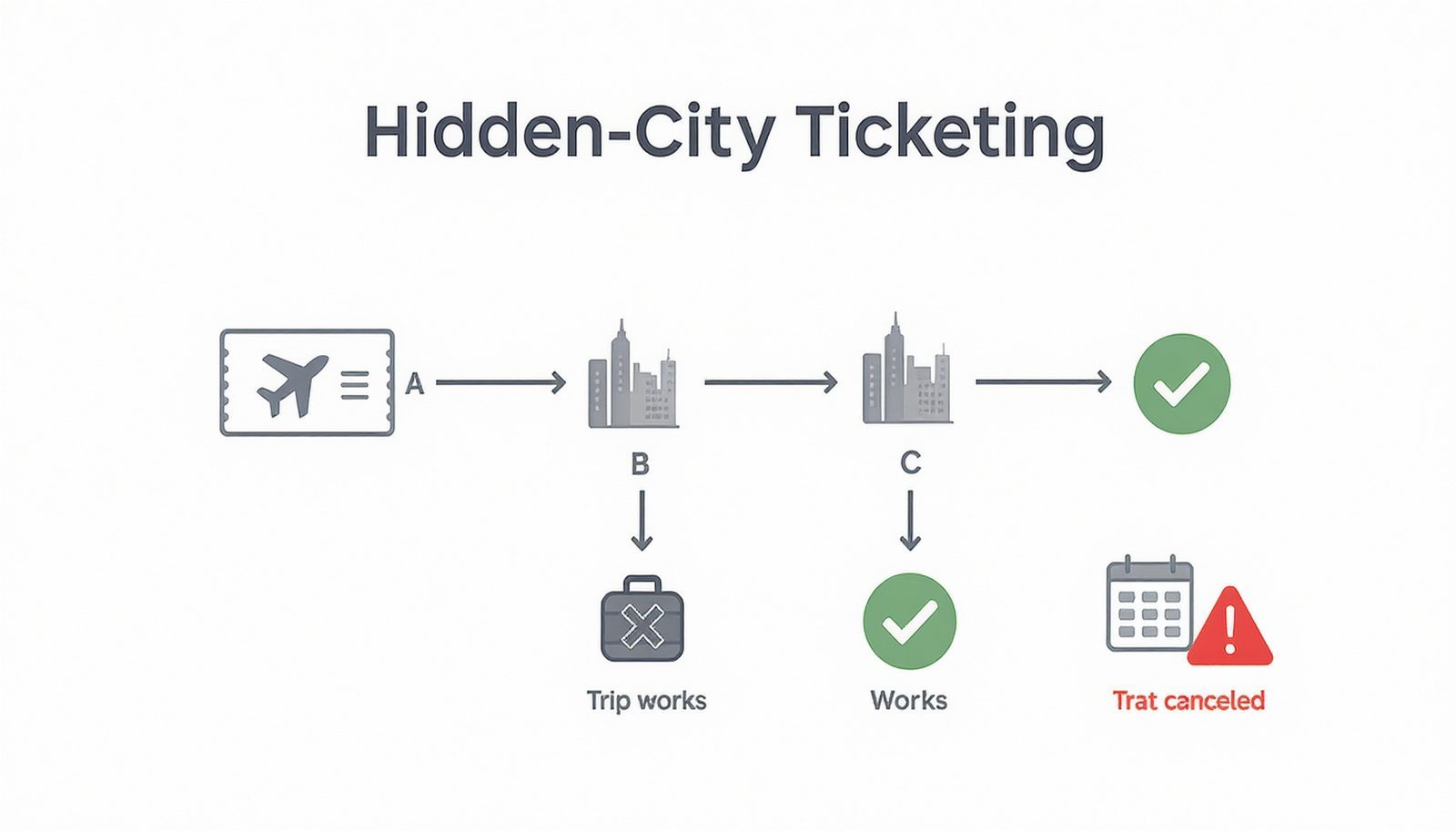
Hidden-city ticketing is not a general-purpose cheap flight strategy. It only works under narrow structural conditions built into airline operations and contracts. These constraints arise directly from how tickets, baggage, and schedules are managed.
Ticket structure and automatic cancellations
Airline reservation systems assume that each segment on a ticket will be flown in order. If a passenger fails to board a segment, the system typically marks them as a no-show and automatically cancels all remaining segments on that ticket.
This has several implications:
- Round-trip hidden-city use is fragile. If the skipped segment is on the outbound, the return flight on the same ticket is usually canceled automatically.
- Multi-city or nested itineraries are even more exposed. Skipping one leg can cascade into cancellations of later legs that depend on the same ticket record.
- Reinstating canceled segments is discretionary. Agents can sometimes restore flights, but doing so may require explanations that reveal the hidden-city intent.
Mechanistically, the system is designed to protect inventory and prevent misuse of partially flown tickets. Hidden-city behavior collides directly with that logic.
Baggage routing and the carry-on-only constraint
Checked baggage is tagged to the ticketed final destination, not the layover city. Baggage systems are optimized to move bags automatically through connections without passenger intervention. This means:
- On a hidden-city itinerary, checked bags will continue to the final city, not stop at the intended hidden city.
- Agents are often instructed not to short-check bags to a connection point unless there is a legitimate operational reason (such as an overnight layover).
- Even if a bag is short-checked, irregular operations (like rebooking onto a different connection) can re-route it.
As a result, hidden-city use is structurally limited to carry-on-only travel. Any situation that forces a gate-check (for example, a full overhead bin on a small aircraft) can undermine the plan by sending the bag to the ticketed destination.
Operational disruptions and re-routing
Airline operations are dynamic. Weather, crew availability, and air traffic control can trigger schedule changes and re-routings. When that happens, the airline’s goal is to move the passenger to the ticketed final destination, not to preserve a specific connection point.
In practice, this means:
- A flight that was supposed to connect through the hidden city may be rebooked to connect through a different hub.
- Nonstop alternatives may be offered that bypass the hidden city entirely.
- Passengers have limited leverage to insist on a specific connection point without disclosing their true intent.
The mechanism is straightforward: rebooking tools search for the most efficient way to get the passenger to the final destination, subject to availability and airline policy. The hidden city is just an intermediate node in that system, so it is not protected.
Cost Distortions vs. Risk: A Structured Comparison
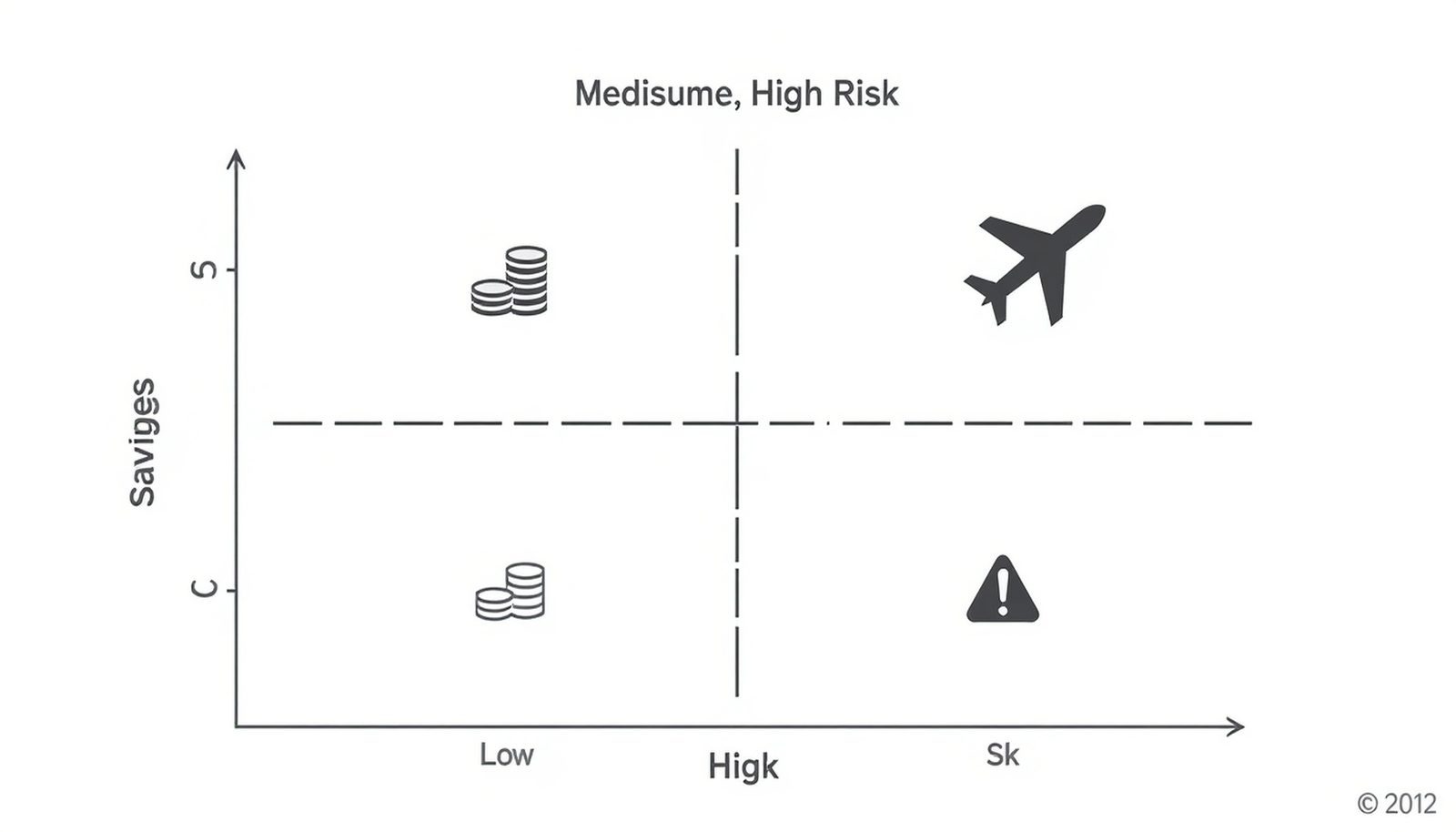
Hidden-city ticketing is often framed as a way to “save hundreds of dollars.” That can be true in individual cases, but the economic reality is a trade-off between price distortions and layered risks. Because there is no reliable public data on average savings or enforcement rates, the comparison has to be qualitative rather than numerical.
How the savings arise
Typical hidden-city savings appear in situations where:
- The destination is a major hub with high nonstop fares.
- There is strong competition on longer connecting routes that pass through that hub.
- The booking is relatively close to departure, when nonstop fares have risen but some connecting inventory remains discounted.
In those cases, the hidden-city itinerary can undercut the nonstop by a significant margin. However, the savings are one-time and situational, not guaranteed. They depend on the specific fare structure at the time of booking.
Risk-adjusted alternatives
Other legal strategies can sometimes capture part of the same pricing logic with less structural risk. These include:
- Booking separate one-way tickets on different carriers.
- Using nearby airports that are less constrained or more competitive.
- Adjusting travel dates or times to hit lower fare buckets.
These alternatives do not exploit hidden-city distortions directly, but they operate within the same demand-based pricing system. The trade-off is usually lower savings but also lower exposure to penalties and disruptions.
Comparing hidden-city vs. conventional strategies
| Dimension | Hidden-City Ticketing | Conventional Cost Strategies |
| Fare level (in best cases) | Can be significantly lower than nonstop to hub | Moderate savings via flexibility and competition |
| Ticket structure | One-way or one-direction on a multi-leg ticket; skipping final leg | Standard round-trips, one-ways, or multi-city within rules |
| Risk of cancellation | High if any skipped segment; return legs on same ticket at risk | Low; no segments intentionally skipped |
| Baggage handling | Carry-on only; checked bags go to ticketed destination | Checked bags handled normally to actual destination |
| Exposure to penalties | Possible fare recalculation, loyalty account action | None beyond standard change/cancel fees |
| Suitability for complex trips | Poor; complexity multiplies risk | Good; designed for multi-leg, round-trip, and family travel |
| Dependence on smooth operations | Very high; disruptions can remove hidden city | Moderate; disruptions usually re-protect to same destination |
The key mechanism behind the risk difference is that conventional strategies work with the assumptions of airline systems, while hidden-city tactics work against them. The more complex the trip, the more those system assumptions matter.
Contracts, Enforcement, and Loyalty Penalties
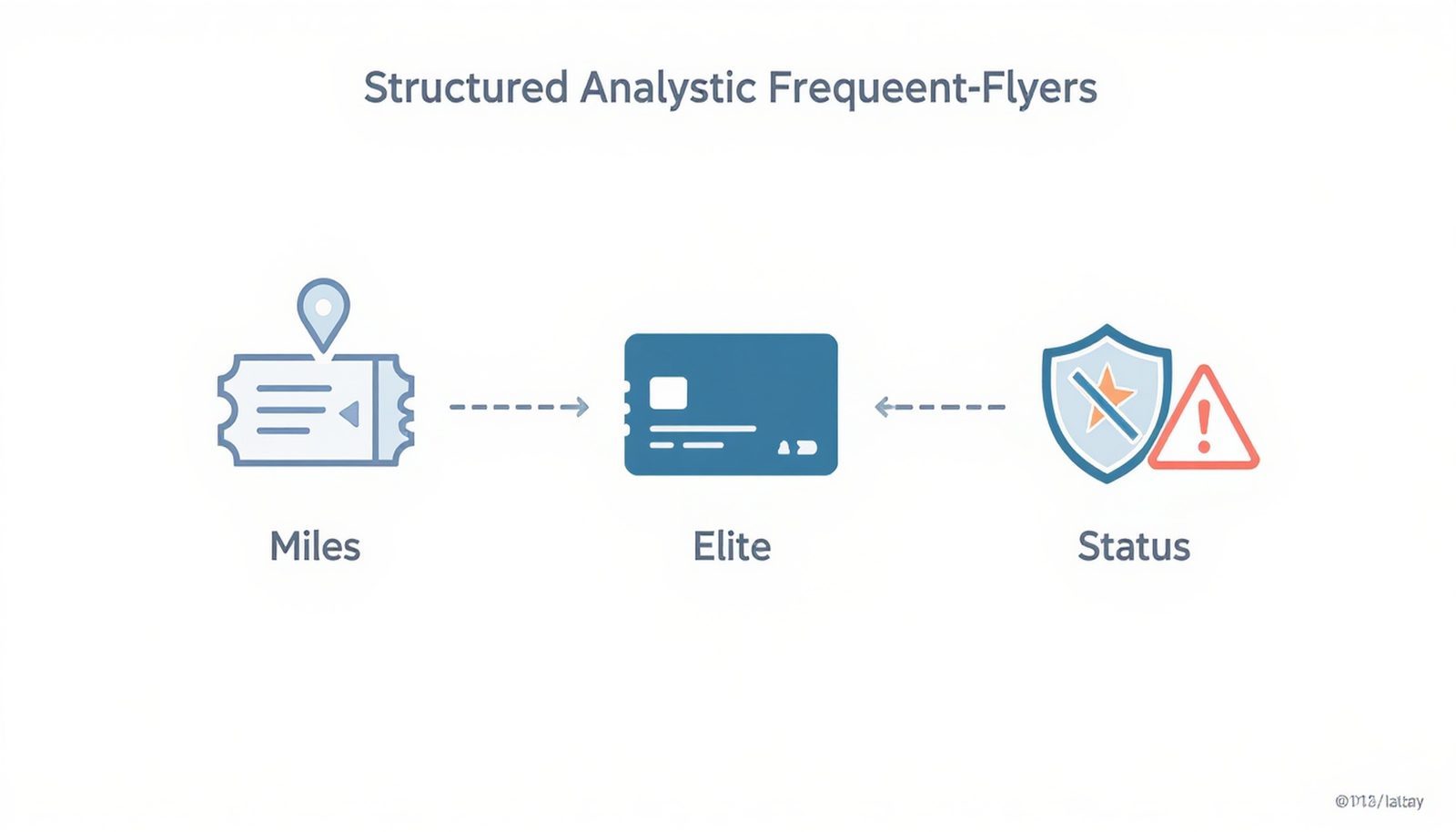
Hidden-city ticketing is generally a contractual issue, not a criminal one. The airline’s contract of carriage typically states that tickets are valid only when all segments are flown in order and that deliberate misuse can trigger consequences.
How contracts frame hidden-city behavior
Contracts of carriage often include clauses that:
- Prohibit “throwaway” or “hidden-city” ticketing explicitly or implicitly.
- Reserve the right to recalculate the fare based on the actual flown routing.
- Allow the airline to cancel remaining segments if a passenger no-shows a leg.
From a mechanism standpoint, these clauses give the airline a legal basis to treat hidden-city use as a breach of the agreed pricing structure. The airline sold a discounted A–C product; the passenger used it as an A–B product.
Enforcement tools and patterns
While public data on enforcement frequency is limited, the tools available to airlines are relatively clear:
- Fare recalculation: Charging the difference between the hidden-city fare and the appropriate fare for the flown segments.
- Ticket cancellation: Voiding remaining flights on the same ticket after a no-show.
- Loyalty penalties: Confiscating miles, revoking elite status, or closing frequent-flyer accounts for repeated patterns.
Detection mechanisms can include:
- Pattern analysis of frequent-flyer accounts that repeatedly end trips at the same hub.
- Review of bookings that consistently no-show final segments.
- Manual investigations triggered by extreme or publicized cases.
Because enforcement is resource-intensive and can generate negative publicity, it tends to be selective rather than universal. However, the existence of these tools means that the expected cost of hidden-city use is not just the ticket price; it also includes the potential loss of accumulated loyalty value.
Legal and ethical debate
The legal debate centers on whether it is fair or enforceable for airlines to restrict how passengers use a seat they have paid for. Courts have generally upheld airlines’ contractual rights, especially when the dispute involves intermediaries that facilitate hidden-city searches. At the same time, public opinion often views the underlying pricing as opaque or unfair.
Ethically, the tension is between:
- Consumer rationality: Using available information to minimize costs within the rules of the booking system.
- Airline system integrity: Maintaining a pricing architecture that depends on passengers honoring the full itinerary.
This tension is unlikely to disappear as long as hub-and-spoke pricing remains complex and non-transparent. Hidden-city ticketing is a symptom of that complexity, not its cause.
International Dimensions: Visas, Entry Rules, and Onward Travel
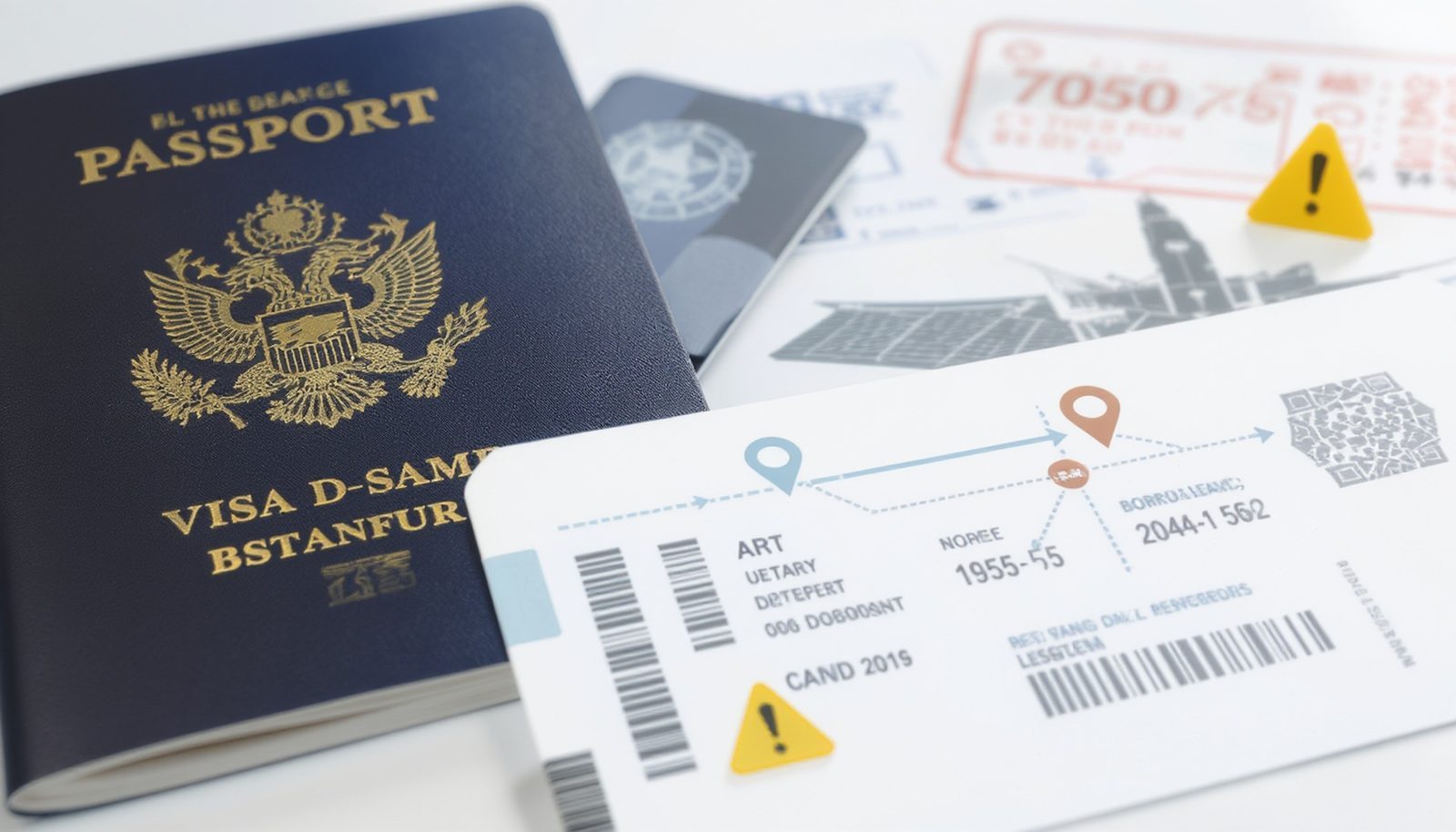
Hidden-city tactics become more complex and riskier when international borders are involved. The key difference is that immigration and airline check-in agents enforce entry rules based on the ticketed itinerary, not the traveler’s hidden plan.
Onward travel and proof of exit
Some countries require proof of onward travel or return tickets as a condition of entry. Airlines are often held responsible if they transport passengers who are later denied entry, so they enforce these requirements at check-in.
In a hidden-city scenario:
- The ticket may show a final destination in a different country than the intended stop.
- Border authorities may expect the traveler to continue to that final destination or to have appropriate visas.
- Airline agents may deny boarding if the traveler lacks documentation for the ticketed final destination.
The mechanism here is liability: airlines can be fined or required to repatriate passengers who do not meet entry requirements. As a result, they err on the side of strict enforcement of the ticketed itinerary.
Visa implications
Visa regimes are built around the country of entry and the country of final destination. If the ticketed final destination requires a visa that the traveler does not hold, several outcomes are possible:
- Check-in agents may refuse to issue a boarding pass.
- Transit rules may not apply if the itinerary suggests a longer stay or a different final country.
- Even if the traveler intends to exit at the hidden city, the system treats them as bound for the final destination.
Because there is limited public data on how often such scenarios occur, the risk is hard to quantify. But structurally, the risk is higher whenever the hidden city and the ticketed final destination are in different visa regimes or when onward travel requirements are strict.
Risk and Uncertainty: Where the Strategy Can Backfire
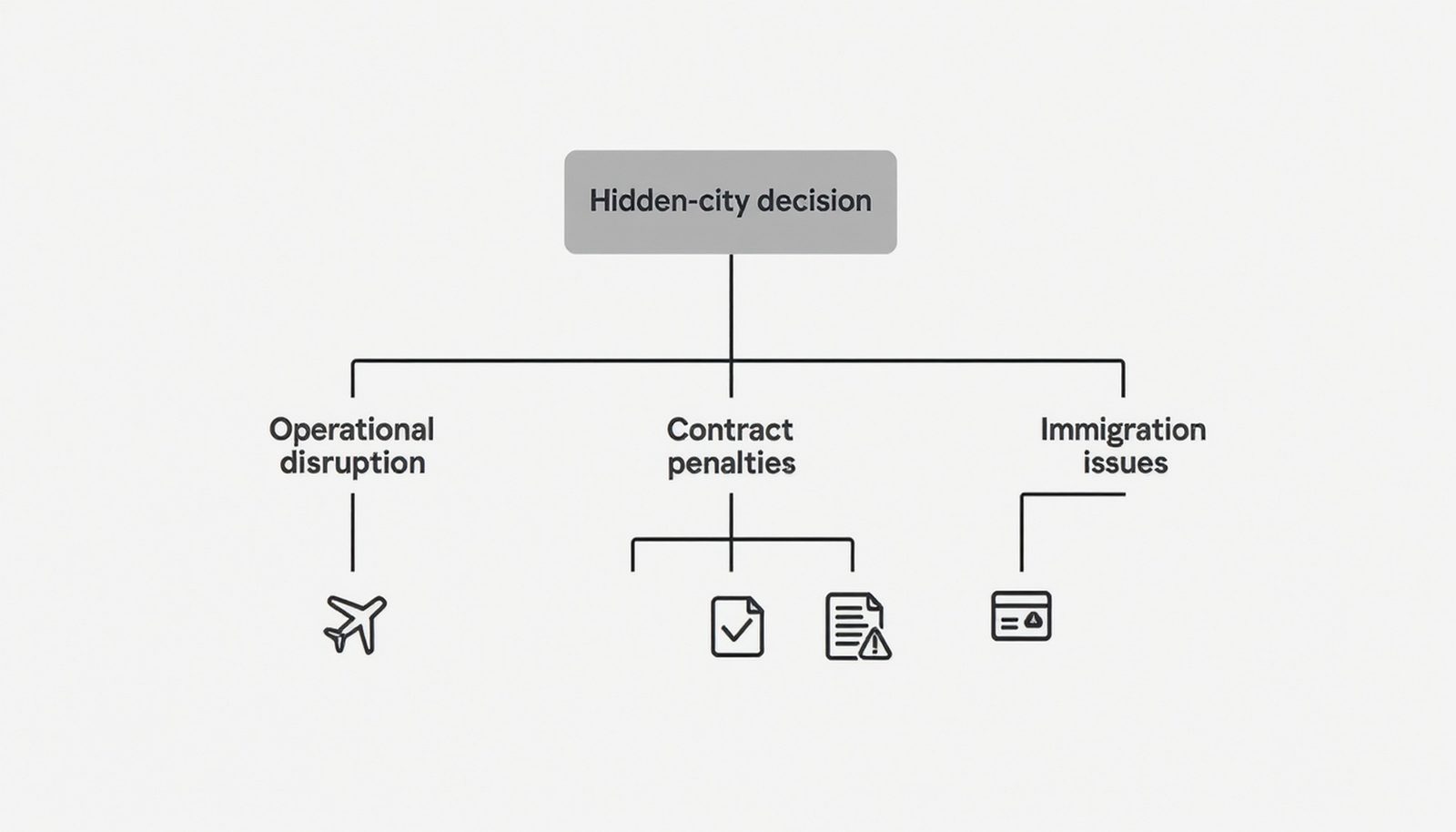
Hidden-city ticketing sits in a zone of high uncertainty. The potential savings are visible at booking, but the full distribution of risks is not. Several layers of uncertainty interact:
Operational uncertainty
Weather, mechanical issues, crew scheduling, and air traffic control can all disrupt flights. For a conventional itinerary, these disruptions are inconvenient but usually manageable: the airline rebooks the passenger to the same destination.
For a hidden-city itinerary, the same disruptions can:
- Remove the hidden city from the routing entirely.
- Force an overnight in a different hub.
- Trigger rebookings that make it difficult to exit at the intended city without explanation.
The probability of disruption on any given trip may be modest, but the impact on a hidden-city plan is disproportionately large because the plan depends on a specific connection point.
Enforcement uncertainty
There is limited transparency about how often airlines pursue penalties against individual travelers. Enforcement appears uneven across carriers and regions, and it may depend on factors such as:
- Frequency and pattern of hidden-city use.
- Visibility of the case (for example, media coverage).
- Internal policies and tolerance levels at specific airlines.
This uncertainty makes it difficult to calculate a precise expected cost. A traveler might use hidden-city tactics several times without incident, then face a significant penalty on a later trip. The lack of clear thresholds is itself a deterrent for risk-averse travelers.
Loyalty value at risk
For frequent travelers, the value of a loyalty account can be substantial: accumulated miles, elite benefits, and upgrade instruments. Hidden-city enforcement that targets loyalty accounts effectively puts that value at risk.
Mechanistically, this risk is asymmetric:
- The upside of a hidden-city ticket is limited to the fare difference on a specific trip.
- The downside can include the loss of a large, accumulated loyalty balance.
This asymmetry is central to the decision calculus. Even without precise probabilities, the potential loss of long-term benefits can outweigh short-term savings, especially for travelers who rely on status for work or frequent travel.
Balanced Conclusion: Hidden-City Ticketing as a Pricing Symptom
Hidden-city ticketing exists because airline pricing is built around city-pair demand, competition, and network optimization, not simple distance. That structure inevitably produces cases where a longer connecting itinerary is cheaper than a shorter nonstop to a hub. Hidden-city tactics are a way of exploiting that distortion.
At the same time, the entire airline system—from contracts of carriage to baggage routing and disruption management—is designed on the assumption that passengers will fly all segments in order. Hidden-city behavior runs counter to those assumptions, which is why it triggers automatic cancellations, baggage constraints, and potential contractual penalties.
From a cost perspective, hidden-city ticketing can deliver meaningful savings in specific scenarios, particularly for one-way, domestic, carry-on-only trips into major hubs. But those savings are tightly coupled to structural risks: operational disruptions that remove the hidden city, enforcement actions that target loyalty accounts, and, in international cases, visa and entry complications.
Because there is little public data on enforcement frequency or average savings, the decision to use hidden-city tactics is ultimately a judgment about risk tolerance rather than a straightforward money-saving rule. The mechanism is clear: the traveler trades system compatibility and contractual safety for price arbitrage. Whether that trade is acceptable depends less on the headline fare difference and more on the traveler’s exposure to loyalty loss, disruption costs, and international rules.
In that sense, hidden-city ticketing is best understood not as a travel hack, but as a visible symptom of deeper pricing distortions in hub-and-spoke networks. The distortions are real, but so are the structural constraints that keep them from being a simple, low-risk path to cheaper flights.