I used to brag about my “$79 flight to Europe.” Friends were impressed. I was smug. Then I added up what I actually spent.
Airport transfers. Overpriced airport food. An extra hotel night I hadn’t planned on. Lost work hours. By the time I did the math, that $79 miracle fare was closer to $400… and I hadn’t even reached my destination.
If you’ve ever chased a cheap flight and later wondered where all your money went, this is for you. Let’s walk through the hidden costs of cheap flights that quietly turn deals
into duds — and how to spot the true cost of budget flights before you hit “book.”
1. The Transfer Trap: How You Get to the Airport (and Between Airports)
When I look at flights now, I don’t start with the ticket price. I start with a different question: How annoying and expensive is it to get to and from this airport?
That’s where the hidden costs of cheap flights usually begin.
Here’s what I check every time:
- Distance vs. savings: That ultra-cheap fare from a secondary airport can be a mirage. If the airport is 60–90 minutes away, you’re paying in cash and time. A “cheap” ticket can easily lose to a closer, slightly pricier airport once you factor in the full total trip cost vs flight ticket price.
- Real transfer cost: I add up trains, buses, rideshares, tolls, parking, and luggage surcharges. A $40 cheaper ticket can disappear in a single Uber ride. This is where airport transfer costs for cheap flights quietly eat your savings.
- Airport change risk: In cities like London, New York, or Paris, some “great” itineraries hide an airport change in the fine print. Cheap on paper, brutal in reality when you’re dragging bags across town between terminals.
What airfare data rarely shows: transfers are getting more expensive. Hotels, rental cars, and restaurant prices have jumped over the last decade, and local transport usually follows. So even if base airfares haven’t exploded, the door-to-door cost of flying often has.
How I sanity-check a “deal” now:
- Price out round-trip transfers for each airport option, both at home and at your destination.
- Compare:
Ticket + transfers from Airport A
vs.Ticket + transfers from Airport B
. - Ask:
Would I pay this much extra to save an hour of hassle?
Sometimes the answer is yes. Often it’s not.
If the total cost difference is under $40–$60 but one option saves me a lot of time and stress, I usually pay more for the better airport, not the cheaper ticket. That’s the real cost guide for airport transfers and layovers most people skip.
2. The Layover Illusion: Cheap Fares That Steal Your Time
Airlines know exactly what they’re doing when they dangle a rock-bottom fare with a 6–10 hour layover. On paper, it looks like a win. In real life, you’re paying with the only currency you can’t get back: time.
Dynamic pricing and yield management are designed to make these awkward itineraries look irresistible. You see a $150 difference and feel clever. The airline sees a way to sell an otherwise undesirable seat.
To avoid classic cheap flight deal mistakes, I ask myself whether the time cost of long layovers is worth the savings.
Here’s how I decide if a layover is actually a deal:
- Put a value on your time: I literally assign myself an hourly rate. Even a modest $20–$30 per hour changes the math fast.
- Calculate “time cost”: If a connection adds 7 hours to my journey, that’s $140–$210 of my time. Suddenly that “cheaper” ticket doesn’t look so cheap.
- Factor in fatigue: Long layovers mean worse sleep, more jet lag, and a sluggish first day. That can cost you a vacation day or a productive workday.
There’s also risk. Tight connections can mean missed flights and surprise hotel nights. Long ones tempt you to leave the airport, which adds transport, food, and sometimes visa costs. When you compare cheap flights vs direct flights, those extra hours and risks matter.
When I’ll actually take the layover:
- It’s at least 2.5–3 hours (for safety) but under 6 hours (for sanity).
- The airport is reasonably comfortable and not notorious for chaos.
- The savings are real after I factor in time, food, and potential delays.
Otherwise, I treat long layovers as what they really are: a hidden surcharge on my time.
3. Airport Food, Coffee, and “Just This Once” Spending
Airport food is where cheap flights quietly bleed out.
Base airfares may not have climbed as much as they feel — some analyses even show inflation-adjusted prices lower than a decade ago. But everything around the flight has crept up: restaurant meals, snacks, drinks. You feel it most when you’re stuck in a terminal with limited options.
On a long travel day, here’s what I often see people (including past-me) spend without thinking:
- $6–$8 coffee + $4 water
- $15–$25 meal (twice, if there’s a layover)
- $10–$20 in snacks “for the flight”
That’s easily $40–$60 per person, per direction. For a couple, round-trip, you’re suddenly at $160–$240 in airport food hidden expenses alone. On many routes, that’s more than the difference between a “cheap” fare and a normal one.
How I keep this under control:
- Pack real food: Sandwiches, wraps, nuts, fruit, protein bars. Security doesn’t care about solid food, and it’s usually better than what you’ll find at the gate.
- Bring an empty bottle: Fill it after security. I refuse to pay $4 for water unless I’m desperate.
- Eat before you go: A proper meal at home or near your hotel is almost always cheaper and better.
- Set a “terminal budget”: I decide in advance:
I’m okay spending up to $15–$20 in the airport.
Then I stick to it.
Once you start including food and drinks in your calculating full cost of flying, some of those long-layover “deals” stop looking so clever.
4. The Hotel Night You Didn’t Plan For
One of the most expensive hidden costs of cheap flights is the extra night you didn’t think about when you booked that bargain fare.
It usually shows up in two ways:
- Awkward departure times: A 6 a.m. flight might be $80 cheaper, but if public transport isn’t running and you need a $60 taxi at 3 a.m., plus you’re wrecked the next day, did you really save anything?
- Forced overnights: Some “cheap” itineraries require an overnight near a hub airport. That’s a hotel, meals, and transfers you didn’t budget for.
Hotel prices have climbed significantly in recent years. One extra night can easily wipe out the entire fare difference you were so proud of. This is one of those cheap airfare traps travelers overlook again and again.
My rule now: I never compare flights without including potential hotel costs. If a later or earlier flight lets me avoid an extra night, I treat that as money saved, even if the ticket itself is more expensive.
When I see a suspiciously cheap itinerary, I ask:
- Do I need to arrive the night before because of the early departure?
- Will I land so late that I’ll miss the last train or bus and need a taxi or hotel?
- Is there an overnight layover that looks harmless on the booking site but ugly in real life?
Once I add a realistic hotel price and late-night transport, a lot of “bargain” flights quietly lose.
5. The Workday (or Vacation Day) You Didn’t Price In
Most people never put a number on their time. Airlines count on that.
Look at how ticket prices are set — dynamic pricing, demand spikes around holidays, fewer flights on certain routes. The system is designed to extract the maximum you’re willing to pay, not to give you the best value for your life.
So I started asking a blunt question: What is this flight really costing me in days?
Some examples:
- A red-eye that ruins the next day might be “cheap,” but if I lose a full workday or a full vacation day to exhaustion, that’s a cost.
- A midday flight that slices a day in half can waste hotel nights — you pay for a room you barely use.
- A long, multi-stop itinerary might save $120 but cost you 12 extra hours. That’s half a day of your trip gone.
When I weigh flight savings vs time wasted, the “cheapest” option often stops being the best choice.
How I factor this in now:
- I decide how many days I’m willing to “spend” on travel vs. being at the destination.
- I compare itineraries in total hours door-to-door, not just departure and arrival times.
- If a more expensive flight gives me an extra half-day or full day at my destination, I treat that as part of the value.
Sometimes the best “deal” is the one that gets you there rested, earlier, and with more usable time — even if the ticket is $100 higher.

6. Fees, Add-Ons, and the Myth of the “Base Fare”
One reason flying feels more expensive, even when base fares haven’t exploded, is unbundling. Airlines advertise a low number, then sell you back the basics: seat selection, bags, food, sometimes even a normal-sized carry-on.
Most fare data doesn’t include these extras, so the “average ticket price” you see in the news is often lower than what people actually pay. That’s why understanding the budget airline extra fees breakdown matters if you want to know the true cost of budget flights.
When I compare flights now, I ignore the base fare and look at the all-in cost for how I actually travel:
- Do I need a checked bag? How much each way?
- Is a carry-on included, or is this one of those basic fares that charge for it?
- Do I care where I sit? If I’m tall or on a long flight, I usually do.
- Is food included, or will I end up buying a meal onboard?
Then I compare:
Cheap
airline: base fare + bag + seat + food- Full-service or regular fare: base fare (with more included)
It’s amazing how often the supposedly cheap option ends up the same price — or more — once I add everything I’d realistically pay for. This is where a lot of cheap airfare traps travelers overlook live.
My rule: I don’t let a low headline fare seduce me. I price the trip the way I’ll actually fly, not the way the airline wants me to imagine it.
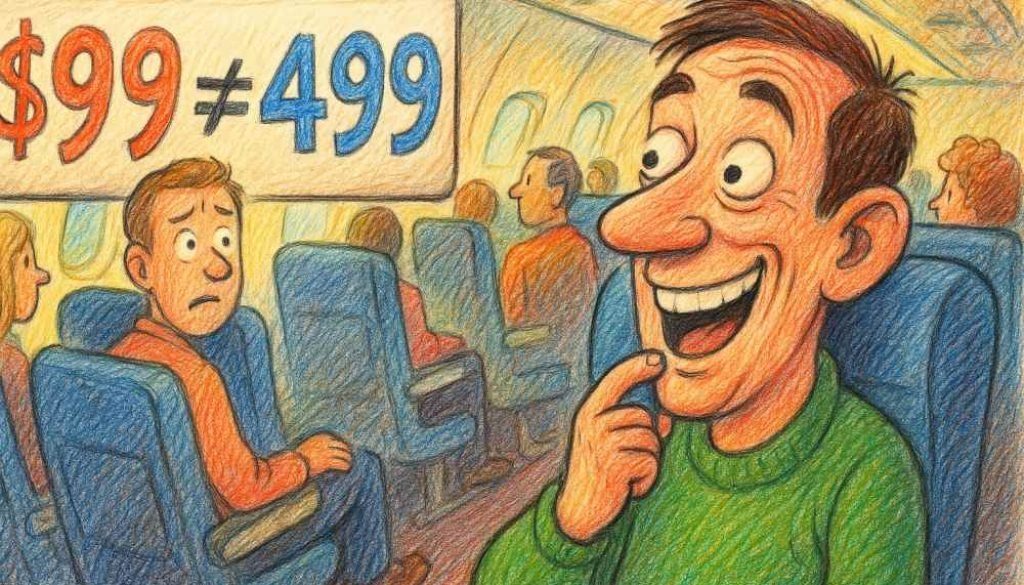
7. How I Now Judge Whether a Flight Is Truly a “Deal”
After watching “cheap” flights quietly drain my budget and energy, I changed how I evaluate every ticket. I don’t ask, Is this the lowest fare?
I ask, Is this the best value for my money, time, and sanity?
This is my simple framework for how to price airport transfers and food, time, and fees so I can see the total trip cost vs flight ticket price clearly.
Here’s the checklist I use now:
- Total cash cost: Ticket + bags + seat fees + airport transfers + likely airport food + possible hotel. That’s the real number, not the one on the search results page.
- Total time cost: Door-to-door hours, including layovers, early wake-ups, and late arrivals.
- Time value: I multiply extra hours by a rough hourly value for my time.
- Trip quality: How wrecked will I be when I land? How many usable days do I gain or lose?
- Risk: Tight connections, airport changes, last flight of the day, or notorious delay hubs.
Only after that do I look at the headline price. Often, the “cheap” flight is actually the most expensive once I’m honest about everything else.
If you start thinking this way, you’ll probably book fewer flights that look like steals and more that feel… reasonable. Not as flashy, maybe. But your wallet, your sleep, and your future self at baggage claim will be happier.
Next time you see a too-good-to-be-true fare, pause and ask: What is this really going to cost me?
That one question can save you hundreds — and, more importantly, days of your life.