
I used to feel triumphant when I snagged a rock-bottom airfare for my family. You know that rush when you see a fare that looks too good to be true? Eventually I realised something uncomfortable: most of the time, it is too good to be true.
Ultra-low-cost airlines are masters at one thing: getting you to click Book
before you’ve seen the real price. For solo backpackers with a tiny bag, that can still be a win. For families? It’s often a trap that quietly drains hundreds of dollars.
Let’s walk through the main ways these cheap
flights make families overspend – and how to flip the script so you only book when it’s genuinely a good deal.
1. The $39 Fare That Becomes $139: Why Headline Prices Lie to Families
When you see a $39 or $59 fare, your brain does something dangerous: it multiplies. Four of us… that’s under $250. Amazing!
But that number is almost never the number you actually pay.
Ultra-low-cost carriers (ULCCs) like Frontier, Spirit, Allegiant and others build their business on a simple idea: sell the seat cheap, sell everything else expensive. The headline fare is just the opening move.
Research comparing the 10 cheapest U.S. airlines found that once you add realistic extras – a checked bag, a carry-on, and basic seat selection – airlines like Southwest, JetBlue, Alaska and Hawaiian often match or beat ULCCs on total price for families (source). In other words, the true cost of budget airlines is rarely what you see on the first screen.
Here’s the mental trap:
- You compare their base fare to another airline’s full fare.
- You assume you’ll be the exception who
travels light
and skips extras. - You forget that kids need stuff, and that you care about things like sitting together.
The result? You click on the cheapest-looking option, then slowly bleed money in the checkout flow. By the time you notice all the extra airline fees for families, you’ve invested time, picked flights, and your brain is whispering, It’s still probably cheaper… right?
Family takeaway: Never compare just the headline fare. Always compare the full trip cost for your family – bags, seats, and any extras – across at least two or three airlines. That’s the only way to see the real cheap flights for families cost breakdown.
2. Bags: The Quiet Fee That Can Add Hundreds to a Family Trip
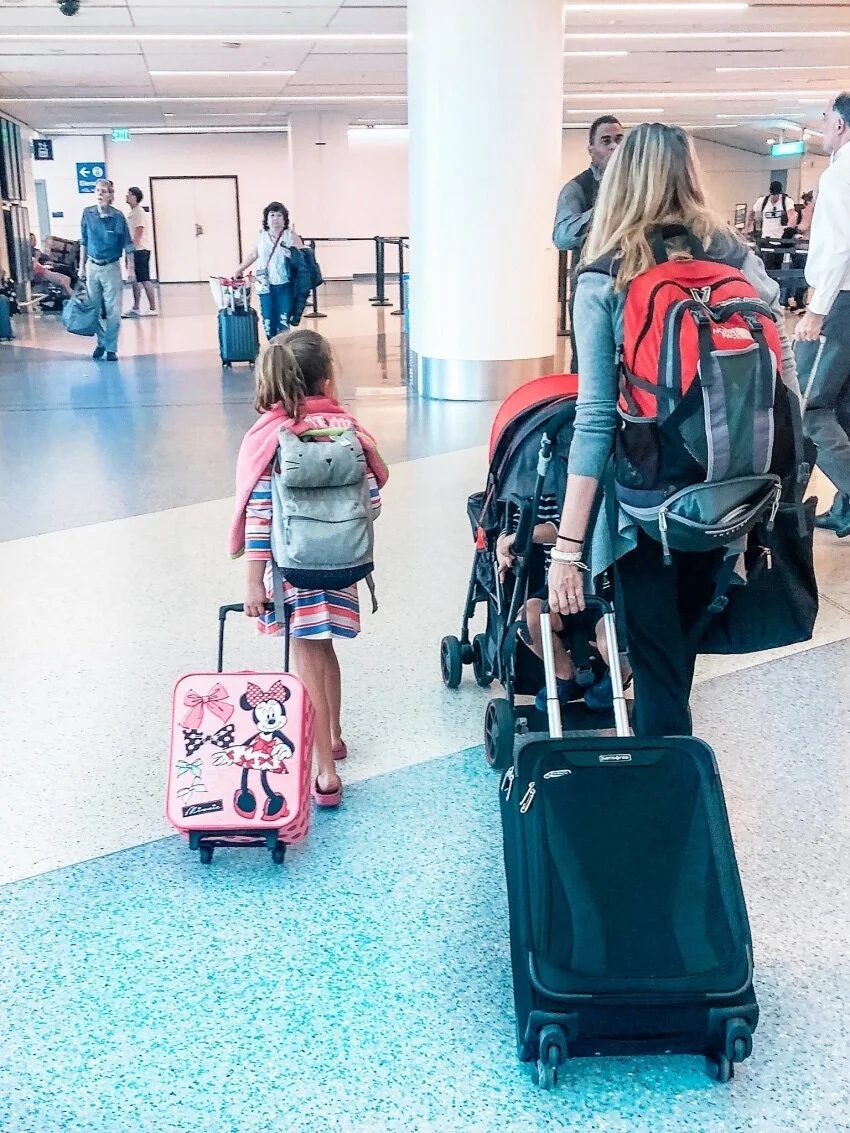
If you have kids, you have stuff. There’s no way around it. That’s exactly why baggage is one of the most profitable – and dangerous – fee categories for families.
On many budget airlines:
- Checked bags are almost never included.
- Carry-ons that fit in the overhead bin can cost more than the base fare.
- Weight limits are strict, and overweight penalties at the airport are brutal.
One analysis found that when you add a checked bag and a carry-on per person, ULCCs often lose their price advantage entirely for families (source). Another breakdown of low-cost carriers shows that baggage is usually the single biggest hidden cost – especially when you pay at the airport instead of online in advance (source).
Here’s how families accidentally overspend on bags:
- You assume a carry-on is free. It isn’t on many ultra-low-cost airlines.
- You don’t pre-book bags, then get hit with higher airport prices.
- You pack one big shared suitcase that ends up overweight and triggers a huge fee.
Meanwhile, airlines like Southwest include two checked bags per person. Suddenly that slightly higher fare can be far cheaper for a family of four once you factor in luggage. In a real family flight cost comparison, those low cost carrier hidden charges around baggage often flip the winner.
Family takeaway: Before you fall in love with a fare, open the airline’s baggage page and do the math for your real packing needs. If you know you’ll need bags, compare against airlines that include them – they often win, even if the ticket doesn’t look like the cheapest option at first glance.

3. Seat Selection: Paying a Ransom Just to Sit With Your Kids
This one hits a nerve for a lot of parents. On many budget airlines, the system is designed to nudge – or pressure – you into paying for seats.
Here’s what typically happens:
- You skip seat selection to
save money
. - At check-in, you discover your 6-year-old is in row 28, you’re in row 12, and your partner is in row 20.
- Now you’re either begging gate agents and strangers to swap, or you’re paying last-minute seat fees.
Some regulators are debating whether airlines should be required to seat young children with parents at no extra cost (source). Until that’s universal, families are stuck in a grey zone where optional
seat fees feel anything but optional.
On full-service or hybrid airlines, basic seat selection is often cheaper or included. On ULCCs, it’s a major revenue stream. Multiply $15–$40 per seat, per leg, by four people, and you can easily add $150+ to a round trip just in family seat and baggage fees.
Family takeaway: When comparing airlines, assume you’ll pay to sit together. Add that cost upfront. Sometimes paying a bit more for a carrier with more generous seating policies is the real bargain, especially when you look at the budget airline vs full service cost side by side.
4. The Airport You Didn’t Notice: Time, Transfers and Hidden Ground Costs
Budget airlines love secondary airports. They’re cheaper for the airline. For you? Not always.
Think about what happens when you land at a smaller, farther airport:
- Longer (and often pricier) transfers into the city.
- Fewer public transport options, especially at night or early morning.
- More time in transit with tired kids – which has its own cost in stress and snacks.
Several guides to budget airlines point out that these secondary airports can quietly erase your savings once you factor in taxis, rideshares, or parking (source; source).
For a solo traveler, an extra hour on a bus might be fine. For a family with a stroller, car seats, and kids who melt down after a long day? That extra hour can feel like three.
Family takeaway: Always check exactly which airport you’re flying into and out of. Then price out the transfer for your whole family. Add that to your flight cost before you decide it’s a deal. The hidden costs of cheap flights often start on the ground.
5. Change Fees, Cancellations and the Cost of Being a Parent
Families are not flexible in the same way solo travelers are. Kids get sick. School events pop up. Work schedules shift. That’s where ultra-low-cost tickets can become very expensive.
On many budget airlines:
- Change fees are high, especially close to departure.
- Some tickets are effectively
use it or lose it
. - Customer service is limited, and there may be fewer alternative flights if something goes wrong.
Studies of ULCCs show they often have tighter route networks and fewer daily flights, which means fewer options when your flight is cancelled or delayed (source). For a family, that can mean an unexpected hotel night, extra meals, and a lot of stress.
There’s also a subtle fee many people miss: some airlines add odd charges like carrier interface fees
that look like taxes but are really just airline-imposed surcharges for booking online (source). They’re not optional, but they’re also not obvious until late in the process.
Family takeaway: If your dates or plans might change, a slightly more expensive ticket on a more flexible airline can be the cheaper choice. Look at change and cancellation policies before you book, not after something goes wrong. When you factor in these risks, the true cost of budget airlines for families often looks very different.
6. How to Compare Real Costs (and When Budget Airlines Actually Make Sense)
Despite all this, I don’t think families should never
fly budget airlines. I think we should stop flying them blindly.
Here’s a simple way to compare real costs for your family and avoid the classic mistakes booking ultra low cost flights:
- Start with tools, not loyalty. Use Google Flights, Skyscanner, or similar to see a wide range of options and price patterns (source).
- Pick your top 2–3 airlines for each route. Include at least one non-ULCC (Southwest, JetBlue, Alaska, etc.).
- Simulate a real booking on each airline’s site:
- Add the number of checked bags and carry-ons you’ll actually bring.
- Add seat selection for at least one adult + each young child.
- Note any weird fees (payment surcharges, online booking fees, etc.).
- Add ground transport. Check airport location and estimate transfers for your whole family.
- Factor in flexibility. Look at change fees and how many flights per day the airline runs on that route.
Only after that should you ask: Which option is truly cheapest for us?
That’s your real family flight cost comparison, not just a race to the lowest headline fare.
In my experience – and in multiple analyses of airline pricing – ULCCs make sense for families only in narrow situations:
- You’re doing a short, simple trip with minimal luggage.
- You can pack everyone into one small bag each and skip checked luggage.
- You’re flying a route with good backup options if something goes wrong.
- You’ve done the full-cost comparison and they’re still clearly cheaper.
Outside of those cases, a mainstream or hybrid carrier is often the better value – and the better experience – for families. Once you see a full cost guide for ultra low cost airlines, the so-called bargain fares look a lot less magical.
7. A Simple Rule to Stop Overspending on “Cheap” Flights
Here’s the rule I use now when I’m booking flights with kids:
If I wouldn’t buy it at the final price, I don’t let myself get excited about the starting price.
That means:
- I ignore the first number I see in big bold font.
- I build the flight the way we’ll actually travel – bags, seats, times that work with kids.
- Only then do I decide if it’s a good deal.
When you do this, something interesting happens. The cheapest
airline often stops being the cheapest. And the airline that looked a bit pricey at first suddenly becomes the obvious choice.
Families don’t just need low fares. We need predictable, honest costs, reasonable comfort, and a decent chance of getting where we’re going without chaos. Budget airlines can sometimes deliver that – but only if you walk in with your eyes open and your calculator on.
Next time you see that irresistible $39 fare, pause. Ask yourself: What will this really cost my family by the time we land?
When you factor in all the budget airline pricing traps and ultra low cost airline fees, the answer might change the way you travel.