
I love a good deal. I track fares, set alerts, and I’ve definitely bragged about a “$49 flight” before. But after years of chasing rock-bottom prices, I’ve learned something uncomfortable:
The cheapest ticket is often the most expensive way to travel.
Not just in money, but in time, energy, and sometimes even ethics. In this guide, I’ll walk through the traps I see most often, how to spot the real cost of budget airlines, and when paying a bit more up front actually saves you a lot overall.
1. The Base Fare Trap: Why That “$49 Flight” Rarely Exists
Let’s start with the biggest illusion: the headline price.
Modern airline pricing is built around unbundling. The base fare is just the right to occupy a seat from A to B. Almost everything else is extra. As ScanFlights and others point out, that “deal” only makes sense if you never need the things most normal humans need.
Here’s what’s often not included in that eye-catching price:
- Carry-on and checked bags
- Seat selection (even just to avoid the middle)
- Reasonable change or cancellation options
- Priority boarding or basic customer service
By the time you add what you realistically need, that $49 fare can quietly become $150–$200. Meanwhile, a “more expensive” full-service airline at $160 might already include a carry-on, a checked bag, and a normal seat.
The mindset shift: I don’t compare tickets anymore. I compare total trip cost for how I actually travel.
Before I even open a booking site, I ask myself:
- How many bags will I really bring?
- Do I care where I sit?
- How painful would it be if I had to change this flight?
Then I price that trip, not the fantasy version where I magically travel with a toothbrush and no preferences. That’s how I avoid the classic cheap airline ticket traps that look great on screen and fall apart in real life.
2. Baggage: The “Cheap Flight” Killer You Feel at the Airport

If there’s one fee that destroys cheap fares more than any other, it’s baggage.
Every major U.S. airline now charges for checked bags on most fares. Even Southwest, long famous for free checked bags, ended that perk on Basic fares in 2025, according to TruAirfare. Budget carriers go further and often charge for carry-ons too—especially if you add them late at the airport.
Here’s how baggage quietly flips the math and changes the flight price vs total trip cost:
- Solo traveler, no checked bag: Ultra-low-cost carrier might still win.
- Couple with 2 checked bags: Add $120–$200 round-trip on many routes.
- Family of 4 with 4 checked bags: You can easily add $300–$400+ to the “cheap” fare.
And that’s before overweight or oversized fees. One slightly heavy suitcase can cost more than the ticket itself.
When I compare flights now, I literally write this out on paper or in my notes app to see the cheap flights extra costs breakdown:
- Airline A: Base fare + 1 checked bag each + 1 carry-on each
- Airline B: Base fare (includes carry-on) + checked bag fee
- Airline C (budget): Base fare + carry-on fee + checked bag fee + airport surcharge if paid late
Then I total it for the whole group, round-trip. The “cheap” airline often ends up being the most expensive line on the page.
How I keep baggage from wrecking my budget:
- I check each airline’s bag policy before I fall in love with a fare.
- I weigh bags at home and use compression cubes to avoid overweight fees.
- I look at credit cards or status that include a free bag if I fly an airline often.
- I’m honest about whether I can really do carry-on only for this trip.
Once you factor in baggage fees on low cost airlines, the real cost of budget airlines starts to look very different.
3. Seat Selection & Onboard Extras: Death by a Thousand Small Charges
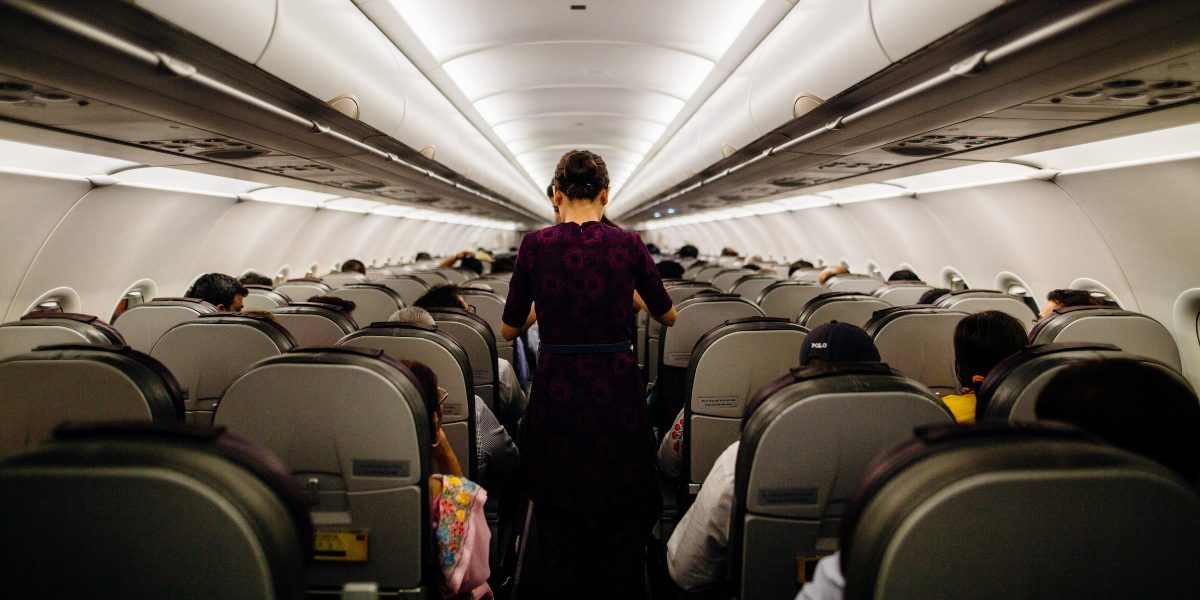
Seat selection used to be a nice-to-have. Now it’s a revenue stream.
On many airlines, you’ll see a seat map full of little price tags: $19 here, $39 there, $89 for extra legroom. TruAirfare notes that preferred and extra-legroom seats can run from about $33 to $160. Multiply that by two or four people, round-trip, and you’re suddenly in “I could have flown a better airline” territory.
Here’s the uncomfortable truth: most people don’t actually need to pay for a seat. You can usually get a free assignment at check-in. But airlines know our fears:
- Parents worry about being separated from kids.
- Tall travelers dread the middle seat.
- Everyone wants to sit together.
So we pay.
Then there’s onboard spending. On ultra-low-cost carriers, you might pay for:
- Snacks and meals
- Soft drinks and sometimes even water
- Wi-Fi or entertainment
For two people on a medium-length flight, food and drinks alone can easily hit $30–$50. Add that to seat fees and you’ve quietly added another “ticket” to your total.
How I decide whether to pay for seats:
- If it’s a short flight and I’m solo, I skip seat selection and check in early.
- If I’m with kids or a nervous flyer, I factor seat fees into the initial comparison. If I know I’ll pay them, they’re not optional.
- If the seat fee pushes the total above a better airline with free seat selection, I switch airlines.
And for food? I treat the plane like a movie theater: I bring my own snacks and a refillable bottle (after security). I’d rather spend that $30 at my destination.
This is where the cheap vs expensive flight value question really shows up. A slightly higher fare on a full service airline can easily beat a bare-bones ticket once you add all these little extras.
4. Layovers, Red-Eyes & “Cheap” Flight Times That Steal Your Trip
Some costs never show up on your credit card. You pay them in sleep, stress, and lost time.
Booking sites love to sort by price, so the top results are often:
- Very early morning departures
- Red-eye flights
- Long or awkward layovers
- Connections through inconvenient airports
On paper, you save $40–$80. In reality, you might be paying for:
- Airport hotel the night before an early flight
- Extra meals and drinks during a long layover
- Lost productivity or a wasted first day because you’re exhausted
- Higher risk of missed connections and delays
Research from TripSense suggests early and red-eye flights are only about 12–16% cheaper on average. That’s not much if it costs you a full usable day of your trip.
When I’m tempted by a cheaper but painful schedule, I ask:
- What is my door-to-door time, not just flight time?
- Will I lose a workday or a vacation day to recovery?
- Will I end up buying lounge access, Wi-Fi, or extra meals just to survive the layover?
Sometimes a long layover is worth it—if I can turn it into a mini-trip with a stopover program or a city visit. But if it’s just six hours in a generic terminal, that “cheap” flight is quietly taxing my energy and my wallet.
My rule of thumb: If a slightly more expensive flight gives me a full extra usable day, I treat that as buying a day of my life back. That’s almost always worth more than $50.
This is the classic time vs money trade off on flights: a cheap flight layover cost comparison often shows that the “deal” isn’t really a deal once you value your time.
5. Secondary Airports & Ground Transport: The Fare You Forgot to Add

Budget airlines love secondary airports. They’re cheaper for the airline. They’re rarely cheaper for you.
Think about airports like these:
- “City” airports that are actually 60–90 minutes away
- Airports with poor public transport, forcing you into taxis or rideshares
- Late-night arrivals when buses and trains barely run
That $60 cheaper fare can easily vanish when you add:
- $40–$80 in rideshares each way
- Extra time in traffic
- Higher risk of missing your flight because of the distance
TripSense calls this the door-to-door cost: fare + ground transport + time + energy. I’ve had “cheap” flights into secondary airports that ended up costing more than a main-airport ticket once I added the Uber receipts.
Now, when I compare flights, I literally do this:
- Check the airport code and map it to the city center.
- Look up typical transport costs and travel time at my arrival time.
- Add that to the ticket price for each option.
Sometimes the main airport is actually the bargain. When you’re comparing a cheap flight vs full service airline, don’t forget to include the ride to and from the airport in your cost guide for budget flights.
6. Change Fees, Flexibility & the Cost of Being Trapped
Cheap fares are often cheap because they’re rigid. No changes, no refunds, no mercy.
That’s fine—until life happens:
- Your work schedule shifts.
- A family issue comes up.
- You get sick right before the trip.
Basic and ultra-low-cost fares often come with:
- High change fees, plus any fare difference
- No refunds, only limited credits (sometimes with expiry dates)
- Customer service that’s hard to reach or slow to respond
On the other hand, a slightly more expensive fare might include:
- Free same-day changes
- Low or no change fees
- Better support when things go wrong
For frequent travelers and commuters, this flexibility is often worth far more than the $30–$60 saved on a rigid ticket. I’ve seen people “save” $40 on a non-changeable fare and then eat a $300 new ticket when plans changed.
My approach now:
- If the trip is time-sensitive or likely to change, I price in flexibility from the start.
- I compare the cost of a flexible fare vs. the worst-case cost of having to rebook a non-flexible one.
- I read the fare rules before I click “buy,” not after something goes wrong.
Sometimes the best “deal” is the one that lets you change your mind without blowing up your budget. This is a huge part of understanding the real cost of budget airlines that rely on strict rules and high fees.
7. The Hidden Human & Environmental Price of Rock-Bottom Fares
There’s one more layer of cost that’s easy to ignore because we don’t see it on our receipts.
Ultra-cheap travel is often built on aggressive cost-cutting: fewer staff, tighter schedules, more pressure on crews and ground workers. As USA Today has reported, that can mean:
- Overworked hotel and airline staff
- Lower wages and worse working conditions
- Overcrowded flights and degraded service
There’s also the environmental side. Frequent ultra-cheap flights encourage more flying, more often, which doesn’t exactly match the “green” marketing many companies push.
I’m not saying you should never book a cheap fare. I still do. But I try to ask myself:
- Am I paying so little that someone else is paying the difference?
- Could I choose a slightly more responsible option without breaking my budget?
- Is this trip important enough to justify the footprint—and if so, can I make it count?
Sometimes paying a bit more means supporting airlines and hotels that treat people and places slightly better. That’s a different kind of “value,” but it matters when you think about the hidden costs of cheap flights beyond your own wallet.
8. A Simple Checklist: How to Tell If a “Cheap” Flight Is Actually a Good Deal
When I’m about to book, I run every option through a quick checklist. You can copy this and use it as a sanity check before you hit “purchase.” It’s basically how I calculate the true flight cost instead of falling for cheap airline ticket traps.
For each flight, I write down:
- Base fare (round-trip)
– Is this Basic/Light/Ultra-low-cost or a standard fare?
– How does this compare in a simple cheap flight vs full service airline check? - Bags
– How many bags do I realistically need?
– What will that cost on this airline? - Seat selection
– Do I actually need to pay for seats (kids, long-haul, tall, nervous flyer)?
– If yes, what’s the total for my group? - Schedule & airports
– How much sleep or usable time do I lose?
– Is there a long layover that will cost me meals or a hotel?
– What’s the ground transport cost from each airport? - Flexibility
– Change/cancellation rules and fees?
– How likely is it that my plans might change? - Hidden “life costs”
– Stress level, risk of delays, energy drain.
– Is this going to make the trip feel rushed or miserable?
Then I total the realistic cost for each option. Not the fantasy version where I never check a bag, never eat, and don’t care where I sit.
Very often, the “more expensive” ticket wins. It’s cheaper once you add everything up. It’s kinder to your time and energy. And it gives you a better shot at actually enjoying the trip you’re working so hard to take.
That’s the paradox of cheap flights: the best deal is rarely the lowest number on the screen. It’s the one that respects your money, your time, and your sanity—and takes the whole trip into account, not just the fare.