I love a good road trip. Windows down, playlist on, snacks within arm’s reach. But I’ve also watched “cheap” drives quietly turn into credit-card hangovers. The problem isn’t just gas. It’s the hidden road trip costs we don’t bother to run the numbers on.
If you’ve ever said, We’ll just drive, it’s cheaper,
this guide is for you. Let’s walk through the fuel, tolls, parking, and fines that quietly wreck a road trip budget – and how to plan around them like an adult.
1. Fuel: Why Your Gas Budget Is Almost Always Wrong
Most of us do fuel math on the back of a napkin. We guess our MPG, multiply by distance, and call it good. That’s how budgets blow up.
Real life is messier. AC blasting, mountain passes, traffic, a roof box, a fully loaded trunk – all of that can drag your real-world fuel economy down by 10–20% or more. What your car is rated for and what it actually delivers on a long drive are rarely the same thing.
Here’s how to budget fuel the boring-but-accurate way (and avoid classic road trip budget mistakes):
- Step 1: Use realistic MPG (or L/100km). Take your rated highway MPG and knock it down by 10–20%. If your SUV is rated at 28 MPG, plan with 24–25 MPG instead. For an EV, use a realistic kWh/mile based on past trips.
- Step 2: Multiply distance by fuel use. Distance ÷ adjusted MPG = gallons needed. Then multiply by your average gas price. Tools like the Trip Cost Calculator or other road trip fuel cost calculator tools do this for you and handle miles vs. kilometers, MPG vs. L/100km, even EV kWh/mile.
- Step 3: Add a buffer. Add 10–15% on top of the fuel total. That covers detours, traffic, wrong turns, and the inevitable
let’s just swing by that viewpoint
moments.
One surprise when you actually run the numbers: fuel is often not the biggest line item in a full road trip cost breakdown. Lodging, food, and activities usually dwarf gas. Fuel still matters, but it’s only one piece of the puzzle.
Takeaway: Stop guessing your fuel cost. Use a calculator, downgrade your MPG a bit, and add a buffer. You’ll be much closer to reality – and less shocked at the pump.

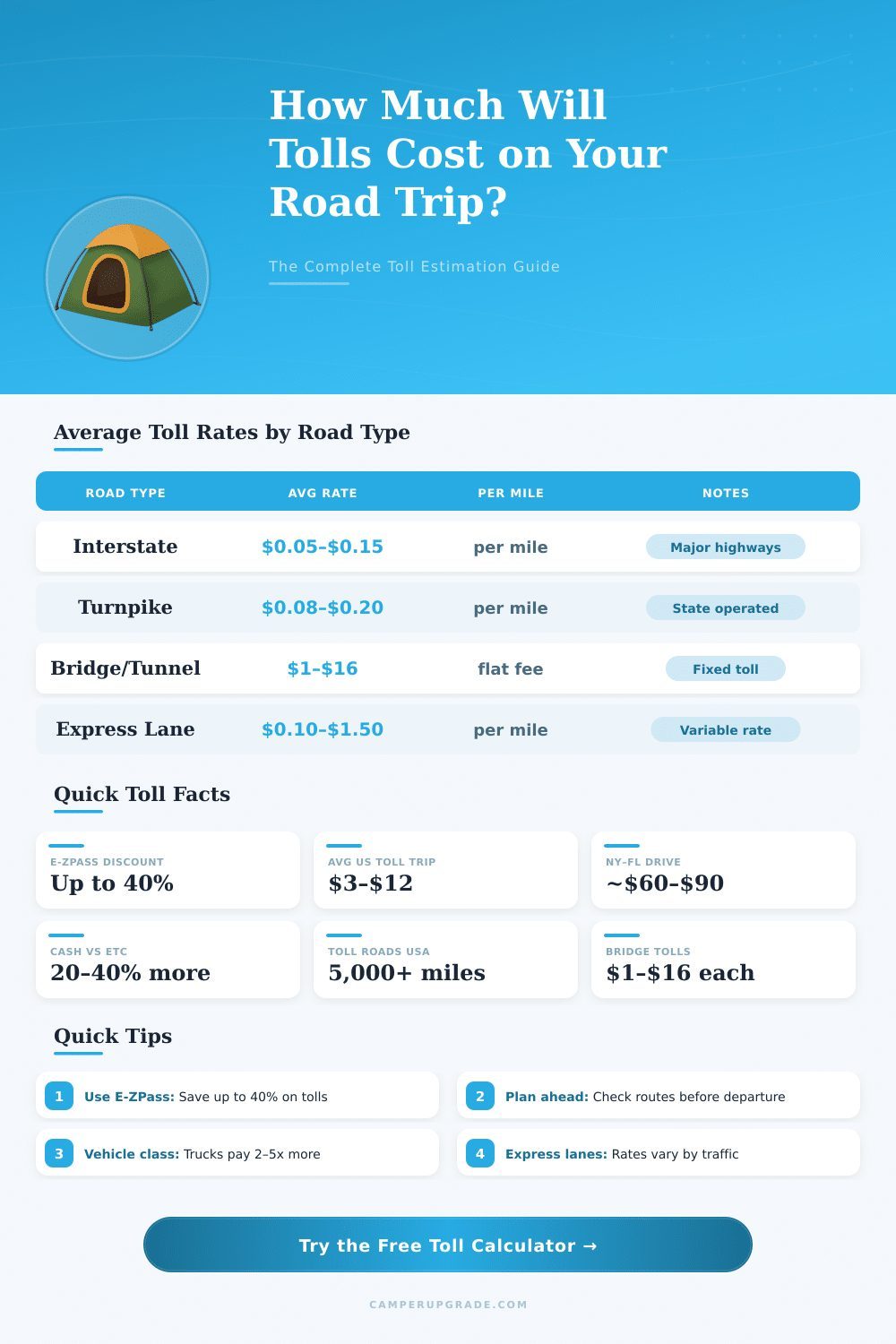
2. Tolls: Small Charges, Big Surprises (Especially With Rentals)
Tolls are sneaky. A few dollars here and there don’t feel like much – until you get home and find a stack of charges, admin fees, and fines. That’s when the “cheap” drive stops feeling so cheap.
Here’s what most travelers underestimate when they budget for road trip fuel and toll costs:
- Coverage is wider than you think. Roughly half of U.S. states have toll roads, bridges, or tunnels. Some stretches are brutally expensive, especially for RVs or trailers.
- There’s no single national pass. EZ-Pass, SunPass, FasTrak, TxTag, I-Pass… many don’t talk to each other. Cross a few regions and you can easily end up on a road your tag doesn’t cover.
- Plate billing is pricey. If you drive through without a compatible tag, you often pay higher “pay-by-plate” rates plus service fees. In some states, repeated missed tolls turn into fines fast.
- Rental car toll programs can be traps. Daily device fees, admin charges, and markups can cost more than the tolls themselves. If you’re renting, read the toll policy before you pick up the keys.
So how do you keep toll road trip costs under control?
- Plan tolls in advance. Run your route through a toll calculator or trip cost tool that estimates tolls and compares fastest vs. cheapest routes. Some calculators combine toll and fuel costs so you can see if that pricey toll road actually saves money overall.
- Decide: pay tolls or avoid them. Navigation apps let you toggle
avoid tolls
. U.S. law requires a free alternative route, but it might add time. Decide upfront: is your priority time or money? - Check vehicle type. If you’re in an RV or towing, assume tolls will be significantly higher and budget accordingly.
Takeaway: Tolls themselves are usually a modest slice of the budget. The real killers are fines, plate fees, and rental-car programs you didn’t read about. Plan your toll strategy before you leave so your how to budget for toll roads question is answered before you hit the highway.
3. Parking: The Silent Budget Killer in Cities and Resorts
Parking is the cost almost everyone forgets. You see a hotel rate, think, That’s not bad,
and only later discover the nightly parking fee that quietly adds 20–30% to your stay.
Here’s where road trip parking fees bite hardest:
- Downtown hotels. Overnight parking can easily run $20–$50 per night in major cities. Multiply that by a week and you’ve just added the cost of another night’s stay.
- Attractions and stadiums. National parks, theme parks, ski resorts, and stadiums often charge per-vehicle parking or shuttle fees on top of tickets.
- Street parking rules. Meters, time limits, residential permits, and confusing signage can lead to tickets if you’re tired and not paying attention.
One smart move when comparing hotels: don’t just sort by nightly rate. Look at the whole picture:
- Nightly room rate
- Parking cost (hotel or nearby garage)
- Extra fuel and time to drive from that “cheaper” hotel to where you actually want to be
Sometimes the bargain hotel 20 minutes away ends up more expensive once you add city parking costs on road trips, extra fuel, and stress.
Takeaway: Treat parking as its own budget category. When you plan lodging and attractions, assume you’ll pay for parking unless you’ve confirmed otherwise. It’s one of those road trip expenses people forget until the tickets start appearing under the wipers.
4. Fines, Fees, and Tickets: The Costs You Don’t See Coming
This is the category nobody wants to think about – and the one that ruins budgets fastest. Speeding tickets, toll violations, parking tickets, park rule violations… all the unexpected road trip fines you swear won’t happen to you.
Why they’re so dangerous:
- They stack. One ticket is annoying. Three in a week is a budget disaster.
- They’re delayed. Toll violations and plate-billed tolls often show up weeks later, when you’ve mentally “closed” the trip.
- Rental companies add their own fees. If a ticket hits a rental car, expect an extra admin fee on top of the fine.
Common traps that turn into parking and ticket costs on road trips:
- Speeding in small towns. Sudden drops from 65 to 35 mph, especially near schools or town centers.
- Ignoring park rules. Some national and state parks require timed-entry permits, vehicle reservations, or shuttle passes. Show up without them and you may pay extra or get turned away.
- Misreading signs. Foreign languages, unfamiliar symbols, or just fatigue can make you miss a “no parking” or “permit required” sign.
How to hedge against this without turning the trip into a stress test:
- Build a buffer. Add 10–20% to your total trip budget as a contingency. That’s not just for tickets – it covers surprise parking, minor repairs, detours, and impulse stops.
- Check rules for parks and cities. Before visiting national or state parks, check official sites or Recreation.gov for passes and permits. For big cities, skim parking and congestion rules.
- Drive like you’re on camera. Because you probably are. Especially on toll roads and in city centers.
Takeaway: You can’t predict every fine or fee, but you can expect that something will go wrong. Budget for it upfront instead of pretending you’ll drive perfectly and never make a mistake.
5. Lodging and Food: The Real Budget Heavyweights
Here’s the uncomfortable truth: on most driving holidays, fuel is not your biggest expense. Lodging and food usually are. If your road trip cost breakdown feels off, this is where to look first.
Most road trip budget calculators show the same pattern: once you plug in realistic nightly rates and daily food costs, those two categories dominate the pie chart. Fuel looks almost modest by comparison.
Let’s break it down:
- Lodging. Nightly rate × number of nights. Simple, but easy to underestimate. Even mid-range hotels add up fast over a week or two.
- Food. Daily food budget per person × number of travelers × number of days. A “cheap” $30 per person per day becomes $120/day for a family of four – $600 over five days.
What budget tools and planners make obvious:
- Daily budgets add clarity. Many calculators show cost per day and per person. That makes it obvious whether you’re planning a $100/day trip or a $300/day one.
- Small tweaks matter. Swapping one restaurant meal per day for groceries can save hundreds over a long trip. Choosing campgrounds or simpler motels instead of mid-range hotels can do the same.
- Driving vs. flying isn’t obvious. For solo travelers on long routes, flying can be cheaper once you factor in lodging and food. For families of three or more, driving often wins up to 1,500–2,000 miles – but only if you keep lodging and food under control.
My go-to approach now:
- Set a daily budget per person for food (e.g., $30–$40 for budget travel, more if you love restaurants).
- Decide your lodging style upfront: hotels, motels, campgrounds, or a mix.
- Use a planner like the Road Trip Planner Calculator to see how lodging and food compare to fuel and activities in your overall road trip cost breakdown.
Takeaway: If your road trip budget feels tight, don’t just obsess over gas prices. Look hard at where you’re sleeping and what you’re eating. That’s where the big savings (or overruns) live.
6. Activities, Extras, and the “Just This Once” Trap
Even if you nail fuel, tolls, parking, and lodging, there’s another category that quietly grows: activities and extras. This is where the we’re on vacation, it’s fine
mindset takes over.
Think about:
- Park entrance fees and passes
- Museum tickets, tours, boat rides, ski passes
- Souvenirs, snacks, coffee stops, tips
- Ride-share or public transit in cities when you don’t want to drive
Individually, none of these feel huge. Together, they can rival your fuel budget and become one of those extra costs of driving holidays that you only notice afterward.
How to keep this under control without killing the fun:
- Create an “activities” line item. Set a total number for attractions and entertainment before the trip. Then roughly assign it per day or per stop.
- Separate “must-do” from “nice-to-do.” Decide which experiences are non-negotiable and which are optional. That way, if costs creep up, you know what to cut without feeling deprived.
- Use calculators that include extras. Some trip cost tools let you add attractions, parking, and miscellaneous costs directly. That gives you a more honest total instead of pretending extras don’t exist.
Takeaway: Activities and extras are where your just this once
decisions live. Give them a real budget instead of treating them as exceptions.
7. How to Build a Realistic Road Trip Budget (Without Killing the Vibe)
Let’s pull this together. You don’t need a spreadsheet obsession to avoid budget shock. You just need a simple structure and a bit of skepticism about your own optimism.
Here’s a practical way to build a realistic budget and avoid the classic road trip budget mistakes:
- Start with distance and time. Use a trip cost calculator to enter your total distance, average speed, and trip length. Let it estimate driving time and fuel so you’re not guessing.
- Add lodging and food. Plug in nightly lodging rates and daily food budgets per person. Look at the per-day and per-person outputs. Ask yourself:
Does this feel like how we actually travel?
- Layer in tolls and parking. Estimate tolls using a toll calculator or your route planner. Add nightly parking for city stays and parking at major attractions so your road trip parking fees don’t blindside you.
- Include activities and extras. Set a total for tickets, tours, and spontaneous fun. Add a small line for souvenirs and coffee stops.
- Add a buffer. Top the whole thing with a 10–20% contingency. This is your cushion for fines, repairs, price spikes, and detours.
Then ask a few hard questions:
- If gas prices jump, can we still afford this?
- If we get one ticket or unexpected fee, does it break us?
- Would flying plus a rental car actually be cheaper for this route?
Sometimes the answer is yes, flying wins. Sometimes the answer is no, but you need to trim lodging or food. The point isn’t to kill the road trip dream. It’s to see the real cost before you’re halfway across the state.
Final takeaway: A road trip can absolutely be the cheaper, richer way to travel – if you stop pretending fuel is the only cost. Budget for tolls, parking, fines, lodging, food, and all the little extras. Then hit the road knowing the surprises will be scenic, not financial.