
You land in a new city, it’s already dark, and you still don’t have a room. This is when people overpay, end up in sketchy neighborhoods, or click on the first listing they see and regret it later.
I actually like booking late. It keeps plans flexible and often unlocks better prices. But I also like sleeping in a safe, clean room that doesn’t blow the budget. This guide is a practical, slightly skeptical last minute accommodation strategy for booking within 48 hours of arrival—without overpaying, wandering into a bad area, or getting caught in last minute Airbnb scams.
1. First Decision: Is This a City Where Last-Minute Deals Even Make Sense?
Before you start scrolling, ask yourself: “Is last-minute actually cheaper here, or am I about to get crushed by demand?”
Last minute hotel booking tips only work when there are plenty of rooms and not enough people to fill them. They fall apart when there’s a big event or limited inventory.
Good candidates for last-minute booking:
- Big cities with tons of hotels (Chicago, Berlin, Bangkok, etc.).
- Off-season or shoulder season dates.
- Regular weekdays (Sun–Thu) in business-focused cities.
Bad candidates for last-minute booking:
- Holiday weekends and school breaks.
- Major events: concerts, sports finals, conferences, festivals.
- Small towns or resort areas with limited rooms.
Dynamic pricing means rates can jump several times a day. One big concert, a conference, or even a viral TikTok spot can wipe out inventory and send prices through the roof. When that happens, your strategy should shift from wait for a deal
to lock something safe and refundable now.
Quick move within 48 hours: open a meta-search site like KAYAK and scan the map. If you see plenty of options under your budget, you can play the last-minute game. If everything looks 80–90% booked or prices are wild, book a refundable room immediately and refine later. That’s how you avoid overpaying for last minute hotels when demand spikes.
2. Second Decision: How Do I Avoid Bad Neighborhoods When I’m Booking Fast?
Saving $30 a night is pointless if you don’t feel safe walking back to your hotel. When you’re booking within 48 hours, you don’t have time for deep research on every district, so you need a quick, repeatable way to avoid bad locations when booking hotels.
Here’s how I sanity-check location in about 10–15 minutes:
- Start with the map view, not the list. On KAYAK and other OTAs, switch to the map and zoom into areas near public transport, central districts, or the neighborhoods where you’ll actually spend time.
- Cross-check with a quick search. Google
Is [neighborhood name] safe at night?
and skim a few recent threads or articles. You’re not chasing perfection—just looking for obvious red flags. - Read the worst reviews first. Filter by
lowest score
and scan for words likeunsafe
,sketchy
,drug
,prostitution
,noisy all night
. If multiple people mention the same issue, believe them. - Check distance in minutes, not miles. A hotel that’s “only 2 miles” from downtown can still be a 45-minute bus ride. Use the map and transit directions to estimate real travel time.
Meta-search tools like KAYAK help because they aggregate millions of verified reviews. That’s useful when you’re trying to avoid fake or overly polished reviews on smaller sites and want to book safe last minute accommodation without guesswork.
Quick move within 48 hours: pick 2–3 candidate areas on the map, then eliminate any hotel where reviews mention safety concerns or extreme noise. Only after that do you start comparing prices.
3. Third Decision: Which Tools Actually Save Money Last-Minute (and Which Just Waste Time)?
When you’re under time pressure, you don’t need every app on your phone. You need a small toolkit that covers three things: discovery, deep discounts, and timing.
Here’s a lean setup that works well for booking within 48 hours of travel:
- Meta-search (discovery & baseline price): KAYAK or similar to see the full landscape across OTAs and direct rates.
- Last-minute deal apps (deep discounts): HotelTonight, Hotwire, Priceline Express Deals, Secret Escapes, Agoda (especially strong in Asia).
- Price prediction / alerts (timing): Hopper or KAYAK price alerts if you’re 24–48 hours out and can wait a bit.
Each tool has a clear role in your last minute accommodation strategy:
- HotelTonight is great for same-day or next-day stays with simple categories (Basic, Solid, Luxe) and surprise deals like Daily Drop.
- Priceline Express Deals & Hotwire use a
mystery hotel
model—no name until after you pay, but you see area, star rating, and amenities. That’s where the 50–60% discounts usually live. - Expedia, Booking.com, Agoda often have mobile-only or
Tonight’s Deals
that undercut their own desktop prices. - Hopper can nudge you on timing—book now or wait—and its Price Freeze lets you lock a rate while you decide.
Don’t try to use everything. Pick 2–3 and run a quick last minute hotel price comparison: one meta-search for the baseline, one last-minute app, and one opaque-deal tool.
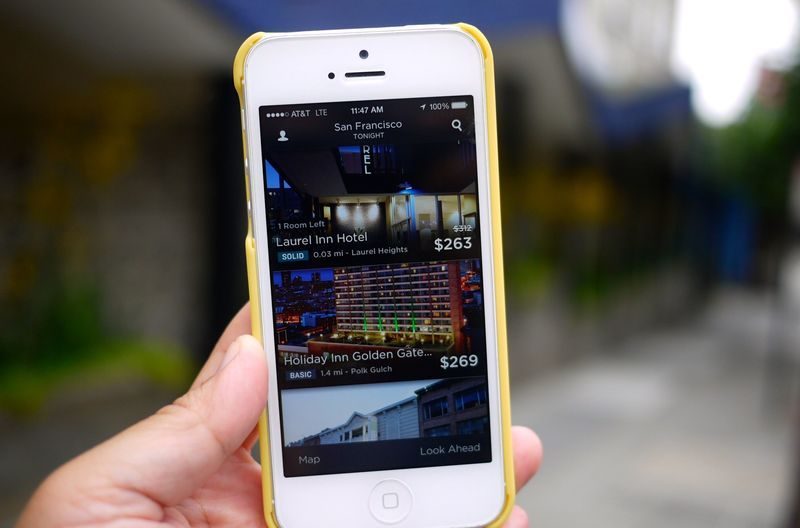
Quick move within 48 hours: get a baseline price on KAYAK, then see if HotelTonight or an opaque deal (Hotwire/Priceline Express) can beat it for the same area and star level. If the savings are small, choose the option with clearer reviews and better cancellation terms—even if it’s not the absolute rock-bottom rate.
4. Fourth Decision: Do I Trade Certainty for a Cheaper “Mystery” Hotel?
This is where you can save big—or regret everything.
Opaque deals (Hotwire, Priceline Express Deals, some Secret Deals on Agoda) hide the hotel name until after you pay. In exchange, you get a lower rate, often on higher-end properties. The real question: how much uncertainty are you comfortable with?
Here’s how I decide if an opaque deal is worth it when I’m trying to avoid overpaying for last minute hotels:
- Location first. Make sure the deal is in a clearly acceptable area on the map, not a huge region that mixes great and terrible neighborhoods.
- Star rating + reviews. A 4-star with strong aggregated reviews in a central area is usually a safe bet. A 2-star mystery hotel in a vague zone is a gamble.
- Amenities that matter to you. If Wi‑Fi, parking, or breakfast are non-negotiable, confirm they’re included before you book.
- Compare against a known hotel. If the opaque deal is only 10–15% cheaper than a well-reviewed, named hotel, I usually pay for certainty.
Remember: opaque deals are typically non-refundable. That’s fine if you’re checking in tonight and your plans are fixed. It’s risky if your trip is still flexible.

Quick move within 48 hours: use opaque deals when (1) you’re in a big city with lots of mid-to-high-end hotels, (2) you’re flexible about the exact property, and (3) the discount is clearly significant—think 30–60%, not 5–10%.
5. Fifth Decision: Lock It In Now or Wait for a Better Last-Minute Drop?
Here’s the classic same day hotel booking dilemma: Do I book now, or will prices drop if I wait until tonight?
A simple framework:
- If availability is high and it’s a normal night: you can often wait until afternoon or evening. Hotels would rather discount unsold rooms than leave them empty, and same-day apps are built around this.
- If availability is low or there’s an event: book a refundable rate now. Don’t play chicken with a sold-out city.
One powerful tactic from revenue-management logic: book a refundable rate you’re okay with, then keep hunting.
- Book a room with free cancellation at a price you can live with.
- Set price alerts (KAYAK, Hopper) or just re-check a couple of times.
- If you find a cheaper or better option, book the new one first, then cancel the old one.
This way, you’re never exposed—you always have a backup bed. It’s a simple way to manage the hotel booking timing cost comparison without stressing over every price change.
Also, pay attention to dates. Shifting your stay by even one night (for example, Sun–Thu instead of Fri–Sat) can drop prices significantly because demand spikes on weekends and around micro-events.
Quick move within 48 hours: if you’re more than 24 hours out and see decent availability, grab a refundable room and keep checking. If you’re booking same-day and it’s already late afternoon, it’s time to commit rather than wait for a miracle drop.
6. Sixth Decision: Should I Call or Walk In Instead of Booking Online?
Most travelers never do this, which is exactly why it sometimes works.
By late afternoon (around 3–5 PM), hotels have a good sense of how many rooms they’ll fill. Unsold rooms are pure lost revenue, and they’d rather discount than leave them empty—especially if they can avoid paying OTA commissions.
Here’s how to use that to your advantage and squeeze out cheap last minute hotel deals:
- Do your homework first. Check online rates for the hotel you want (or similar ones nearby) so you know the going price.
- Call the hotel directly. Ask for the front desk or reservations and say something like:
I’m looking for a room for tonight. I’m seeing rates around $X online. Is there any flexibility if I book directly with you?
- Mention loyalty (even basic). If you’re a member of their program—even at the lowest tier—say so. Hotels often have unpublished member discounts.
- Consider walking in. In cities with lots of hotels and no major events, walking in around early evening and asking for a same-night rate can work. Just make sure you have a backup option in case they’re full or expensive.
These tactics are strongest in off-peak periods and in destinations with abundant rooms. During holidays or big events, they’re far less effective—and sometimes impossible.
Quick move within 48 hours: once you’ve identified 1–2 good candidates online, call them directly in the late afternoon. If they can’t beat or match the online rate, you still have your digital options.
7. Seventh Decision: How Do I Spot Scammy or Misleading Listings Fast?
When you’re rushed, you’re more vulnerable to scams and bad surprises. That’s when last minute travel lodging mistakes get expensive. So I use a simple, skeptical checklist before I hit Book
, especially on peer-to-peer platforms where the risk of last minute booking scams is higher.
Red flags I watch for:
- Too few reviews or all-new reviews. A property with almost no history—or only a handful of recent 5-star reviews—feels risky, especially on Airbnb-style platforms.
- Photos that don’t match reality. Overly polished, generic stock-looking photos with no exterior shots or no bathroom photos are a warning sign.
- Vague location descriptions.
Close to everything
means nothing. I want a clear map pin and honest distance to key areas. - Inconsistent reviews. If half the guests say it’s spotless and the other half say it’s filthy, something’s off. I assume the worst.
- Weird payment requests. Anyone asking you to pay outside the platform, wire money, or send card details via message is an instant no.
If you’re wondering how to spot fake accommodation listings quickly, this is it: reviews, photos, location clarity, and payment method. Meta-search sites and big OTAs help because they rely on verified stays. They’re not perfect, but they do reduce the odds of completely fake listings and last minute Airbnb scams.
Quick move within 48 hours: if anything feels off—location unclear, reviews thin, payment sketchy—skip it. You’re in a rush, which is exactly when scammers win. Better to pay a bit more for a verified, boringly reliable option.
8. Final Decision: What’s Actually “Cheap” When You Factor In Real Costs?
Last-minute, it’s easy to obsess over the nightly rate and forget everything else. But the cheapest
room can end up costing more once you add real-world expenses. A good last minute accommodation cost guide looks beyond the headline price.
When I compare options, I look at the total cost of staying there, not just the rate:
- Transport costs. A cheaper hotel far from the center might require daily taxis or long rides. That adds up fast.
- Breakfast & food. A slightly pricier hotel with free breakfast can beat a cheaper one where you’re buying breakfast out every day.
- Resort fees, parking, taxes. Some properties hide fees until the last step. Always check the final total.
- Loyalty value. A hotel that earns you points, free nights, or perks (late checkout, upgrades) can be a better long-term deal than a rock-bottom independent place.

Also, remember that star rating isn’t everything. KAYAK’s data and other research show that dropping from a 4-star to a solid 3-star in a good area can save a lot without ruining your trip. I’d rather have a clean, well-located 3-star than a fancy 5-star in the middle of nowhere.
Quick move within 48 hours: do a 30-second comparison: nightly rate + estimated transport + breakfast/fees. If a slightly more expensive hotel clearly wins on total cost and convenience, take it. Your future, tired self will be very happy you did.
Putting It All Together: A 10-Step Last-Minute Booking Script
Standing in an airport or train station right now? Here’s the condensed playbook to avoid the usual same day hotel booking mistakes:
- Check if the city/date is high demand (events, holidays, low availability).
- Open KAYAK (or similar) and scan the map for options in decent areas.
- Shortlist 3–5 hotels in safe, convenient neighborhoods.
- Read the worst reviews first to filter out safety/noise disasters.
- Get a baseline price from meta-search and one major OTA.
- Check HotelTonight and one opaque tool (Hotwire/Priceline Express) for better deals in the same area and star level.
- If availability is tight, book a refundable room you can live with.
- Optionally, call your top choice in late afternoon to see if they’ll beat the online rate.
- Before paying, scan for scam red flags: unclear location, weird payment, inconsistent or thin reviews.
- Choose based on total cost (rate + transport + fees), not just the nightly price.
Last-minute doesn’t have to mean desperate. With a bit of structure—and a healthy dose of skepticism—you can book safe last minute accommodation at a fair price, in a good area, even when you’re down to the final 48 hours.