
I don’t plan trips around worst-case scenarios. But I do plan my money around them.
When a trip falls apart at the last minute, most people remember the drama: the lines, the shouting, the chaos at the gate. I’m usually thinking about something else: the spreadsheet behind it. What is this actually going to cost me, and how do I keep that number as low as possible?
This guide is a cost-first playbook for last minute trip cancellation costs. We’ll walk through the key decisions you face in the first hour, what each choice is likely to cost, and how to use the rules (plus a bit of strategy) to cut your losses.
1. First 15 Minutes: Are You Trying to Save the Trip or Save the Cash?
The moment you see “Canceled” next to your flight, you have to decide: is your priority to still go, or to stop the bleeding and get your money back?
Those are two very different strategies:
- Save the trip: You want to get to your destination today or tomorrow, even if it means some extra cost.
- Save the cash: You’re willing to abandon or postpone the trip if that protects your budget.
In the first 15 minutes, I try to do three things at once. Time really is money here:
- Open the airline app and look for same-day alternatives (including nearby airports).
- Get in a physical line at the gate or customer service desk.
- Call the airline — and if the U.S. line is jammed, I try their international numbers (Australia, UK, Canada often pick up faster).
While I’m waiting, I quickly check:
- Cause of cancellation: Weather, air traffic control, or an airline issue (crew, maintenance, IT)? This will matter for what they owe you.
- My booking type: One ticket or separate tickets? Single-ticket itineraries are easier to rebook without extra cost.
- My non-air costs: Hotel tonight, prepaid tours, cruise departure, car rental. Which of these are refundable?
The goal in this window isn’t to fix everything. It’s to avoid the most expensive outcome: doing nothing while all the good options disappear.
2. Refund vs Rebook: Which Choice Actually Costs You Less?
Once you reach an agent or see options in the app, you hit the core money question: Do I take the new flight, or do I walk away and take a refund?
Under U.S. Department of Transportation rules, if the airline cancels your flight and you decide not to travel, you’re entitled to a cash refund for:
- Your unused ticket (even if it was “nonrefundable”).
- Paid extras tied to that flight (baggage, seat fees, early boarding, etc.).
That’s spelled out clearly by the DOT here: DOT refund rules.
Here’s the catch: if you accept the airline’s alternative flight, you usually lose the right to that refund. By rebooking, you’re choosing to travel instead of cash out.
So I run a quick mental comparison to see which option actually costs less:
- Option A – Rebook: What extra costs will I eat? (Meals, hotel, missed night at destination, lost prepaid activities.)
- Option B – Refund: If I take the cash back, what non-air costs become sunk? (Nonrefundable hotel, tours, event tickets.)
Whichever total is lower is usually the smarter move. It’s not just about the ticket; it’s about the whole trip.
Two important details most people miss when they’re panicking at the gate:
- You don’t have to accept vouchers. If the airline canceled, you can insist on a cash refund instead of credits or miles.
- Significant schedule changes can also trigger refunds. If your departure or arrival shifts by several hours, or your routing changes in major ways, you may qualify for a refund even if the flight technically still operates. The DOT defines these thresholds (for example, 3+ hours arrival delay on domestic flights) in its refund guidance.
When I’m on the fence, I ask the agent to hold the rebooking while I confirm hotel and other costs. A five-minute pause can save hundreds — and it’s one of the easiest ways to reduce travel cancellation fees without doing anything fancy.
3. Weather or Airline’s Fault? That One Word Changes Who Pays
Not all cancellations are equal. The label the airline uses — weather vs operational — often decides whether they’ll pay for your hotel and meals or leave you on your own.
In the U.S.:
- For any cancellation, you can get a refund if you choose not to travel.
- But extra compensation (meals, hotels, ground transport) is mostly voluntary and usually only offered when the disruption is controllable by the airline.
Controllable issues typically include:
- Crew shortages or mis-scheduling.
- Maintenance and mechanical problems.
- IT outages, staffing issues, aircraft swaps.
Uncontrollable issues usually mean:
- Severe weather.
- Air traffic control restrictions.
- Security events, natural disasters.
Why this matters for your wallet:
- Controllable: Many airlines will cover a hotel, meal vouchers, and sometimes ground transport. Policies vary, but it’s worth pushing.
- Uncontrollable: You’ll likely pay your own hotel and meals, even though you can still get a ticket refund if you don’t travel.
If the explanation doesn’t match what you’re seeing — for example, your airline claims weather but other carriers are still flying the same route — I politely ask:
Can you confirm whether this is coded as a weather cancellation or an operational one in your system?
That wording matters. Agents see internal codes that determine what they’re allowed to offer. If it’s operational, I’ll calmly ask:
Since this is an operational issue, what can you do for hotel and meal coverage tonight?
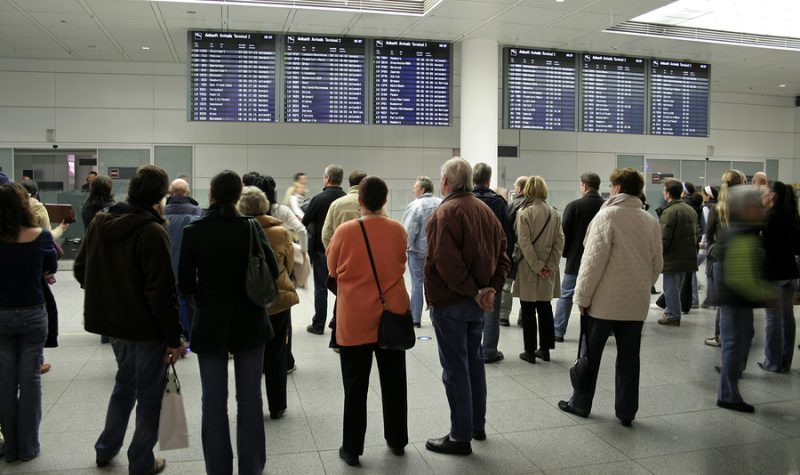
And while I’m doing all this, I’m documenting everything: screenshots of the app, photos of the departure board, and notes on what each agent tells me. That documentation is gold later for complaints, credit card claims, or EU compensation — especially when you’re arguing over the cost of cancelling a flight last minute and who should actually pay.
4. The Real Cost of Getting Stuck Overnight
Let’s say there’s no way to get out tonight. Now the question becomes: How expensive is this overnight going to be, and who’s paying?

Here’s how I break it down when I’m suddenly budgeting for an unexpected trip cancellation:
Step 1: Ask the airline for concrete help
I don’t ask, Is there anything you can do?
That invites a soft no. I ask specific, money-focused questions:
Are you providing hotel vouchers for this cancellation?
If not, do you have a distressed traveler rate at nearby hotels?
Can you provide meal vouchers for tonight and breakfast?
Even low-cost carriers sometimes have small vouchers or partner rates. It’s not generous, but it’s better than nothing.
Step 2: Price your alternatives fast
While I’m talking to the airline, I’m also checking:
- Hotel prices near the airport vs in the city (sometimes a 20–60% difference).
- Airport lounges (day passes or credit card access) if I’m stuck for many hours but not overnight.
- Whether a late-night bus or train to another city with more flights tomorrow is cheaper than staying put.
Then I compare that to the value of my trip. If I’m losing a nonrefundable $300 hotel night at my destination and a $150 tour, spending $120 on an airport hotel to still make the trip might be rational. If the trip is mostly sunk anyway, I lean toward taking the refund and going home.
This is where a lot of money mistakes when cancelling travel plans happen: people throw good money after bad without doing this quick comparison.
Step 3: Bring your credit card benefits into the equation
Premium cards (Chase Sapphire, Amex Platinum, some Citi cards, and others) often include trip delay or cancellation coverage. That can reimburse:
- Hotels.
- Meals.
- Essential items (toiletries, clothes).
But only if:
- You paid for the trip with that card (or points from that card’s program).
- The delay meets the card’s minimum threshold (often 6–12 hours or an overnight stay).
- The reason for the delay is covered under the policy.
This is where keeping every receipt matters. I snap photos of restaurant bills, hotel invoices, rideshare receipts, and even airport snacks. Later, I submit them with a short timeline of what happened.
If you’ve ever wondered whether travel insurance for last minute cancellations is worth it, this is the moment it either earns its keep or doesn’t.
5. International & EU Flights: Where Real Cash Compensation Kicks In
On U.S. domestic flights, your main legal protection is the right to a refund if you don’t travel. That’s it. No automatic cash for your trouble.
But if your trip touches Europe, the math changes.
Under EU Regulation EC 261, you may be entitled to €250–€600 per person in compensation if:
- Your flight is to/from the EU or operated by an EU carrier, and
- The cancellation is within the airline’s control (not severe weather or extraordinary circumstances), and
- You were informed less than 14 days before departure.
This compensation is in addition to your right to a refund or rebooking. It’s not a voucher; it’s cash (or bank transfer) if you qualify.
So if I’m on an EU-eligible flight and it’s clearly an operational issue, I immediately start building my case:
- Time-stamped screenshots of the cancellation.
- Photos of departure boards showing other airlines still operating the route (if relevant).
- Written notes of what agents say about the cause.
Later, I file a claim directly with the airline or use a specialized service if they stonewall. The key is: don’t assume you’re not owed anything just because the airline is quiet about EC 261. They rarely advertise it.
If you’re cancelling a vacation last minute on an EU route, this can be the difference between a painful loss and walking away with some of your costs covered.
6. Hidden Costs: Separate Tickets, Missed Connections, and Vouchers
Some of the most expensive losses happen in the gray areas — where the airline technically did its job, but your broader trip falls apart.
Separate tickets vs one itinerary
If you booked a cheap self-connection (for example, one ticket to a hub, another separate ticket onward), the airline only owes you anything on the ticket they canceled. The missed second flight is usually your problem.
So I ask myself before booking: If the first leg dies, can I afford to eat the second?
If the answer is no, I try to keep everything on one ticket, even if it costs a bit more upfront. That extra $50 can save hundreds later.
This is a big one when you’re budgeting for unexpected trip cancellations. The cheapest option on the search screen isn’t always the cheapest in real life.
Vouchers vs cash
Airlines love to offer vouchers. They’re cheaper for them and often expire or come with restrictions. For you, they’re a loan to the airline with strings attached.
My rule:
- If the airline canceled the flight, I push for a cash refund first.
- I only accept a voucher if it’s clearly more valuable than cash (for example, a 20–30% bonus) and I’m sure I’ll use it before it expires.
And I always read the fine print: blackout dates, routes excluded, transferability, and whether I can combine it with other credits. This is where a lot of people lose money without realizing it.
Missed connections on a single ticket
If your first leg is delayed or canceled and you miss a connection on the same ticket, the airline is responsible for getting you to your final destination. That usually means:
- Rebooking you on the next available flight on their own metal.
- Sometimes moving you to a partner airline (especially within alliances like Oneworld or Star Alliance) if they’re willing.
When I see a missed connection coming, I don’t wait until I land. I start working the app and phone while I’m still in the air (if there’s Wi‑Fi) or the moment we touch down.
Knowing the difference between a no show vs cancellation fee also matters here. If you know you’re not going to make it, contact the airline as soon as possible. A quick call can sometimes turn a total loss into a partial credit.
7. How to Turn a Bad Day into a Smaller Loss (and Sometimes a Win)
Most people walk away from cancellations with less money and more stress than they needed to. The difference isn’t luck; it’s how quickly and strategically you act.

Here’s the condensed playbook I actually use when I’m staring at a same-day flight cancellation and trying to keep costs under control:
- Decide your priority fast: Save the trip or save the cash?
- Work multiple channels at once: App, in-person line, phone (including international numbers), and even social media DMs.
- Clarify the cause: Weather vs operational. That single word affects hotels, meals, and vouchers.
- Know your rights:
- U.S.: Refund if you don’t travel after a cancellation or significant schedule change.
- EU: Possible €250–€600 compensation on qualifying flights under EC 261.
- Document everything: Screenshots, photos of boards, receipts, and notes on what agents say.
- Use your tools: Credit card trip protections, alliance partners for rebooking, and the DOT’s Airline Cancellation and Delay Dashboard to compare airline cancellation policies.
- Be politely persistent: Calm, specific requests usually get better results than anger or vague complaints.
Trip cancellations will always be annoying. But they don’t have to be financially devastating. If you treat those first 15–30 minutes like a negotiation over your own money — because that’s exactly what they are — you’ll walk away with fewer losses and, sometimes, a partial refund or compensation you didn’t even know you could claim.
And the next time you’re staring at a non refundable ticket and wondering what your cancellation options really are, you’ll know how to run the numbers, protect your budget, and make a decision that feels less like panic and more like a plan.