
I used to treat layovers like a game: How short can I make this connection and still get away with it?
Then I started adding up the real cost of the times I didn’t get away with it — last‑minute tickets, airport hotels, lost vacation days, and a lot of exhausted, angry waiting.
These days I plan layovers the way I’d think about an investment: what’s the risk, what’s the downside, and what am I really optimizing for — price, time, or sanity?
This guide is my playbook for choosing layover times that balance risk, price, and fatigue — so you stop gambling with your trip every time you click “Book” and start choosing layovers that actually work for your life.
1. The Hidden Math of Layovers: What Are You Really Risking?
Every time you pick a layover, you’re making a bet. Most of us only look at the ticket price and the total travel time. We rarely factor in what happens if the first flight is late — or if the whole plan falls apart.
Here’s how I think about it now:
- Short layover = cheap ticket + hidden lottery ticket — you might win, but when you lose, it hurts.
- Longer layover = slightly higher price + built‑in insurance — less exciting, far more predictable.
When you choose between a short layover vs long layover, this is what’s really on the line:
- Money: last‑minute rebooking, change fees, new tickets, airport hotels, meals, lost prepaid nights or tours.
- Time: lost vacation days, arriving a day late, or spending 8 hours in a terminal you never wanted to see.
- Energy: sprinting through airports, sleeping badly, starting your trip already exhausted.
Now I ask one simple question before I book: If the first flight is 60–90 minutes late, what happens to my life? If the answer is I lose a $900 long‑haul ticket and a night of hotel
, I don’t book a 50‑minute connection. Ever.
To make smarter choices about how long a layover should be, you need to understand one thing airlines quietly rely on.
2. Minimum Connection Time: The Rule That Tricks You Into Tight Layovers
Every airport and airline has a number called Minimum Connection Time (MCT). It’s the shortest connection they’re allowed to sell you. It’s not a comfort guideline. It’s a legal threshold under ideal conditions.
MCT quietly assumes:
- Your first flight arrives on time.
- You deplane quickly.
- Gates are reasonably close.
- Security, immigration, and boarding lines are short.
Real life rarely looks like that, especially if you’re already tired or dealing with a big hub.
Booking sites don’t explain any of this. They just show you a neat little 45‑minute connection and highlight it as “shorter travel time”. Technically legal. Practically stressful.
Here’s how I treat MCT now when I’m choosing safe layover times:
- MCT = hard floor, never a target.
- Domestic: I add at least 30–60 minutes beyond MCT.
- International or customs involved: I add 60–120 minutes beyond MCT.
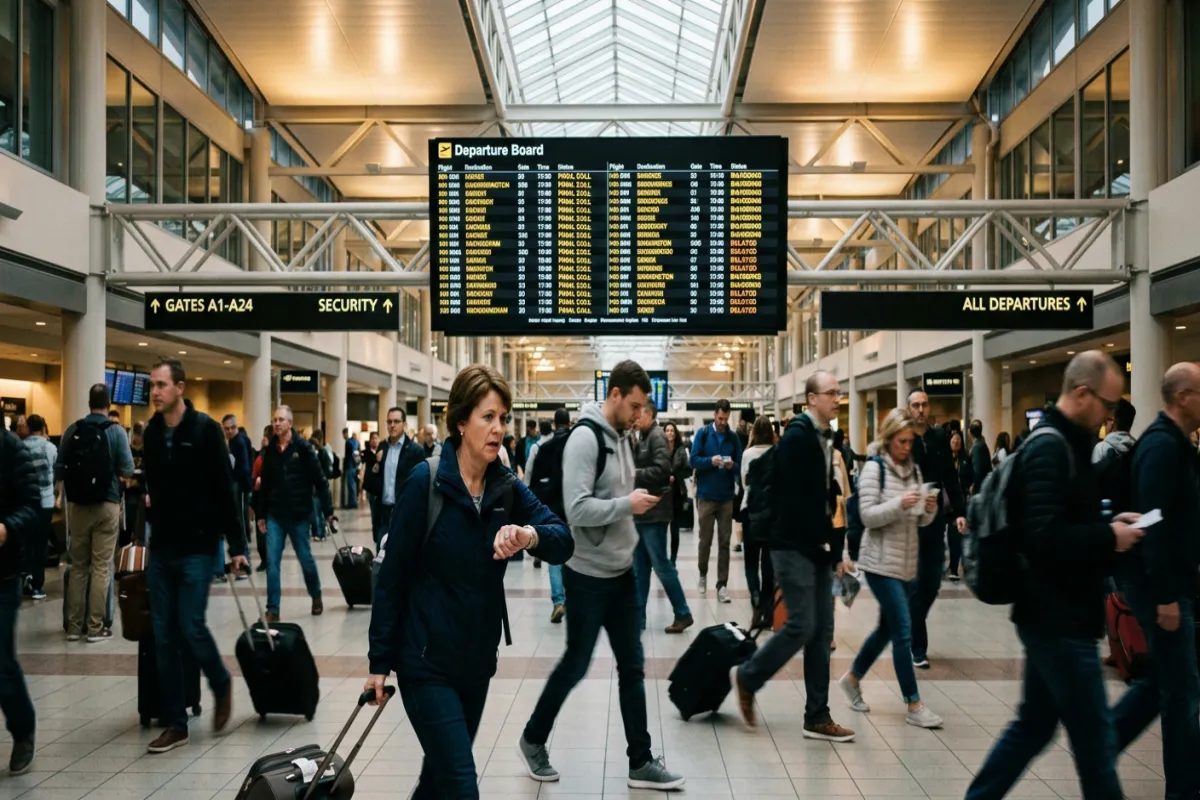
And I always remember: boarding usually closes 10–15 minutes before departure. So your 1‑hour layover
is really 45–50 usable minutes. That’s not a buffer. That’s a dare.
3. One Ticket vs Separate Tickets: The Risk That Changes Everything
The single biggest factor in how risky a layover is isn’t the airport or the country. It’s this:
Are all your flights on one ticket, or did you build a DIY connection with separate bookings?
Protected (same-ticket) connections
When all legs are on one booking:
- The itinerary must respect MCT.
- If the airline’s delay makes you miss your connection, they generally have to rebook you at no extra cost or refund the unused segment if they can’t get you there in a reasonable time (details here).
- Your checked bags are usually tagged through to your final destination.
So with a protected ticket, a tight layover is mostly a stress problem, not a financial disaster. You might still hate your life for an hour, but you’re unlikely to buy a new long‑haul ticket.
Self-transfers (separate tickets)
When you book separate tickets — maybe to save money or mix low‑cost carriers — everything flips:
- The second airline doesn’t care that you were late. You’re just a no‑show.
- You usually have to reclaim and recheck bags.
- If you miss the second flight, you often need to buy a new ticket at walk‑up prices.
This is where the cost of missing a connecting flight gets brutal. On separate tickets, a tight connection isn’t just risky — it’s expensive.
On self-transfers, I treat layovers like this:
- Domestic–domestic self-transfer: 2.5–3 hours minimum.
- Domestic–international: 3–4 hours minimum.
- International–international with immigration + bags: 4–5 hours minimum.
Yes, that’s long. But compare it to the cost of a missed $600–$1,200 flight plus a surprise hotel night. Suddenly a 4‑hour layover looks like a bargain.
4. Domestic vs International: Why the Same Layover Length Isn’t the Same Risk
A 90‑minute layover can be totally fine in one situation and a disaster in another. The label that matters isn’t the airline — it’s the type of connection and where you’re entering or leaving a country.
Domestic–domestic (same country)
What usually happens:
- Deplane.
- Walk to next gate.
- No immigration, no customs.
My rule of thumb for a safe layover time for domestic connections:
- Absolute minimum I’m willing to book: 1 hour (only at smaller or very efficient hubs, same airline, same terminal).
- Comfortable: 1.5–2 hours.
Why more than the classic 45 minutes? Because domestic flights are delayed constantly. Weather, air traffic control, late inbound aircraft — none of that cares about your connection.
Domestic–international
This is where people get burned.
You’re taking a delay‑prone domestic flight and connecting to a long‑haul that might only run once a day. Miss it, and you’re not just late — you’re potentially a day late.
Risks:
- Terminal change.
- Extra security checks.
- Boarding for long‑hauls often starts 45–60 minutes before departure.
My rule when I’m planning how long a layover should be before an international flight:
- Same ticket: 2–3 hours.
- Separate tickets: 3–4 hours, especially if the long‑haul is expensive or infrequent.
International–international
This one depends heavily on the airport and whether you stay airside (no immigration) or must enter the country.
- Airside, efficient hub (e.g., Singapore, Doha, Amsterdam, Munich): 1.5–2 hours can work on one ticket.
- Immigration + security + possible baggage recheck: 3 hours on one ticket, 4–5 hours on separate tickets.
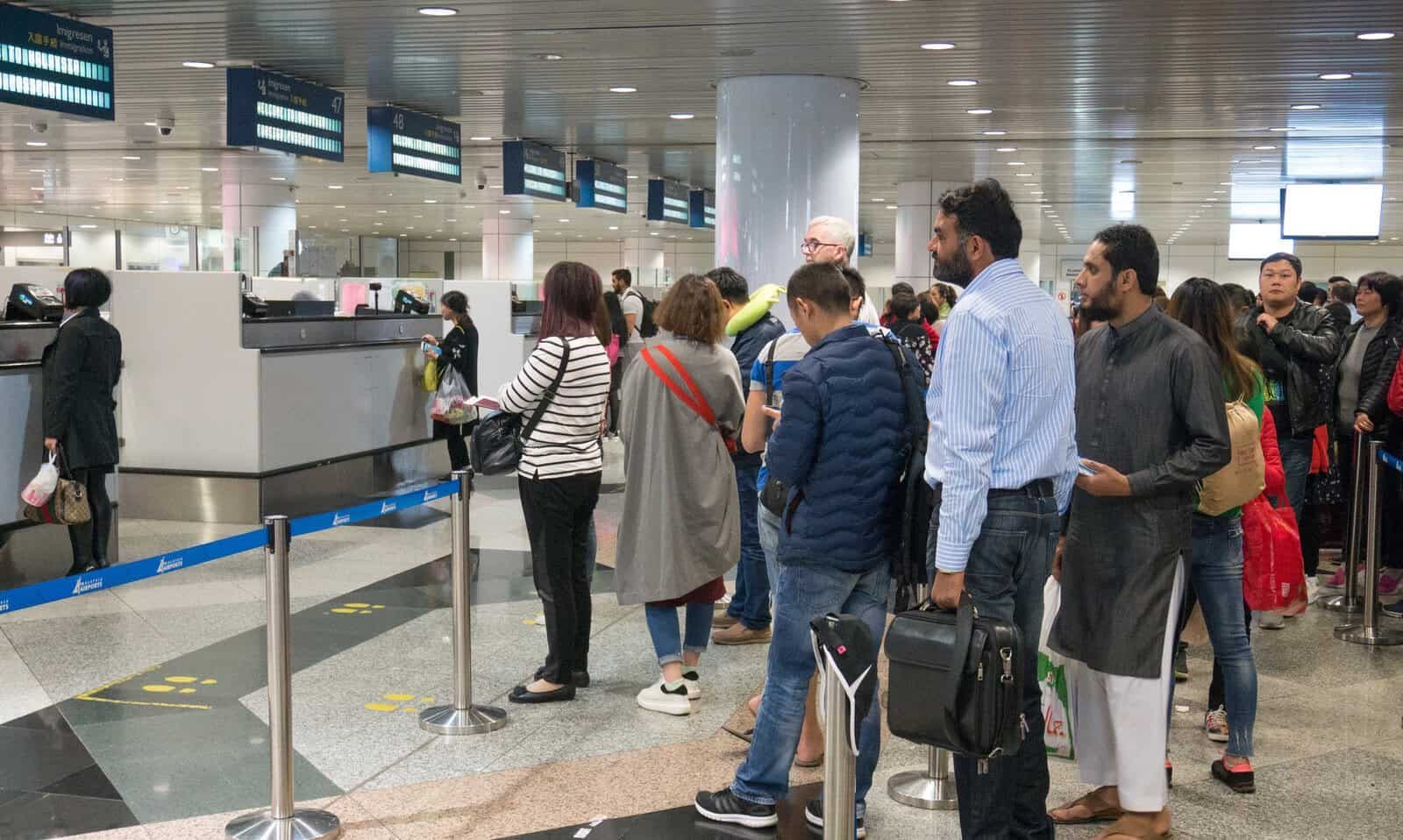
In the U.S., arriving from abroad usually means:
- Immigration.
- Collect bags.
- Customs.
- Recheck bags.
- Security again.
That can easily take 60–90 minutes before you even start walking to your next gate. A 2‑hour connection here is not generous. It’s the bare minimum.
5. Airport Layout: The Variable Everyone Underestimates
Not all hubs are created equal. Some are built for smooth connections. Others feel like they were designed by someone who hates walking and loves buses.
Before I trust a short layover, I ask:
- Is this a compact, connection‑friendly hub? (Think: Amsterdam, Helsinki, Singapore, Doha, Munich.)
- Or a sprawling, multi‑terminal maze? (Think: Paris CDG, London Heathrow, Rome FCO, some U.S. mega‑hubs.)
Things that quietly eat your layover:
- Long walks between distant gates.
- Inter‑terminal trains or buses.
- Security checkpoints between terminals.
- Schengen vs non‑Schengen passport control in Europe (20–40 minutes at busy times, longer for non‑EU passports).
My personal rule: if an airport is known for chaos or long walks, I add at least 30–60 minutes to whatever I’d normally accept. If a Schengen border crossing is involved, I add another 30 minutes on top of that.
When in doubt, I do a quick reality check before I lock in my layover time and ticket price trade off:
- Search
[airport] connection time
and read recent experiences. - Look at the airport map and see if terminals are connected airside.
- Check if my flights are in the same terminal and on the same airline/alliance.

6. Fatigue vs Savings: When a Longer Layover Is Actually Cheaper
Once I started tracking my trips, I noticed something: the “cheapest” itinerary often cost me more overall. The hidden costs of tight layovers add up fast.
Think about what a tight connection can really cost you if it goes wrong:
- New ticket: $200–$1,000+ depending on route.
- Airport hotel: $100–$250.
- Meals and transport: $30–$100.
- Lost prepaid night at your destination: $80–$300.
- Lost vacation time: hard to price, but very real.
Now compare that to paying $40–$80 more for a flight with a safer 2.5–3 hour layover. Suddenly, the boring
option is the smart financial move — especially on long haul flight layover strategy where missing one leg can wreck the whole trip.
Then there’s the sleep factor. Tight connections often mean:
- Early wake‑ups to catch the first flight.
- Adrenaline spikes from sprinting through terminals.
- Arriving wired and exhausted, then struggling to sleep or enjoy your first day.
Longer, well‑timed layovers can actually help you:
- Eat a real meal.
- Shower in a lounge or day room.
- Walk, stretch, and reset before a long overnight flight.
Layover length, fatigue, and travel stress are tightly linked. Saving $50 on a ticket and losing a full night of sleep is rarely a good deal.

7. A Simple Framework: How I Decide If a Layover Is “Safe Enough”
Here’s the mental checklist I run through before I click “Book”. Use it as a cost guide for layover decisions and tweak it to match your own risk tolerance.
Step 1: What am I optimizing for?
I pick one primary goal:
- Minimize risk (important trip, expensive ticket, tight schedule).
- Minimize time (short trip, I value every hour at destination).
- Minimize cost (I’ll accept more risk and hassle).
Then I check if my layover choice actually matches that goal. If I’m supposedly minimizing risk but booking a 55‑minute self‑transfer, I know I’m lying to myself.
Step 2: Same ticket or separate?
- Same ticket: I’m more relaxed, but I still avoid razor‑thin connections.
- Separate tickets: I treat the layover like a fragile connection I must protect at all costs.
The risk of tight connections on separate tickets is where people get hit hardest, so I’m extra conservative here.
Step 3: Domestic or international, and where?
I ask:
- Is there immigration, customs, or a Schengen border crossing?
- Is this the U.S. first entry point from abroad (which means bags + TSA again)?
- Is the onward flight long‑haul or infrequent?
The more yes answers, the more buffer I add. This is where minimum layover time for international flights really matters.
Step 4: Test the 60–90 minute delay scenario
I imagine the first flight arriving 60–90 minutes late and ask:
- Do I still make the connection without sprinting?
- If I miss it, what’s the financial damage?
- Are there later flights that day with seats?
If the answers look ugly, I pick a longer layover or a different routing. This quick test has saved me from a lot of classic flight layover planning mistakes.
Step 5: Adjust for airport reality
I quickly check:
- Airport reputation (efficient hub vs chaos magnet).
- Terminal maps and whether I’ll need to change terminals.
- Time of day (peak morning/evening vs mid‑day lull).
Then I add 30–60 minutes if anything looks tricky. It’s a simple way of balancing layover risk, price, and fatigue without overthinking every detail.
8. Practical Time Targets: What I Actually Book
To make this concrete, here are the layover ranges I personally aim for in 2026, assuming I have a choice of flights. Think of these as starting points, not rigid rules.
On one ticket (protected connections)
- Domestic–domestic: 1.5–2 hours.
- Domestic–international: 2–3 hours.
- International–domestic (first entry to U.S.): 2.5–3 hours.
- International–international, airside only, efficient hub: 1.5–2 hours.
- International–international with immigration + security: 3 hours.
On separate tickets (self-transfers)
- Domestic–domestic: 2.5–3 hours.
- Domestic–international: 3–4 hours.
- International–domestic (U.S. or similar): 4 hours.
- International–international with immigration + bags: 4–5 hours.
Are these conservative? Yes. But they’re based on the trips where I didn’t end up sleeping in a plastic chair, buying a walk‑up ticket, or losing a day of my vacation.
If you remember nothing else, remember this:
- MCT is a legal minimum, not a comfort target.
- Self-transfers are where tight layovers become truly expensive.
- Always mentally add a 60–90 minute delay to your first flight and see if your plan survives.
Once you start thinking of layovers as a risk decision instead of a time puzzle, you’ll stop bragging about 40‑minute connections — and start arriving with more money, more sleep, and a lot less drama.