
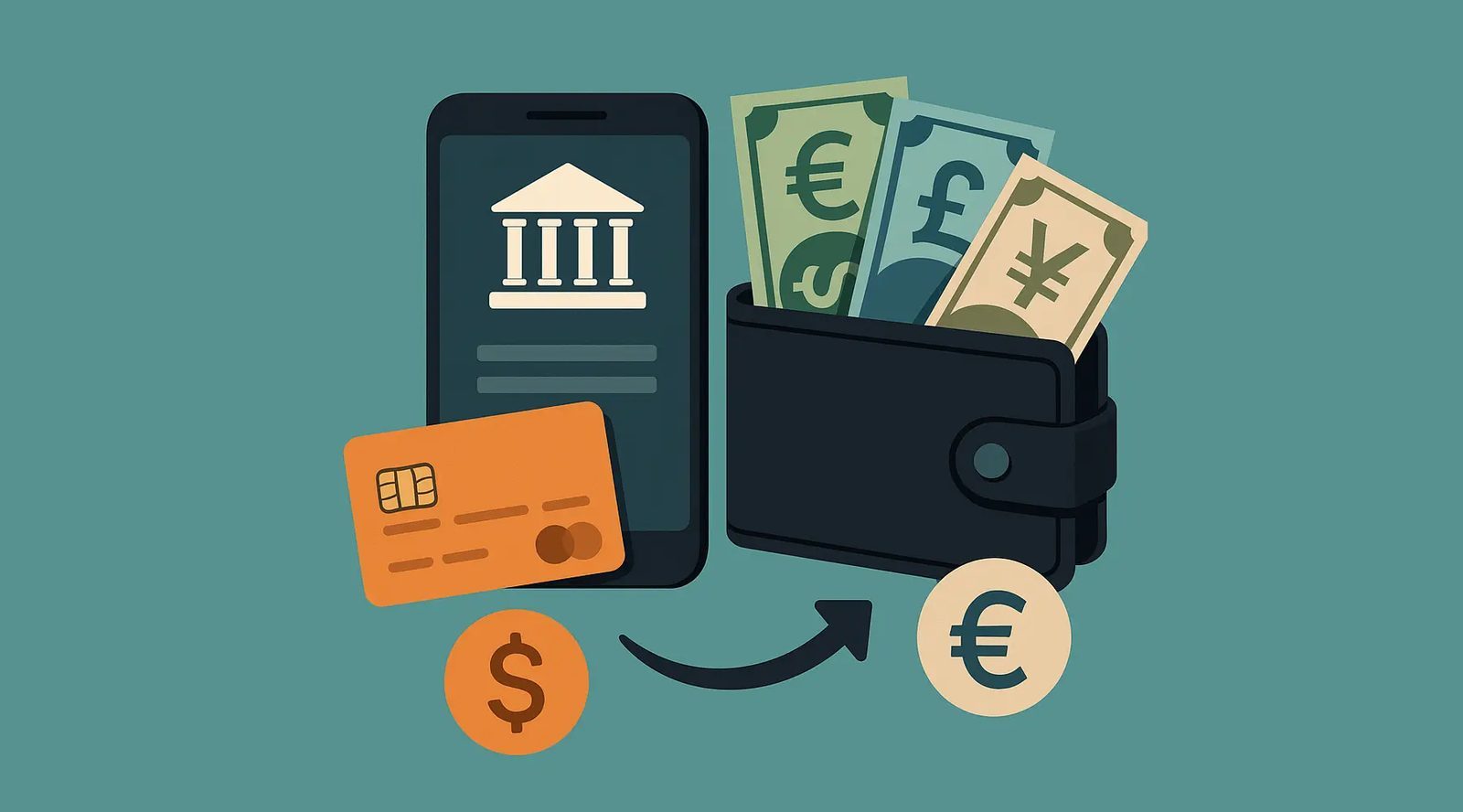
I love multi-country trips. I hate multi-currency chaos.
If you’ve ever come home with a pocket of random coins, mystery card charges, and a group chat full of “wait, who owes what in which currency?” — this is for you.
Here’s how I actually manage money on trips that cross borders: how I plan, which cards I use, how I avoid the worst foreign transaction fees, and where the real payment traps hide. Because just use your card
is lazy advice. With a bit of setup, you can do much better.
1. First Decision: One Card, or a Multi-Currency Setup?
Before you think about cash, ATMs, or how to split bills, start with one question: are you running this trip off a single home-bank card, or are you willing to set up a proper multi-currency system?
Here’s the uncomfortable truth about multi-country trip money management: traditional bank accounts are usually terrible once you leave home. Many US banks effectively charge 1%–6% per international transaction when you combine foreign transaction fees with poor exchange rates (see Finder and MoneyTransfers).
Multi-currency (or “borderless”) accounts flip that model:
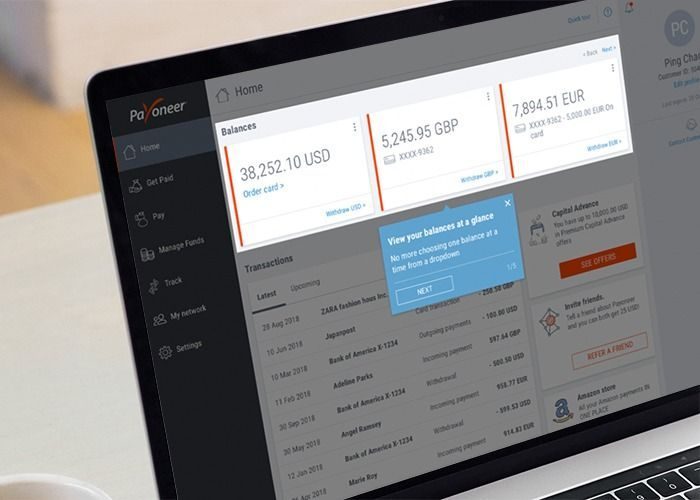
- You can hold balances in multiple currencies (EUR, GBP, THB, etc.) in one place.
- You convert when you choose, often at or near the mid-market rate.
- A linked debit card spends from the matching local currency first, so you avoid repeated conversions.
Popular providers all follow this pattern, with their own twists:
- Wise: 40+ currencies, mid-market rates, conversion fees from ~0.43%, card fee and quirky ATM rules, but very transparent (Finder).
- Revolut: tiered plans, fee-free exchange up to certain limits, extras like virtual cards and kids’ accounts.
- Xe Multi-Currency: up to 18 currencies, no monthly fee, good for timing conversions and sending money abroad quickly (Xe).
So what’s the best way to pay in different currencies on a single trip?
- If you travel abroad once every few years and usually to one country: a single no-foreign-transaction-fee credit card is often enough.
- If you travel abroad more than once a year, or your itinerary hits 3+ currencies: a multi-currency account + card is usually worth the 30–60 minutes of setup.
Ask yourself: Am I okay paying 2–5% on almost everything I buy this trip?
If the answer is no, you’re already leaning toward a multi-currency setup instead of relying on a single home card.

2. The Silent Killer: Foreign Transaction Fees & Bad FX Rates
Most travelers worry about ATM fees and ignore the slow bleed: foreign transaction fees and hidden FX margins. That’s where the real cost of using a credit card in multiple countries often hides.
Foreign transaction fees are usually 1%–3% per purchase, averaging about 1.58% according to WalletHub. That’s on top of whatever exchange rate your bank decides to use.
Here’s how that adds up on a multi-destination trip:
- $3,000 in trip spend × 3% fee = $90 gone for nothing.
- Add a 2%–3% hidden FX margin and you’re effectively paying 5%–6% more for the entire vacation.
Now compare that with a more deliberate cross-border travel payment strategy:
- Wise: mid-market rate + ~0.43%–1% fee.
- Revolut: mid-market-ish, often 0% within monthly allowance, then a small margin.
- Specialist transfer providers: from ~0.35% for sending/receiving (MoneyTransfers).
Before any multi-country trip, I run a quick audit of my wallet:
- Check every card: does it charge foreign transaction fees? If yes, it stays home.
- Prioritize cards from issuers known for 0% FX fees (Capital One, many travel cards, some HSBC, Discover, USAA, etc.).
- Use multi-currency accounts for big transfers, prepaying apartments, or paying friends in other currencies.
If you only change one thing about how you manage multiple currencies while traveling, make it this: use at least one card with 0% foreign transaction fees. It’s the easiest way to cut your currency conversion fees and protect your travel budget from exchange rate padding.
3. Dynamic Currency Conversion: The Trap You See but Don’t Recognize
Dynamic Currency Conversion (DCC) is the most obvious trap on the screen, and still catches smart travelers every day.
You’ve seen it: the card machine or ATM asks if you want to pay in your home currency instead of the local currency. It shows you the amount in dollars. It looks helpful. It feels safe.
It’s not. It’s a fee machine.
Here’s what’s really going on behind that friendly screen:
- The merchant or ATM operator sets a terrible exchange rate, often 3%–7% worse than the real rate.
- They may add extra fees on top.
- Your bank may still treat it as a foreign transaction anyway.
As TheTraveler.org points out, paying in your home currency almost always costs more than paying in the local currency. DCC is designed to make you feel informed while quietly overcharging you.
My personal script at terminals when I’m trying to avoid dynamic currency conversion abroad:
- If the screen asks:
Pay in USD or EUR?
I always choose the local currency. - If a waiter asks:
USD or local?
I say:Local currency, no conversion please.
- If they insist or say
it’s the same
, I’m fine asking them to void and redo, or I pay cash.
One rule for the whole trip: Always pay in the local currency. Always. That single habit saves more than most people realize.
4. Cash vs Card vs Apps: What to Use Where (and Why)
On a multi-country trip, the right mix of cash, card, and apps changes by region. There is no universal answer. That’s exactly why people get burned by local payment traps when traveling.
Let’s break it down using patterns from Lumera’s multi-currency travel guide and what’s actually worked for me.
Europe / UK / Switzerland
- Primary: No-foreign-fee credit card for almost everything.
- Backup: Small amount of local cash for tips, markets, tiny cafés.
- Why: Card acceptance is high, FX rates on good travel cards are strong, and you get purchase protection.
How I handle multi-country trip money management here:
- Tap a 0% FX fee credit card for transport, hotels, restaurants.
- Withdraw cash once per country from a low-fee ATM using a debit card tied to a multi-currency account.
- Track everything in local currency; let apps handle conversion in the background.
Southeast Asia
- Primary: Local cash for most day-to-day spending.
- Secondary: Card for hotels, flights, big restaurants.
- Why: Cash is still king in many places; card acceptance is patchy and sometimes surcharged.
My approach here:
- Withdraw a decent chunk of cash at a time from a reputable bank ATM to minimize per-withdrawal fees.
- Use a multi-currency travel card if it supports the local currency; otherwise accept one conversion hit at the ATM, not dozens at merchants.
- Track bigger expenses precisely; for small cash spends, I’m happy to round in my notes or app.
Business Travel
- Primary: Company credit card with 0% FX fees.
- Secondary: Personal card + multi-currency account for side trips and personal days.
Key rule: never mix business and personal. It’s not just about ethics; it’s about staying sane when reconciling expenses in multiple currencies later.
Across all regions, I think in layers:
- First layer: 0% FX fee credit card.
- Second layer: Multi-currency debit card for ATMs and places that don’t take credit.
- Third layer: Local cash for the truly offline world.
That mix keeps your travel budget less exposed to bad exchange rates while still being practical on the ground.
5. ATMs, Withdrawals, and the Art of Not Getting Fleeced
ATMs are where many multi-country trips quietly leak money. Hidden ATM fees on international travel can stack up fast.
Here’s what can hit you in one simple withdrawal:
- A flat fee from the local ATM operator.
- A percentage fee from your home bank for foreign withdrawals.
- A bad exchange rate if you accept DCC at the ATM.
As TheTraveler.org notes, frequent small withdrawals are the worst of all worlds: you pay the flat fee over and over.
Here’s how I handle ATMs on multi-country trips to keep currency conversion fees and local charges under control:
- Use the right card.
I use a debit card from a bank or multi-currency provider that either refunds ATM fees or charges very little. Wise and some online banks are decent here, but it’s worth checking their ATM limits and fees carefully. - Withdraw fewer times, in larger amounts.
I’d rather pay one $5 fee on $300 than three $5 fees on $100 each. I balance this with safety: I don’t walk around with my entire trip budget in cash. - Always decline conversion at the ATM.
If the ATM offers to charge you in your home currency, I hit “Decline conversion” or equivalent and let my bank handle the FX. - Favor bank-branded ATMs.
I avoid random standalone machines in tourist zones. Bank ATMs tend to be more transparent and less predatory.
One more subtle point for multi-currency travel cards: if your account holds the local currency, make sure your card is actually spending from that balance and not auto-converting from your home currency. Most providers do this correctly, but it’s worth a small test transaction early in the trip.

6. Multi-Currency Accounts: When They’re Genius (and When They’re Overkill)
Multi-currency accounts are trendy, but you don’t need one for every vacation. The trick is knowing when they’re a tool and when they’re just another app to babysit.
They shine when:
- You’re visiting several countries on one trip and expect to return to some of them.
- You get paid in foreign currencies (freelancing, remote work, rental income).
- You regularly send money abroad (family support, overseas bills, tuition).
- You want to time conversions and avoid rate spikes (Xe and Currencies Direct lean into this).
Key features that actually matter, based on comparisons from Monito, MoneyTransfers, and Finder:
- Local account details vs. just balances
Holding EUR is nice. Having a local EUR IBAN in your name is better. It lets you receive domestic transfers like a local and avoid incoming wire fees. - FX rate transparency
Wise uses the mid-market rate and shows the fee separately. Revolut and others may bundle margin into the rate. I prefer seeing the fee clearly. - ATM rules
Some accounts are cheap for card payments but expensive at ATMs. Read the fine print on monthly free withdrawals and caps. - Coverage
Does it support the currencies you actually need? 40+ currencies is meaningless if your key destination isn’t included.
When is a multi-currency account overkill?
- You’re doing a single short trip to one country.
- You already have a great 0% FX fee credit card and don’t need to receive money abroad.
- You’re not excited about managing yet another financial app or card.
My personal rule of thumb: if I’m hitting 3+ currencies in 12 months, or I’m getting paid in foreign currencies, I keep a multi-currency account active. Otherwise, I lean on a strong travel credit card, keep the setup simple, and focus on avoiding FX fees on vacation with good habits rather than more products.
7. Group Trips & Shared Costs: Staying Fair Across Currencies
Multi-country group trips are where money gets emotional. Different cards, different fees, different currencies — and suddenly someone feels like they’re subsidizing everyone else.
Common pain points (highlighted well by Lumera):
- Exchange rates change mid-trip, but you’re still settling in one currency.
- One person pays more on their card, but their bank adds 3% FX fees.
- Cash-heavy countries make it hard to track who paid what.
Here’s the system I use to keep things fair and avoid international travel money mistakes in groups:
- Nominate 1–2 primary payers
Ideally, people with 0% FX fee cards or multi-currency accounts. They handle most big payments: hotels, rental cars, group dinners. - Track in the local currency of the expense
Don’t convert everything to USD or EUR on the fly. Log the actual amount in the currency you paid. Let an app or spreadsheet handle conversion later at a consistent rate. - Settle up in one currency at the end
Pick a base currency (often USD or EUR) and convert everyone’s totals using a single agreed rate per currency (for example, the mid-market rate on the last day or a simple average). - Be explicit about fees
If one person’s card charges 3% FX fees, decide upfront: is that their personal cost of using a bad card, or are you all sharing it? I vote personal cost. It nudges everyone toward better card choices.
Multi-currency expense apps help, but the mindset matters more: log in local currency, convert later, agree on rules upfront. That alone kills most money drama on a multi-country trip.
8. A Simple Pre-Trip Checklist (So You Don’t Think About Money All the Time)
Here’s the checklist I run before any multi-country trip to keep my cross-border travel payment strategy under control:
- Cards
- At least one 0% foreign transaction fee credit card.
- One debit card with low or refunded ATM fees.
- Check all PINs and card expiry dates.
- Accounts
- Decide if a multi-currency account is worth it for this trip.
- If yes, open/fund it and pre-convert a reasonable amount into key currencies.
- ATM & fee strategy
- Know which banks/ATMs are recommended at your destinations.
- Plan to withdraw fewer, larger amounts safely.
- Commit to always declining DCC at ATMs and terminals.
- Group rules (if not solo)
- Agree who pays for what.
- Agree on how you’ll track expenses (app, sheet, notes).
- Agree on how and when you’ll settle, and in which currency.
- Mindset
- Expect some friction. A card will fail. An ATM will be down.
- Carry a small emergency stash in a major currency (USD/EUR) just in case.
Multi-country trips don’t have to mean multi-currency chaos. With the right mix of cards, a clear plan for FX fees, and maybe a multi-currency account in your toolkit, you can stop thinking about every payment and actually enjoy the trip.
Before you go, ask yourself: Where, exactly, is my money likely to leak on this itinerary?
Plug those holes now, and future-you will be very grateful.