You’ve just stepped off a long flight. Your brain’s foggy, your phone’s at 23%, and all you want is a shower and a bed. Then you hit arrivals and reality kicks in: How do I actually pay for this first ride?
This is the moment people get overcharged, scammed, or stuck because their card won’t work and they have no cash. That first airport transfer is a tiny stress test of your travel prep: How do you pay quickly, safely, and without wasting money?
Cash, card, or app can all be great options for airport transport abroad – but not in the same way, and not in every country. Let’s walk through the decisions so you land prepared, not panicked.
1. Do You Need Local Cash in Hand Before You Land?
Before I think about taxis, airport buses, or ride apps, I ask one simple question:
If my cards and phone failed at the airport, could I still get to my hotel?
In a lot of places, the honest answer is no unless you’ve got some local currency ready for that first airport taxi, bus, or train.
Countries like Germany, Austria, Poland, Italy, Spain, and Japan are still surprisingly cash-heavy for taxis and small vendors. Even when there’s a card reader in sight, drivers may say they prefer cash
or that the machine is broken
. In smaller towns or late at night, cash can be the only realistic way to pay for airport transport when you first land.
On the other hand, in the Nordics (Sweden, Norway, Finland), London, major U.S. cities, and much of China and Korea, you can often go from plane to hotel without touching a banknote. Cards, contactless payments, and mobile wallets are the default.
Here’s the trade-off I use when deciding whether to get local currency for the airport bus, train, or taxi:
- Pros of landing with cash: Works even if card readers are down, no need to hunt for an ATM, handy for tips, lockers, and small fees.
- Cons: Airport exchange kiosks usually have awful rates and high fees; if you lose cash, it’s gone.
So what do I actually do?
- For cash-heavy destinations (e.g., Japan, parts of Southern/Eastern Europe): I order a small amount of local currency online before the trip and pick it up at home. Just enough to cover the first airport transfer and a small buffer.
- For card-first destinations (e.g., Nordics, UK, big U.S. cities): I’m fine landing with very little or no local cash, relying on cards, contactless, and apps. I still keep a small emergency stash in a major currency (USD/EUR) tucked away.
The goal isn’t to carry a brick of cash. It’s to avoid being forced into a terrible exchange rate or a sketchy situation because you have no cash at all.

2. Should You Pay Your First Ride with a Card or a Travel App?
Once I know I could survive without tech, I flip the question:
If everything works, what’s the safest and cleanest way to pay?
For me, the safest way to pay for an airport taxi or rideshare is usually a card or a ride app, not cash.
Why cards and apps are often safer than cash for airport transport:
- Digital trail: You get a receipt, a timestamp, and with rideshare apps, a record of the route. That’s gold if you need to dispute a charge or report a scam.
- Fraud protection: Credit cards especially have strong chargeback rights. Cash has none.
- No change drama: No more
Sorry, I don’t have change
or mysteriously rounded-up fares.
But there are catches when you’re deciding between cash vs card for an airport taxi:
- Not all taxis accept cards, even when they say they do.
- Some drivers add unofficial card fees or vague
service charges
. - Dynamic Currency Conversion (DCC) can quietly add 3–7% to your bill if you pay in your home currency instead of local.
My rule of thumb for that first airport ride:
- If Uber/Bolt/Grab/etc. is legal and widely used: I often book via app. The fare is calculated automatically, payment is in-app, and I can see the route and driver rating. Paying for Uber or Bolt from the airport also avoids awkward cash conversations.
- If I’m using an official airport taxi: I ask
Do you take card?
before getting in. If yes, I prefer to pay with a credit card (not debit) for better fraud protection and clearer dispute options. - If the driver hesitates or looks annoyed about cards: I assume there’s a decent chance of
machine broken
drama later and mentally prepare to switch to cash or a ride app instead.
Cards and apps are fantastic for airport transfers – but only if you understand the fee traps. Let’s tackle those next.
3. How Do You Avoid Hidden Fees and Bad Exchange Rates?
Even if you dodge outright scams, you can still bleed money through the system itself. Banks, ATMs, and payment processors all want a slice of your airport transfer cost. I try to keep that slice as thin as possible.
Here’s what I watch for when paying for airport transport abroad:
1. Dynamic Currency Conversion (DCC)
This is the classic one. The card terminal or app asks:
Pay in USD or in EUR?
(or your home currency vs local)
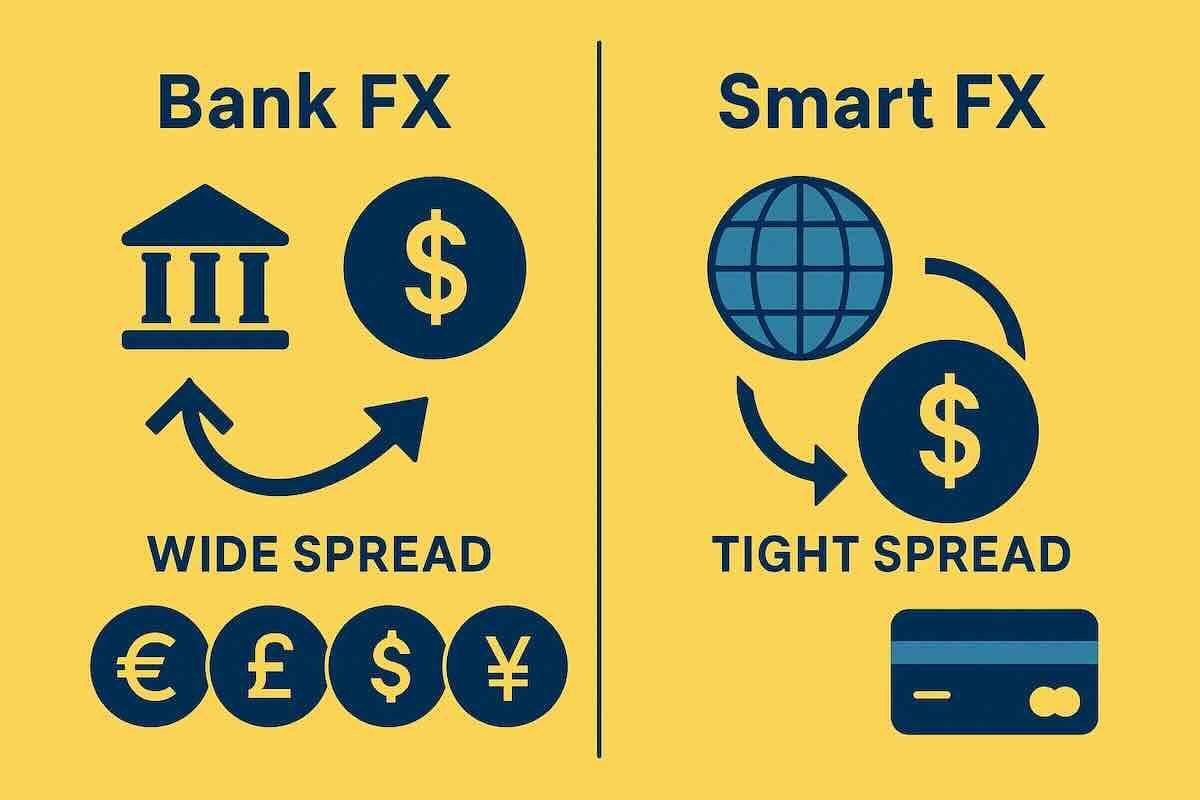
It looks friendly. It’s not. Choosing your home currency usually means the terminal sets the exchange rate, often with a 3–7% markup. To keep the cost of airport transfers down, I always:
- Choose to pay in the local currency (EUR, JPY, etc.).
- Ignore the scary
unknown rate
warning – my bank’s rate is almost always better than the terminal’s.
2. Foreign transaction fees
Many credit and debit cards charge around 3% on foreign purchases. On a single taxi ride, that’s small. Over a trip, it adds up fast.
My approach:
- Use a no-foreign-transaction-fee credit card as my main travel card for airport rides and beyond.
- Keep a backup card that also has low or no FX fees, in case the first is blocked.
3. ATM and cash withdrawal costs
If I need cash at the airport for a bus ticket, train fare, or taxi, I try to avoid the worst offenders:
- Skip airport exchange kiosks unless it’s a true emergency.
- Use an ATM from a major bank, not a random standalone machine with huge fees and bad rates.
- Withdraw a reasonable chunk once rather than many tiny withdrawals, to spread the fixed ATM fee.
And I never use a credit card for cash withdrawals unless I’m absolutely stuck – the cash advance fees and immediate interest are brutal.
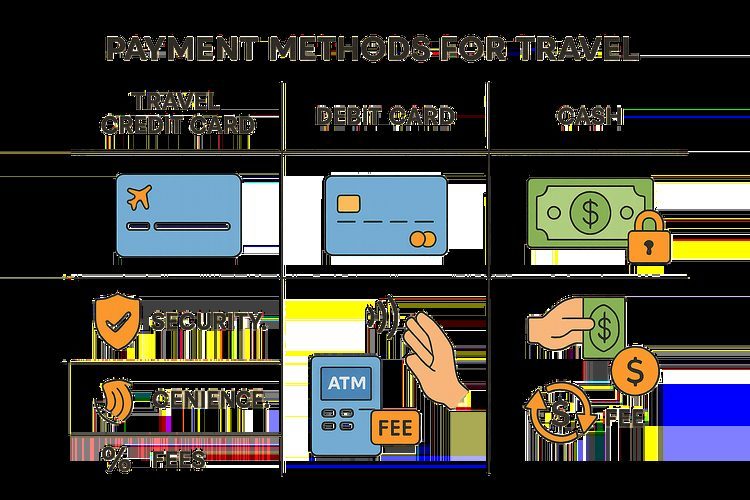
4. What If the Taxi Driver Says the Card Machine Is “Broken”?
This is one of the most common airport-transport tricks worldwide. You confirm you can pay by card, take the ride, then at the end you hear:
Sorry, machine not working. Cash only.
Sometimes it’s genuine. Often it’s not.
Here’s how I handle it, especially in cities where card acceptance is legally required (like New York yellow cabs and London black cabs):
- Stay calm, but firm. I say something like:
We agreed on card before the ride. Please try again.
- Ask them to reboot the terminal or try another card. Many
broken
machines magically recover. - Note the cab details: license plate, driver ID, company name. I do this visibly so they know I’m paying attention.
- Mention the regulator or police if I’m in a city where card acceptance is mandatory. For example:
Card is required by law. If it doesn’t work, I’ll call the taxi authority to help us sort it out.
In many cases, the machine suddenly works again.
If it truly doesn’t:
- I offer to pay via app if the company has one.
- If I must use cash, I pay the metered fare only, no extra
machine broken
surcharge.
In less regulated markets, I’m more cautious. If a driver seems cagey about cards from the start, I either:
- Switch to a different taxi that clearly displays card logos and looks professional, or
- Use a rideshare app where payment is handled in-app and not negotiable at the end.
The key is to decide how you’ll pay for your airport taxi before you get in, not after you’re already at the hotel with your luggage in the trunk.
5. Are Mobile Wallets (Apple Pay, Google Pay) Safe for That First Ride?
More and more, my default isn’t physical card or cash. It’s tap-to-pay with my phone.
Why? Because mobile wallets like Apple Pay and Google Pay are often safer than handing over a physical card for that first airport transfer:
- They use tokenization – the merchant never sees your real card number.
- They require biometrics (face/fingerprint) or a passcode to authorize payment.
- They use the same fraud protections as your underlying card.
In many cities, especially post-pandemic, taxi terminals and rideshares accept tap-to-pay by default. In some places (like parts of China and Korea), mobile payments are so dominant that cash feels old-fashioned.
But there are two big caveats for that first airport ride:
- Battery and connectivity: If your phone dies or your eSIM isn’t activated yet, you don’t want your only payment method locked inside that device.
- Acceptance gaps: Some older taxis or rural areas still don’t support contactless payments, even if they take chip cards.
So I treat mobile wallets as my primary but not my only way to pay for airport transport:
- I keep at least one physical card in a separate pocket or money belt.
- I carry a small amount of local cash as backup.
- I make sure my phone is charged before landing and, if possible, I have an eSIM or roaming plan ready so my banking and ride apps work immediately.
6. What’s the Smartest Mix: Cash, Card, or Travel Card for Day One?
Relying on just one payment method is where people get burned. One lost wallet, blocked card, or dead phone can turn a simple airport transfer into a full-blown problem.
I aim for a hybrid setup that balances safety, cost, and convenience for that first day:
1. Small local cash buffer
- Enough for one or two rides plus a bit extra for snacks or tips.
- Stored in a separate pocket from my main wallet.
- Obtained at decent rates (ordered in advance or from a bank ATM, not a random kiosk if I can avoid it).
2. Main payment: no-FX-fee credit card
- Used via mobile wallet when possible, or as a physical card.
- Strong fraud protection and often rewards or points on travel spending.
- Always paying in local currency, never via DCC.
3. Backup: travel debit or multi-currency card
- For ATM withdrawals and as a backup payment method if my main card fails.
- Ideally from a bank that reimburses ATM fees or a provider like Wise/Revolut with transparent FX rates.
On day one, at the airport, that mix gives me options and avoids common airport transfer payment mistakes:
- If taxis are card-friendly: I tap my phone or use my credit card.
- If the card system is down: I pay cash from my small buffer.
- If I misjudged and need more cash: I use my travel debit card at a bank ATM, once, for a sensible amount.
7. Quick Landing Checklist: What Will You Actually Do?
It’s easy to nod along and then forget everything when you’re jet-lagged at baggage claim. I like having a simple, written plan for that first ride from the airport.
Here’s a checklist you can adapt for your next trip so you know exactly how to pay for airport transport abroad:
- Before you fly:
- Check if your destination is cash-heavy or cashless for taxis, airport buses, and trains.
- Decide if you’ll withdraw cash at the airport or bring a small amount of local currency from home.
- Set up a no-FX-fee credit card in your mobile wallet for contactless payments.
- Install and test any rideshare apps used in that country (Uber, Bolt, Grab, etc.).
- On the plane (or just before landing):
- Decide your first-choice payment method (app, card, or cash) and your backup.
- Screenshot your hotel address in the local language.
- Make sure your phone is charged and your eSIM/roaming is ready if possible.
- At the airport:
- Ignore pushy drivers. Look for official taxi stands or clearly marked rideshare pickup zones.
- Ask
Do you take card?
before getting into a taxi. - If using a card, always choose to pay in the local currency to avoid extra conversion fees.
- If a driver claims the machine is broken, stay calm, insist once, then switch to your backup plan.
Airport transport is the first money test of your trip. If you can get through that ride without overpaying, panicking, or arguing about payment, you’ve already set the tone for the rest of your travels.
So next time you land in a new country, don’t just ask How do I get to my hotel?
Ask: How do I want to pay for that ride – and what’s my backup if that fails? Answer that, and you’ll be a lot harder to scam.