
I love cheap international flights. I don’t love gambling my entire trip on a sketchy connection just to save $80.
This guide is about the middle ground: using positioning flights and alternate airports to cut costs without turning your vacation into a high-stress experiment.
By the end, you should be able to look at an expensive fare and think: Is there a smarter way to route this?
— and actually answer that with numbers, not vibes.
1. First Decision: Do You Even Need a Positioning Flight?
Before I start breaking a trip into pieces, I ask one blunt question:
Can I get something reasonable from my home airport without extra complexity?
A positioning flight is a separately booked segment you take just to reach a better departure airport for your main trip. It’s not a normal connection. It’s a second ticket, with its own risks, rules, and confirmation number.
Why bother with this at all?
- Cash fares from your home airport are outrageous compared to nearby hubs.
- Award space in business or first only exists from certain cities.
- You want a specific product (Qatar Qsuite, ANA First, Iberia business, etc.) that doesn’t serve your home airport.
But here’s the trap: people jump to positioning flights too fast. I try not to.
My first step is always to search from my home airport across multiple programs and tools. I want to know if I can avoid separate ticket positioning flight risks altogether:
- Cash: Google Flights, Skyscanner, airline sites.
- Awards: Aeroplan, Flying Blue, Avios, Asia Miles, United, etc.
- Aggregators: tools like seats.aero for quick award scans.
If I can get:
- a decent economy fare, or
- a solid award in a tolerable cabin,
then I often stop there. Simpler is usually safer, especially if the cost comparison between a positioning flight vs direct isn’t dramatic.
Rule of thumb: I only consider positioning when the potential gain is big: hundreds of dollars, or tens of thousands of miles, or a major cabin upgrade. Small savings rarely justify the extra moving parts.
2. Second Decision: Where Are the “Smart” Airports for Your Trip?
Once I know my home airport options are mediocre, I flip the question:
From which airports is this route actually cheap or well-served?
This is where tools like FlightConnections and award search engines shine. I’m not thinking about my home city yet. I’m thinking about global hubs and regional sweet spots that consistently offer cheap international flights from nearby airports.
Typical patterns:
- Transatlantic: BOS, JFK, EWR, IAD, PHL, ORD often have aggressive pricing.
- To Asia: LAX, SFO, SEA, YVR, sometimes DFW or IAH.
- To Europe from Canada: YYZ and YUL often beat smaller Canadian airports.
On the award side, some programs are notorious for city-specific sweet spots. For example, Iberia’s business-class awards to Madrid are much cheaper from JFK/BOS/IAD than from many other cities. If I live in, say, Charlotte, I might need to position to one of those gateways to unlock the deal.
So my process looks like this:
- Ignore my home airport for a moment.
- Search from major hubs on my continent to my destination.
- Identify 2–3 airports where prices or award space are clearly better.
Only then do I ask: Can I get myself to one of these hubs cheaply and safely?
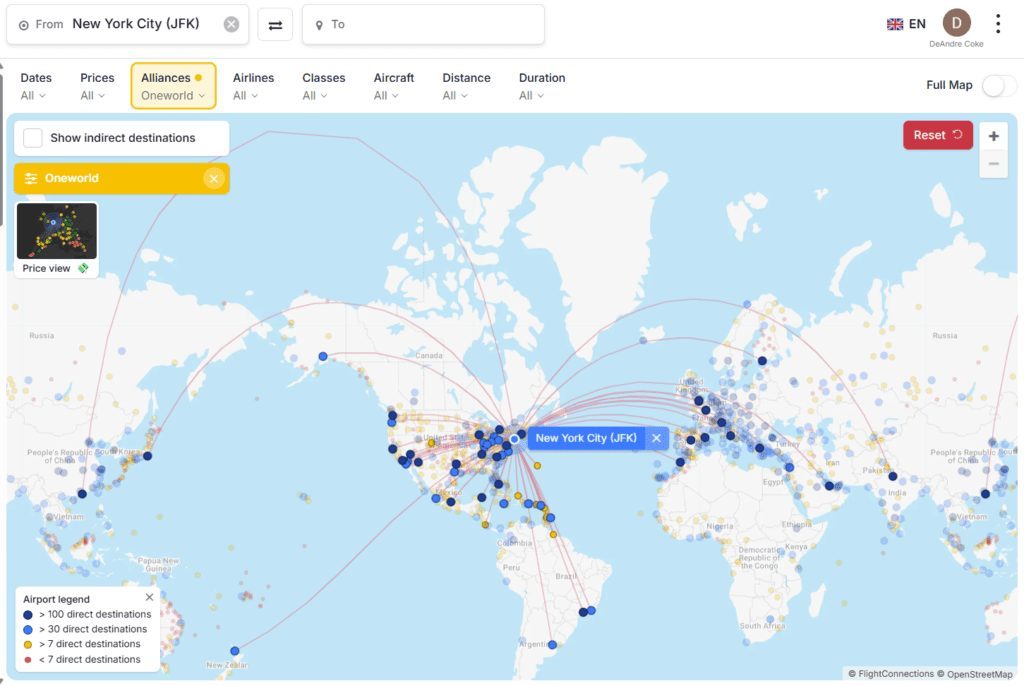
Key mindset shift: stop assuming your home airport is the “start” of the trip. The real starting point is wherever the best long-haul deal lives, whether that’s your home airport or an alternative airport with better airfare.
3. Third Decision: Does the Math Actually Work (All-In)?
This is where people fool themselves. They see a $400 cheaper long-haul fare from another city and mentally pocket the savings. But they ignore everything else.
I force myself to do a full trip-level cost comparison before I celebrate any positioning flights cost savings.
Option A: Simple itinerary from home
- Round-trip or multi-city ticket from home airport.
- All on one ticket, protected connections, bags checked through.
Option B: Positioning strategy
- Positioning flight(s) to the cheaper hub.
- Main long-haul ticket from that hub.
- Any extra ground transport, hotels, meals, and baggage fees.
Then I add everything up:
- Cash: fares + bags + hotels + transfers + meals.
- Points: miles used + taxes/fees + any points you’d earn but now won’t.
- Time: extra hours in transit, overnight stays, extra PTO.
Only if Option B beats Option A by a meaningful margin do I proceed.
For example, suppose:
- Home airport to Paris: $1,200 round-trip.
- Hub city to Paris: $800 round-trip.
- Positioning flight: $150 each way = $300.
- Overnight hotel near hub: $120.
- Extra meals and transit: $60.
Total for positioning: $800 + $300 + $120 + $60 = $1,280.
That “$400 cheaper” fare is now more expensive than just flying from home. And you’ve added risk and complexity for nothing.
My personal rule: I want at least $250–$300 in real, all-in savings (or a major cabin upgrade) before I accept the extra hassle of positioning. For premium cabins or huge mileage savings, I’ll accept less cash savings because the comfort jump is massive.
When you compare an alternative airport vs home airport airfare, this all-in view keeps you honest. It also forces you to notice hidden costs of alternative airports: airport transfers, parking, overnight stays, and the value of your time.
4. Fourth Decision: How Much Risk Are You Willing to Carry?
Here’s the uncomfortable truth: positioning flights are not protected. If your first flight is delayed and you miss the long-haul, the second airline usually shrugs. You’re a no-show.
So I ask myself a harsh question:
If the positioning leg goes wrong, can I absorb the hit?
That hit might be:
- Buying a last-minute long-haul ticket at walk-up prices.
- Losing a hard-to-find award seat.
- Missing a cruise departure, tour, or event.
To keep the positioning flight missed connection risk manageable, I use a few rules:
1. Build big buffers
- Same-day positioning: I want at least 4–6 hours between scheduled arrival and long-haul departure, more if it’s winter or a delay-prone route.
- High-stakes trips (cruise, wedding, safari): I often position the day before and treat the hub as a mini-stopover.
2. Prefer carry-on only
- Separate tickets often mean no through-checking of bags.
- You may have to collect and re-check luggage, clear security again, and respect check-in cutoffs.
- Carry-on only gives you more flexibility if you need to switch flights last minute and avoids common mistakes with positioning flights and baggage.
3. Use flexible fares and protections
- On the positioning leg, I prefer fares I can change or cancel cheaply.
- I pay attention to credit card benefits: trip delay, trip interruption, missed connection coverage.
- For complex or expensive trips, I consider standalone travel insurance that covers missed connections on separate tickets. Separate tickets travel insurance issues can be tricky, so read the fine print.
4. Know your personal risk tolerance
- Solo, flexible, backpack-style trip? I’m more aggressive.
- Family of four with kids and limited PTO? I’m much more conservative. Sometimes the “expensive” simple ticket is actually the cheap option once you price in stress and risk.
If you’re not comfortable with the worst-case scenario, the deal isn’t good enough.
5. Fifth Decision: Can You Use Multi-City and Open-Jaw to Avoid Extra Flights?
Positioning doesn’t always mean add more flights.
Sometimes the smarter move is to reshape the main ticket instead of bolting on extra segments.
Two tools I use a lot:
Multi-city tickets
Example: Chicago → London → Paris → Chicago
on one ticket. This can be similar in price to a simple round-trip, sometimes even cheaper, and it keeps everything protected on one reservation.
Open-jaw tickets
Example: fly into Geneva, travel overland, fly home from Zurich. The gap in the middle is on your own (train, bus, car), but the long-haul flights are on one ticket.
In regions like Europe or parts of Asia, this is gold:
- You avoid backtracking to your arrival city.
- You use fast, cheap trains or buses instead of extra flights.
- You sometimes pay less than a boring round-trip.
Crucially, booking the same flights as separate one-ways is often more expensive than a single multi-city or open-jaw ticket. So I always test the multi-city option before I start stacking separate tickets.
How this helps with positioning:
- Maybe you don’t need a separate positioning flight home if you can fly back from a different city that’s easier to reach overland.
- Maybe you can turn what would have been a risky separate leg into a protected segment on the main ticket.
When I can keep everything on one ticket and still hit my price goals, I almost always do it. Complexity without protection is the part I try to avoid.
6. Sixth Decision: Are You Exploiting (Not Fighting) Airline Pricing?
Airline pricing is not logical. It’s algorithmic, dynamic, and often predatory. As pricing gets more complex, using alternate airports to save money becomes less about luck and more about strategy.
Instead of fighting that, I try to surf it.
Some patterns I watch for:
1. The “convenience tax” of small airports
Smaller or monopoly airports often have inflated fares simply because they can. If you live in one of these, it can be cheaper to:
- Drive or take a train to a bigger airport, or
- Use a low-cost carrier to reach a major hub, then fly long-haul from there.
This is where a budget strategy using positioning flights can shine, as long as you remember the hidden costs of alternative airports like parking, gas, and extra time.
2. Regional hubs as secret weapons
Sometimes the best deals aren’t from the mega-hubs, but from regional hubs served by low-cost carriers. For example:
- Positioning to a city with a strong low-cost presence (Ryanair, easyJet, AirAsia, etc.).
- Then catching a long-haul sale fare or award from there.
This can be especially powerful if you’re saving on long haul flights with regional airports that don’t show up in your first instinctive search.
3. Treating your trip as segments, not a round-trip
Instead of searching Home → Destination → Home
as one neat package, I think in stages:
- Stage 1: Home → Best departure hub.
- Stage 2: Hub → Destination (long-haul).
- Stage 3: Destination → Return hub (maybe a different one).
- Stage 4: Return hub → Home.
Sometimes the magic is in asymmetry. You might fly out via one hub and back via another, depending on where the deals and award space are.

This approach takes more time and more tabs. But it’s how you stop being the person who pays whatever the algorithm throws at your home airport and start being the person who quietly sidesteps the worst of it.
7. Seventh Decision: Is the Upgrade Worth the Hassle?
Sometimes positioning isn’t about saving money. It’s about buying comfort or experience at a discount.
Example scenarios:
- Economy from home is $1,200. Business from a hub is $1,800. Positioning costs $200. For $1,400 total, you get lie-flat instead of a cramped overnight.
- Award from home is 180,000 miles in business. From a hub, it’s 70,000 miles. Positioning costs 10,000 miles or $150. You’ve just saved 100,000+ miles.
In these cases, I’m not just asking Is it cheaper?
I’m asking:
- How much is my sleep worth?
- How much do I value my miles?
- Will this cabin upgrade change how I feel on day one of the trip?
For a once-in-a-decade trip, I’m more willing to position for a great business or first-class product. For a quick long weekend, I’m less interested in adding complexity just to sit in a slightly nicer seat.
One more nuance: I often lock in the scarce long-haul award first (from whatever hub has space), then build the positioning around it. Long-haul premium awards are usually the bottleneck. Short-haul positioning flights are easier to replace if plans change.
8. Putting It All Together: A Simple Checklist Before You Book
When I’m about to pull the trigger on a positioning strategy, I run through this quick checklist. It’s my personal guide on how to book safe positioning flights without getting burned:
- Have I exhausted simple options from my home airport?
If not, I’m probably overcomplicating things. - Do I know which hubs or alternate airports actually have better deals?
I’ve checked major hubs and award sweet spots, not just guessed. - Have I done a full all-in cost comparison?
Including bags, hotels, meals, transfers, and time. - Is the upside big enough?
At least $250–$300 saved, or a major cabin/comfort upgrade, or huge mileage savings. - Is my risk buffer realistic?
Generous layovers or overnight, flexible fares, carry-on if possible, and some form of protection. - Have I tried multi-city or open-jaw on one ticket?
If I can keep everything protected on one reservation, that usually wins. - Does this match my personal tolerance for hassle?
For families or high-stakes trips, simplicity often beats cleverness.
If I can honestly say yes
to most of those, I book the positioning flights and sleep fine. If not, I remind myself: paying a bit more for a simple, protected itinerary is not losing. It’s buying peace of mind.
Use positioning flights and alternate airports as a scalpel, not a lifestyle. When the numbers and the risk profile line up, they’re one of the most powerful tools you have against modern airfare pricing. When they don’t, close a few tabs and take the straightforward route. Your future self at the gate will thank you.