

I used to think a cheap weekend getaway
was any flash sale that hit my inbox. $89 round trip? Done. Then I’d get home, open my banking app, and wonder how that cheap
escape turned into a $500+ hit.
If that sounds familiar, this guide is for you. Instead of just looking at the flight price, we’ll walk through how to budget door‑to‑door—from your front door to the hotel and back again—and what a realistic 2–3 day weekend actually costs.
We’ll break down the real numbers, the sneaky extras, and a simple framework you can reuse for every trip. The goal: no more surprises when the credit card bill shows up, and a clear idea of the total cost of a weekend getaway.
1. Start With Reality: What a Weekend Trip Actually Costs
Before getting into strategy or hacks, it helps to know what people really spend. When you add up transport, lodging, food, and a couple of activities, most 2–3 day trips fall into a surprisingly predictable range.
Across several breakdowns and surveys (including data summarized in this weekend cost guide and this 2024 spending snapshot):
- Typical total for 2 nights (per person): about $350–$600
- Common overall range: roughly $230–$830 per person
- For two people: it’s very easy to end up in the $500–$1,200 range
So where does all that money actually go on a “cheap weekend getaway”?
- Lodging: often 40–50% of the total (think $120–$220 per night for a mid‑range place)
- Transport: $30–$80 for gas on a road trip, or $150–$300+ for regional flights if you don’t book early
- Food: $60–$120 per person for two days of casual dining, coffees, and a drink or two
- Activities: $20–$60 per person for basic stuff, $50–$150+ if you add tours, shows, or rentals
So when you see a $99 weekend deal
, the real question is: Okay, and what’s the other $300–$500 I’m not seeing yet?
Takeaway: A truly cheap
weekend is rarely under $250 total unless you’re staying with friends, camping, or being very intentional. For most people, $250–$350 is a realistic budget‑conscious target, and $500+ is common once you add flights or nicer hotels.
2. Door‑to‑Door Transport: The Costs Hiding Between the Flights
Most people only budget for the obvious: the flight, the train ticket, or the gas. The problem? Everything in between. On a short trip, the cheap
flight is often the smallest part of your transport bill.
When I plan a weekend now, I literally write out the door‑to‑door travel budget like this:
- Home → airport (rideshare, parking, bus, train)
- Airport → destination city center or hotel
- Local transport all weekend (transit passes, rideshares, scooters, parking)
- Hotel → airport → home again
Then I price each link. It’s not glamorous, but this is where the real cost of a cheap
weekend getaway hides.
Some typical weekend transport traps:
- Airport transfers: Two $40 rideshares each way? That’s $160 on top of your
$120 flight deal
. - Budget airline add‑ons: A low base fare plus baggage and seat fees can easily beat a full‑service airline’s all‑in price for two people.
- Parking: Airport parking at $15–$25 per day, plus hotel parking at $20–$40 per night, can quietly add $70–$150.
- Local transit: Day passes, scooters, and
just this one Uber
add up fast.
If you’re driving instead of flying, the math changes but the principle doesn’t: don’t guess. Use numbers, not vibes, when you compare flight vs driving weekend trip cost.
Tools like the Road Trip Cost Calculator let you plug in your route, MPG, and gas prices to get a realistic fuel and toll estimate. You can even compare routes and see how much that faster
toll road actually costs you.
Takeaway: Always calculate door‑to‑door transport: main fare + airport transfers + local transit + parking + baggage/fees. Only then compare cheap flight
vs. drive
vs. train/bus
for your weekend trip cost breakdown.
3. Lodging: The Headline Rate Is a Lie
Accommodation is usually the biggest line item in any weekend getaway budget, and it’s also where the most gotchas
live. That $120/night room? It’s rarely $120 by the time you check out.
Here’s what I look at now instead of just the nightly rate:
- Taxes & fees: In many places, these add 30–40% to the base rate. A $120 room can easily become $160+ per night.
- Resort & destination fees: These are often mandatory and not obvious until the final booking screen.
- Parking: City hotels can charge $20–$40 per night. That’s effectively another $20–$40 on your room rate.
- Cleaning & service fees (for rentals): A
cheap
Airbnb can double in price once you add cleaning and service fees for a short stay.
On the flip side, lodging is also where you can save the most without killing the trip:
- Stay slightly outside the center: A 10–20 minute transit ride can cut your nightly cost dramatically.
- Use kitchens strategically: A place with a kitchenette lets you skip $15 hotel breakfasts and overpriced snacks.
- Share space: Splitting a 2‑bedroom rental with friends can drop your per‑person cost below a basic hotel.
- Be flexible on dates: Shifting by one weekend or avoiding big events can change prices more than any coupon code.
Takeaway: Always compare the total cost for the stay (including taxes, fees, and parking), not just the nightly rate. A more expensive
place with free parking and breakfast can be cheaper overall when you look at the full door to door vacation cost estimate.
4. Food & Activities: The Silent Budget Killers
Food and activities are where a lot of cheap
trips quietly double in price. $8 coffee here, $12 cocktail there, $25 museum ticket, $40 bike rental. None of it feels huge in the moment.
Then you get home and realize you spent more on snacks and just this one tour
than on your flight.
From the data and my own trips, a realistic per‑person weekend estimate looks like this:
- Food: $60–$120 for 2 days of casual meals, coffees, and a drink or two
- Activities: $20–$60 for basic attractions, $50–$150+ if you add tours, shows, or rentals
That’s per person. For two people, you’re easily in the $160–$400 range just for eating and doing things on a short trip.
Here’s how I keep this under control without feeling deprived:
- Set a daily food number: For example,
We’re aiming for $40–$50 per person per day.
Then choose restaurants that fit. - Self‑cater the boring meals: Breakfast and snacks are easy to DIY. Save restaurant money for the meals you’ll remember.
- Pre‑pick 1–2 paid activities: Decide in advance what’s worth paying for, and let everything else be free or low‑cost (walks, parks, free museum days).
- Avoid the
hungry and trapped
tax: Don’t wait until you’re starving in the most touristy part of town to look for food.
Takeaway: Decide your per‑day food budget and your activity budget before you go. If you don’t, these two categories will quietly blow up your cheap
weekend and wreck your weekend travel expenses list.
5. The Simple Door‑to‑Door Budget Framework (You Can Reuse Every Time)
Now let’s turn this into something you can actually use for weekend getaway budget planning. I like to think in five buckets, plus a buffer:
- Transport (door‑to‑door)
Flights or gas + airport transfers + local transit + parking + baggage/fees. - Lodging
Total for the stay including taxes, fees, and parking, divided by the number of people. - Food
Per‑person daily estimate × number of days. - Activities
Pre‑planned tickets + a small allowance for spontaneous things. - Miscellaneous
Souvenirs, snacks, tips, toiletries, etc.
Then I add a 10–15% buffer on top. Because something always comes up.
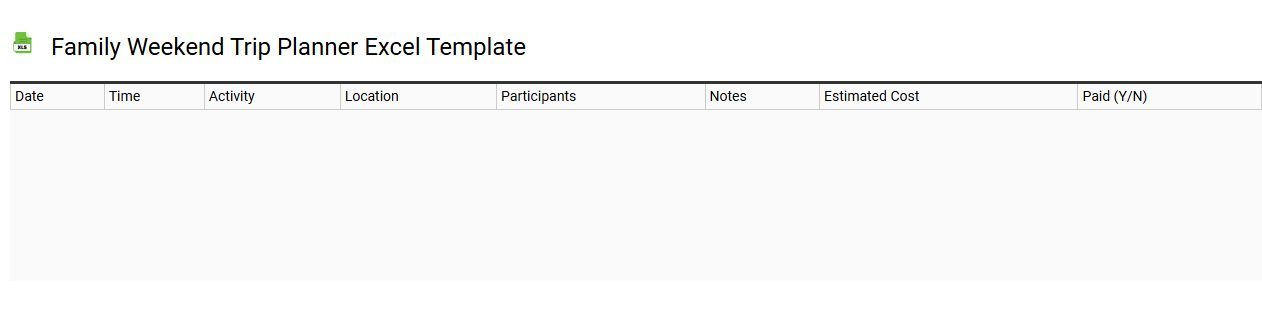
If you like spreadsheets (or just want something pre‑built), tools like the Travel Budget Calculator and weekend‑trip Excel templates from sites like TemplateBudget and XLSTemplate can do the math for you.
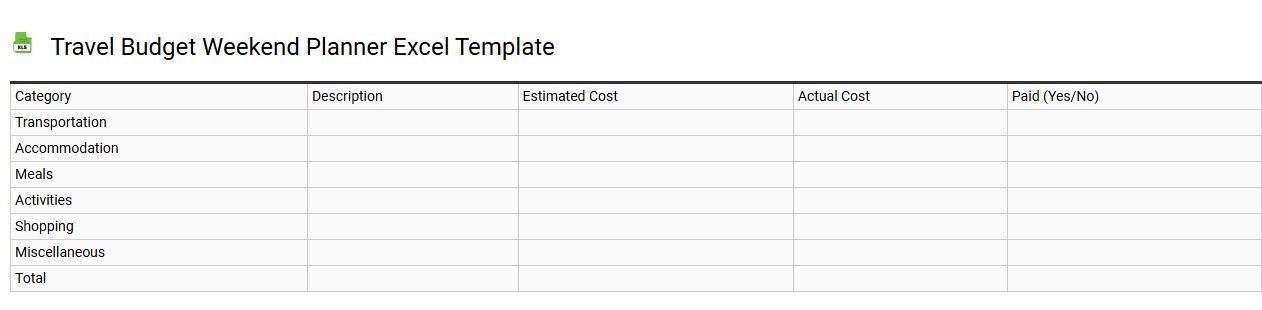
They’re built around the same idea: put all the categories in one place, estimate, then compare your planned vs. actual spending. It’s basically a short trip travel cost calculator you control.
Takeaway: Don’t just ask Can I afford this flight?
Ask What’s the total door‑to‑door cost for this weekend, including everything?
That’s how you avoid the hidden costs of cheap trips.
6. Build a Sample Budget: Cheap vs. Comfortable vs. Treat‑Yourself
Let’s make this concrete. Imagine a 2‑night weekend for one person. Here’s how three different styles might look when you add everything up in a realistic weekend trip cost breakdown.
Scenario A: Ultra‑Budget, Driveable Getaway
- Drive 200 miles round trip: ~$40 gas
- Simple motel in a small town: $80/night × 2 = $160 (taxes included)
- Food: $35/day × 2 = $70 (one restaurant meal per day, rest DIY)
- Activities: $20 (one paid activity, rest free hikes/walks)
- Misc + buffer: ~$30
Total: about $320
Scenario B: Comfortable City Weekend (Typical)
- Regional flight: $200 round trip (all‑in with bags)
- Airport transfers + local transit: $80
- Mid‑range hotel: $180/night × 2 = $360 (with taxes/fees)
- Food: $60/day × 2 = $120
- Activities: $60 (museum + bike rental or show)
- Misc + buffer (10–15%): ~$80
Total: about $900 for two people, or $450 per person
Scenario C: Treat‑Yourself Weekend
- Last‑minute flight: $350
- Airport transfers + rideshares: $120
- Nice boutique hotel: $260/night × 2 = $520
- Food: $90/day × 2 = $180
- Activities: $120 (tour + show + rentals)
- Misc + buffer: ~$150
Total: easily $1,400+ for two people
Notice something? The cheap weekend
and the treat‑yourself
weekend aren’t different because of one big thing. They’re different because every category is 20–50% higher.
Takeaway: You don’t need to cut everything. Decide which scenario you’re aiming for, then deliberately choose where you’ll spend and where you’ll save. That’s how to budget a weekend trip without feeling like you’re on a financial detox.
7. How to Actually Keep Your Weekend Under Control (Without Killing the Fun)
Here’s the part that matters: how to use all this without turning your trip into a spreadsheet competition.
When I plan a weekend now, I run through a quick checklist:
- Pick your total number first.
For example:I want this weekend to be around $350 per person, all‑in.
That’s your door to door travel budget. - Back into the categories.
Maybe that means $120 transport, $150 lodging, $60 food + activities, $20 buffer. - Compare options by total cost, not just one line.
A slightly more expensive hotel with free breakfast and parking might win. - Lock in the big stuff early.
Transport and lodging are where last‑minute decisions hurt the most. - Pre‑decide your splurges.
One great dinner? A show? A spa session? Choose them on purpose, not in the moment when you’re tired. - Track lightly during the trip.
You don’t need a full ledger. Just keep a running note of daily spend so you know if you’re drifting.
And one more thing: timing matters. Traveling off‑peak, avoiding big events, and being flexible with departure times (Friday night vs. Saturday morning, Sunday early vs. late) can shave a surprising amount off both flights and hotels. Many budget guides, like this one, point out that timing alone can change the real cost of cheap flights more than any promo code.
Final thought: A weekend away doesn’t have to be expensive, but it’s almost never as cheap as the headline price suggests. If you start thinking in door‑to‑door totals instead of flight deals
, you’ll avoid the most common budgeting mistakes for weekend trips, make better choices, stress less about money, and actually enjoy the getaway you worked for.